
When sourcing apparel from a clothing manufacturer, one of the most common surprises buyers encounter is receiving significantly different quotes for what appears to be the same garment. A hoodie, T-shirt, or jacket may receive multiple price estimates from different factories, leaving brands wondering why the costs vary so dramatically. For startups and growing fashion brands, understanding these pricing differences is essential for making informed sourcing decisions.
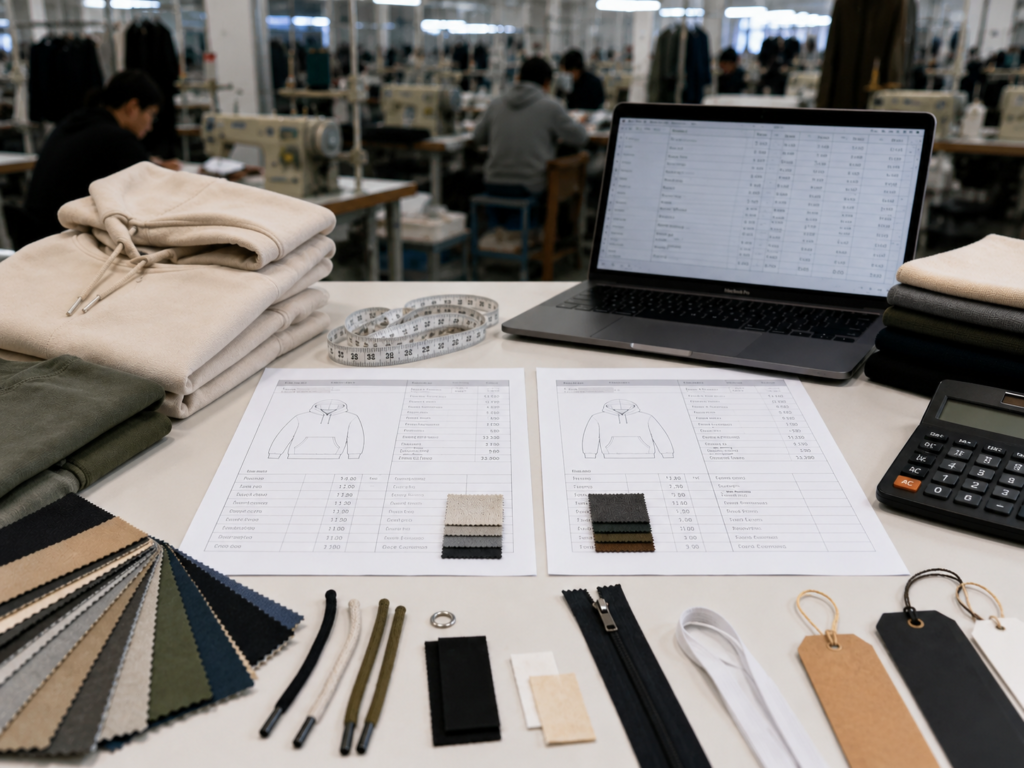
The reality is that clothing manufacturing quotes are influenced by far more than the garment itself. Factors such as fabric quality, order quantity, production complexity, printing and embroidery techniques, trims, packaging requirements, quality control standards, and delivery schedules can all have a substantial impact on the final cost. As a result, two factories may provide very different quotations while both are technically pricing the same product.
Understanding how clothing manufacturers calculate production costs allows brands to compare quotes more accurately and avoid costly misunderstandings. In this guide, we’ll break down the key factors that affect apparel manufacturing pricing and explain why garment factory quotations can vary so widely, helping you choose the right manufacturing partner for your business.
A Lower Quote Does Not Always Mean a Lower Price
When comparing quotations from different clothing manufacturers, it is important to understand that a lower price does not necessarily represent the same product. Two factories may both quote a “custom hoodie,” but the materials, construction methods, trims, and quality standards included in the quotation can vary significantly.
For example, one factory may base its quote on a lightweight 280gsm fleece fabric, standard stock colors, basic screen printing, generic drawcords, and simple packaging. Another manufacturer may quote a premium version using heavyweight 420gsm fleece, custom-dyed fabric, embroidery, specialty printing techniques, custom woven labels, branded hang tags, barcode stickers, and enhanced quality control procedures. Although both quotations refer to the same type of garment, the final products are fundamentally different in terms of quality, appearance, and production cost.
To make quote comparisons more accurate, buyers should look beyond the unit price and carefully review the complete specification package. Fabric weight, trim quality, branding elements, packaging requirements, and inspection standards all contribute to the overall manufacturing cost and product value.
Example Comparison
| Component | Lower-Cost Quote | Higher-Cost Quote |
|---|---|---|
| Fabric | 280gsm fleece | 420gsm heavyweight fleece |
| Fabric Color | Stock fabric color | Custom dyed color |
| Decoration | Basic screen print | Embroidery + puff print |
| Labels | Standard label | Custom woven neck label |
| Accessories | Standard drawcord | Premium custom drawcord |
| Packaging | Basic poly bag | Branded packaging with barcode |
| Quality Control | Standard inspection | Enhanced quality inspection |
Tip: When evaluating clothing factory quotes, compare the full product specification rather than focusing solely on the unit price. A higher quote may include better materials, stronger branding elements, and higher quality standards that deliver greater long-term value.
Fabric Type and Fabric Quality
Fabric is one of the most important factors affecting clothing manufacturing costs and often accounts for a significant portion of the final garment price. Even when two products appear similar, differences in fabric specifications can result in substantial price variations. For example, a basic cotton T-shirt, a heavyweight streetwear hoodie, an activewear legging, and a technical outdoor jacket all require different materials, performance characteristics, and production processes.
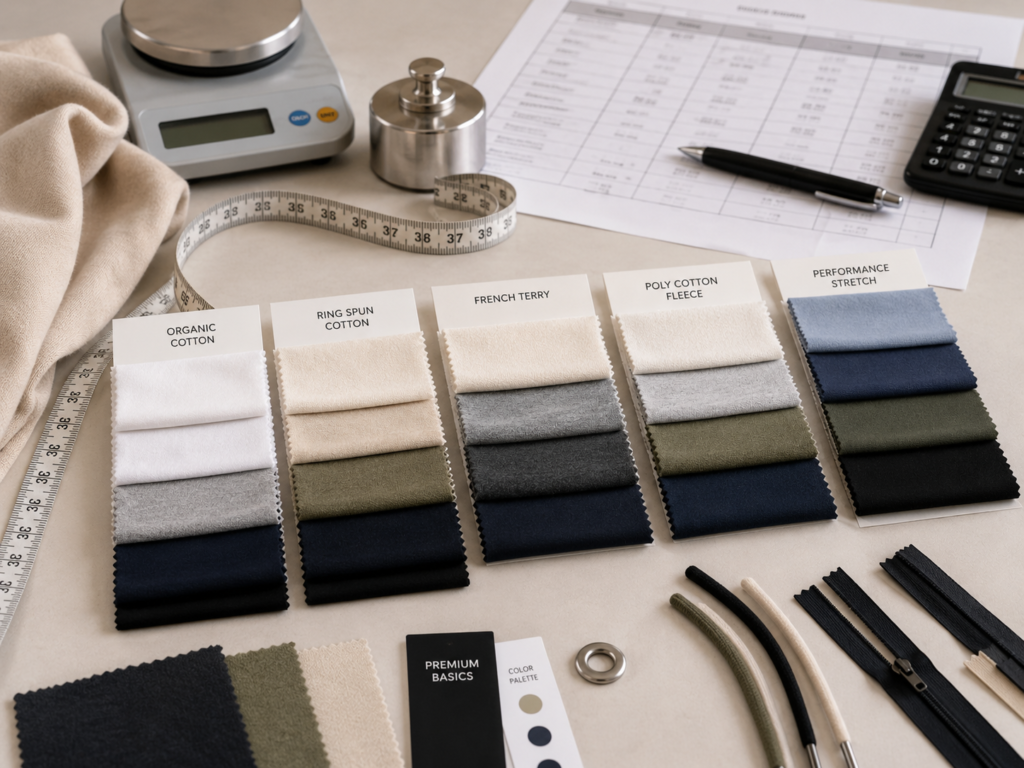
Several factors influence fabric pricing, including fiber composition, fabric weight, yarn quality, knitting or weaving methods, stretch performance, shrinkage control, dyeing techniques, finishing treatments, color fastness, and supplier minimum order quantities. A standard 180gsm cotton jersey will cost considerably less than a premium 260gsm heavyweight cotton fabric, while performance fabrics such as nylon-spandex blends are typically more expensive than standard polyester materials.
When evaluating a quote from a clothing manufacturer, it is essential to understand exactly what fabric is included. Some factories may quote using stock fabrics that are readily available, while others may price custom-developed fabrics tailored to your brand requirements. This difference alone can have a significant impact on the final quotation.
Questions to Ask Before Comparing Fabric Costs
- What is the fabric composition?
- What is the fabric weight (GSM)?
- Is the fabric stock material or custom-developed?
- Does the fabric include special treatments such as washing, brushing, or coating?
- Is the fabric suitable for my target market and product positioning?
Tip: Always compare fabric specifications when reviewing clothing factory quotes. Two garments may look similar, but differences in fabric quality can significantly affect cost, durability, and customer satisfaction.
Order Quantity and MOQ
Order quantity plays a major role in determining the unit price of a garment. In apparel manufacturing, many production costs are fixed regardless of the order size. Pattern preparation, fabric sourcing, cutting setup, sewing line preparation, printing, quality inspection, and packaging all require time and resources before production begins.
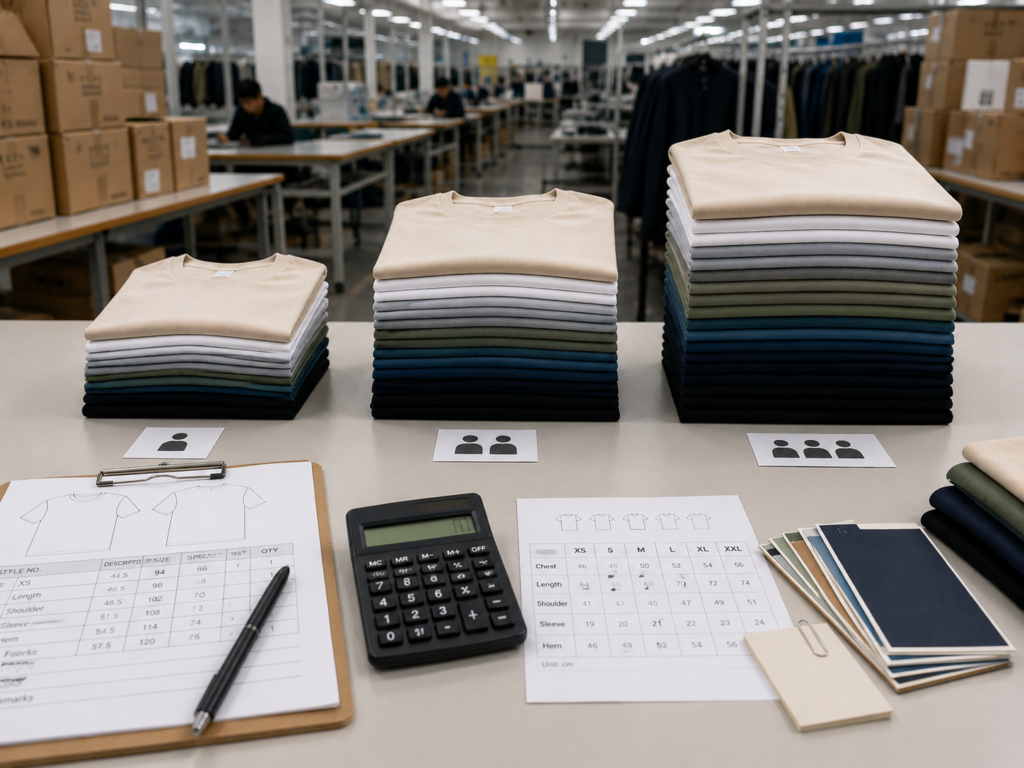
For smaller orders, these setup costs are distributed across fewer units, resulting in a higher cost per piece. Larger production runs allow factories to operate more efficiently, purchase materials in bulk, optimize production scheduling, and reduce overall unit costs. As a result, a quote for 100 pieces may be significantly higher per unit than a quote for 500 or 1,000 pieces.
Minimum Order Quantity (MOQ) requirements can also impact pricing. Fabric mills, trim suppliers, packaging manufacturers, and printing facilities often have their own minimum production quantities. If your order volume is below these thresholds, the factory may need to source alternative materials or use stock components, which can affect both pricing and customization options.
Best Practice When Requesting Quotes
Instead of asking:
“How much does this hoodie cost?”
Ask:
“Please provide pricing for 100 pcs, 300 pcs, and 500 pcs.”
This approach allows you to compare pricing tiers and better understand how production volume affects manufacturing costs.
Garment Complexity
The complexity of a garment has a direct impact on production time, labor requirements, and final pricing. Simple products with fewer pattern pieces and straightforward construction methods generally cost less to manufacture than garments that include multiple components and specialized sewing techniques.
A basic T-shirt may require only a few sewing operations, while a jacket or premium hoodie can involve additional pattern pieces, lining, pockets, zippers, ribbing, drawcords, decorative stitching, and extensive quality control procedures. Every added feature increases production time, and labor remains one of the largest cost components in garment manufacturing.
Factors that increase garment complexity include:
- Multiple pattern pieces and panels
- Pocket construction
- Linings and interlinings
- Rib cuffs and waistbands
- Zippers, buttons, and snap fasteners
- Elastic components
- Decorative stitching
- Contrast fabrics
- Special washes and finishing treatments
- Complex embroidery or applique work
For example, a standard hoodie with a simple kangaroo pocket will typically cost much less than a premium version featuring zippered pockets, a double-layer hood, custom drawcord tips, applique branding, and contrast stitching details.Order Quantity and MOQ
Order quantity plays a major role in determining the unit price of a garment. In apparel manufacturing, many production costs are fixed regardless of the order size. Pattern preparation, fabric sourcing, cutting setup, sewing line preparation, printing, quality inspection, and packaging all require time and resources before production begins.
For smaller orders, these setup costs are distributed across fewer units, resulting in a higher cost per piece. Larger production runs allow factories to operate more efficiently, purchase materials in bulk, optimize production scheduling, and reduce overall unit costs. As a result, a quote for 100 pieces may be significantly higher per unit than a quote for 500 or 1,000 pieces.
Minimum Order Quantity (MOQ) requirements can also impact pricing. Fabric mills, trim suppliers, packaging manufacturers, and printing facilities often have their own minimum production quantities. If your order volume is below these thresholds, the factory may need to source alternative materials or use stock components, which can affect both pricing and customization options.
Tip: If cost control is a priority, focus on simplifying garment construction while maintaining the features most important to your customers. Reducing unnecessary complexity can significantly lower production costs without sacrificing product value.
Printing, Embroidery, and Decoration
Decoration techniques can significantly influence clothing manufacturing costs, making them one of the most common reasons why garment factory quotes vary. While two garments may share the same base design, differences in branding and decorative elements can lead to substantial pricing differences.
Common decoration methods used by clothing manufacturers include:
- Screen Printing
- Digital Printing (DTG)
- Heat Transfer Printing
- Sublimation Printing
- Embroidery
- Puff Printing
- Applique
- Woven Patches
- Rubber Patches
- Silicone Logos
- Garment Washing and Distressing Effects
Each decoration method requires different equipment, labor, setup procedures, and production times. For example, a simple one-color chest print is generally far more cost-effective than large-scale embroidery or multi-location branding. Premium techniques such as applique, puff printing, and custom patches typically increase both sample development costs and bulk production expenses.
Several factors directly affect decoration pricing:
- Artwork size
- Number of print colors
- Logo placement locations
- Embroidery stitch count
- Print coverage area
- Special testing requirements
- Fabric compatibility
When comparing quotations, always confirm that every factory is pricing the same decoration method. A quote based on screen printing should not be compared directly with one that includes embroidery or premium branding elements.
Tip: Always provide clear artwork files and decoration specifications when requesting quotes. This helps clothing manufacturers calculate costs accurately and prevents unexpected price adjustments later.
Pattern Making and Fit Development
Pattern development is another important factor that can influence apparel manufacturing quotes. Some garment manufacturers include pattern-making services within their pricing, while others charge separate development fees for custom designs.
If your garment requires a unique fit, the factory may need to create a new pattern, develop grading specifications, adjust measurements across multiple sizes, and revise samples based on fitting feedback. This process requires experienced technical designers and additional development time, which naturally increases production costs.
Custom pattern development is particularly important for:
- Activewear
- Streetwear
- Jackets
- Dresses
- Pants and trousers
- Fitted tops
- Plus-size apparel
- Performance garments
A factory using existing stock patterns may offer a lower quote, but the fit may not accurately reflect your brand’s desired sizing standards. In contrast, a manufacturer investing in custom fit development often provides better long-term consistency and product quality.
For fashion brands focused on customer satisfaction and repeat purchases, fit development should be viewed as an investment rather than an expense.
Pattern Making and Fit Development
Pattern development is another important factor that can influence apparel manufacturing quotes. Some garment manufacturers include pattern-making services within their pricing, while others charge separate development fees for custom designs.
If your garment requires a unique fit, the factory may need to create a new pattern, develop grading specifications, adjust measurements across multiple sizes, and revise samples based on fitting feedback. This process requires experienced technical designers and additional development time, which naturally increases production costs.
Custom pattern development is particularly important for:
- Activewear
- Streetwear
- Jackets
- Dresses
- Pants and trousers
- Fitted tops
- Plus-size apparel
- Performance garments
A factory using existing stock patterns may offer a lower quote, but the fit may not accurately reflect your brand’s desired sizing standards. In contrast, a manufacturer investing in custom fit development often provides better long-term consistency and product quality.
For fashion brands focused on customer satisfaction and repeat purchases, fit development should be viewed as an investment rather than an expense.
Quality Standards and Inspection Requirements
Quality control is another major factor that can influence clothing manufacturing costs. Factories that maintain higher quality standards typically invest more time, labor, and resources into inspection procedures throughout the production process. While this may result in a higher quotation, it often helps prevent costly quality issues after delivery.
Comprehensive quality control programs may include:
- Fabric inspection
- Color consistency checks
- Measurement verification
- Stitching inspections
- Print and embroidery inspections
- Shrinkage and wash testing
- Packaging inspections
- Final random quality inspections
A lower-priced quote may involve fewer inspection procedures, which can increase the risk of production issues such as inconsistent sizing, loose threads, poor print durability, color variations, or incorrect packaging. These problems can negatively impact customer satisfaction and brand reputation.
For brands selling in competitive international markets, stable product quality is often far more valuable than achieving the lowest possible manufacturing cost. A seemingly low-cost garment can become much more expensive if it results in returns, replacements, discounts, or production rework.
Tip: When comparing clothing factory quotes, ask about quality control procedures and inspection standards. A slightly higher price often reflects stronger quality assurance and lower production risk.
Factory Type and Service Scope
One of the most overlooked reasons clothing manufacturer quotes vary is that not all suppliers provide the same level of service. While some factories focus solely on cutting and sewing, others operate as full-service apparel manufacturers offering comprehensive support throughout the entire product development process.
Common supplier types include:
- Sewing factories
- Garment manufacturers
- Trading companies
- OEM clothing manufacturers
- ODM clothing manufacturers
- Full-service apparel manufacturers
A full-service clothing manufacturer may offer:
- Fabric sourcing
- Trim sourcing
- Pattern development
- Sample making
- Size grading
- Production management
- Quality control
- Packaging solutions
- Export and logistics support
In contrast, a basic sewing workshop may only provide cutting and sewing services, leaving the buyer responsible for sourcing materials, managing production details, and coordinating logistics.
Because the service scope is different, these quotes should not be compared solely on price. A higher quotation may include valuable services that reduce workload, improve product quality, and simplify the production process.
Tip: Before selecting a supplier, determine whether you need a simple production partner or a full-service clothing manufacturer that can support product development, sourcing, quality control, and export management.
Final Thoughts
Understanding what drives clothing manufacturing costs is the key to comparing factory quotes accurately. Factors such as fabric quality, order quantity, garment complexity, decoration methods, trims, packaging, and quality standards can all influence the final price.
Instead of focusing solely on the lowest quote, look for a clothing manufacturer that can provide the right balance of quality, service, and value. A clear understanding of your product requirements will help ensure a smoother production process and better results for your brand.
If you’re looking for a reliable garment manufacturer or custom clothing manufacturer, choosing an experienced production partner can help you bring your designs to market more efficiently and confidently.