Denim is one of the most recognizable fabrics in the world, yet many buyers and apparel brands still struggle with inconsistent quality, fabric misunderstandings, production delays, and sourcing confusion. From fiber composition to fabric weight and washing performance, small differences in denim manufacturing can significantly affect the final product.
At its core, denim is a durable woven twill fabric traditionally made with indigo-dyed warp yarns and undyed or lightly dyed weft yarns. While classic denim is 100% cotton, modern denim fabrics may also include elastane, polyester, lyocell, or recycled fibers to improve stretch, durability, softness, or sustainability.
This guide explains denim from a practical manufacturing and sourcing perspective — including how denim is made, the difference between denim and jeans, common denim fabric types, color treatments, fabric blends, and key considerations buyers should understand before sourcing denim products or developing a jeans collection.
What Is Denim, Exactly?
The term “denim” is widely used across fashion, sourcing, and manufacturing, yet it is still commonly misunderstood. Buyers often confuse denim with canvas, twill, or even knitted fabrics, which can lead to incorrect specifications, pricing disputes, sampling delays, and production issues.
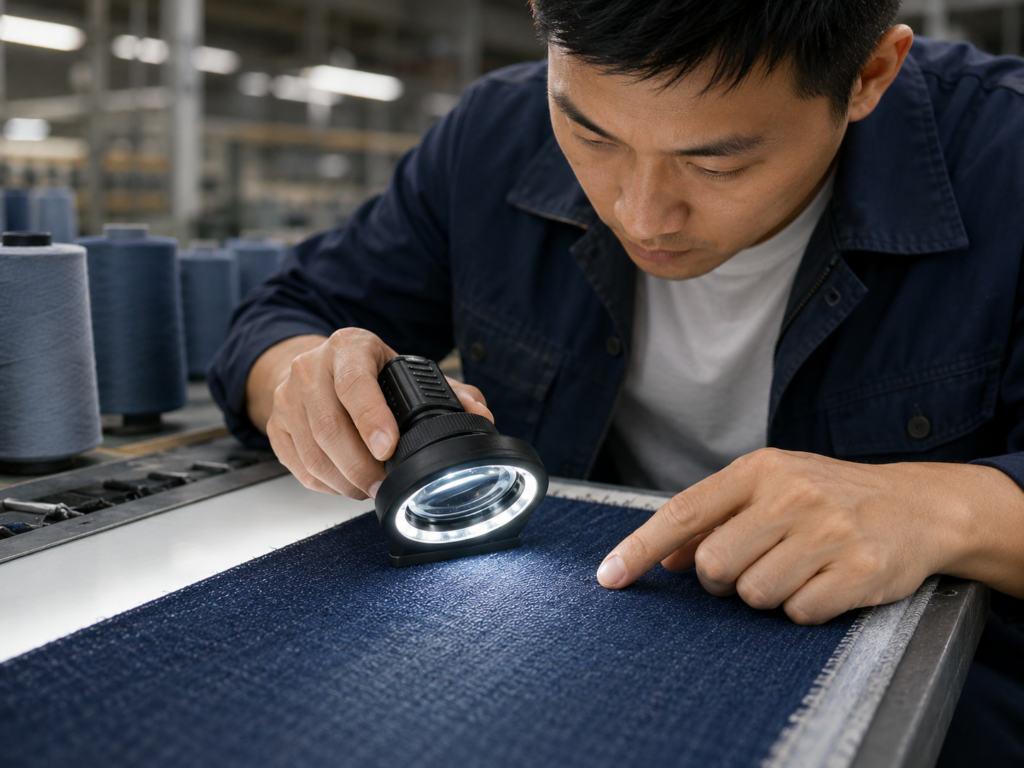
In technical terms, denim is a durable woven twill fabric traditionally made with colored warp yarns — most commonly indigo dyed — and white or lightly colored weft yarns. This construction creates the characteristic diagonal rib pattern and the recognizable blue-faced, white-backed appearance associated with classic denim fabrics.
Most traditional denim uses a 3/1 twill weave, where the warp yarn passes over three weft yarns and under one. Because the dyed warp yarn dominates the fabric surface, the outer face appears blue while the underside remains lighter in color. This unique weave structure gives denim its strength, durability, fading characteristics, and signature texture.
It is also important to distinguish between denim and jeans. Denim is the fabric itself, while jeans are garments made from denim. In addition to classic indigo denim, modern mills now produce black denim, ecru denim, sulfur-dyed denim, stretch denim, broken twill denim, left-hand twill, right-hand twill, and various fashion-driven specialty constructions.
For apparel brands and sourcing teams, understanding the weave structure and yarn construction early in development can prevent costly misunderstandings during sampling and bulk production.
Key Denim Terms
| Term | Meaning | Why It Matters |
|---|---|---|
| Twill | A weave pattern with diagonal lines | Provides strength, durability, and drape |
| Warp | Lengthwise yarns, usually dyed | Creates the face color of denim |
| Weft | Crosswise yarns, usually undyed | Creates the lighter backside |
| 3/1 Twill | Warp passes over 3 yarns and under 1 | Standard classic denim construction |
| Right-Hand Twill (RHT) | Diagonal lines move right | Common in traditional denim |
| Left-Hand Twill (LHT) | Diagonal lines move left | Produces a softer hand feel |
| Broken Twill | Alternating twill direction | Reduces fabric twisting after washing |
One of the most common sourcing mistakes is treating all denim fabrics as interchangeable. In reality, weave direction, yarn count, dye penetration, and stretch composition can dramatically change garment performance, wash effects, and production consistency.
Is Denim Made from Cotton? What Denim Fabric Is Really Made Of
One of the most common questions in apparel sourcing is whether denim is made entirely from cotton. Traditionally, the answer is yes — classic denim was originally produced using 100% cotton yarns. However, modern denim manufacturing has evolved significantly, and today many denim fabrics include blended fibers designed to improve comfort, durability, stretch, softness, and sustainability.
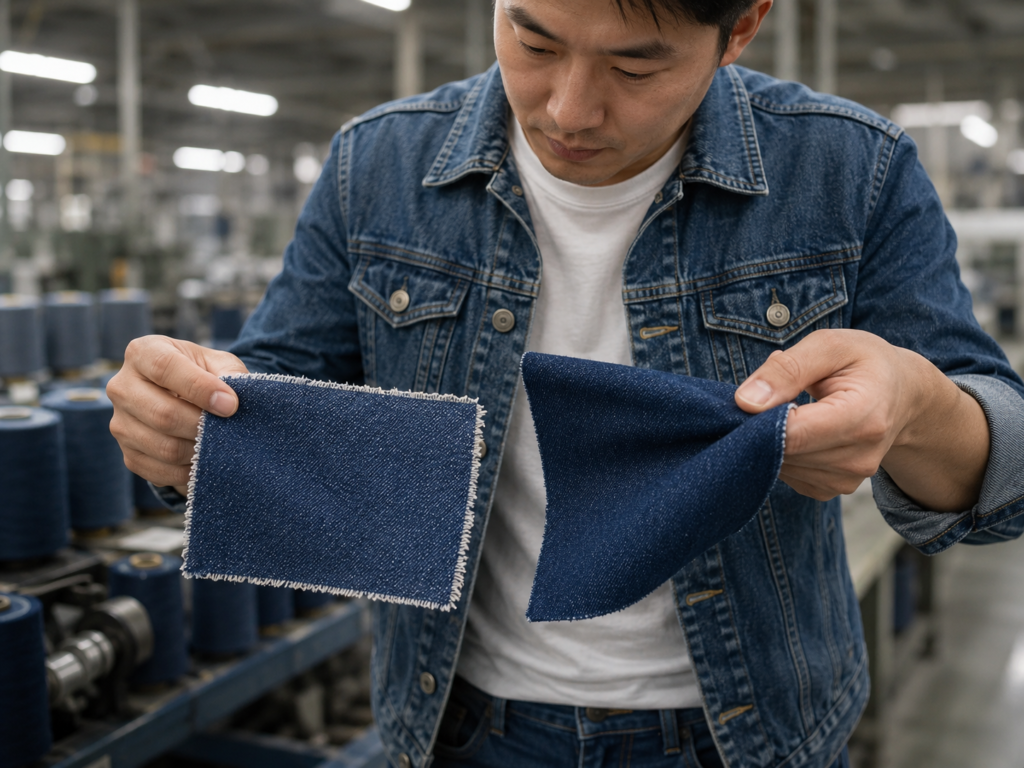
Traditional rigid denim is typically woven from pure cotton, giving it the authentic texture, durability, and fading characteristics associated with classic jeans and workwear. This type of denim is commonly used for vintage-style jeans, trucker jackets, heavyweight workwear, and raw denim products because it develops natural wear patterns and distinctive fading over time.
Modern stretch denim, however, often combines cotton with additional fibers such as elastane, polyester, lyocell, modal, or recycled cotton. Even a small percentage of stretch fiber — usually around 1–3% elastane — can dramatically change garment comfort, flexibility, and fit recovery.
Different fiber blends are selected based on the intended garment performance, target price point, washing effect, and customer preference. For this reason, professional buyers and sourcing teams typically request complete fiber composition details rather than relying on generic terms like “stretch denim” or “soft denim.”
Common Denim Fiber Blends
Sourcing Insight
One of the most common mistakes in denim sourcing is assuming that all stretch denim performs similarly. In reality, two fabrics with nearly identical compositions can behave very differently depending on yarn quality, weave density, finishing methods, and fabric engineering. Always request full fabric specifications and approved sample references before bulk production begins.
How Is Denim Made? Step-by-Step Denim Manufacturing Process
Many people assume the character of denim comes mainly from garment washing or distressing, but the foundation of denim quality is established much earlier during yarn spinning, dyeing, weaving, and finishing. Understanding the full manufacturing process is essential for apparel brands, sourcing teams, and buyers because each production stage directly affects fabric appearance, shrinkage, fading behavior, durability, and final garment quality.
In simple terms, denim production begins with cotton fiber processing and ends with garment washing and finishing. Along the way, mills spin yarns, dye warp yarns with indigo or sulfur dyes, weave the fabric in twill construction, stabilize shrinkage through finishing, and finally transform the fabric into finished jeans or denim garments.
Step-by-Step Denim Manufacturing Process
1. Fiber Preparation & Yarn Spinning
The process starts with cotton fiber opening, cleaning, carding, and sometimes combing for finer-quality yarns.
The fibers are then spun into yarn using different spinning methods:
- Ring-spun yarn: Softer hand feel, irregular vintage texture, premium appearance
- Open-end yarn: More economical, cleaner appearance, higher production efficiency
Yarn type strongly influences the final denim texture, fading characteristics, and price level.
2. Indigo Dyeing
The warp yarns are dyed before weaving using repeated indigo or sulfur dye baths.
Common Dyeing Methods
Rope Dyeing
- Yarn is twisted into rope form before dyeing
- Produces classic ring-dyed denim
- Creates more authentic fading over time
- Preferred for premium and vintage denim
Slasher Dyeing
- Faster and more efficient for large-volume production
- Common in commercial denim manufacturing
- Offers greater production efficiency and consistency
During dyeing, oxidation occurs between dye baths, gradually building the desired indigo shade.
3. Sizing Process
Before weaving, warp yarns receive a protective sizing coating.
Purpose of Sizing
- Reduces yarn breakage during weaving
- Improves weaving efficiency
- Protects yarn surface integrity
Proper sizing is critical for maintaining fabric consistency in high-speed production.
4. Denim Weaving
The dyed warp yarns and undyed or lightly colored weft yarns are woven together using a twill weave construction — most commonly 3/1 twill.
This creates:
- The diagonal denim texture
- Blue face / white back appearance
- Characteristic denim durability and drape
Loom Types
Selvedge Looms
- Narrow-width weaving
- Self-finished clean edges
- Traditional premium denim appearance
Modern Air-Jet or Projectile Looms
- Wider fabric production
- Higher efficiency for mass manufacturing
- Common in commercial denim production
5. Finishing & Sanforization
After weaving, the denim fabric goes through finishing processes to stabilize performance and control shrinkage.
Common Finishing Processes
- Sanforization (shrinkage control)
- Heat setting
- Skew correction
- Softening treatments
- Surface finishing
Proper finishing helps maintain garment sizing consistency during washing and wear.
6. Cutting & Sewing
Once the fabric is approved, garment factories cut and sew the denim into finished products such as:
- Jeans
- Jackets
- Shirts
- Workwear
- Fashion garments
High-stress areas typically receive reinforcement techniques such as:
- Bartacking
- Rivets
- Double-needle stitching
to improve durability.
7. Garment Washing & Finishing
The final appearance of denim garments is created during the garment washing stage.
Common Denim Wash Techniques
- Enzyme wash
- Stone wash
- Ozone wash
- Laser finishing
- Tinting
- Rinse wash
These treatments create the worn textures, fades, softness, and vintage effects associated with modern denim products.
What Is the Difference Between Denim and Jeans?
The terms “denim” and “jeans” are often used interchangeably, but they actually refer to two different things. Understanding this distinction is important in fashion, apparel sourcing, and garment manufacturing because fabric type and garment category are not the same.
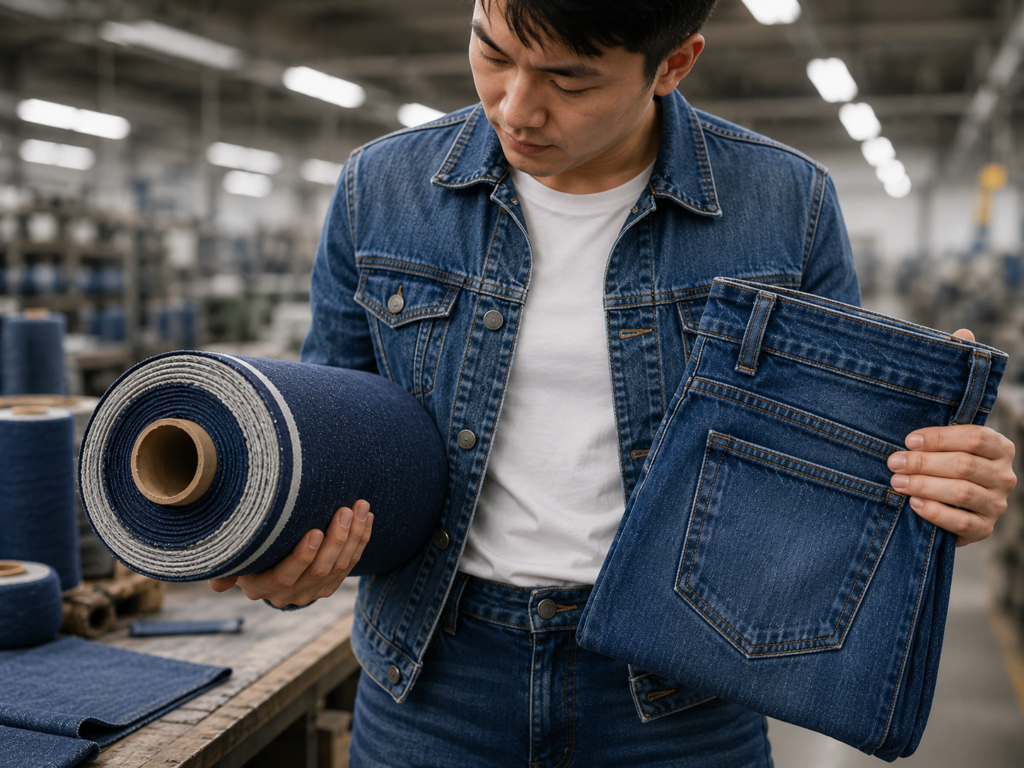
Simply put:
- Denim is the fabric
- Jeans are garments usually made from denim
Denim is a woven twill fabric traditionally made with indigo-dyed warp yarns and lighter-colored weft yarns, creating the signature diagonal texture and blue-faced appearance associated with classic denim products.
Jeans, on the other hand, are a garment style — most commonly five-pocket pants featuring rivets, reinforced seams, and traditional workwear-inspired construction. While most jeans are made from denim fabric, some “jeans-style” garments may actually use knitted fabrics, colored twills, stretch blends, or other non-denim materials.
Likewise, denim fabric is not limited to jeans production alone. It is widely used for:
- Denim jackets
- Shirts
- Dresses
- Skirts
- Workwear
- Accessories and bags
Denim vs. Jeans Comparison
| Category | Definition | Common Examples | Notes |
|---|---|---|---|
| Denim | A woven twill fabric | Raw denim, indigo twill fabric | Used to produce many apparel categories |
| Jeans | A garment style | Five-pocket pants | Usually made from denim fabric |
| Non-Denim Jeans | Jeans-style garments using other fabrics | Jeggings, stretch knit pants | May not perform like true denim |
| Non-Jean Denim Products | Garments made from denim | Jackets, dresses, shirts | Same fabric, different product category |
So when someone asks, “Are jeans denim?” the answer is usually yes — but ultimately, the fabric construction determines how the product looks, feels, fades, stretches, and performs over time.
What Colors and Types of Denim Are Available?
Many people associate denim only with classic blue jeans, but modern denim manufacturing offers a much wider range of colors, finishes, weights, and fabric constructions. Today’s denim market includes everything from traditional indigo workwear denim to black stretch denim, lightweight fashion denim, ecru natural denim, and specialty textured fabrics designed for premium collections.
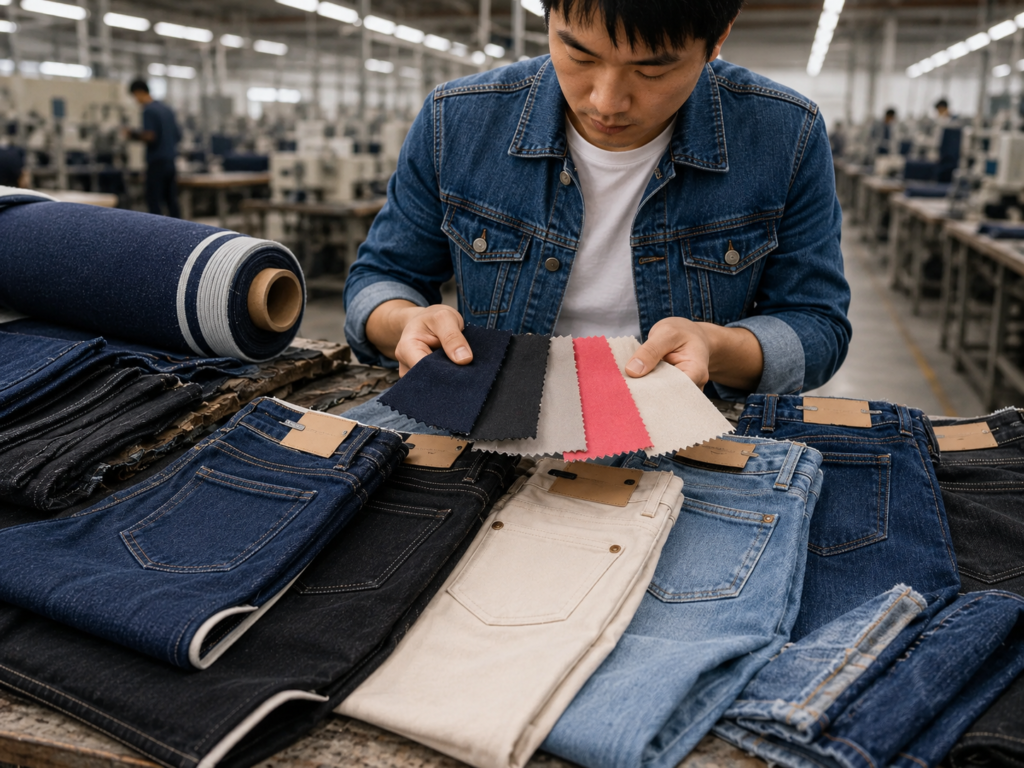
For apparel brands and buyers, denim selection usually comes down to three key factors:
- Fabric weight
- Dyeing method
- Finishing treatment
These elements directly affect garment appearance, comfort, fading behavior, seasonality, durability, and production cost.
Common Denim Colors
Indigo Denim
The most traditional and recognizable denim type.
- Indigo-dyed warp yarns with white weft yarns
- Creates the classic blue face and lighter backside
- Develops natural fading and high-contrast wear patterns over time
Commonly used for:
- Jeans
- Jackets
- Heritage workwear
- Raw denim collections
Black Denim
Usually produced using sulfur-dyed yarns.
Characteristics
- Deep black or charcoal appearance
- Fades differently from indigo denim
- Popular in fashion and streetwear collections
Black denim may gradually fade into gray or washed charcoal tones after repeated washing.
Ecru or Natural Denim
Made from undyed cotton yarns.
Features
- Natural off-white appearance
- No indigo bleeding
- More eco-conscious aesthetic
- Popular for minimalist and sustainable collections
Colored Denim
Produced using sulfur dyes or reactive dyeing methods.
Popular Fashion Colors
- Gray
- Brown
- Green
- Red
- Pastel tones
- Seasonal fashion shades
Colored denim is commonly used in fashion-focused or trend-driven collections.
Common Types of Denim Fabric
| Denim Type | Typical Weight | Common Applications | Key Characteristics |
|---|---|---|---|
| Raw / Rigid Denim | 12–16+ oz | Vintage jeans, jackets | Crisp hand feel, strong fading potential |
| Stretch Denim | 8–12 oz | Skinny jeans, comfort fits | Added flexibility and recovery |
| Selvedge Denim | 12–18 oz | Premium heritage denim | Narrow-loom construction with clean self-edge |
| Lightweight Denim | 6–10 oz | Shirts, dresses, summer wear | Softer drape and lighter feel |
| Heavyweight Denim | 16–21+ oz | Workwear, premium raw denim | Durable with long break-in period |
| Slub or Neppy Denim | Various | Vintage-inspired collections | Irregular yarn texture and character |
Raw Denim vs Washed Denim
Raw Denim
Raw denim is unwashed after weaving and finishing.
Characteristics
- Stiffer texture
- More personalized fading over time
- Higher shrinkage potential if unsanforized
Often preferred in premium and heritage denim markets.
Washed Denim
Washed denim undergoes garment finishing treatments before sale.
Common Wash Treatments
- Stone wash
- Enzyme wash
- Vintage wash
- Ozone wash
- Softening treatments
These processes improve softness, reduce shrinkage, and create pre-worn visual effects.
Woven Denim vs Knit “Denim”
True denim is always a woven twill fabric.
However, many products marketed as “knit denim” are actually:
- Jersey fabrics
- French terry fabrics
- Stretch knitted textiles printed or dyed to resemble denim
While knit denim products offer more comfort and flexibility, they behave very differently from woven denim in terms of:
- Stretch recovery
- Durability
- Fading
- Structure
- Garment lifespan
For apparel sourcing and product development, clearly identifying whether a fabric is woven denim or knit imitation denim helps avoid quality misunderstandings and customer returns later.
How to Source High-Quality Denim Without Costly Problems
Denim sourcing can quickly become complicated when pricing pressure, inconsistent quality, communication delays, and production risks enter the process. This is especially true when sourcing across multiple factories or overseas supply chains where fabric specifications, wash standards, and delivery expectations are not clearly defined from the beginning.
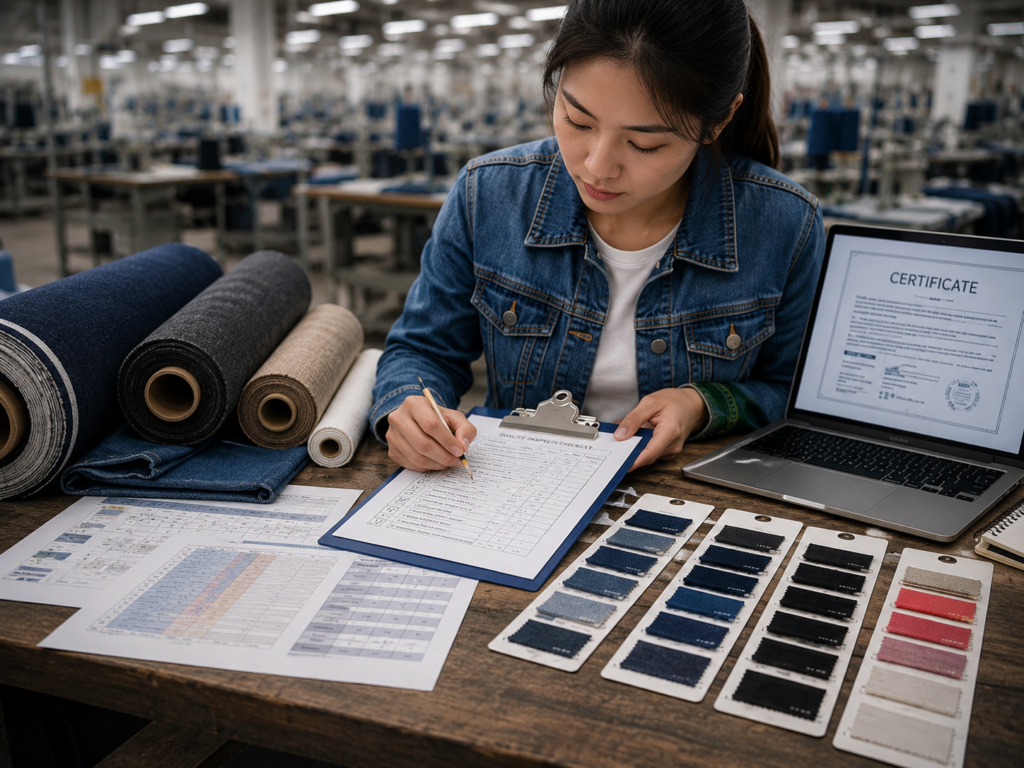
Successful denim sourcing depends on controlling details early — including fabric construction, shrinkage standards, color consistency, testing requirements, lead times, and communication procedures. Clear technical documentation and approval processes help reduce production errors, shipment delays, quality disputes, and costly rework later.
Key Areas to Control During Denim Sourcing
Fabric Specifications
Always request complete fabric details rather than general descriptions like “stretch denim” or “premium denim.”
Important Fabric Information
- Fiber composition breakdown
- Yarn type (ring-spun or open-end)
- Dyeing method (rope dye or slasher dye)
- Weave construction (3/1 twill, broken twill, etc.)
- Fabric weight and width
- Shrinkage standards
- Skew control specifications
Accurate fabric specifications are essential for maintaining consistency between sampling and bulk production.
Shade & Wash Approval
Color variation is one of the most common causes of denim production disputes.
Best Practices
- Approve shade bands before bulk production
- Confirm wash recipes in advance
- Standardize enzyme, stone, ozone, or laser wash settings
- Define acceptable color tolerance ranges
Consistent wash standards help avoid large shade differences between production batches.
Testing & Compliance
Professional denim sourcing should always include product testing and compliance verification.
Common Testing Requirements
- Colorfastness
- Tear strength
- Abrasion resistance
- Seam slippage
- Shrinkage performance
- PH value testing
- Restricted substance compliance
If sustainability claims are involved, certifications should always be verified directly through official issuer databases rather than screenshots or copied documents.
Lead Times & Production Planning
Denim production includes multiple stages:
- Yarn spinning
- Indigo dyeing
- Weaving
- Finishing
- Garment washing
- Final sewing and packing
Because of this, accurate production scheduling is critical.
Important Timeline Checks
- Fabric production lead time
- Bulk dyeing schedule
- Garment wash capacity
- Ex-factory date
- Shipping buffer time
For large programs, some buyers also arrange split shipments to prioritize core sizes or key delivery windows.
Payment Terms & Communication
Many sourcing problems come from unclear communication rather than manufacturing itself.
Recommended Practices
- Confirm Incoterms early
- Define payment schedules clearly
- Establish delay responsibility terms
- Use one dedicated communication contact
- Maintain weekly production updates
Consistent communication reduces misunderstandings and allows problems to be identified before they affect shipment schedules.
Frequently Asked Questions About Denim
| Question | Straight Answer |
|---|---|
| What is denim? | Denim is a durable woven cotton twill fabric with dyed warp yarns and lighter weft yarns. |
| What are jeans made of? | Most jeans are made from denim fabric, usually cotton-based or cotton-blend materials. |
| Is denim cotton? | Traditional denim is 100% cotton, though modern denim often includes stretch or blended fibers. |
| Is denim a color? | No. Denim is a fabric type, while classic denim is commonly dyed indigo blue. |
| What color is denim naturally? | Natural denim is ecru or off-white before the yarns are dyed with indigo or sulfur dyes. |
| Are all jeans made from denim? | No. Some jeans-style garments use knit fabrics, twill, or stretch materials instead of true denim. |
| Is denim woven or knit? | True denim is always woven. “Knit denim” only imitates the appearance of denim. |
| What makes denim “denim”? | Its twill weave construction and colored warp-dominant surface define denim fabric. |
Conclusion
Denim is more than just blue jeans — it is a highly engineered woven twill fabric whose performance depends on fiber composition, yarn construction, dyeing method, weave structure, finishing, and garment washing techniques. From rigid raw denim to modern stretch blends, every production decision affects comfort, durability, fading behavior, and overall product quality.
For apparel brands, buyers, and sourcing teams, understanding how denim is made helps reduce costly mistakes in sampling, production, and quality control. When fiber specifications, weave construction, wash standards, and shrinkage targets are clearly defined from the beginning, denim programs run more smoothly, product consistency improves, and long-term sourcing becomes far more reliable.
Why I Write This
My name is Coolvid, and I work with global apparel buyers, fashion brands, wholesalers, and retailers looking for reliable clothing manufacturing and sourcing solutions. Through years of working in fashion production and international B2B supply chains, I’ve seen how small misunderstandings in fabric specifications, garment construction, quality standards, and lead times can quickly turn into costly sourcing problems.
At Yoplook, we focus on helping brands and wholesalers simplify apparel development with clearer communication, stable production quality, and reliable manufacturing support. Based in Shenzhen, China, we operate as a B2B clothing supplier and manufacturer specializing in fashion apparel and OEM/ODM production services.
Our product categories include:
- Women’s fashion
- Jackets & coats
- Dresses & skirts
- Jeans & denim apparel
- T-shirts & sweatshirts
- Sportswear
- Kidswear
- Fashion bags
- Underwear and more
With years of export experience serving international markets, we support apparel brands, wholesalers, retailers, and sourcing companies across Europe, North America, Australia, the Middle East, and other global regions.
If you are looking for dependable denim development, fashion manufacturing, or OEM/ODM clothing production with clear specifications, stable lead times, and professional communication, feel free to contact us.
- Brand: Yoplook
- Business Type: B2B Clothing Supplier & Manufacturer
- Location: Shenzhen, China
- Email: yopl@yoplook.com
- Website: https://yoplook.com/