
A custom apparel business can lose margin long before a customer asks for a refund. Thin fabric, unstable sizing, weak seams, and cracked prints can quietly turn a large T-shirt order into a costly problem.
The best wholesale T-shirt suppliers support custom apparel businesses with stable fabric quality, clear size consistency, reliable print compatibility, and proven wash performance. Strong supplier selection reduces risk in sourcing, protects brand reputation, and improves repeat sales.
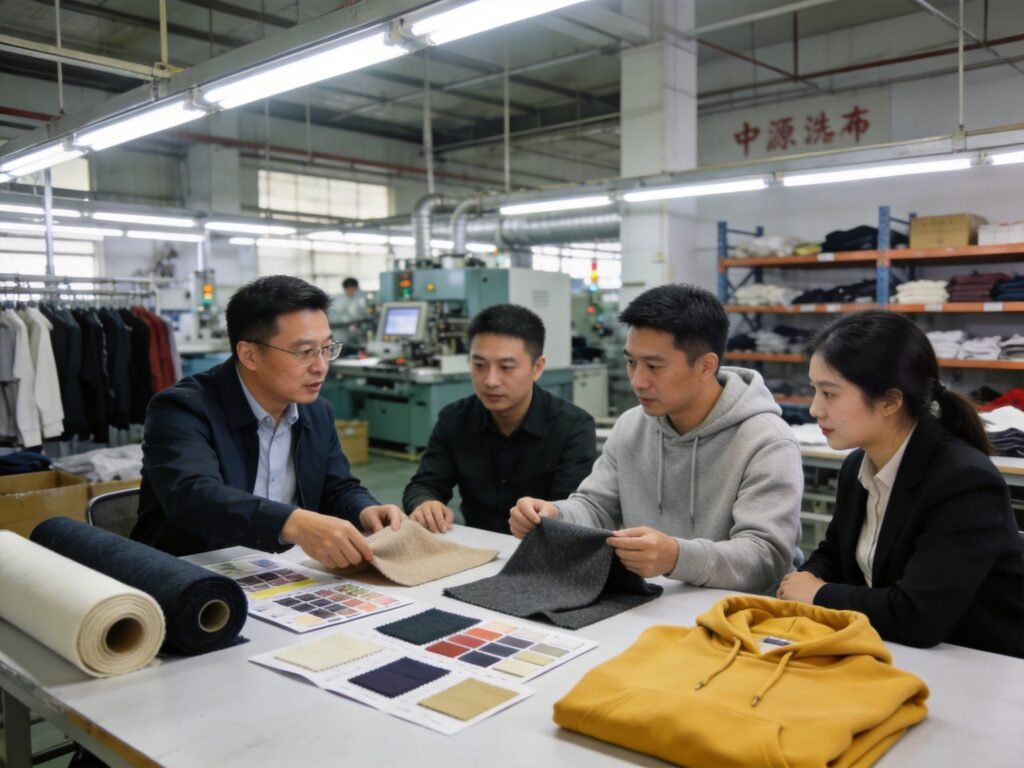
The T-shirt market looks simple from a distance. A blank tee seems basic. In reality, it is one of the easiest products to get wrong at scale. The insights gathered from Reddit, Amazon UK, Amazon France, Amazon Germany, Trustpilot, YouTube, Instagram, Facebook, and SiteJabber point to the same failures again and again. Buyers complain that shirts are too thin, white fabric is see-through, length shrinks after washing, side seams twist, sleeves feel unbalanced, collars stretch out, prints crack, and seams open too early. These are not rare mistakes. These are supplier-level control issues. That is why supplier choice matters as much as design, print, or price.
Why Does Supplier Selection Matter So Much in Custom Apparel?
A poor supplier can make even a strong design look low quality. A strong supplier can make a basic T-shirt feel reliable, premium, and easy to reorder.
Supplier selection matters because the supplier controls the foundation of the finished product: fabric, fit, sewing, finishing, print compatibility, and production consistency. Most repeat complaints in custom apparel come from failures in those basic areas, not from design alone.
The complaint insights show that customers usually describe T-shirt problems in simple language. They do not talk about yarn hairiness or skew percentage. They say the shirt feels cheap, looks transparent, shrinks too much, pills after a few washes, or falls apart too soon. That makes supplier choice a commercial decision, not only a sourcing decision. The wrong supplier creates customer service cost, discount pressure, slower reorders, and weaker brand trust.
The most common risk areas look like this:
| Risk Area | What Buyers Notice | Supplier Control Point |
|---|---|---|
| Fabric too thin | Shirt looks cheap or transparent | GSM, density, opacity control |
| Shrinkage | Shirt becomes too short after wash | Pre-shrinking and finishing |
| Poor fit | Shirt feels too boxy, too tight, or too short | Pattern and grading system |
| Weak stitching | Hem, sleeve, or neck opens early | Sewing standards and tension control |
| Print failure | Graphic cracks, peels, or fades | Print method and wash testing |
| Batch inconsistency | Same size feels different by color or order | Bulk measurement control |
A strong custom apparel program starts by choosing a supplier that can prevent these problems before production begins.
How to Evaluate Wholesale T-Shirt Suppliers for Custom Apparel Businesses?
A good supplier should offer more than a catalog and a low quote. The real test is whether product quality stays stable across colors, sizes, washes, and repeat orders.
To evaluate wholesale T-shirt suppliers for custom apparel businesses, focus on fabric quality, opacity control, shrinkage performance, fit consistency, sewing quality, print compatibility, communication clarity, and sample-to-bulk consistency. The best supplier is the one that can prove repeatability, not just promise it.
Many buyers compare suppliers by price first. That is understandable, but the insights suggest a more useful order of priorities. The largest pain points are usually basic quality failures that could have been screened earlier. A supplier that cannot control white tee transparency or length shrinkage is not really cheaper once returns and complaints begin.
A practical supplier evaluation framework should include these points:
| Evaluation Point | Strong Supplier Signal | Weak Supplier Signal |
|---|---|---|
| Fabric specification | Clear GSM, composition, finish, and use case | General wording only |
| Light-color control | Separate plan for white and pale shades | Same spec for all colors |
| Fit system | Clear regular, slim, oversized, or tall patterns | One fit scaled across all needs |
| Shrinkage control | Wash test data and target shrink limits | No wash data |
| Sewing quality | Stable neck, side seam, hem, and sleeve finish | Loose or inconsistent sample construction |
| Print readiness | Guidance by print method and fabric type | Blank garment only, no print thinking |
| Bulk consistency | Size audits and QC system | Random final check only |
| Communication | Clear lead times, revisions, and issue handling | Slow or vague replies |
This matters because positive market feedback is also very clear. Buyers praise shirts that are soft but durable, lightweight but not see-through, thick-collared, true to size, stable after washing, and still wearable after years. Good suppliers create those results through control, not luck.
What Product Red Flags Should Be Checked During Supplier Review?
A supplier sample can look good on a hanger and still fail under normal use. Surface appearance alone does not reveal the real risk.
The main red flags during supplier review are see-through fabric, unstable collar shape, poor seam balance, off-grain cutting, rough handfeel, weak print surface compatibility, inconsistent measurements, and no evidence of wash testing. Any of these signs can lead to expensive bulk problems later.
The market insights point to several product failures that repeat across platforms and regions. Those failures are useful because they reveal where supplier review should be stricter.
A strong review checklist includes these common warning signs:
| Red Flag | What It Often Leads To |
|---|---|
| White fabric that reads through easily | Customer complaints about transparency |
| Body length already short in sample | Severe post-wash fit loss |
| Sleeve shape feels forced or uneven | Poor comfort and weak silhouette |
| Side seams not hanging straight | Twisting after wash |
| Neckline puckering | Weak collar recovery and poor sewing control |
| Rough or hairy fabric surface | Early pilling |
| Sample print already stiff | Cracking or peeling after wash |
| Size label not matching measurement | High bulk inconsistency risk |
A supplier that treats these as minor details is likely to create larger issues in volume production.
OEM vs ODM T-Shirt Suppliers: Which Model Fits Your Business?
The right supplier model depends on how much product control, design ownership, and development speed a business needs.
OEM T-shirt suppliers produce styles based on buyer-provided specifications, while ODM T-shirt suppliers offer ready-developed styles that can be customized with branding or limited changes. OEM works better for businesses that want stronger product control, while ODM works better for businesses that want faster development and lower product creation complexity.
This choice affects sourcing strategy more than many buyers expect. It changes how fit is developed, how much fabric control is possible, and how quickly a product line can move from concept to launch.
The difference can be viewed this way:
| Model | Best For | Strengths | Limits |
|---|---|---|---|
| OEM | Brands with specific fit, fabric, and quality targets | More control over material, fit, and details | Longer development time |
| ODM | Brands that want faster launch and simpler development | Faster sampling and easier setup | Less control over original garment architecture |
For custom apparel businesses that care deeply about fit balance, white-tee opacity, collar structure, shrinkage control, and long-term consistency, OEM often provides more room for precision. For businesses focused on speed, trend testing, or quick seasonal graphics, ODM can be practical if the base shirt quality is already verified.
The insights strongly support one lesson here: no print program can save a poor base garment. That means ODM only works well when the ready-made blank already performs well in fabric, fit, and wash stability.
When Does OEM Make More Sense for Custom Apparel?
Some product goals require more control than stock blanks can offer. That is where OEM becomes the stronger path.
OEM makes more sense when the business needs specific fabric weight, special white opacity standards, custom fit blocks, tall sizing, better collar construction, or print-ready garments designed for long-term durability. OEM is also useful when brand identity depends on product feel and repeat consistency.
Many of the complaints in the supplied insights come from generic product shortcuts. White tees use the same light fabric as darker shades. Tall sizes are treated like standard sizes with minor length changes. Oversized fits are created by simply scaling up regular patterns. These shortcuts create visible quality loss.
OEM is helpful when the product strategy includes needs like these:
| Business Need | Why OEM Helps |
|---|---|
| White tees that are not see-through | Fabric can be adjusted by shade |
| Better print durability | Garment can be developed with print method in mind |
| Fit for specific customer body type | Pattern can be built around target fit |
| Stronger collar and seam durability | Construction details can be specified |
| Better wash performance | Shrinkage and recovery targets can be built into approval |
| Long-term repeat orders | Production standard can be locked more tightly |
OEM generally fits businesses that want the garment itself to be part of the brand promise.
When Does ODM Make More Sense for Custom Apparel?
Not every product line needs deep development from zero. In some cases, speed and simplicity matter more.
ODM makes more sense when the business needs faster launch timing, lower development complexity, smaller product differentiation at the garment level, or a ready-made blank that already meets core quality expectations. It is often a good fit for simpler graphic programs or fast-moving collections.
ODM can work well when supplier selection is careful. The key is not to assume that an existing style is production-ready just because it is already offered. The same evaluation rules still apply. The blank must still be checked for transparency, shrinkage, collar shape, seam quality, print compatibility, and size stability.
ODM is safer when these conditions are true:
| Good ODM Condition | Why It Matters |
|---|---|
| Base T-shirt already tested well | Reduces risk in bulk |
| Size consistency is proven | Easier repeat ordering |
| Fabric handfeel matches brand level | Better customer satisfaction |
| White and light shades are controlled | Prevents common complaints |
| Print tests are available | Reduces crack and peel risk |
| Sample matches production | Avoids first-order disappointment |
The wrong ODM base can create the exact problems shown in market complaints, especially thin fabric, poor shape retention, and weak print performance.
What to Ask a Wholesale T-Shirt Supplier Before Placing a Large Order?
The right questions reveal whether a supplier understands production quality or only understands quotation speed.
Before placing a large order, ask about fabric weight by color, opacity standards, shrinkage limits, fit grading logic, print compatibility, seam reinforcement, QC testing, sample-to-bulk consistency, lead times, and defect handling. Good answers should be clear, specific, and measurable.
Many sourcing problems begin because the wrong questions were asked too late. A supplier may say the shirt is soft, premium, or high quality. Those words sound good, but they do not prevent complaints. Specific questions do.
Here are the most useful questions to ask before bulk approval:
| Question | Why It Matters |
|---|---|
| What is the GSM for each color group? | White tees often need different fabric control |
| Are white and light shades tested for transparency? | “Too thin” and “see-through” are major complaint drivers |
| What is the shrinkage target after one wash and repeated washes? | Length loss is one of the most repeated problems |
| Is the fit block different for regular, oversized, and tall styles? | Poor grading creates bad fit reviews |
| What seam areas are reinforced? | Sleeve, hem, and neck openings are common failure points |
| What print methods work best on this fabric? | Prevents cracking, peeling, and stiff print feel |
| Is pilling tested? | Surface appearance affects premium feel |
| How is collar recovery checked? | Neck shape strongly affects perceived quality |
| How are size measurements controlled in bulk? | Same size must stay consistent across production |
| How is the approved sample linked to final production? | Prevents sample-better-than-bulk issues |
Strong suppliers usually answer these questions with standards, tolerances, and process details. Weak suppliers often respond with broad marketing language.
What Quality Standards Should Be Confirmed Before Bulk Production Starts?
A large order should never depend on appearance approval alone. The garment must be approved for performance as well.
Before bulk production starts, confirm standards for GSM, opacity, shrinkage, skew, pilling, seam strength, collar recovery, print durability, measurement tolerance, and final inspection. These controls directly address the most repeated market complaints.
The complaint insights make it easy to prioritize the right tests. The same failure patterns appear too often to ignore. A reliable bulk standard often includes the following:
| Standard | Purpose |
|---|---|
| GSM check | Confirms fabric weight target |
| Opacity test | Protects white and light-color coverage |
| Shrinkage test | Controls wash size loss |
| Twist/skew check | Prevents crooked seams and distorted prints |
| Pilling test | Protects long-term appearance |
| Seam strength check | Reduces early opening or tearing |
| Collar recovery test | Protects neckline stability |
| Print crack test | Protects graphic durability |
| Measurement audit | Keeps size accuracy stable |
| Final appearance inspection | Finds dirt, holes, wrong labels, and finish issues |
This kind of approval system supports better reorder confidence and fewer surprises after delivery.
Conclusion
The best wholesale T-shirt suppliers for custom apparel businesses are not just sources of blank garments. They are production partners that control fabric, fit, stitching, printing, and consistency with discipline. Strong supplier evaluation, the right supplier model, and the right pre-order questions help turn a large T-shirt order into a stable product line instead of a preventable quality problem.