
A hoodie may look simple, but weak control in one production step can lead to shrinkage, pilling, loose cuffs, bad fit, and fast customer complaints.
Hoodie manufacturing moves through a clear chain of steps, from fabric sourcing and sampling to cutting, sewing, finishing, inspection, and final packing. Each step affects comfort, fit, durability, and bulk consistency.
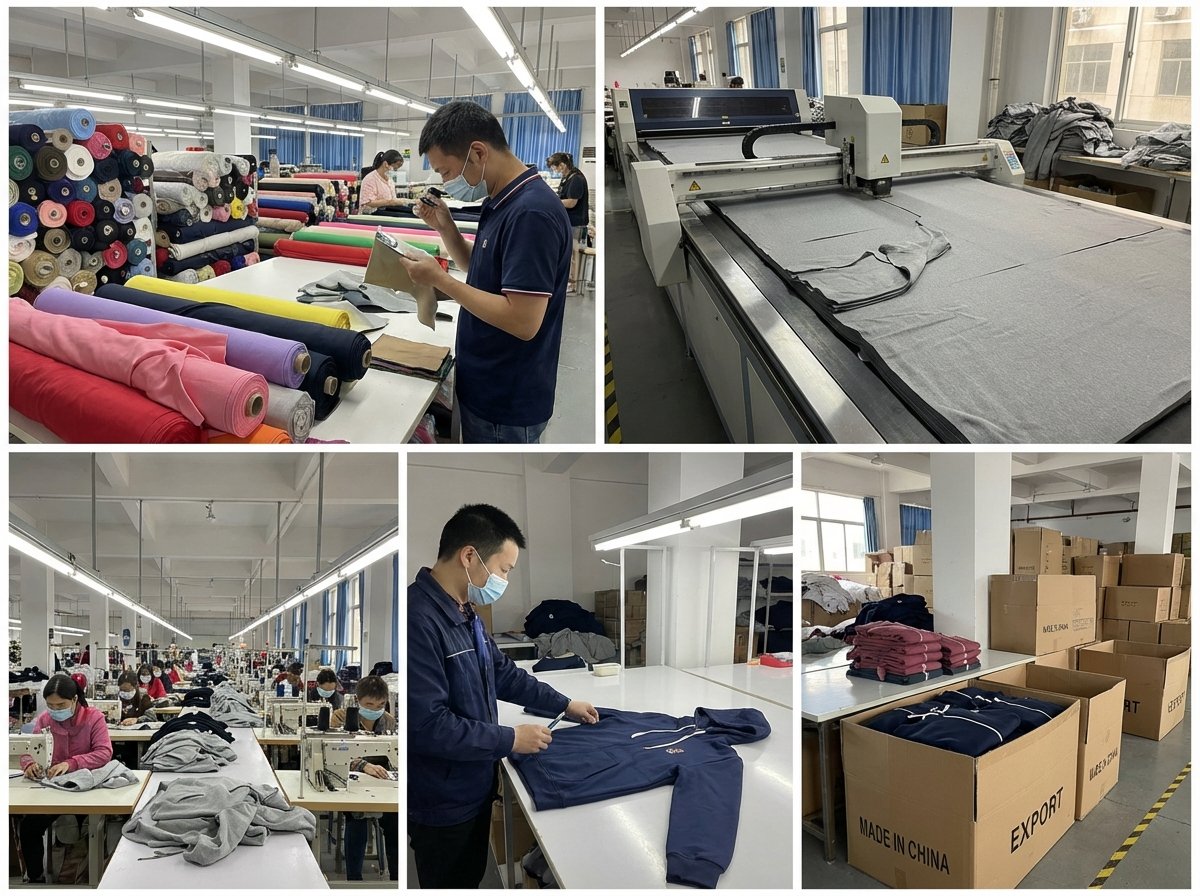
Hoodie production is often treated as basic garment work. In reality, it is a process that depends on many linked decisions. Real market feedback shows the same failures again and again. Hoodies shrink after one wash. Fabric pills too early. Sleeves feel too short. Cuffs lose shape. Zippers break. Fleece sheds. Product photos show a thick warm hoodie, but the delivered product feels thin and cheap. These are not random problems. Most of them begin inside the factory, long before the product reaches the customer.
That is why it helps to understand how hoodie production actually works. A good hoodie is not only made by choosing fabric and sewing panels together. It is made by controlling fabric weight, shrinkage, fit balance, rib recovery, seam strength, trim quality, and finishing consistency through every stage of production.
What Does Hoodie Manufacturing Start With?
Hoodie manufacturing starts with product planning, not with sewing.
The first stage is defining the hoodie clearly through specs such as fabric type, GSM, fit, size chart, trims, artwork, labels, and packaging details.
Before any sample is made, the factory needs a clear product direction. This usually includes the hoodie silhouette, target season, fit type, fabric structure, color plan, artwork placement, and trim details. A lightweight jersey hoodie, a midweight French terry hoodie, and a heavyweight brushed fleece hoodie all follow different development logic. If the product direction is vague, the factory may fill the gaps with guesswork. That often leads to rework later
This stage matters because many market complaints come from wrong product definition at the start. A hoodie sold as warm and thick should not be developed with fabric that feels thin and flat. A relaxed fit should not be graded like a slim fit. A factory with strong development control will clarify these points early so that fabric sourcing and sample work follow one clear standard.
How Hoodie Production Works from Fabric Sourcing to Final Packing
Hoodie production works as a linked sequence, where each stage affects the next one.
The usual flow is fabric sourcing, sample development, fit approval, fabric testing, bulk cutting, sewing, finishing, inspection, and final packing for shipment.
Fabric sourcing comes first because the material shapes the full product. The factory selects fabric based on weight, composition, season use, hand feel, and wash performance. After that, sample development begins. The first sample helps confirm fit, shape, hood size, pocket construction, cuff tension, and trim quality. Once the sample is reviewed and corrected, the factory prepares the approved standard for production.
Bulk production starts only after the fabric and specs are confirmed. The fabric is checked, spread, and cut into panels. If the hoodie includes print or embroidery, that work is often added before final sewing on certain panels. Then sewing begins, usually with body panels, sleeves, hood, pocket, rib, and trims assembled in sequence. After sewing, the garment moves to finishing, which may include thread cleaning, pressing, lint removal, measurement check, and appearance inspection. Final packing is the last stage, where labels, folding, polybags, carton ratios, and barcode details are checked.
| Main stage | What happens |
|---|---|
| Fabric sourcing | Fabric, rib, and trims are selected |
| Sampling | Shape, fit, and details are tested |
| Approval | Comments are closed before bulk starts |
| Cutting | Fabric is spread and cut into garment panels |
| Sewing | Panels, pocket, hood, rib, and trims are joined |
| Finishing | Loose threads, shape, and appearance are corrected |
| Packing | Labels, folds, bags, and cartons are prepared |
Why Is Fabric Sourcing So Important in Hoodie Manufacturing?
Fabric sourcing decides how the hoodie will feel, wear, and wash.
A strong hoodie factory chooses fabric by looking at softness, thickness, shrinkage, anti-pilling performance, color stability, and season use instead of cost alone.
Many of the strongest complaints in the insight table begin with fabric problems. Some hoodies are described as paper-thin. Some feel like cheap polyester. Some lose softness after washing. Some become rough and itchy. Some pill in less than three months. These issues show that fabric sourcing is not a small step. It is one of the biggest quality decisions in the whole process.
A good factory should evaluate fabric beyond the composition label. Cotton-rich brushed fleece may give a soft and premium feel, but shrinkage needs control. Polyester blends can improve durability and drying speed, but the touch should still feel comfortable. French terry may work well for a cleaner and lighter hoodie, while thick fleece is often better for warmth-focused styles. Fabric weight also matters. If the product is meant for colder weather, the factory should not use a thin cloth and try to solve the problem later with marketing language.
How Does Sampling Help Prevent Hoodie Production Problems?
Sampling turns the design from a concept into a testable product.
A hoodie sample is used to check fit, fabric feel, hood shape, construction details, trim quality, and possible problems before bulk production begins.
Sampling is where many hidden issues first become visible. A sample may show that the body is too short, the sleeves are too narrow at the elbow, the hood is too small, or the rib feels too loose. These are all common complaints found in real market feedback. If these issues are found during sampling, they can still be corrected. If they are missed and the order moves into bulk, the problem becomes much more expensive.
A strong hoodie development process often includes more than one sample round. The first sample may focus on shape and construction. Later rounds may refine fit, fabric touch, print placement, zipper choice, or washing behavior. This stage should not be rushed. A factory that takes hoodie sampling seriously is usually better prepared to avoid the common failures customers describe later.
What Are the Key Manufacturing Steps in Private Label Hoodie Production?
Private label hoodie production follows the same base process as general hoodie manufacturing, but with more control around branding details.
The key steps usually include tech pack review, material matching, sampling, artwork approval, bulk cutting, sewing, branding application, finishing, inspection, and packing with brand-specific labels and packaging.
Private label production adds more detail to the standard manufacturing flow. In addition to core garment quality, the factory also needs to manage brand labels, care labels, size labels, hangtags, print files, embroidery layouts, barcode stickers, and packaging presentation. A hoodie may be sewn well and still fail if the wrong neck label is attached, the print size is off, or the hangtag and carton label do not match the order.
This stage also requires close consistency between the approved sample and the bulk order. One common market problem is that the final hoodie looks different from the product photo or approved concept. That can happen when the factory changes fabric feel, print scale, trim color, or hood shape during production. Good private label hoodie production depends on freezing the approved standard and following it without drift.
| Private label control point | Why it matters |
|---|---|
| Brand labels | Keeps product identity accurate |
| Artwork placement | Prevents off-center or wrong-size prints |
| Packaging details | Supports retail and e-commerce presentation |
| Size stickers and barcodes | Prevents shipping and selling errors |
| Approved sample standard | Keeps bulk close to the original product |
What Happens During Cutting and Sewing?
Cutting and sewing turn approved materials into the finished hoodie structure.
Accuracy in cutting and consistency in sewing are essential because poor control here leads to bad fit, seam failure, loose rib, and visible quality defects.
During cutting, the fabric is spread and cut according to the approved pattern and size set. If the cutting is inaccurate, the garment can lose balance before sewing even begins. Panel mismatch can affect body width, sleeve length, hood symmetry, and pocket alignment. This is one reason why bulk hoodies sometimes show size inconsistency or fit distortion.
Sewing is where the hoodie gains its final structure. The body panels, sleeves, hood, pocket, hem rib, and cuff rib are joined in sequence. Trims such as zipper, eyelet, drawcord, or decorative tape are also added at the right stage. Many market complaints point directly to sewing problems. Seams split. Cuff joins crack. Pockets distort. Sleeves feel wrong during movement. These failures often come from weak stitch control, poor reinforcement, or unstable rib attachment. Strong factories use clear sewing standards and reinforce high-stress areas to reduce these problems.
What Finishing Steps Matter Before a Hoodie Is Packed?
Finishing is the stage where the hoodie is cleaned, shaped, and checked before inspection and packing.
Important finishing steps include trimming loose threads, pressing, lint removal, shade review, measurement check, and checking the garment against the approved sample.
This stage matters more than it appears. A hoodie may be sewn correctly but still look poor if finishing is weak. Fleece can shed if the inside is not cleaned well after brushing. Surface lint can make the product look used or low grade. Poor pressing can distort the shape. Loose threads can create an unfinished feel. These small details affect first impression strongly.
Finishing also helps catch problems before final inspection. The garment can be measured again, visual defects can be found, and trim function can be tested. For zip hoodies, zipper movement should be checked. For dark colors, visible shade issues should be reviewed. For brushed fleece, the inside should be checked for excess loose fiber. This is often the last practical stage to correct small problems before the order is packed.
What Are the Common Quality Control Points in Hoodie Manufacturing?
Quality control in hoodie manufacturing should cover fabric, fit, sewing, trims, finishing, and wash performance.
The most common control points are shrinkage, pilling, size accuracy, seam strength, rib recovery, zipper durability, colorfastness, fleece shedding, hood shape, and bulk consistency.
The insight table shows exactly why these points matter. Buyers complain about hoodies that shrink after the first wash, pill too early, fade quickly, feel rough, lose softness, shed lint, or arrive with weak seams and loose cuffs. These are not small cosmetic issues. They are product performance failures.
A factory with a strong hoodie QC system will usually check fabric before cutting, inspect measurement during sewing, review assembly quality in line, and inspect finished garments before packing. Wash-related testing is especially important because many hoodie complaints only appear after laundering. If shrinkage, softness loss, or color change is not tested early, the market may find the problem first.
| Quality control point | Common market problem it helps prevent |
|---|---|
| Shrinkage test | Hoodie becomes smaller after washing |
| Pilling test | Surface fuzz and fabric balls appear early |
| Size measurement check | Sleeves or body length come out wrong |
| Seam strength check | Seams split at cuffs, pockets, or stress points |
| Rib recovery check | Cuffs and hems stretch out too fast |
| Colorfastness check | Fading or pale discoloration after washing |
| Lint and fleece check | Loose fiber sheds onto other clothing |
Why Does Bulk Consistency Matter So Much in Hoodie Production?
A good sample only proves that the hoodie can be made once. Bulk consistency proves that it can be made well at scale.
The best hoodie factories keep the same fit, feel, trim quality, sewing standard, and finishing level across the whole order instead of only in the first sample.
Many factories can produce one strong sample. Fewer can repeat that quality across every carton. Bulk inconsistency is one of the most damaging problems in apparel production because it creates mixed customer experiences under the same product name. One customer may receive a soft hoodie with good fit, while another gets a smaller, rougher, or thinner version from the same style.
This matters because hoodie buyers notice comfort and fit very fast. If the sleeve is short, the cuff is loose, or the fabric feels cheaper than before, trust drops quickly. Strong bulk control depends on stable fabric lots, clear measurement standards, locked trims, production-line discipline, and final inspection that follows the approved standard rather than guesswork.
What Makes a Hoodie Factory Better at Manufacturing?
A better hoodie factory understands that a hoodie is a comfort product, a fit product, and a repeat-wear product.
The strongest factories combine good material selection, careful sampling, disciplined sewing, useful testing, and stable bulk execution to reduce the common complaints seen in the market.
The positive feedback in the insight table also shows what good hoodie production creates. Buyers praise hoodies that are soft, thick, warm, durable, true to size, comfortable after many washes, and still holding shape after long wear. These are not random compliments. They are the result of good manufacturing control. Factories that keep softness and shape after washing, control pilling, reinforce seams, and balance fit properly are the ones more likely to deliver strong repeat products.
Good hoodie manufacturing is not about adding complexity for no reason. It is about controlling the basics well. The fabric should match the product promise. The fit should feel balanced. The cuffs should recover. The seams should hold. The fleece should stay comfortable. When these basics are handled well, the finished hoodie feels better, lasts longer, and creates fewer quality complaints.
Conclusion
Hoodies are manufactured through a full chain of controlled steps, from fabric sourcing and sampling to sewing, finishing, inspection, and packing. The factories that manage each step well are the ones most likely to deliver stable quality, better fit, and stronger long-term product performance.