
Fit is one of the most critical aspects of garment design, especially in basics like crewnecks. The way a crewneck fits affects not only comfort and appearance but also production standards, fabric performance, and end-user satisfaction.
A crewneck should fit close to the neck without being tight, rest naturally on the shoulders, and offer a straight, relaxed drape through the body.
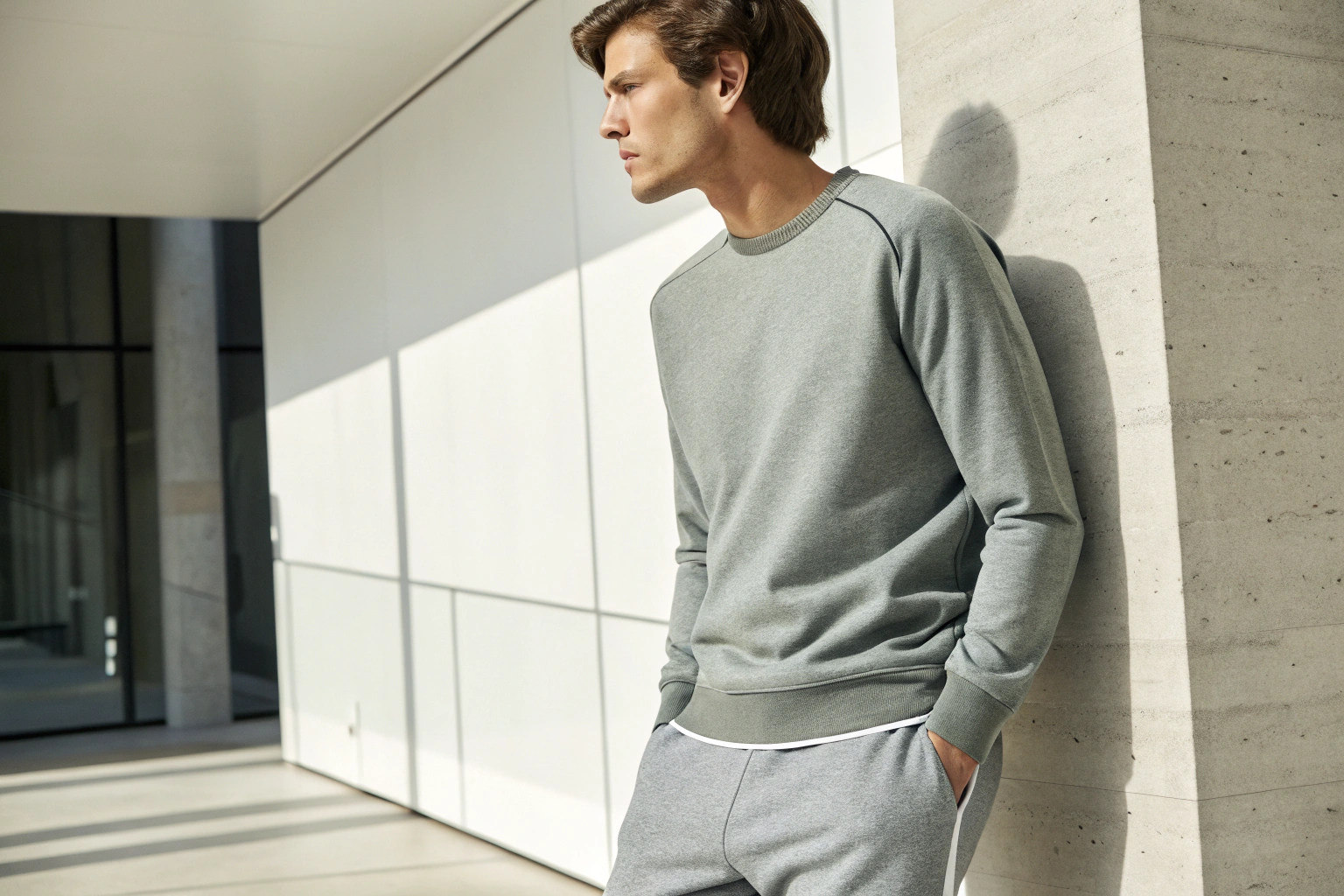
Each region of the garment—from collar to hem—requires calibrated proportions and controlled tolerance during pattern development. Proper fit ensures visual balance, mobility, and long-term durability, especially under repeated washing or layering.
What Is the Ideal Neck Fit for a Crewneck?
The neckline defines the structure of the entire garment, influencing both aesthetics and functionality.
A properly fitted crewneck neckline sits flat against the base of the neck, without pulling or gapping, and maintains its shape after multiple washes.
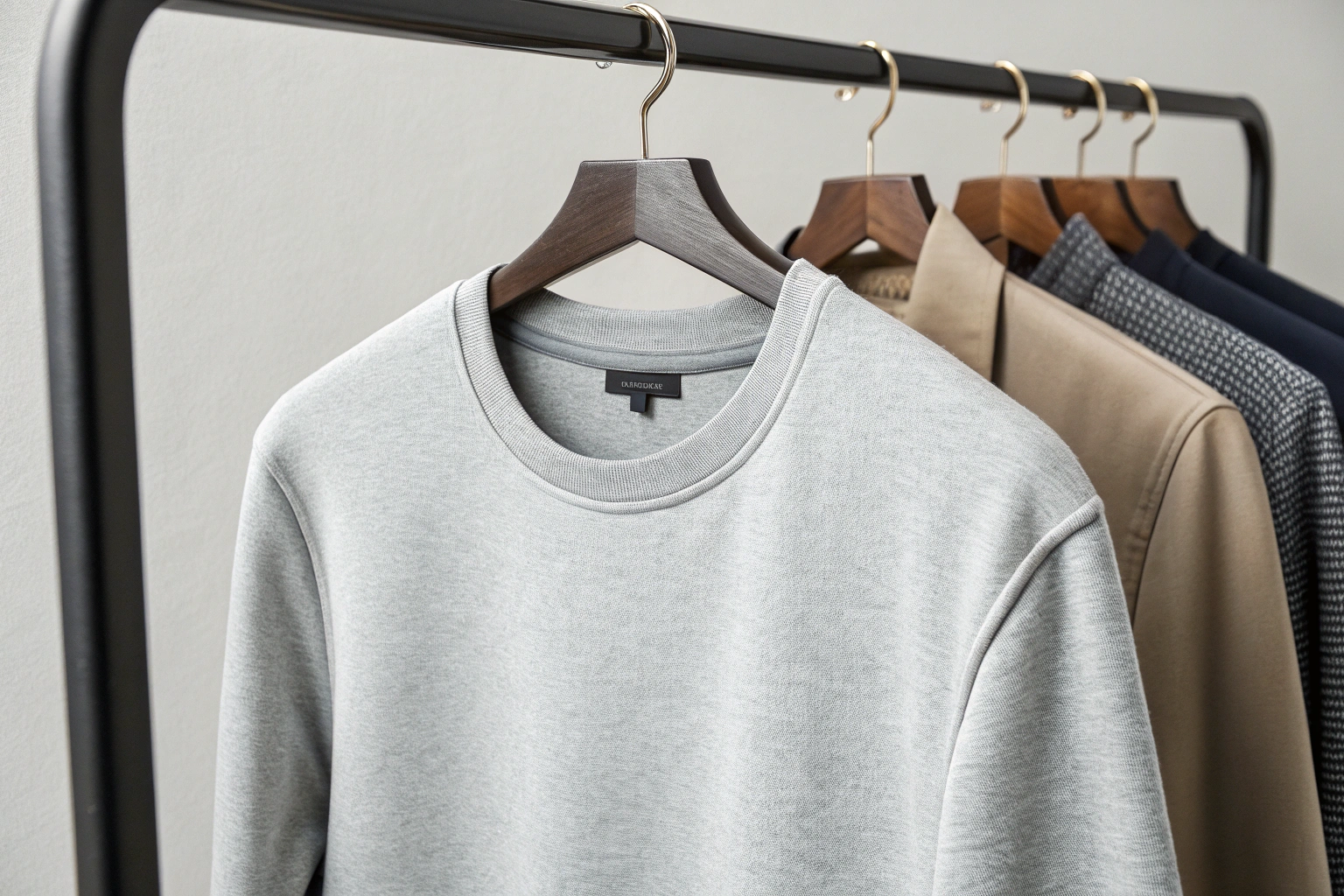
In manufacturing, the neckline is reinforced with rib fabric, often blended with elastane for stretch and recovery. Rib width typically ranges between 1.5–2.5 cm, depending on the garment type (sweatshirt vs. T-shirt). The neck opening must allow easy wearing but recover to a snug position after the garment is on. Stitching methods such as double-needle binding or coverstitching secure the collar and prevent deformation. If the neck is too tight, it restricts movement and increases fabric stress. If too loose, it disrupts the silhouette and causes slippage during wear. Correct neckline circumference is calculated based on average head size and shoulder slope.
How Should the Shoulder and Sleeve Fit Be Structured?
The shoulder seam and sleeve angle play a key role in overall garment shape and mobility.
Crewneck garments should have shoulder seams that align with the shoulder bone, and sleeves that allow full range of motion without sagging or pulling.
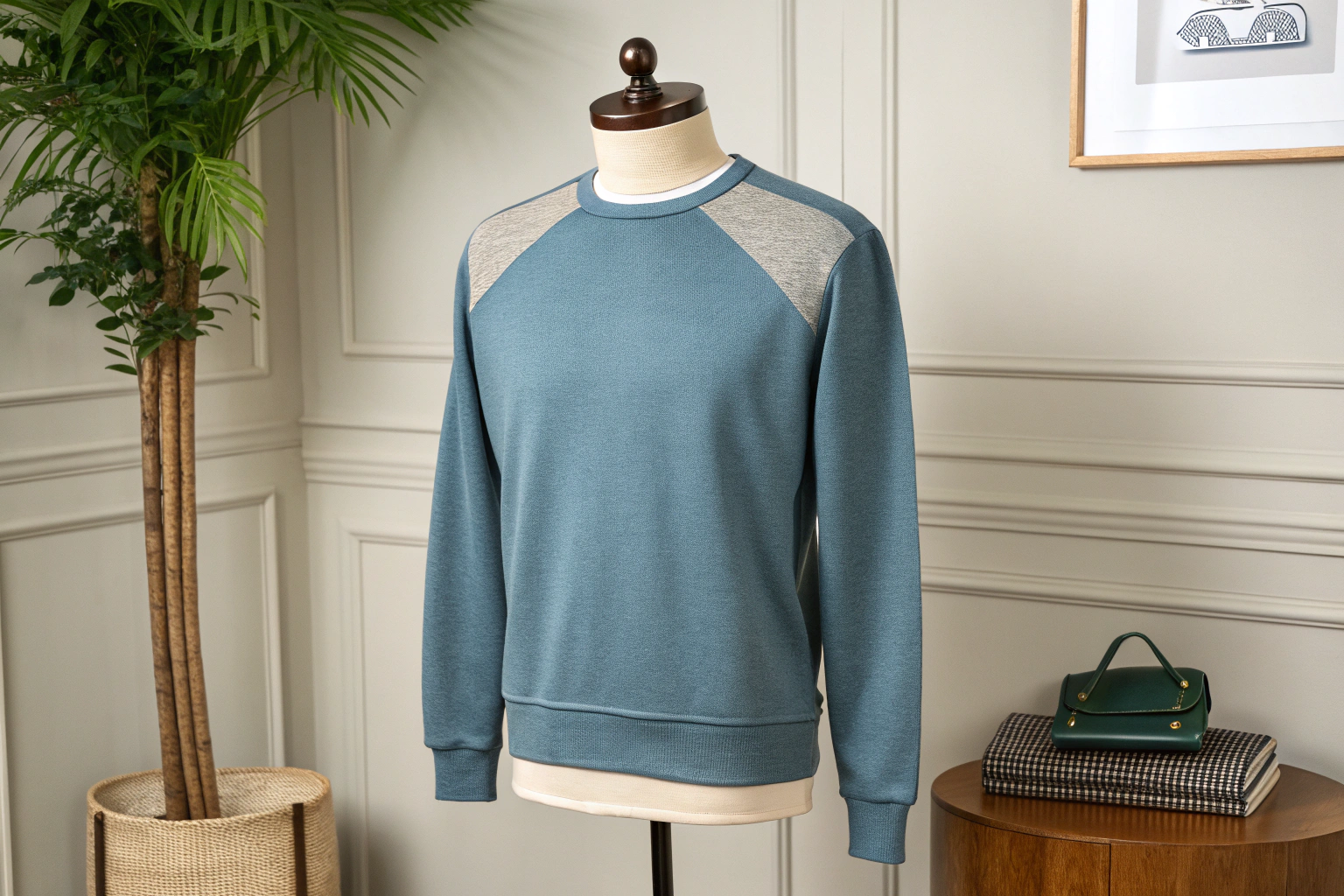
From a construction viewpoint, shoulder fit is achieved by adjusting the shoulder slope and armhole depth. For casualwear, drop shoulders may be used for a relaxed style, while set-in sleeves are preferred for a more tailored look. Sleeve circumference must be proportional to body width to avoid imbalance. In long-sleeve crewnecks like sweatshirts, ribbed cuffs are added to maintain sleeve position. During production, seam alignment is checked to ensure symmetrical positioning and proper sleeve pitch. Flatlock stitching or reinforced shoulder taping enhances durability in these high-movement zones.
What Is the Ideal Body Fit for Crewnecks?
The body of a crewneck should follow a straight or slightly shaped silhouette that adapts to different wear preferences.
The ideal crewneck body fit is relaxed but not oversized, allowing ease through the chest and waist without excessive fabric pooling.
Fit grading is planned based on intended use: slim-fit styles reduce ease by 2–4 cm across the chest, while relaxed styles may increase ease by 6–8 cm. The hem typically falls at or just below the waistline, with rib bands providing structure. In T-shirt versions, side seams remain straight, while sweatshirts may taper slightly to control garment weight. Seam allowances, fabric stretch, and shrinkage expectations are factored into the initial spec sheet. Production samples are tested through fittings and wash tests to confirm dimensional stability.
Factory Control Points for Fit Consistency
Achieving uniform fit across thousands of units requires precision at every production stage.
Fit consistency depends on pattern accuracy, fabric behavior, cutting precision, and sewing quality control at scale.
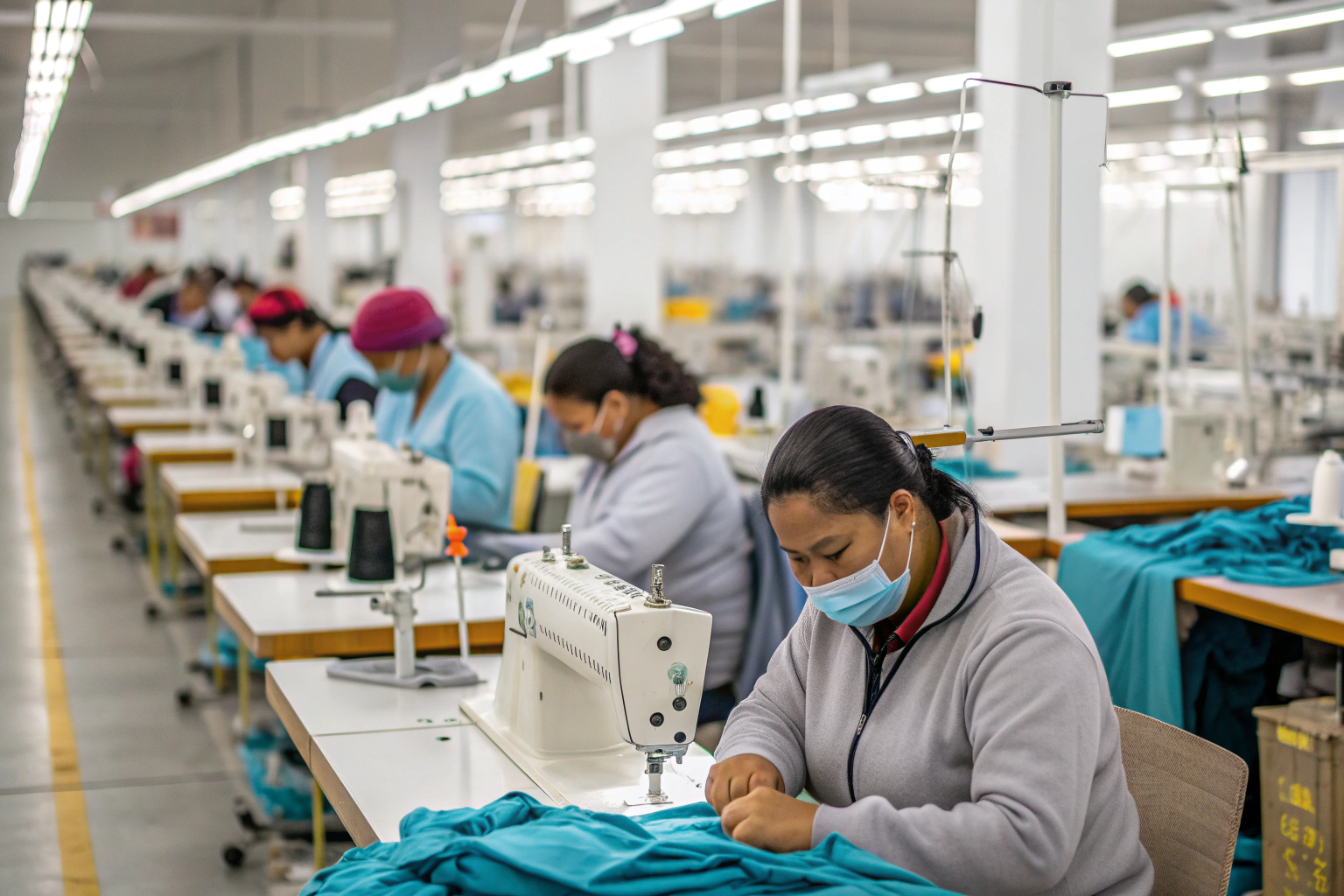
Fit control begins with marker planning during fabric cutting. Misalignment at this stage causes discrepancies across batches. Rib fabric is cut on stretch direction with recovery tests to prevent neck opening distortion. Sewing teams receive operation guides defining seam placement, topstitching lines, and collar tension. After assembly, garments undergo dimensional inspection at key points: chest width, body length, shoulder width, sleeve length, and neckline circumference. Tolerance ranges are set by product category and market standards, often within ±1 cm. Inspection samples are measured post-wash to confirm shrinkage allowances. Consistent fit enhances customer satisfaction and reduces return rates.
Why Fit Matters in Global Market Positioning
Correct fit directly affects garment longevity, comfort, and brand identity across consumer segments.
Well-fitted crewnecks elevate perceived product value and support diverse styling—from minimal basics to premium streetwear and activewear lines.
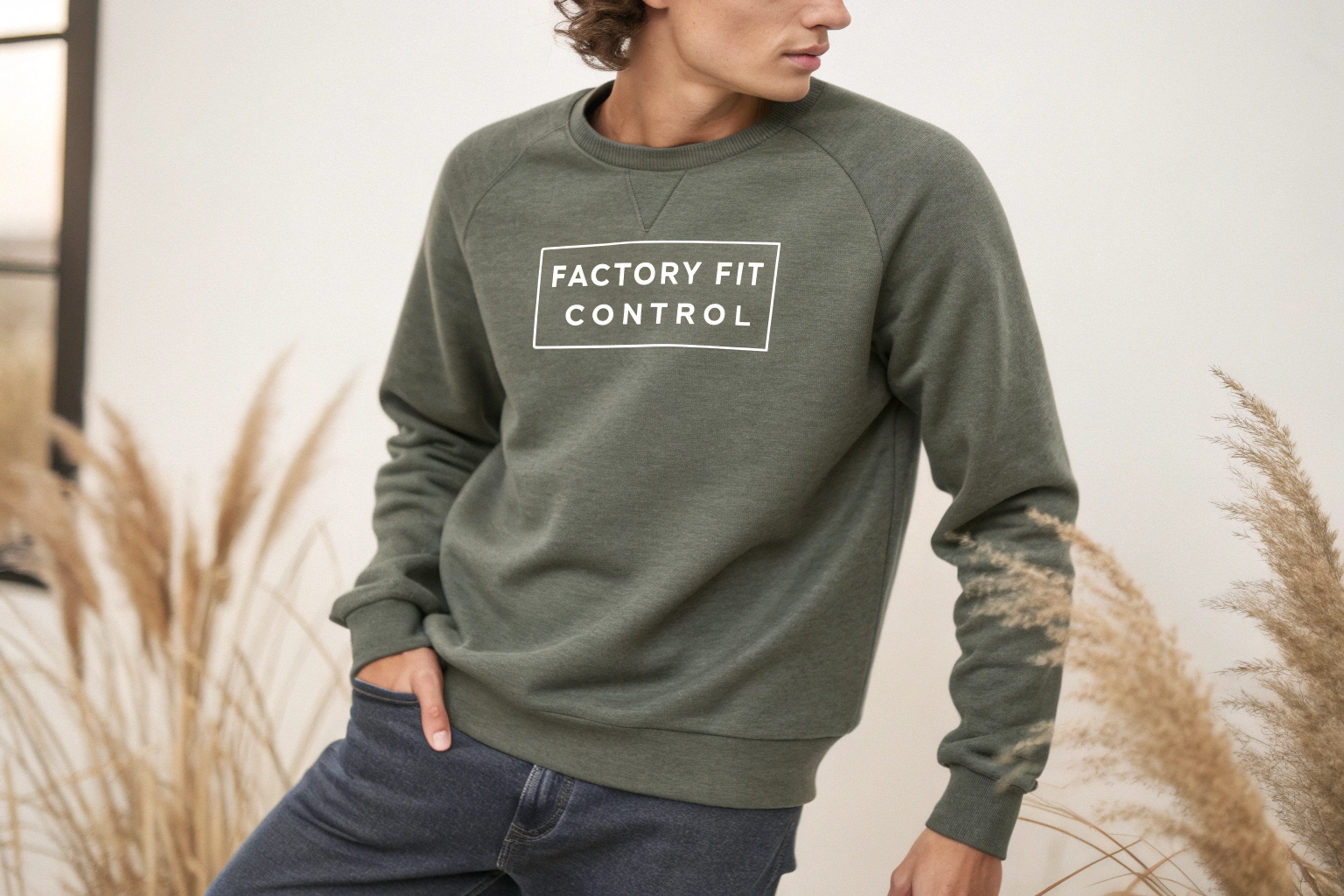
In international markets, consumer expectations vary by region, lifestyle, and climate. Crewneck products are adjusted accordingly—narrower fits in East Asia, relaxed cuts in North America, and hybrid silhouettes in Europe. For brands, maintaining a consistent fit standard across styles and collections is essential to brand loyalty. From a factory perspective, scalable fit solutions depend on tested base patterns, digitized grading, and adaptable production lines. Fit libraries developed through long-term data collection support responsive sizing for different body types. As e-commerce drives growth in global apparel sales, precise and predictable fit has become a non-negotiable requirement for mass production.
Conclusion
A crewneck is designed to fit in a way that balances comfort, movement, and clean appearance. Its neckline should sit securely at the base of the neck, the shoulder seams must align properly, and the body should fall straight without excess tightness or bulk. Achieving this requires collaboration between design, patternmaking, fabric sourcing, and workshop execution. Factories rely on standardized measurement protocols, calibrated cutting systems, and trained sewing teams to maintain fit consistency. Fit impacts customer retention, product returns, and market competitiveness. As such, the fit of a crewneck is not just a styling element—it is a key technical benchmark that reflects the quality and precision of the entire production chain.