
A hoodie factory may look good on paper, but one weak production system can lead to shrinkage, pilling, bad fit, broken trims, and fast customer complaints.
The best hoodie manufacturer is the one that can control fabric feel, fit balance, wash performance, stitching strength, color stability, MOQ flexibility, and lead time consistency across sampling and bulk production.
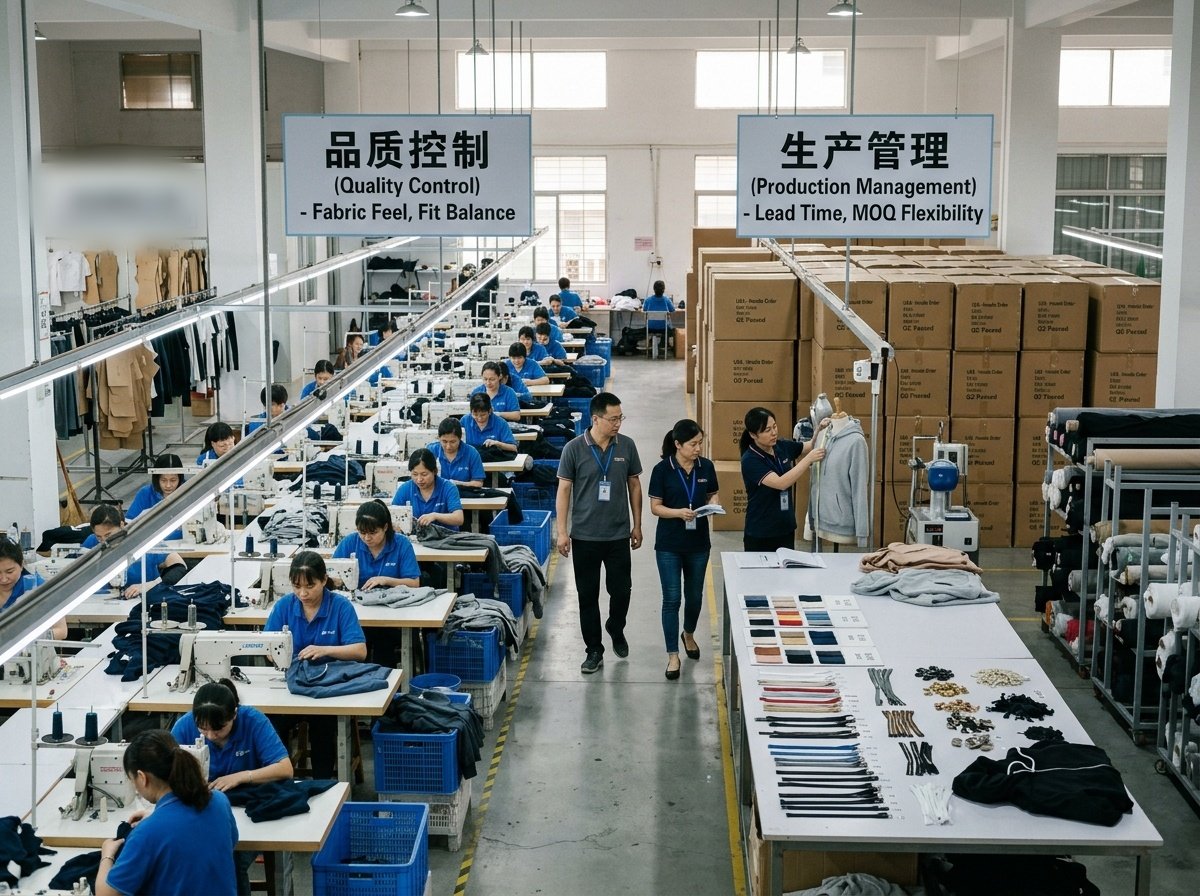
Choosing a hoodie manufacturer has become more difficult because the market is full of factories that can make a sample look acceptable but cannot keep the same standard in bulk. Real market feedback shows the same problems again and again. Hoodies shrink after one wash. Sleeves come out too short. Cuffs stretch out. Fabric pills early. Fleece sheds everywhere. Zippers fail in weeks. Product photos promise a thick, warm hoodie, but the real garment feels thin and cheap. These issues are not random. Most of them come from factory-side decisions in fabric, pattern, sewing, finishing, and quality control. That is why the right choice should be based on production facts, not only price or sales language.
What Defines a Good Hoodie Manufacturer for Growing Apparel Brands?
A good hoodie manufacturer is not only a factory that can sew garments. It is a supplier that can help keep product quality stable as order volume grows.
A strong hoodie manufacturer is defined by stable sizing, honest fabric quality, low defect risk, repeatable bulk consistency, clear communication, and the ability to support growth without quality drop.
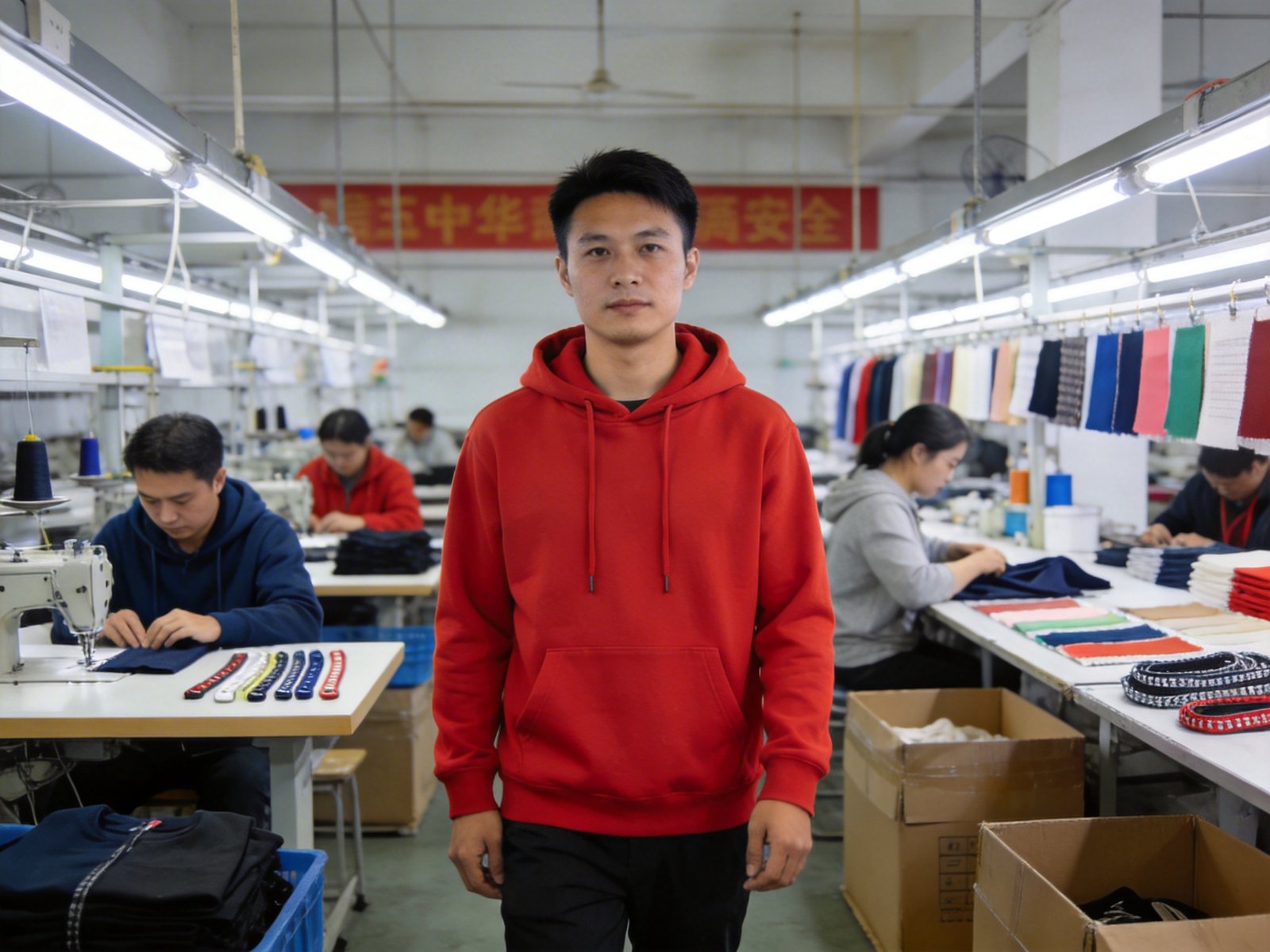
For growing apparel brands, the risk is rarely just late production. The bigger risk is unstable product experience. A brand may receive a first sample that feels soft and looks clean, but bulk orders may arrive with rougher fabric, weaker cuffs, smaller measurements, or lower-grade trims. This is where a good manufacturer stands apart from an average one. The better factory can repeat the same standard across more units, more colors, and more reorder cycles. That matters because hoodie customers notice comfort, fit, warmth, softness, and shape very quickly.
A good manufacturer also understands product positioning. A heavyweight winter hoodie needs different fabric logic than a lightweight layering hoodie. An oversized streetwear fit needs different grading than a regular fit basic style. A factory that understands these differences can prevent common market complaints before they happen. This is especially important for brands trying to build repeat sales, because one bad hoodie program can damage trust fast.
| What strong factories do | What weak factories often do |
|---|---|
| Keep fit stable across sizes | Let measurements drift in bulk |
| Match sample and bulk quality | Swap to lower-grade bulk materials |
| Test wash performance | Assume the fabric will be fine |
| Use clear production standards | Depend on verbal instructions |
| Control trims and finishing | Focus only on appearance at packing |
Why Is Fabric Quality the First Factor to Compare?
Fabric is the first thing customers feel, and it is also the source of many hoodie complaints.
The best hoodie manufacturers choose fabric based on season, hand feel, durability, and wash performance, not only on cost or surface appearance.
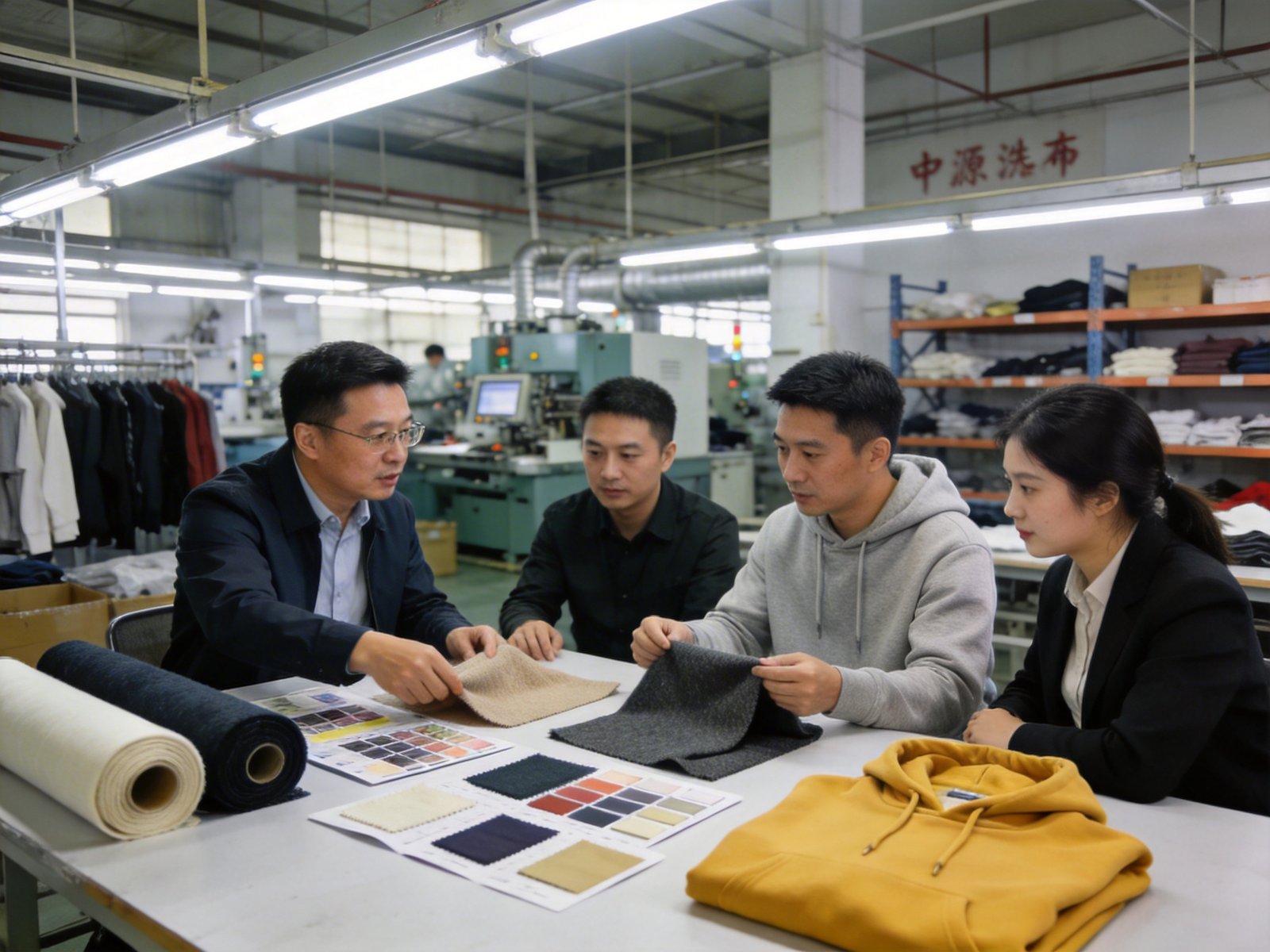
Market feedback makes this very clear. Many negative reviews describe hoodies as thin, cheap, rough, itchy, plastic-like, or worn out after one wash. Some products are described as “paper thin.” Some feel like an old towel. Some are sold as warm hoodies but arrive closer to a jersey top with a hood. This shows that poor fabric choice is one of the fastest ways to lose customer trust.
A strong hoodie manufacturer should explain fabric weight, composition, brushing method, fleece density, and expected wash behavior. Cotton-rich fleece can feel soft and premium, but shrinkage must be controlled. Polyester blends can improve durability, but the surface and skin feel must still be comfortable. French terry works well for lighter programs, while brushed fleece suits colder-season products better. The best factories do not hide behind composition labels alone. They connect fabric choice to the actual use of the garment.
Why Does Fit Control Matter More Than Many Buyers Expect?
Fit is one of the most visible signs of factory competence.
A strong hoodie manufacturer should be able to control body length, sleeve length, hood shape, chest balance, arm movement, and grading logic across all sizes.
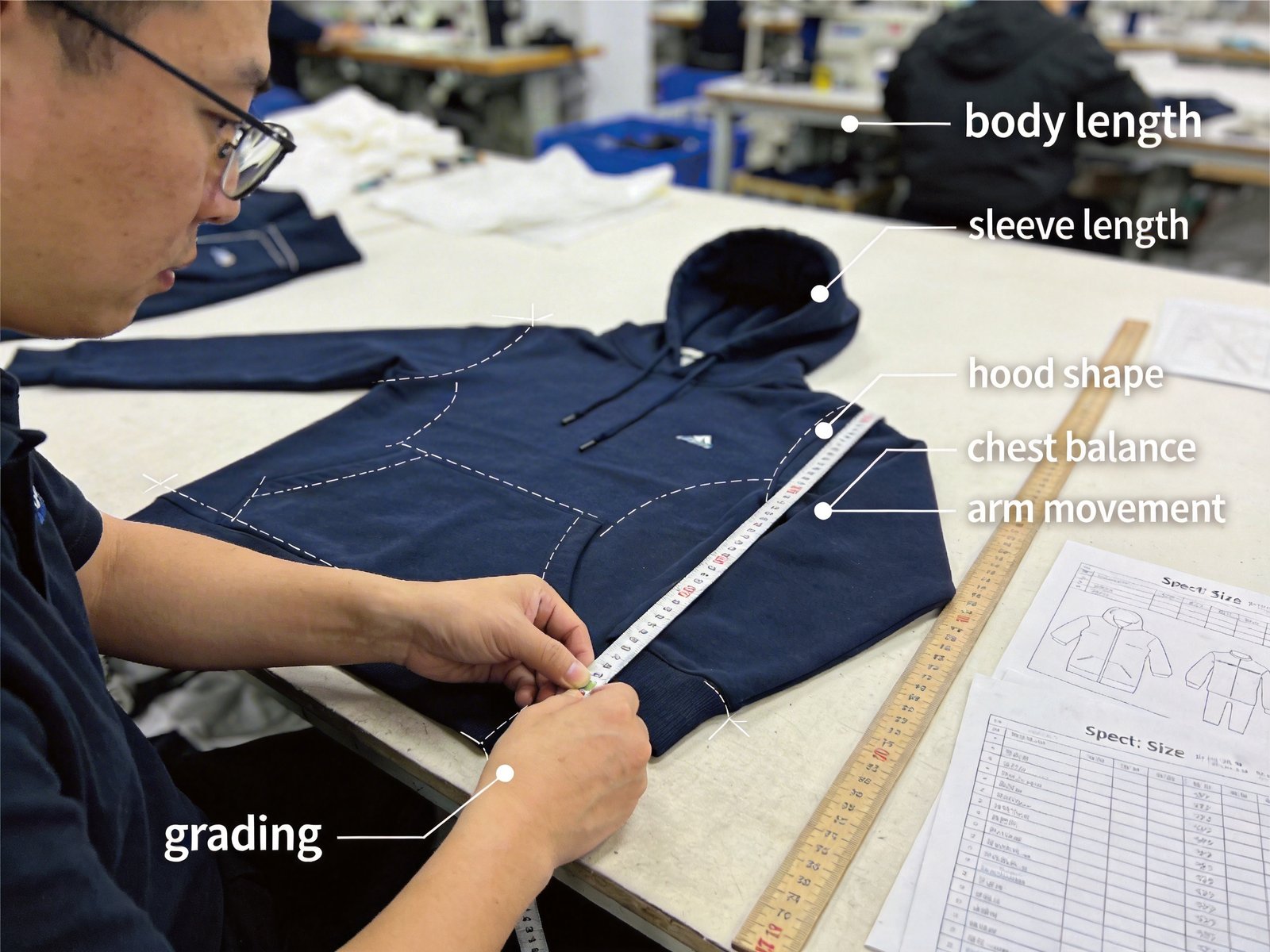
Many real buyer complaints are highly specific. The hoodie body is fine but the sleeves are too short. The body is too short. The arms feel narrow at the elbow. The hood is too small to wear up. The neck opening is tight. Some hoodies are so long they look like dresses. These are not simple size-label problems. These are pattern and grading problems.
A good factory should have tested fit blocks for regular, relaxed, and oversized programs. Oversized does not mean only increasing width. Sleeve proportion, shoulder drop, hood volume, body length, and hem balance all need to work together. A factory that cannot discuss fit in these terms is often not strong enough for custom hoodie development. Good fit creates repeat wear. Bad fit creates returns.
How Important Is Wash Performance in Hoodie Manufacturing?
Wash performance is one of the most important factors because many hoodie complaints begin after the first wash.
The best hoodie manufacturers test shrinkage, softness retention, pilling, colorfastness, and shape retention before bulk production begins.
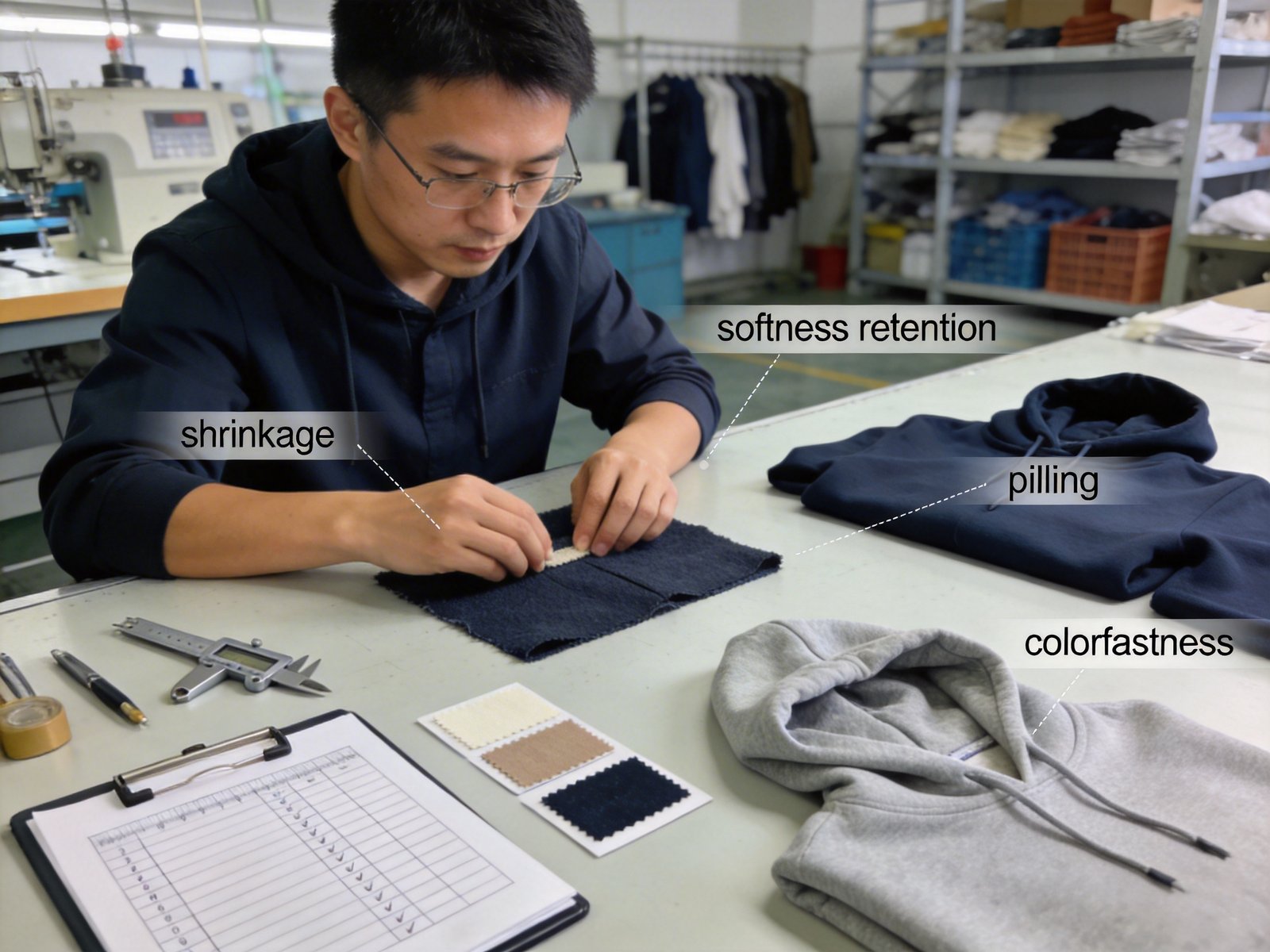
The insight table shows repeated complaints about hoodies that shrink almost a full size, fade after one wash, lose softness, become itchy, or start pilling very early. Some buyers even complain that the hoodie feels ruined after one cycle. This means wash durability is not a minor technical detail. It is a core buying factor.
Strong manufacturers build wash testing into development. They do not wait for the market to discover problems. They pre-shrink fabric where needed. They check color stability. They compare hand feel before and after washing. They monitor rib recovery and seam performance. This is especially important for fleece hoodies, because softness loss, lint shedding, and heat damage can easily destroy the comfort value of the product.
The Most Important Criteria for Comparing Hoodie Factories
Comparing hoodie factories should go beyond quote sheets and sample photos.
The most important criteria are fabric quality, fit control, wash performance, anti-pilling ability, sewing strength, trim quality, MOQ flexibility, lead time stability, communication quality, sampling accuracy, and bulk consistency.
A useful factory comparison should look at both product quality and execution ability. Product quality includes the fabric, fit, trim, and stitching. Execution ability includes sampling speed, correction handling, MOQ flexibility, delivery reliability, and consistency across repeat orders. A factory may offer a competitive quote, but if the cuff rib loses shape, the zipper fails, or the bulk size run becomes inconsistent, that low price becomes expensive very quickly.
This is why the best comparison method is structured, not emotional. Instead of asking whether a factory is good, compare how each one performs across the same key areas. This gives a more realistic picture of long-term suitability.
| Factor | What to compare |
|---|---|
| Fabric | GSM, blend, softness, season use, wash feel |
| Fit | Length balance, grading, hood shape, movement |
| Wash performance | Shrinkage, pilling, color stability, softness retention |
| Sewing | Seam strength, reinforcement, finishing quality |
| Trims | Zipper, drawcord, eyelet, rib recovery |
| MOQ | Entry level flexibility and color/style options |
| Lead time | Sample speed, bulk schedule, reorder stability |
Why Do Sewing and Trim Quality Decide Long-Term Value?
A hoodie is judged not only by fabric but also by how well it holds together over time.
The best hoodie manufacturers use stronger seam control, better reinforcement, reliable rib quality, and trim choices that match the product’s price and wear level.
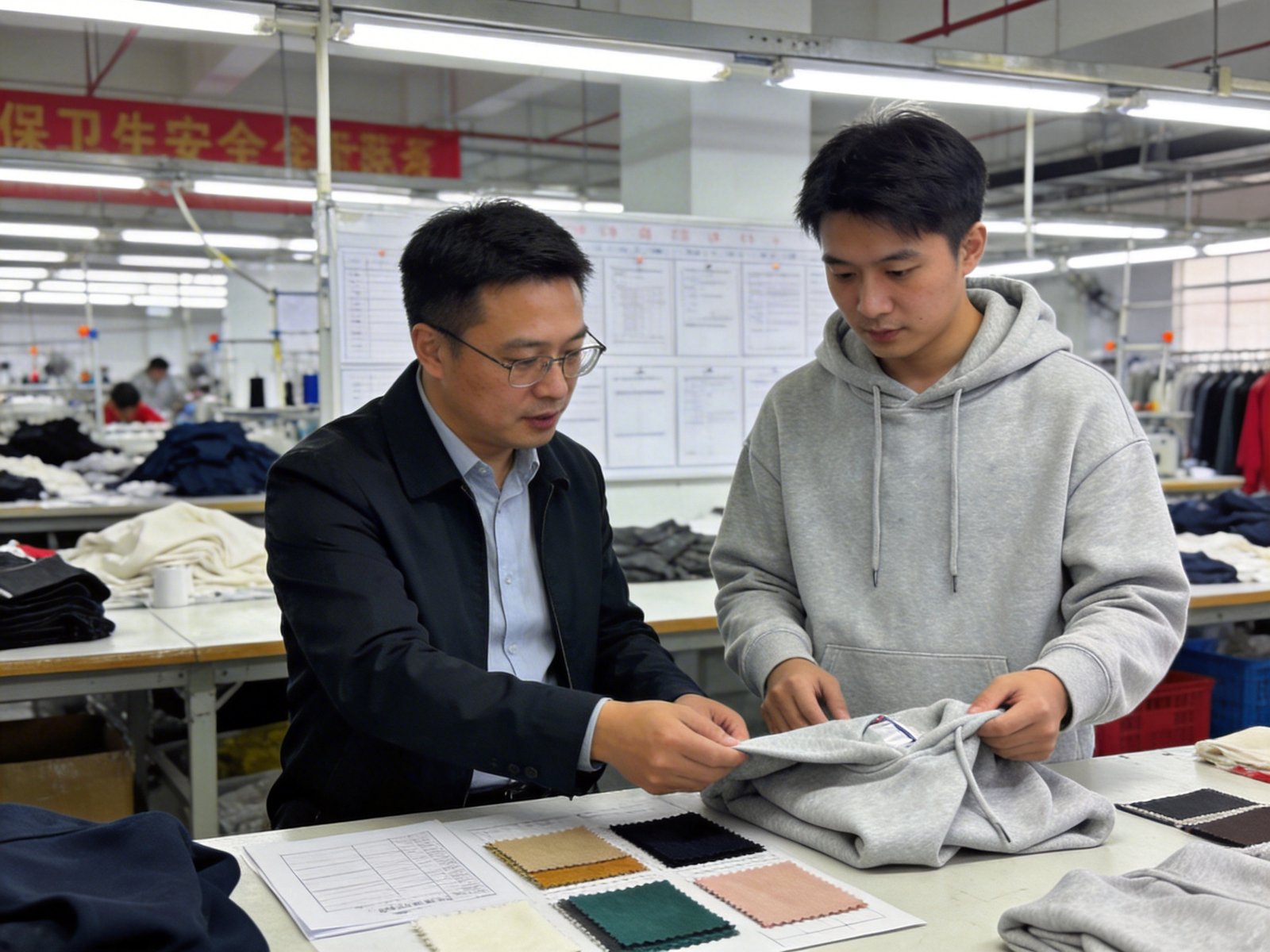
Many negative reviews point to ripped seams, loose cuffs, broken zippers, poor stitching, and weak pocket construction. These are all clear signals of weak production control. A hoodie may feel soft at first, but if the cuff seam splits or the zipper breaks after a short period, the full product value collapses.
Better factories pay attention to stitch density, reinforcement at stress areas, rib stability, zipper grade, and finishing cleanliness. They do not treat trims like secondary details. They understand that cuffs, hems, pockets, zippers, and drawcords are part of the product experience. In many reviews, buyers praise hoodies that feel durable, hold their shape, and still look good after repeated wear. That kind of feedback usually comes from better construction, not just better marketing.
How Should MOQ Be Evaluated Without Hurting Product Quality?
MOQ matters because it affects how easily a brand can launch, test, and reorder.
The best hoodie manufacturer is not always the one with the lowest MOQ, but the one that offers workable quantities without cutting corners on material or construction.
For growing brands, MOQ can shape the entire sourcing decision. A factory with an extremely high MOQ may create too much inventory risk. A factory with a very low MOQ may still not be the right choice if it uses lower-grade fabric, unstable trims, or rushed production methods to make the order work. MOQ should be judged together with style complexity, fabric availability, color count, printing method, and trim customization.
A strong manufacturer will explain why the MOQ exists and where flexibility is possible. For example, the factory may allow lower quantities when using stock fleece colors, shared rib, standard drawcords, or existing fit blocks. That kind of flexibility is more useful than a low MOQ promise that leads to weak product quality.
How to Shortlist Hoodie Manufacturers Based on Quality MOQ and Lead Time
A strong shortlist should balance product quality, order flexibility, and delivery reliability.
The best way to shortlist hoodie manufacturers is to compare fabric and fit quality first, then check MOQ structure, sample accuracy, lead time stability, and ability to repeat the same standard in bulk.
111
Shortlisting should start with the product, not with the sales pitch. First, remove factories that cannot explain fabric performance, shrinkage control, or fit logic clearly. Then review sampling results. Does the sample match the requested shape? Does the fabric feel appropriate for the target market? Does the sewing look clean? Are trims acceptable? After that, evaluate MOQ and lead time. A useful partner should offer a workable development path, not just a one-time sample.
Lead time should also be checked carefully. Fast sampling means little if bulk orders are always late or inconsistent. A good factory should be able to explain development timing, lab dip timing if needed, sample revision timing, bulk production timing, and reorder timing. Reliable lead time matters because delays often damage product launches just as much as quality issues do.
What Red Flags Should Eliminate a Hoodie Factory Quickly?
Some factory warning signs appear early and should not be ignored.
The biggest red flags are vague material claims, no test data, unstable sizing, over-promised lead times, unclear MOQ logic, poor sample execution, and product photos that feel far better than the real garment.
Several market complaints in the insight table point to the same red flags. The hoodie received is thinner than expected. The product looks different from the photo. The size is far smaller than normal. The material claim does not match the real hand feel. These problems usually come from weak development discipline or misleading product presentation.
A factory should also raise concern if communication stays vague when discussing shrinkage, pilling, colorfastness, or construction standards. Good factories can answer these points directly. Weak factories often shift the conversation back to price. That is a risk, especially for brands that need repeatable quality.
Which 11 Factors Matter Most When Choosing the Best Hoodie Manufacturer?
The best decision comes from looking at the full picture, not one single advantage.
The 11 key factors are fabric quality, fit control, wash performance, anti-pilling ability, sewing strength, trim quality, MOQ flexibility, lead time reliability, sampling accuracy, communication clarity, and bulk consistency.
These 11 factors work together. A factory may be strong in price but weak in fit. Another may have good fabric but unstable lead times. Another may offer low MOQ but weak bulk control. The right manufacturer is the one with the strongest overall balance for the target product and growth stage.
A strong hoodie program is built on product honesty and production discipline. The factory should be able to make a hoodie that feels right on day one and still performs after repeated wear and washing. That is what separates a good supplier from the best one.
Conclusion
The best hoodie manufacturer is defined by product control, not promises. Factories that manage fit, fabric, washing, trims, MOQ, and bulk consistency well are the ones most likely to support long-term brand growth successfully.