
A custom hoodie can look easy on paper, but one weak step in development can lead to delays, bad fit, unstable quality, and costly bulk mistakes.
Hoodie manufacturing moves from concept to bulk production through clear stages: tech pack review, fabric selection, sampling, fit correction, testing, pre-production approval, bulk cutting, sewing, finishing, inspection, and shipment coordination.
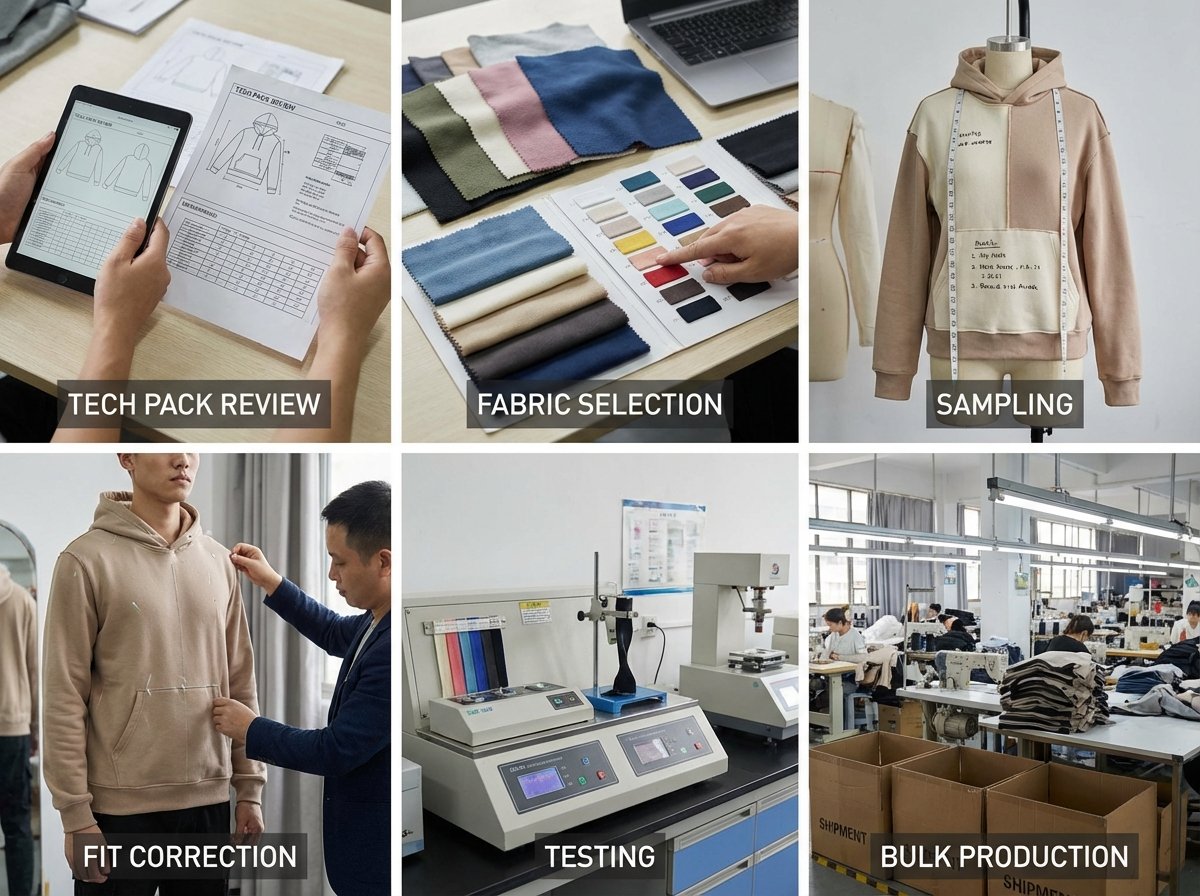
Custom hoodie development is not only about sewing fabric into shape. It is a full product process. Every stage affects the final result. If the tech pack is vague, the sample may be wrong. If the sample is rushed, the fit may fail. If bulk production starts too early, the final order may show shrinkage, pilling, loose cuffs, broken seams, or wrong measurements. That is why buyers need to understand how hoodie manufacturing really works from the first file to the final carton.
What Starts the Hoodie Manufacturing Process?
A custom hoodie project starts with product definition, not with fabric cutting.
The first step is a clear tech pack that shows measurements, fabric details, trims, artwork, label placement, sewing details, and packing requirements.
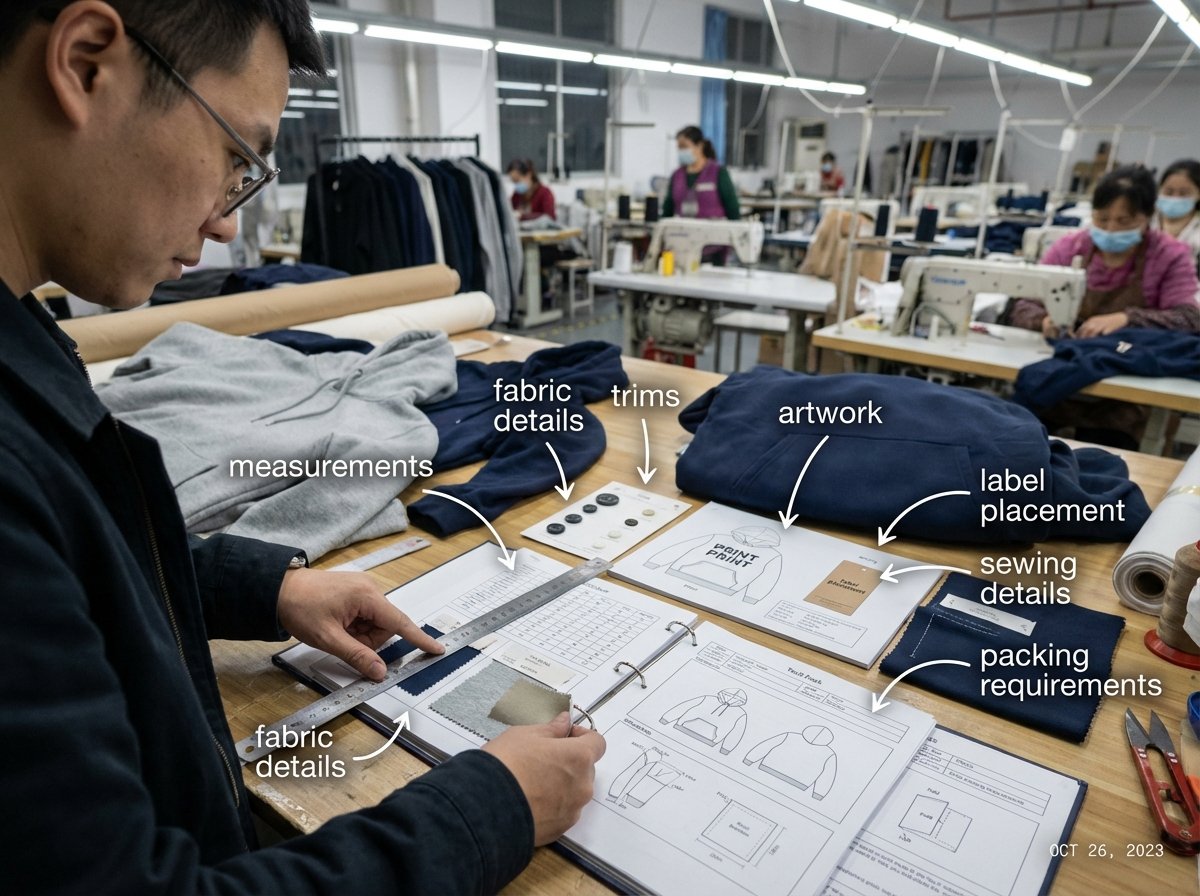
A strong start reduces confusion later. The tech pack gives the factory the first full picture of the hoodie. It should include flat sketches, size chart, tolerance, fabric composition, GSM target, color references, rib details, hood structure, pocket construction, cuff and hem details, drawcord instructions, zipper specs if needed, print or embroidery placement, wash label content, and packing method. When this file is weak, factories are forced to guess. Guessing creates rework, delay, and inconsistency.
At this stage, buyers should also define the market goal of the hoodie. A winter heavyweight fleece hoodie needs a very different fabric and structure than a lightweight layering hoodie. An oversized streetwear style also needs a different fit block than a regular everyday fit. Clear positioning at the beginning helps the whole process move faster and with fewer changes.
| Early development item | Why it matters |
|---|---|
| Tech pack | Gives the factory the full product blueprint |
| Size chart | Prevents fit confusion and grading errors |
| Fabric target | Sets thickness, feel, and season use |
| Trim details | Controls zipper, cord, eyelet, and label quality |
| Artwork file | Prevents wrong print size or placement |
How Is Fabric Selected for a Custom Hoodie?
Fabric selection decides how the hoodie will feel, fit, wear, and wash.
The right hoodie fabric should match the target market in weight, softness, stretch, durability, and wash performance before sampling begins.
This is one of the most important steps in the whole process. Many hoodie problems start here. If the fabric is too thin, the garment may feel cheap. If the blend is wrong, the surface may pill too quickly. If the fleece is unstable, the hoodie may lose softness after washing. If shrinkage is not controlled, the final garment may become much smaller after the first wash.
Common hoodie fabrics include cotton-poly fleece, French terry, cotton-rich brushed fleece, and stretch blends. Each option has a different result. Brushed fleece gives a warmer and softer inside. French terry gives a cleaner, lighter structure. Polyester helps durability and drying speed. Cotton often improves softness and natural feel. The correct choice depends on product positioning, price level, and target season.
Factories should also check fabric test points before moving forward. These include GSM stability, shrinkage, pilling resistance, colorfastness, and hand feel after washing. Good hoodie development does not rely on fabric claims alone. It relies on tested fabric performance.
How Does Sampling Turn a Hoodie Idea into a Real Product?
Sampling is the stage where design becomes a physical garment.
A hoodie sample helps confirm shape, fit, fabric behavior, trim quality, and construction before bulk production is approved.
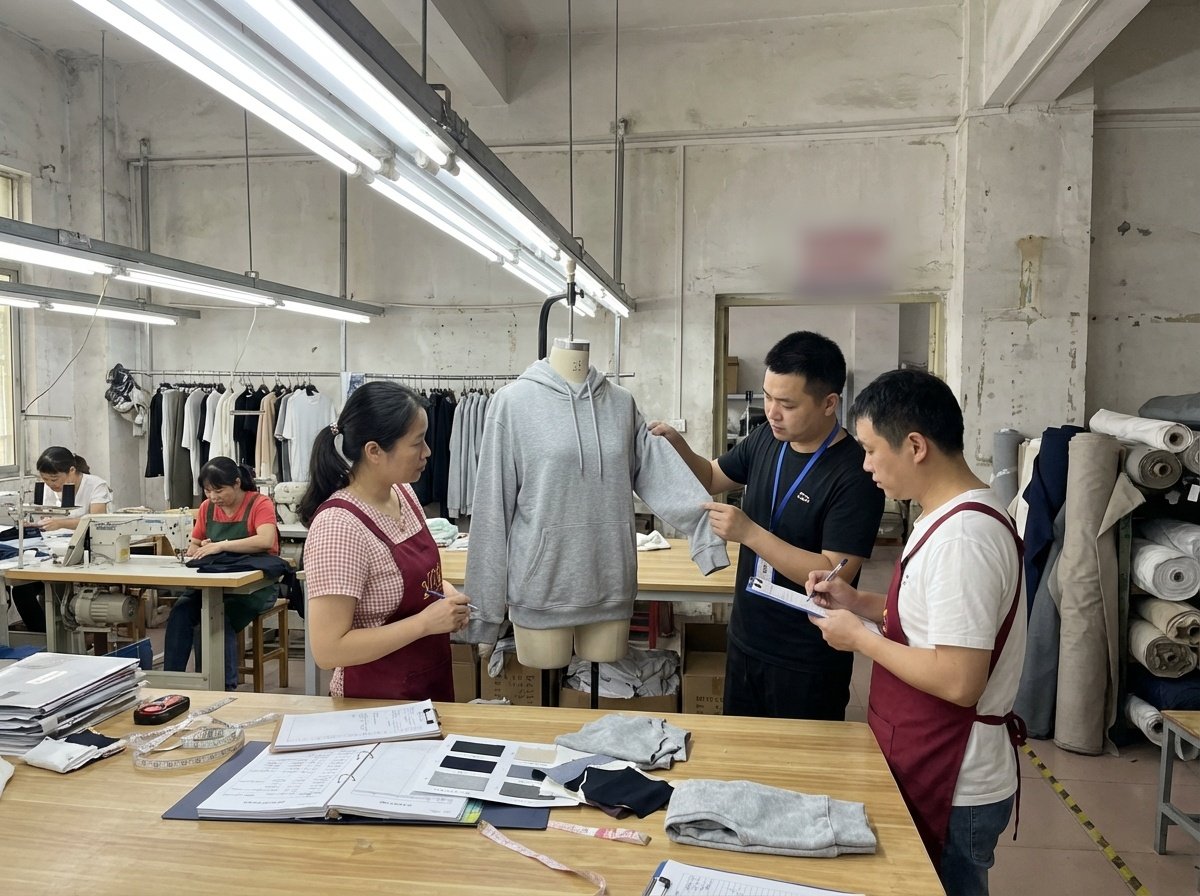
The first sample is often not perfect. That is normal. It is built to reveal issues. A proto sample may show that the hood is too small, the sleeve is too short, the rib is too loose, or the body shape looks unbalanced. A fit sample may show that the chest is good but the armhole is too tight. A revised sample may fix shape but still need better pocket placement or cleaner topstitching.
This stage should be treated as problem-solving, not just approval. Hoodie buyers should review fabric hand feel, drape, weight, neck opening, hood depth, body length, sleeve length, cuff tension, and construction details. If the hoodie includes custom printing, embroidery, washed effects, or special trims, those details should also be checked at sample stage.
Sampling usually moves through several rounds when the product is custom. Fast approval without careful review may save a few days, but it often creates expensive bulk issues later.
| Sample type | Main purpose |
|---|---|
| Proto sample | Checks early shape and construction |
| Fit sample | Reviews measurements and body balance |
| Salesman sample | Shows final visual direction |
| Pre-production sample | Confirms bulk standard before cutting starts |
How Custom Hoodie Development Moves from Sampling to Mass Production
A hoodie should only move to bulk production after sample comments are closed and final standards are locked.
The transition from sample to bulk requires confirmed measurements, approved fabric, trim matching, test results, artwork approval, and a signed pre-production standard.
This is the stage where many avoidable mistakes happen. A sample may look good, but the bulk order can still fail if development comments are not transferred correctly into production. For example, the sample may use one rib quality while the bulk order uses another. The approved fabric may be soft, but the actual production lot may feel different. The print size may change. The sleeve length may drift if grading is not controlled. That is why a pre-production review is necessary.
A good factory prepares a pre-production meeting before cutting starts. This meeting checks approved sample, fabric lot, color standard, trim list, sewing construction, packing method, labels, and measurement chart. If there are special points like brushed fleece, garment wash, oversized fit, or embroidery placement, those points should be highlighted clearly. This stage helps align the sample room, production floor, QC team, and packing team.
Mass production should begin only when all key standards are frozen. Once fabric is cut in bulk, changes become much more costly.
What Are the Key Production Stages Buyers Should Understand Before Ordering Custom Hoodies?
Bulk production is not one single step. It is a chain of technical stages.
The main production stages are fabric inspection, pattern grading, marker planning, cutting, panel printing or embroidery, sewing, finishing, pressing, measurement check, final inspection, and packing.
Each stage matters. Fabric inspection checks shade, flaws, and width. Pattern grading creates the full size range. Marker planning controls fabric use efficiency. Cutting must stay accurate so pieces match. If the hoodie uses screen print, puff print, embroidery, or patches, those details are often added before final assembly. Sewing then joins the body, sleeves, hood, pocket, rib, and trims. After sewing, the hoodie may go through thread cleaning, pressing, lint removal, measurement check, metal detection if required, and final packing.
Understanding this chain helps buyers ask better questions. If a factory cannot explain how size tolerance is checked after sewing, measurement problems may appear in the order. If there is no discussion about rib recovery, loose cuffs may become a real issue later. If shade control is weak, color mismatch may happen between panels or cartons. Strong production is built through stage-by-stage control.
What Quality Checks Matter Most Before Bulk Hoodie Approval?
Quality control should start before bulk sewing, not only at the end of packing.
The most important checks include fabric testing, fit approval, shrinkage review, pilling review, seam strength, zipper function, rib recovery, measurement tolerance, and final visual consistency.
Hoodies are judged very quickly by end buyers. Softness is noticed at once. Fit is noticed at once. Hood shape, cuff tension, stitching quality, and overall thickness are also easy to judge. That is why hoodie quality control needs both technical checking and wear-focused checking.
A strong control plan often includes fabric testing before cutting, size measurement during sewing, in-line inspection during assembly, and final random inspection before shipment. Wash testing is also important, especially for custom fleece hoodies. This helps confirm whether the product will shrink, twist, lose color, or become rough after washing. For zip-up hoodies, zipper durability also matters. For brushed fleece, lint shedding should be checked. For oversized styles, body and sleeve balance must stay correct in every size.
Quality should be judged against the approved sample and approved spec, not against assumptions made during production.
What Should Buyers Watch Closely During Bulk Production?
Bulk production should be monitored for consistency, not only speed.
The biggest bulk risks are size drift, fabric shade variation, poor stitching, trim substitution, loose rib quality, and finishing that does not match the approved sample.
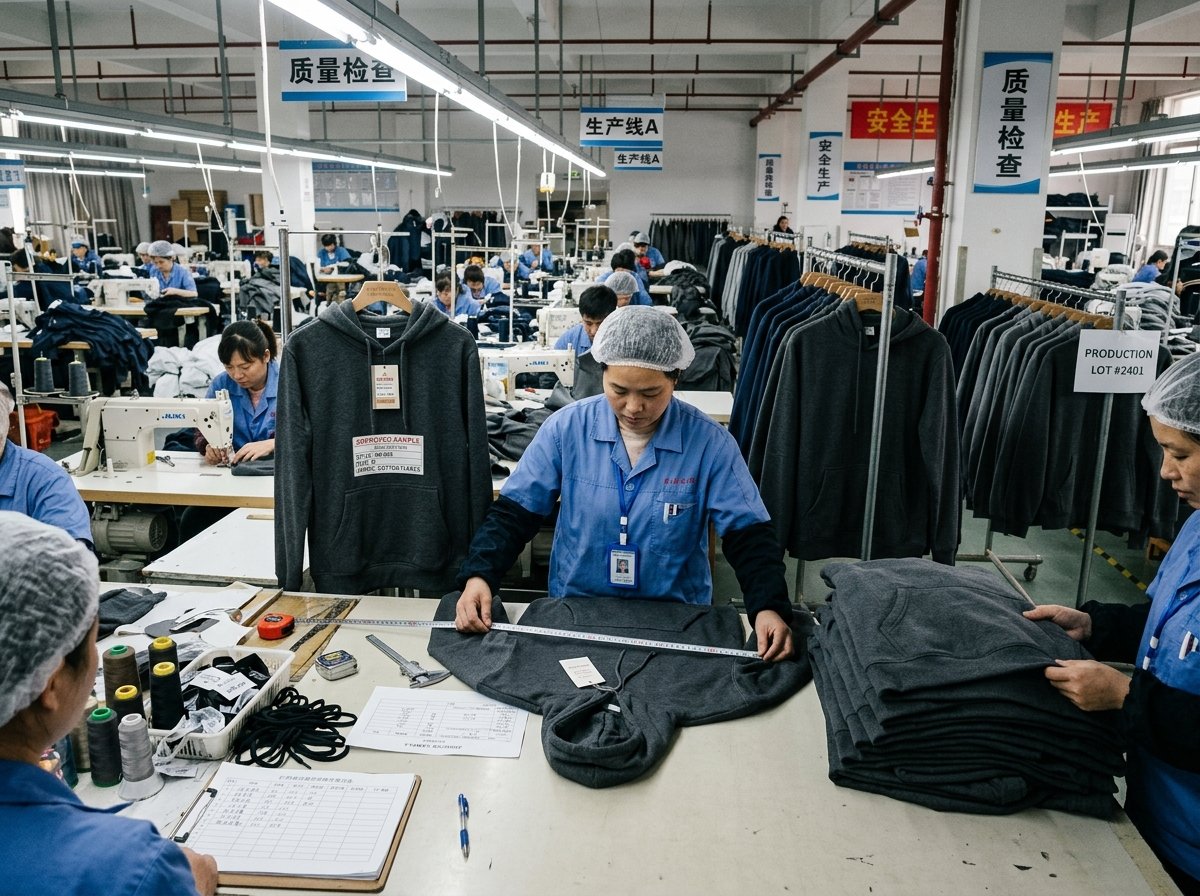
This is where production discipline becomes visible. Some factories make a strong sample but struggle to repeat it at scale. That is why buyers should care about process control during the order, not only before it. Key points include measurement checks during sewing, trim matching against approved swatches, fabric lot control, and in-line inspections at major assembly points.
If the hoodie has embroidery, printed artwork, or washed color effects, those details need close monitoring because visual inconsistency can happen quickly. If the style uses oversized fit, grading must be watched carefully so smaller and larger sizes keep the same design intention. For fleece hoodies, brushing and finishing should also stay stable from lot to lot.
Conclusion
A custom hoodie moves from tech pack to bulk production through controlled stages, not guesswork. Clear specs, strong sampling, tested fabric, careful approvals, and disciplined bulk control lead to better fit, better quality, and smoother production.