
A hoodie can look like a simple product, but the final cost can rise fast when fabric, fit, trims, printing, and MOQ are not planned well.
Custom hoodie manufacturing cost in 2025 usually depends on fabric weight, fiber blend, trim quality, print method, labor complexity, packaging, order quantity, and how much testing and sampling are needed before bulk production.
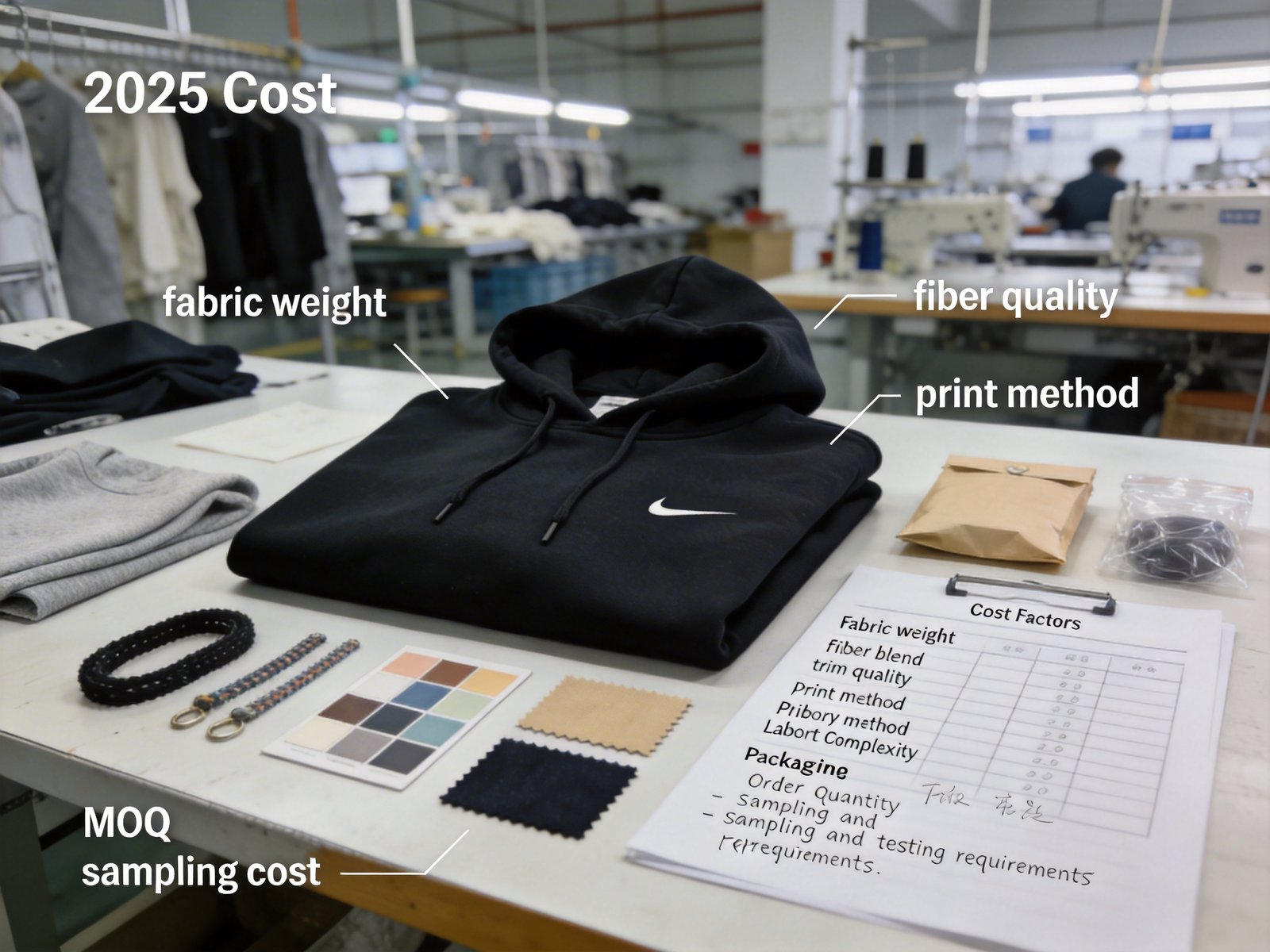
Hoodie pricing is one of the most misunderstood parts of apparel sourcing. Many buyers start with a target price, then compare quotes, then assume the lowest number is the best option. That often leads to problems later. A hoodie that looks cheaper on the quote sheet may become more expensive after quality claims, rework, returns, or poor sell-through. Market feedback from Reddit, Amazon, Trustpilot, YouTube, Instagram, and review platforms shows the same pattern again and again. Thin fabric, early pilling, shrinkage, loose cuffs, broken zippers, fading, bad sizing, and bulk inconsistency are common complaints. Those issues do not appear by accident. In many cases, they begin with cost-cutting decisions in fabric, trims, finishing, and process control.
That is why hoodie cost should be understood as a structure, not just a single number. A good cost analysis looks at what is inside the garment, how the garment is made, how stable the quality needs to be, and what level of customization is required. A lightweight pullover with stock fabric and simple printing will not cost the same as a heavyweight brushed fleece hoodie with custom rib, embroidery, garment dye, branded labels, and retail-ready packaging. The gap can be significant even when both products are called “hoodies.”
What Factors Affect Custom Hoodie Manufacturing Cost?
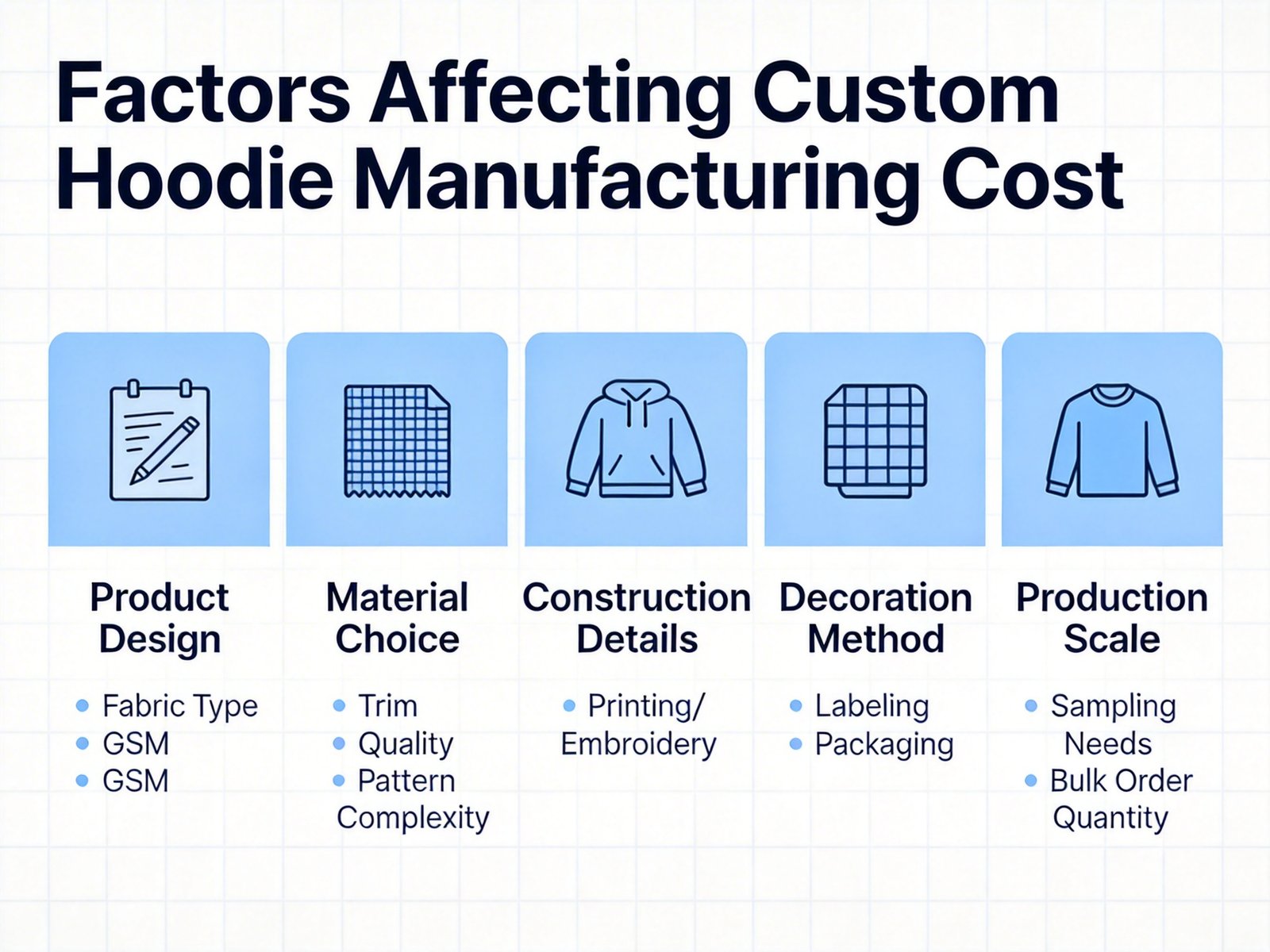
The total cost of a hoodie is shaped by product design, material choice, construction details, decoration method, and production scale.
The biggest cost drivers are fabric type, GSM, trim quality, pattern complexity, printing or embroidery, labeling, packaging, sampling needs, and bulk order quantity.
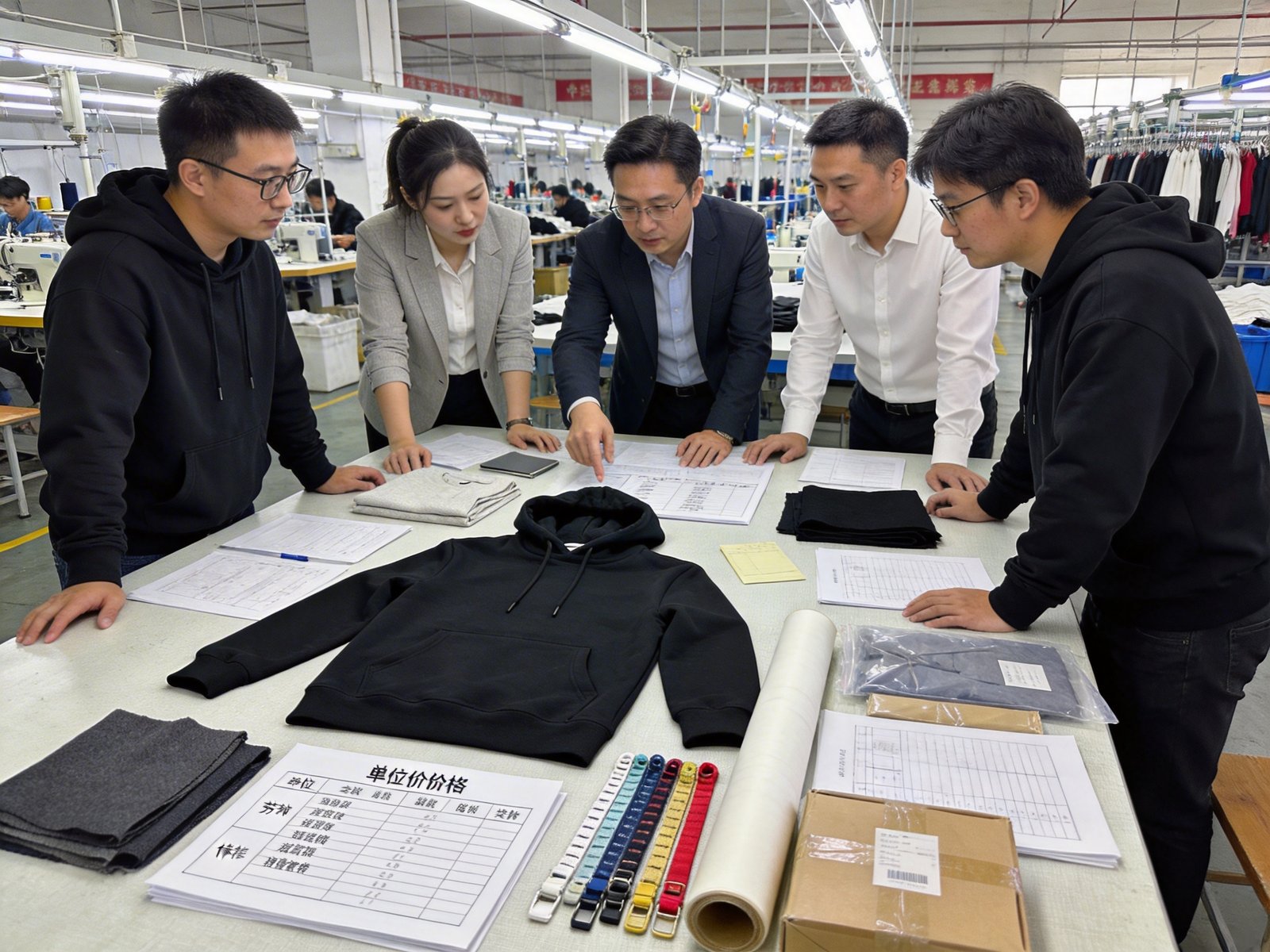
The strongest price influence usually comes from fabric. A basic lightweight jersey hoodie costs far less than a brushed fleece or heavyweight cotton-rich hoodie. Fabric composition also matters. Cotton-rich materials often increase cost, while some polyester-heavy fabrics may reduce price but also change hand feel and market perception. That matters because many negative reviews in the insight table are linked to thin fabric, harsh synthetic feel, and weak warmth. A hoodie that feels cheap may save cost at the factory level but lose value in the market.
Construction is another major factor. A clean pullover hoodie with standard pocket and regular rib is simpler to make than a zip-up hoodie with high-grade zipper, double-layer hood, hidden pockets, contrast panels, coverstitch details, or washed effects. Decoration adds more cost as well. Screen print, puff print, DTG, embroidery, patchwork, appliqué, and special wash effects all change labor time and process steps.
| Main cost factor | How it changes price |
|---|---|
| Fabric weight and blend | Heavier and softer fabrics usually cost more |
| Style complexity | More panels and trims increase labor |
| Decoration method | Embroidery and special effects raise cost |
| Trim level | Better zippers, rib, cords, and labels add cost |
| MOQ | Lower quantity usually means higher unit price |
What Is the Basic Cost Breakdown of Materials Labor Printing and Packaging for Hoodies?
A hoodie unit price is usually built from several layers, not one production step.
The main cost blocks are fabric, labor, trims, decoration, finishing, labels, packaging, quality control, and shipping arrangement before final export cost is added.
For many hoodie programs, fabric is the largest share of the ex-factory cost. Depending on fabric weight, blend, and market level, fabric can take the biggest portion of the total. Heavy fleece, cotton-rich brushed back fabric, garment-dyed materials, or specialty performance knits will push this portion up. Labor is often the second major block. Labor cost rises when the hoodie has more sewing operations, complicated stitching, special trims, or added finishing steps.
Printing and embroidery can be moderate or high depending on size and method. A small one-color chest print may be relatively easy to control. A large puff print, all-over print, heavy embroidery, or mixed technique layout will cost more. Packaging also matters more than many expect. Standard polybag and carton packing is basic. Branded polybags, barcodes, hangtags, size stickers, insert cards, tissue paper, or retail-fold packing all raise the cost.
A simple way to think about hoodie cost is this:
| Cost block | Typical impact on hoodie price |
|---|---|
| Fabric | Usually the largest part |
| Sewing labor | High on complex or premium styles |
| Trims | Moderate but important for value feel |
| Printing / embroidery | Can range from low to very high |
| Labels and packaging | Small per unit, but adds up fast |
| Testing and QC | Small per unit, but critical for stable quality |
Why Does Fabric Choice Have Such a Big Influence on Hoodie Unit Price?
Fabric choice changes not only raw material cost but also product positioning, comfort level, and complaint risk.
Heavier GSM, cotton-rich blends, brushed fleece, French terry, stretch fabrics, and premium finishing all push hoodie unit price upward in different ways.
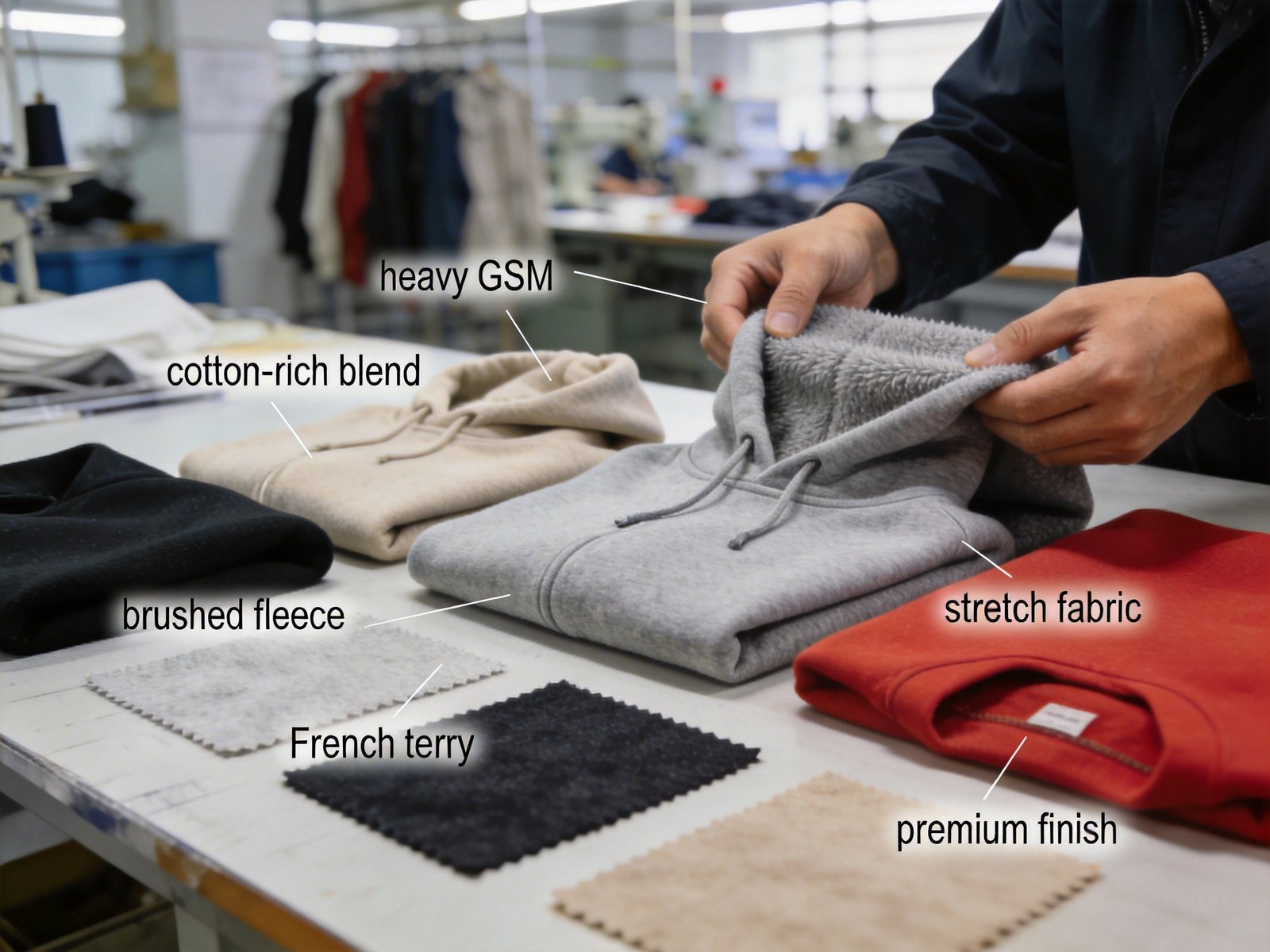
The insight table makes this point very clear. Many of the strongest negative comments are linked to thin fabric, cheap polyester feel, rough hand feel, weak warmth, and poor wash performance. That means fabric cost cannot be judged only by material price per kilo. It also affects how the hoodie performs in real use. A low-cost fabric that pills, shrinks, or feels harsh after washing can create more business damage than a fabric that costs slightly more but stays stable.
Fabric price is shaped by several details. GSM matters because a 420 GSM heavyweight fleece uses more material than a 280 GSM midweight fleece. Fiber content matters because cotton-rich blends, special yarns, organic content, recycled fiber systems, or performance finishes can raise the cost. Surface finish matters too. A hoodie with a smooth outside and soft brushed inside often needs better finishing control than a plain basic fabric. Some fabrics also require better pre-shrinking and testing, which adds process cost.
This is why fabric choice and product promise must stay aligned. A hoodie marketed as warm, soft, and premium must feel that way in reality. If not, the price structure is wrong from the start.
How MOQ and Fabric Choices Influence Hoodie Unit Price
MOQ has a strong effect because it changes how efficiently materials, labor, and trims can be used in production.
Lower MOQs usually create higher unit prices, while higher MOQs often reduce cost through better fabric usage, trim sourcing, and line efficiency.
MOQ affects cost in several ways at once. First, fabric mills may charge more for small dye lots or small custom developments. Second, factories spread setup cost across fewer units when the order is small. Third, customized trims like branded drawcord tips, zippers, labels, or special rib may become more expensive if the order size is low. This is why a 100-piece custom hoodie order rarely reaches the same unit price as a 1,000-piece order of the same style.
Fabric choice makes this even more important. Stock fabrics can help keep MOQ flexible and lower cost. Fully custom fabric development usually raises both MOQ pressure and price. The same applies to special colors, custom garment wash, or unique fleece structures. A factory may offer a workable MOQ by using available stock fleece, standard rib colors, and common trims. That often makes more sense than chasing a very low MOQ with too many custom elements packed into the style.
| MOQ level | Common cost effect |
|---|---|
| Very low MOQ | High unit price and fewer trim options |
| Mid-size MOQ | Better balance of flexibility and cost |
| High MOQ | Lower unit cost and more sourcing leverage |
How Much Do Labor and Construction Details Change Hoodie Cost?
Labor cost increases when the hoodie takes more steps to sew, finish, and inspect.
Pullover hoodies are usually simpler than zip-up hoodies, while double-layer hoods, hidden pockets, paneling, special stitching, and garment treatments all increase labor cost.
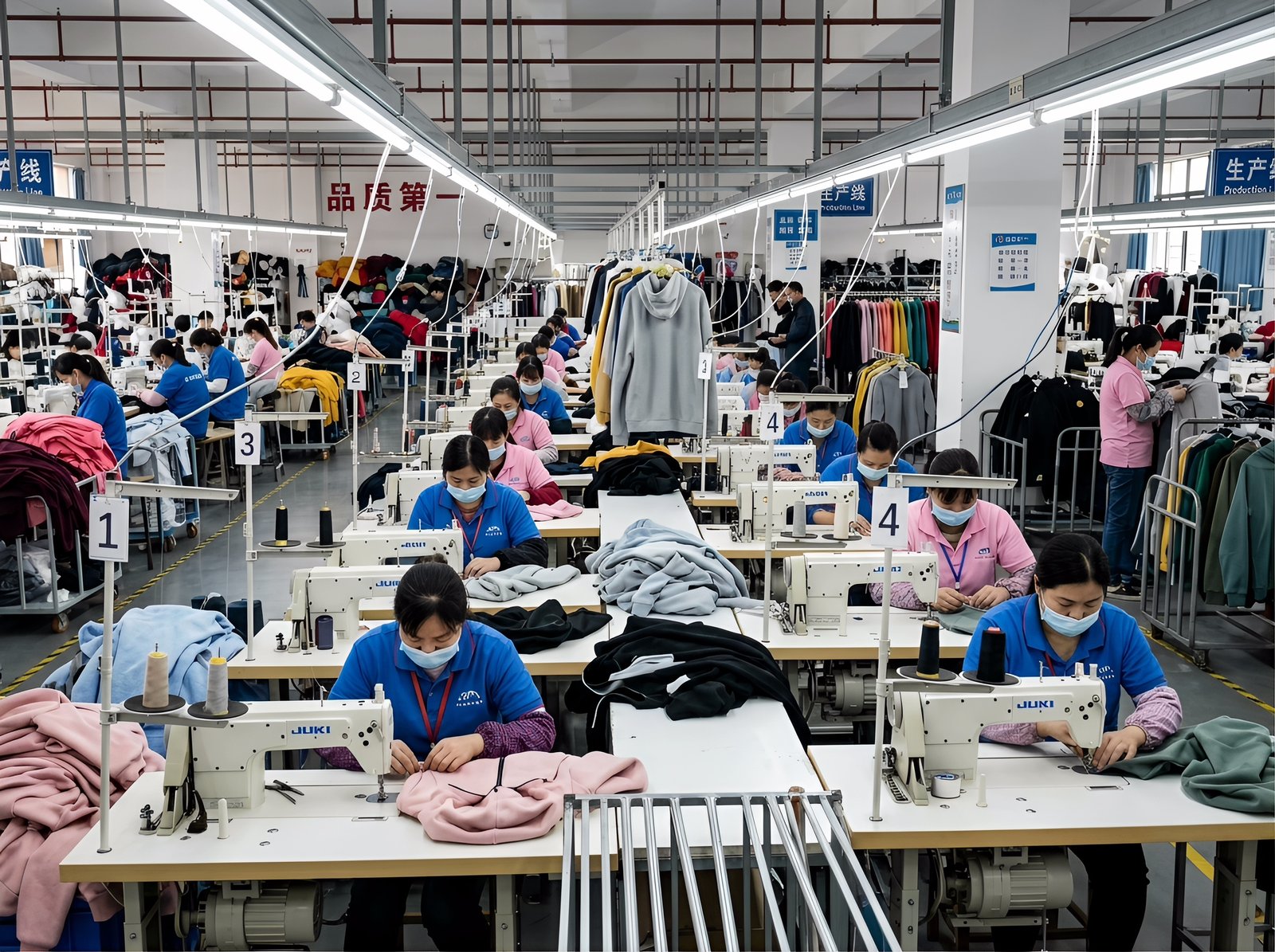
A hoodie is not just fabric plus print. The sewing structure matters a lot. A standard pullover with kangaroo pocket and single-layer hood is usually more efficient than a full zip hoodie with double-needle finishing, zipper guard, inside tape, double-layer hood, shaped panel seams, and branded metal trim. Each added feature means more sewing time, more chance for alignment issues, and more in-line quality checks.
The market complaints in the insight table also show why labor quality matters. Buyers mention broken seams, cuff seam splitting, loose cuffs, bad sleeve balance, and poor fit around elbows or hoods. These are often linked to how the garment is made, not just what material is used. Better construction usually needs better labor control, more reinforcement at stress points, and cleaner finishing. That may raise unit price, but it also supports better durability.
How Much Do Printing Embroidery and Branding Add to Hoodie Cost?
Decoration can change a hoodie from a basic blank into a branded product, but it can also reshape the full cost structure.
Simple one-position prints add limited cost, while large graphics, puff print, embroidery, patches, applique, and multiple branded trims can raise the unit price quickly.
Branding is often where hoodie costs start to separate sharply. A small chest logo in one color may be relatively simple. A large back print with sleeve print, inside neck print, woven brand label, hangtag, custom drawcord, zipper puller, and embroidered patch becomes a very different product. The more brand identity is built into the hoodie, the more setup, handling, alignment, and inspection are needed.
Printing method also matters. Screen print is often cost-effective at larger volume for stable artwork. DTG may work for smaller runs or detailed art but can change the cost structure. Embroidery often increases both cost and production time. Puff print, reflective print, chenille patch, or mixed-media decoration can push the garment into a more premium cost zone.
Why Do Packaging and Testing Matter in Hoodie Costing?
Packaging and testing are small compared with fabric, but they often decide whether the product feels ready for market and stays stable after delivery.
Retail-ready packaging, barcode labeling, branded hangtags, wash testing, shrinkage control, and anti-pilling checks all add cost, but they help reduce risk.
Testing is especially important because so many hoodie complaints happen after washing or repeated wear. The insight table includes shrinkage, pilling, fading, rough hand feel, loose rib, and shedding. These are exactly the kinds of failures that development testing is meant to reduce. A factory that does not build testing into the cost may offer a cheaper quote, but the garment may be riskier in real use.
Packaging also changes market value. A hoodie packed in a basic polybag is not the same as a hoodie prepared for direct retail, e-commerce fulfillment, or premium gifting. Even though the packaging cost per unit may look small, it affects the full landed cost and the final presentation.
How Can Hoodie Cost Be Reduced Without Creating Quality Problems?
Cost can be controlled best through smart design choices, not blind cost cutting.
The safest ways to reduce hoodie cost are using stock fabrics, simplifying construction, limiting trim variation, consolidating colors, and choosing decoration methods that fit the order size.
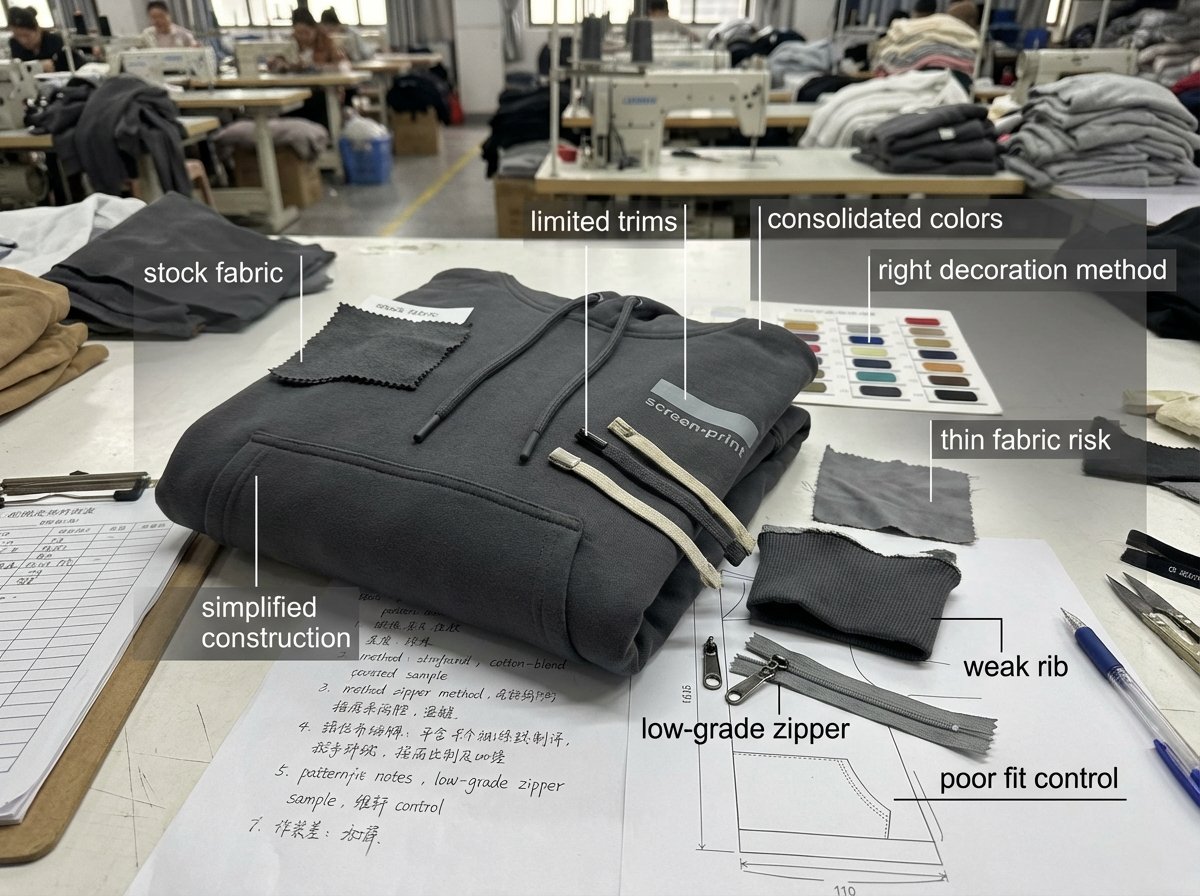
The insight table shows what happens when cost is reduced in the wrong place. Thin fabric leads to “cheap” feedback. Weak rib leads to loose cuffs. Low-grade zippers fail. Poor finishing creates rough feel and shedding. Weak pattern control creates fit complaints. So the goal should not be to make the cheapest hoodie possible. The goal should be to protect the parts of the hoodie that customers feel most clearly.
Smart cost control usually means keeping the right fabric quality, protecting fit and wash performance, and simplifying non-essential details. For example, using a stock fleece color may save more safely than lowering fabric weight too much. Keeping one strong logo placement may work better than adding multiple small trims and prints that raise cost without lifting product value.
Conclusion
Hoodie manufacturing cost in 2025 is shaped by fabric, construction, branding, MOQ, and process control. The best cost decisions come from balancing price with real product performance, not from chasing the lowest quote alone.