
The performance of a sports jersey depends heavily on material choice. Fabric selection affects breathability, moisture control, durability, and how the garment performs during intense physical activity.
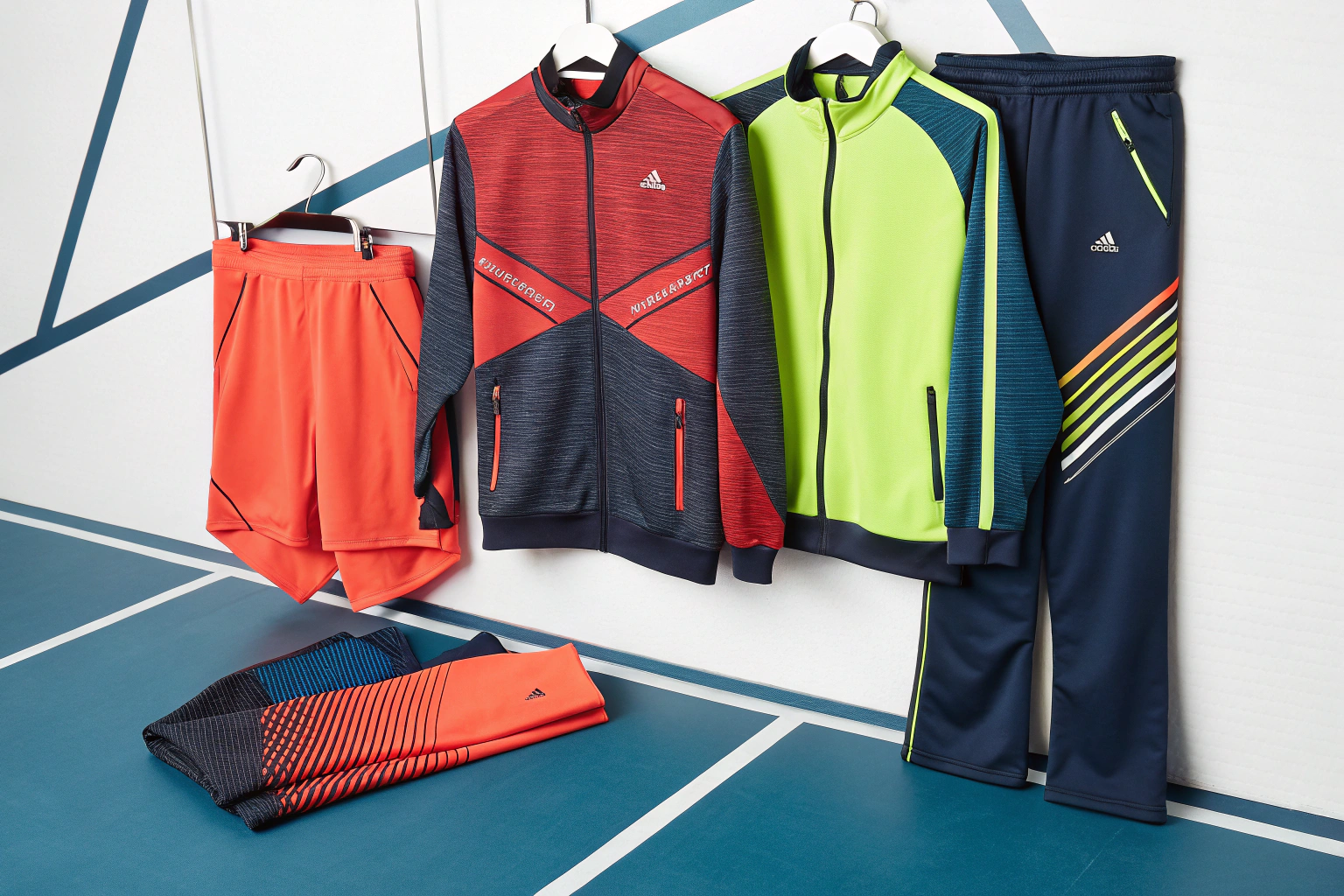
Polyester-based fabrics are widely considered the best material for sports jerseys due to their lightweight structure, moisture-wicking ability, and durability under repeated use.
In manufacturing, jersey materials are chosen not only for athlete comfort but also for stability in mass production, print compatibility, and long-term performance after washing.
Why is polyester the most common jersey material?
Polyester dominates sports jersey production for clear technical reasons.
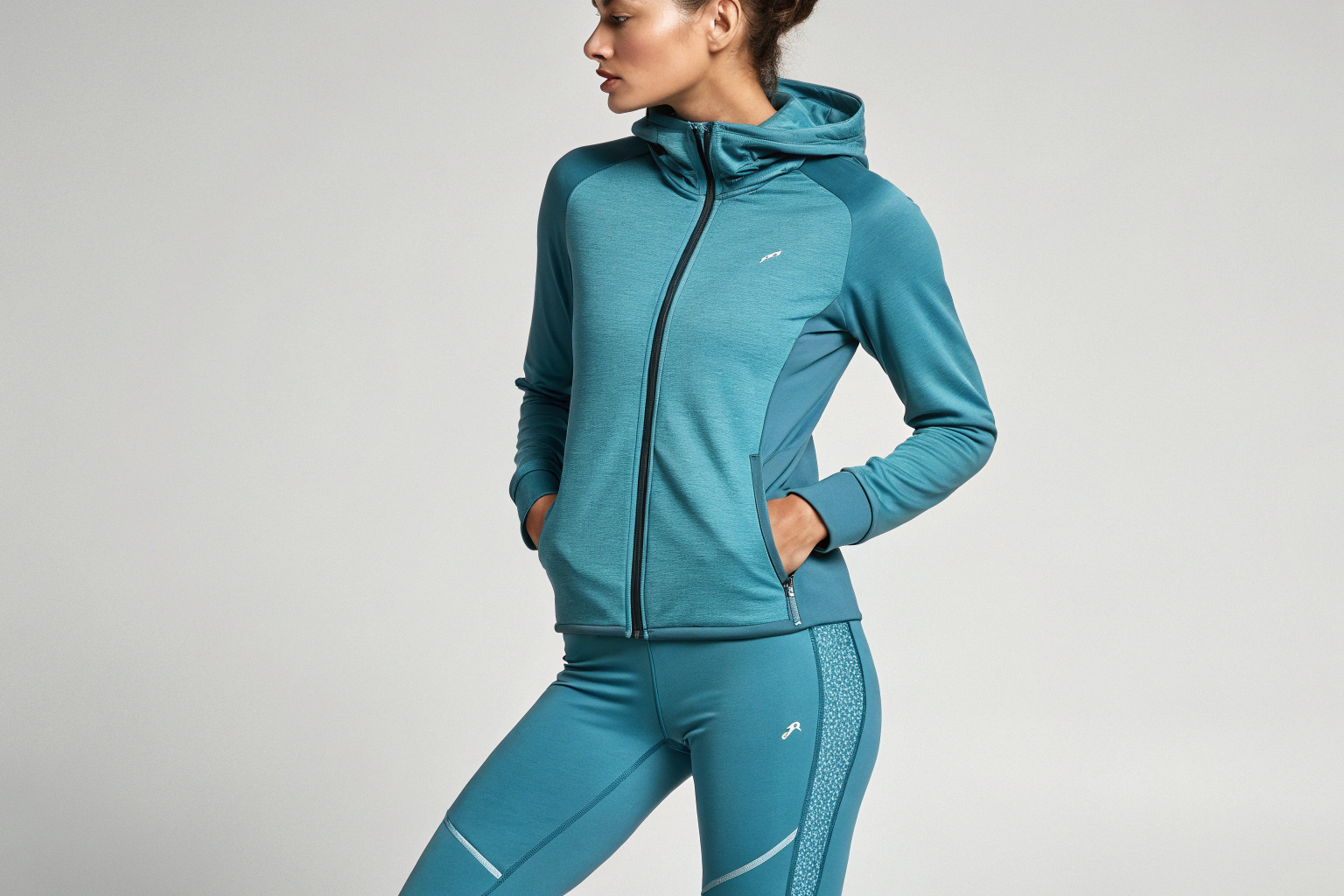
Polyester offers fast drying, high strength, and excellent shape retention, making it ideal for high-intensity sports environments.
Unlike natural fibers, polyester does not absorb moisture. Sweat is transferred to the fabric surface and evaporates quickly, helping regulate body temperature during activity. Polyester yarns are resistant to abrasion and stretching, which allows jerseys to maintain fit even after repeated washing and movement. From a production standpoint, polyester fabrics accept sublimation printing extremely well, ensuring sharp colors and long-lasting graphics commonly required for team jerseys.
How do mesh and knit structures improve jersey performance?
Fabric structure plays a major role alongside fiber type.
Mesh and lightweight knit constructions improve airflow and reduce fabric weight, enhancing comfort during extended wear.
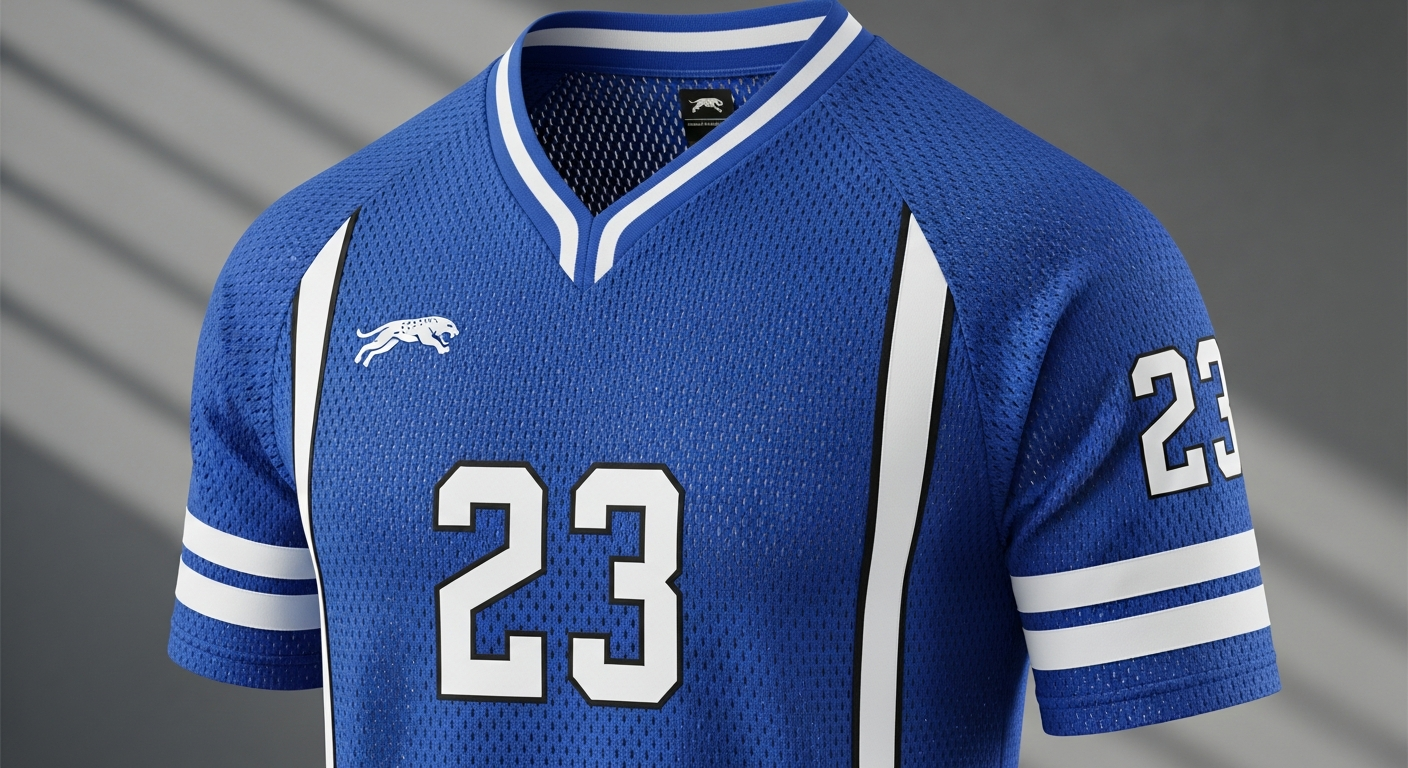
Sports jerseys are often produced using circular knit or warp knit mesh fabrics. Mesh panels create ventilation zones that allow heat to escape, especially in high-sweat areas such as the chest and back. Interlock knits provide a smoother surface for printing while maintaining stretch. Factories adjust knitting density, yarn thickness, and mesh hole size to balance breathability with opacity and durability. These adjustments are tested during sampling to ensure consistent performance across sizes.
| Fabric Structure | Key Benefit | Common Use |
|---|---|---|
| Mesh Knit | Maximum airflow | Football, basketball |
| Interlock Knit | Smooth, stable | Soccer, training tops |
| Warp Knit | Durable, lightweight | Cycling, running |
Is spandex necessary in sports jerseys?
Elasticity improves comfort and fit but must be controlled carefully.
Small amounts of spandex enhance flexibility and movement without compromising fabric stability.
Most performance jerseys include 3–8% spandex blended with polyester. This addition allows the garment to stretch with body movement and recover its shape. Excessive spandex can increase cost and reduce breathability, so factories fine-tune blend ratios based on sport type. Compression-fit jerseys require higher stretch recovery, while traditional team jerseys often rely on polyester alone for a looser silhouette.
How do factory processes affect jersey material performance?
Material performance is reinforced through finishing and production control.
Professional factories apply moisture-wicking, anti-odor, and heat-setting processes to stabilize jersey fabrics before and after sewing.
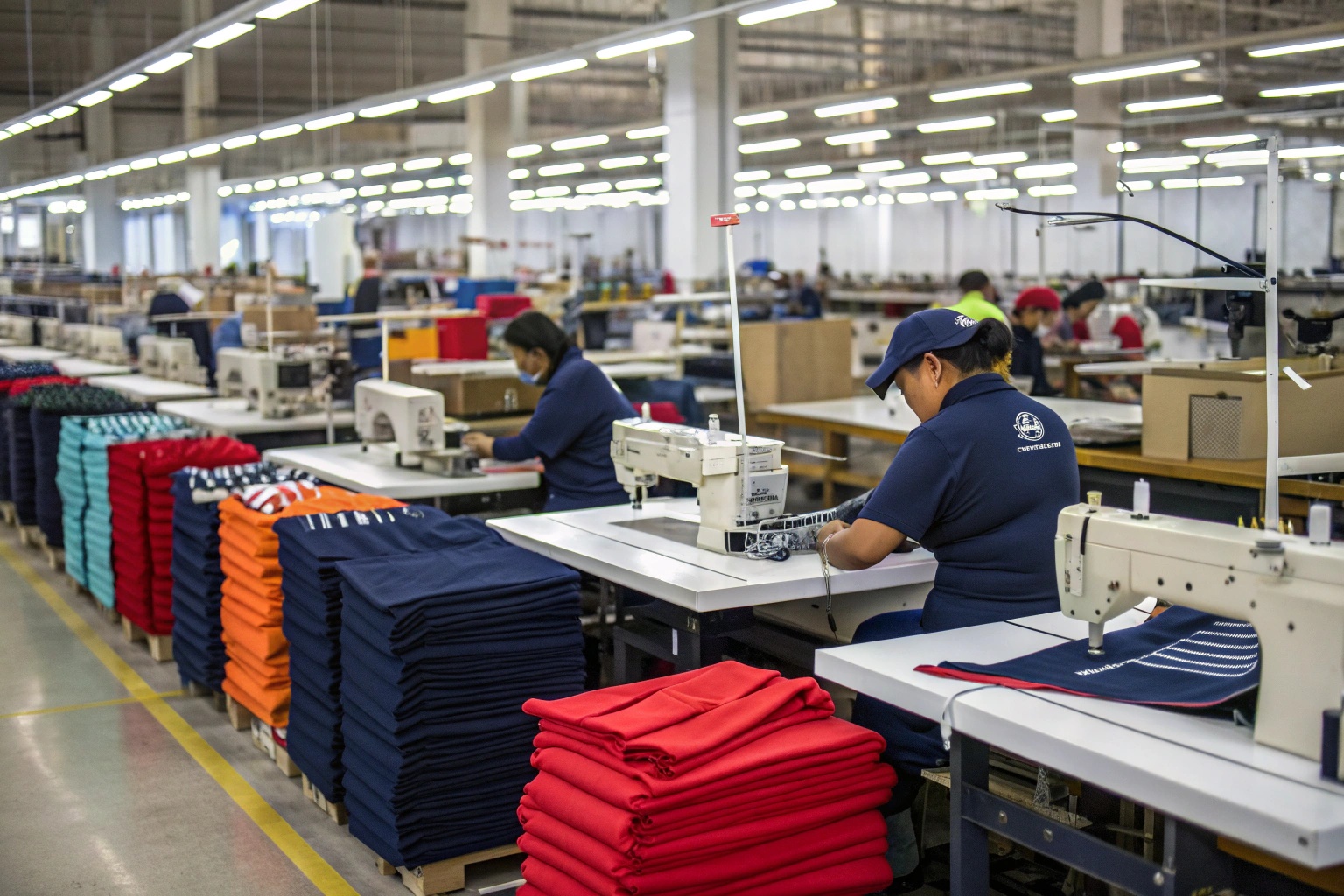
Before cutting, fabrics undergo heat setting to lock in shape and reduce shrinkage. Moisture management finishes enhance sweat transport, while antibacterial treatments help control odor buildup. During cutting, tension-controlled spreading prevents distortion of lightweight knits. Sewing uses stretch-compatible threads and flatlock or overlock machines to ensure seams remain flexible. Quality inspection focuses on seam elasticity, print durability, and size consistency after wash testing.
Are natural fibers suitable for sports jerseys?
Natural fibers offer comfort but limited performance in high-intensity sports.
Cotton and other natural fibers are generally unsuitable for sports jerseys due to slow drying and moisture retention.
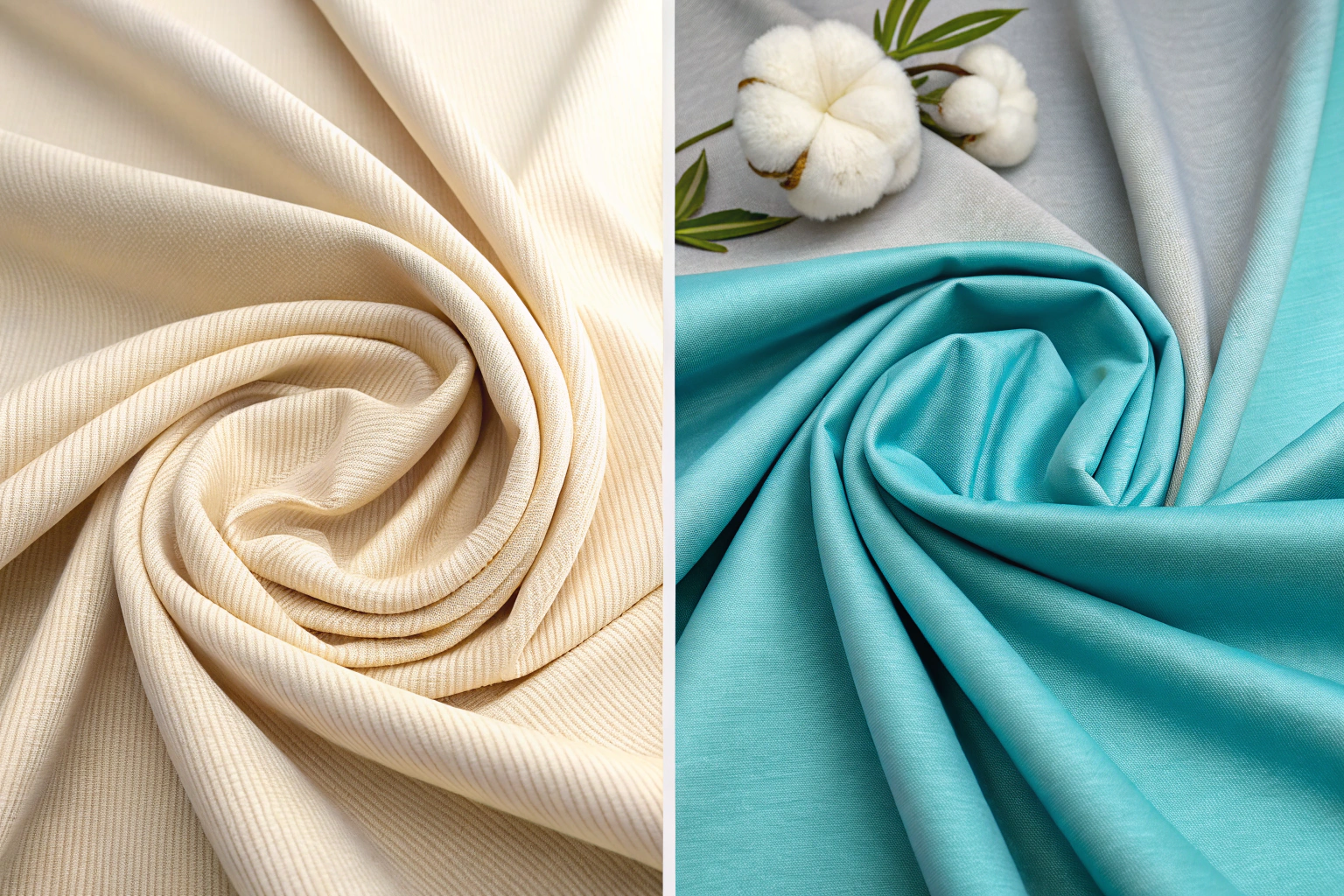
Cotton absorbs sweat quickly and holds moisture, which can increase garment weight and reduce comfort during play. While cotton blends may appear in warm-up or fan apparel, they are rarely used for performance jerseys. In competitive sportswear manufacturing, synthetic fibers provide greater reliability, easier maintenance, and better compatibility with modern printing technologies.
Conclusion
The best material for a sports jersey is a polyester-based fabric, often enhanced with mesh structures and small amounts of spandex. This combination delivers moisture control, durability, lightweight comfort, and consistent performance across demanding conditions. From a manufacturing perspective, polyester jerseys support efficient production, precise printing, and long-term dimensional stability. Through advanced knitting techniques, fabric finishing, and controlled factory processes, sports jerseys are engineered to meet the physical demands of athletes while maintaining visual impact and structural reliability. These factors make polyester the foundation of modern sports jersey design and production.