
Understanding the difference between a sweatshirt and a hoodie is essential in apparel development, as each style serves different functional, aesthetic, and production purposes.
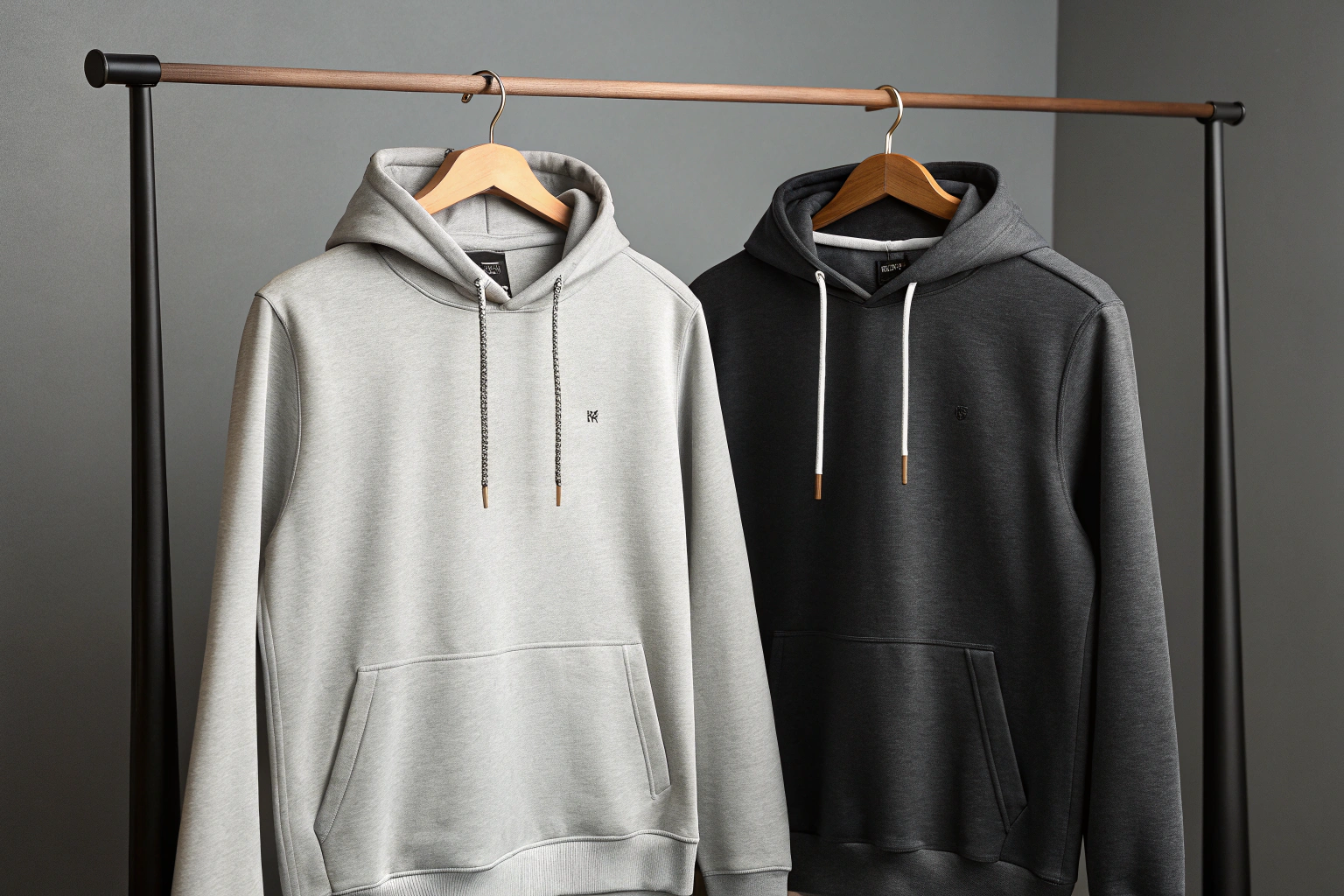
A sweatshirt is a collarless pullover made from knit fabric, usually without a hood, while a hoodie is a sweatshirt that includes an attached hood and often additional design features like drawstrings and front pockets.
Though they share similar materials and construction methods, the presence of a hood and accessories like pockets or zippers changes how each garment is used, styled, and produced. This distinction also affects workflow in garment factories, from pattern drafting to sewing line organization.
What defines a sweatshirt?
The sweatshirt is a staple in casual and sportswear collections due to its simplicity and comfort.
A sweatshirt typically features a round neckline, long sleeves, ribbed cuffs and hem, and is made of medium to heavy-weight knit fabric, often without additional details.
The construction process includes attaching the front and back body, inserting sleeves, and finishing with ribbed components. French terry and brushed fleece are the most common fabric choices. Sweatshirts are usually quicker to produce than hoodies, with fewer sewing operations and simpler patterns. Their minimalist look makes them suitable for print designs, embroidery, or plain colorways in both men’s and women’s collections.
What defines a hoodie?
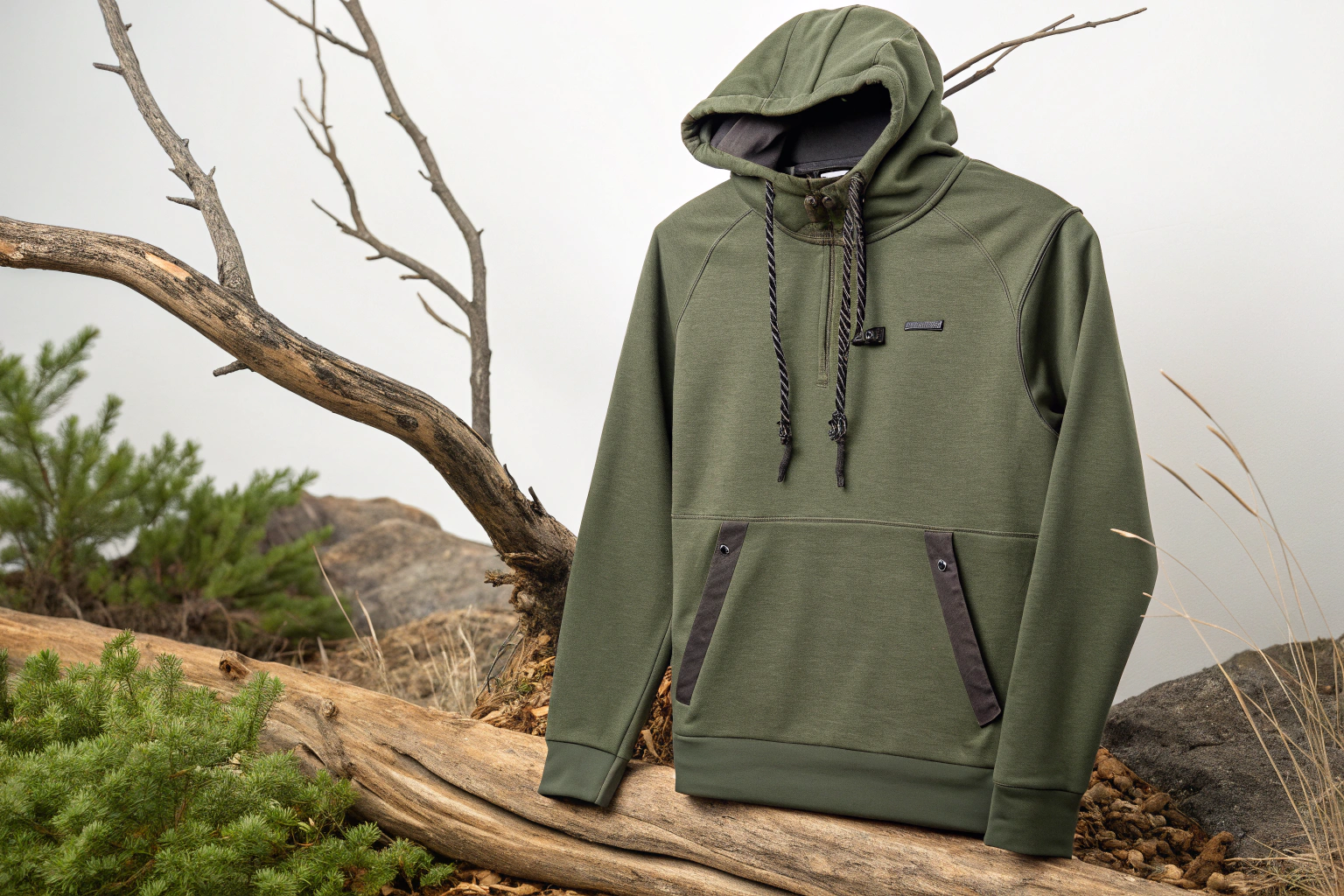
Hoodies are distinguished by their hood structure and added elements that enhance utility and visual appeal.
A hoodie includes an attached hood, often with drawstrings, and may have features like a front kangaroo pocket or zipper closure.
Manufacturing a hoodie involves additional pattern components and sewing stages. The hood must be precisely aligned with the neckline, and if drawstrings or eyelets are included, extra steps are needed for insertion and reinforcement. Kangaroo pockets are sewn onto the body before side seams are closed, and zip-up versions require zipper attachment with clean edge finishes. These additions extend production time but offer greater market appeal for streetwear and sportswear lines.
| Feature | Sweatshirt | Hoodie |
|---|---|---|
| Neckline | Crewneck | Hooded with drawstring |
| None or minimal | Kangaroo or side pockets | |
| Closure | Pullover | Pullover or zip-up |
| Use Case | Basic layering | Outdoor or casual layering |
How do fabrics and finishes vary between the two?
While both garments use similar fabric bases, surface finishes and linings may differ based on end-use.
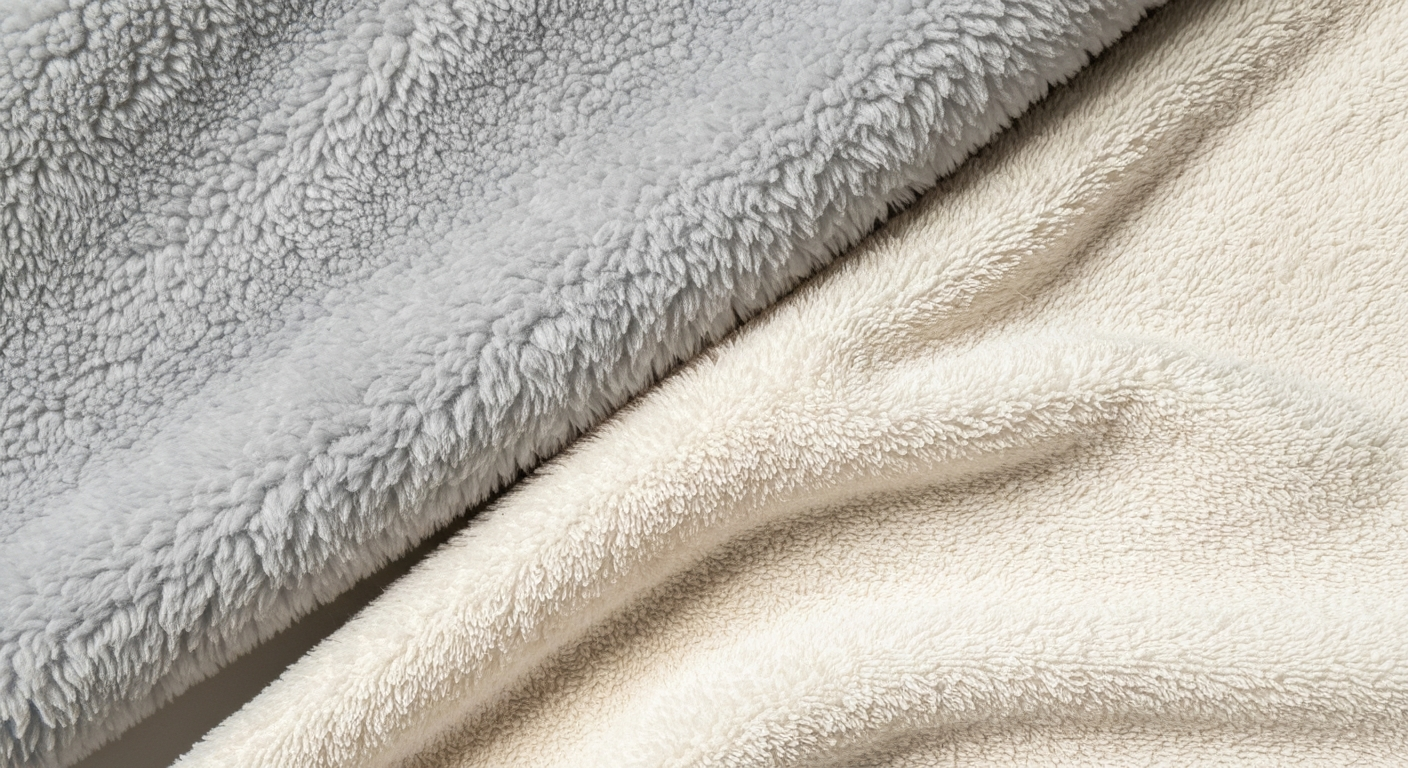
Sweatshirts favor smoother, brushed interiors for comfort, while hoodies often include heavier fleece or lined hoods for added insulation.
Factories may use 280–350 GSM brushed fleece for hoodies, enhancing thermal performance. For sweatshirts, a mid-weight French terry (240–300 GSM) balances comfort and layering flexibility. Hood linings can be single jersey or self-fabric, depending on the style level. Finishing treatments such as enzyme wash, pre-shrink processing, and silicone softening ensure smooth handfeel and dimensional stability. These treatments are applied after sewing or as part of the fabric prep stage before cutting.
How does factory production adjust between sweatshirts and hoodies?
Production lines are adjusted depending on the complexity of the garment.
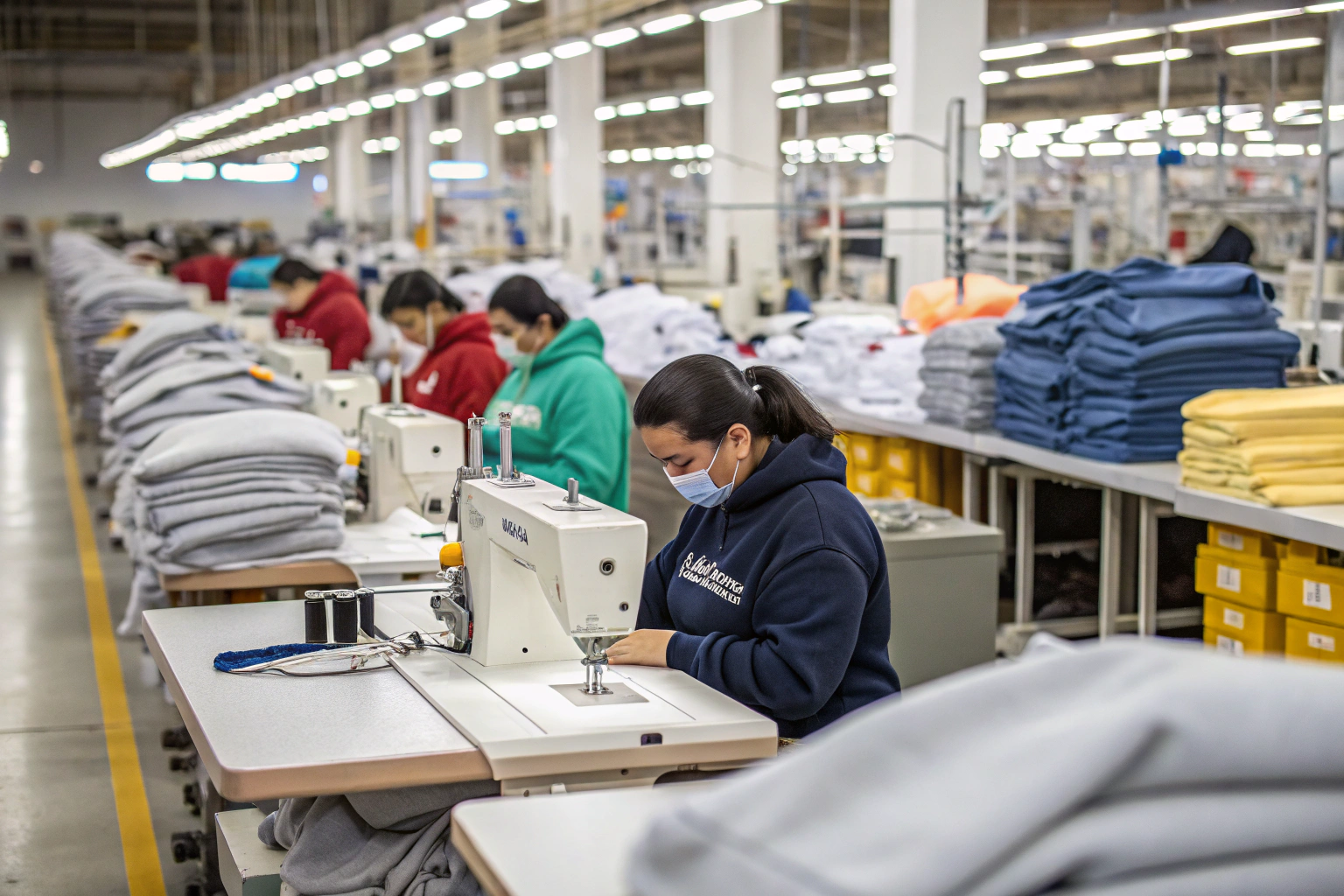
Sweatshirts follow a streamlined process with fewer assembly points, while hoodies require additional steps including hood construction, pocket placement, and accessory integration.
In the sewing line, sweatshirts can be produced with standard flatlock and overlock machines in fewer stations. Hoodies, especially those with zip closures, demand extra handling and operator skill to align zippers and reinforce drawstring openings. Production managers plan capacity based on style breakdown. For large orders, hoodies and sweatshirts are grouped separately to avoid bottlenecks and ensure consistent quality. QC teams check for symmetrical hood seams, pocket placement accuracy, and secure drawstring tension.
How are sweatshirts and hoodies applied in different product lines?
Each style serves distinct purposes in collection planning.

Sweatshirts are ideal for minimal, print-focused collections or lightweight seasonal offerings, while hoodies are commonly featured in streetwear, youthwear, and cold-weather drops.
Design teams select sweatshirts for capsule collections where surface design is the focus. Hoodies are often used to showcase brand identity through oversized silhouettes, bold graphics, or tech features. Market segments such as travel, lounge, and training wear also influence material and detail selection. The ability to apply various surface techniques like DTG printing, screen print, or embroidery further enhances the design flexibility of both garments.
Conclusion
While sweatshirts and hoodies share similar origins and materials, they fulfill different roles in both consumer wardrobes and factory production lines. Sweatshirts prioritize clean construction, easy layering, and cost-effective manufacturing. Hoodies offer enhanced utility, thermal comfort, and higher perceived value through added features. In apparel manufacturing, the distinction between the two is not just aesthetic—it drives decisions in pattern making, labor planning, and quality control. Factories equipped with flexible workflows and skilled teams can deliver both styles efficiently, ensuring consistency and market responsiveness across seasonal collections.