
In fashion development, the choice between a V-neck and a crew neck is not only about aesthetics—it affects garment structure, fit, and consumer acceptance. Both neckline styles are widely used across collections, but they serve different styling purposes and customer expectations.
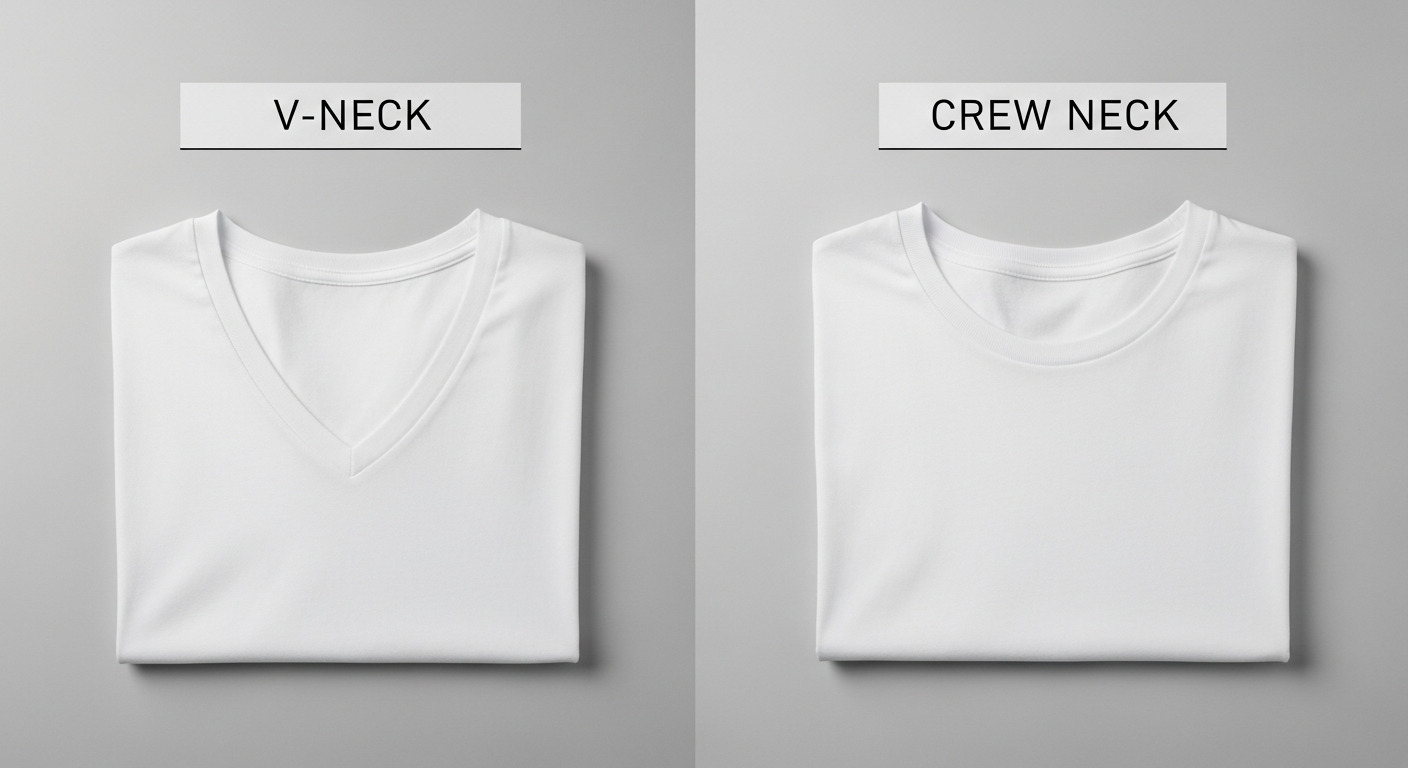
There is no universal answer to which looks better; V-necks offer a lengthening visual effect, while crew necks provide a balanced and minimal look suitable for most body types.
Each neckline style requires specific pattern adjustments and factory workflows, making the decision between the two a strategic one at both design and production levels.
What Are the Design Differences Between V-Neck and Crew Neck?
The two necklines differ in shape, visual line, and coverage, directly influencing how the upper body is framed.
Crew necks feature a round neckline that fits close to the base of the neck, while V-necks form a pointed dip that opens the neckline vertically.
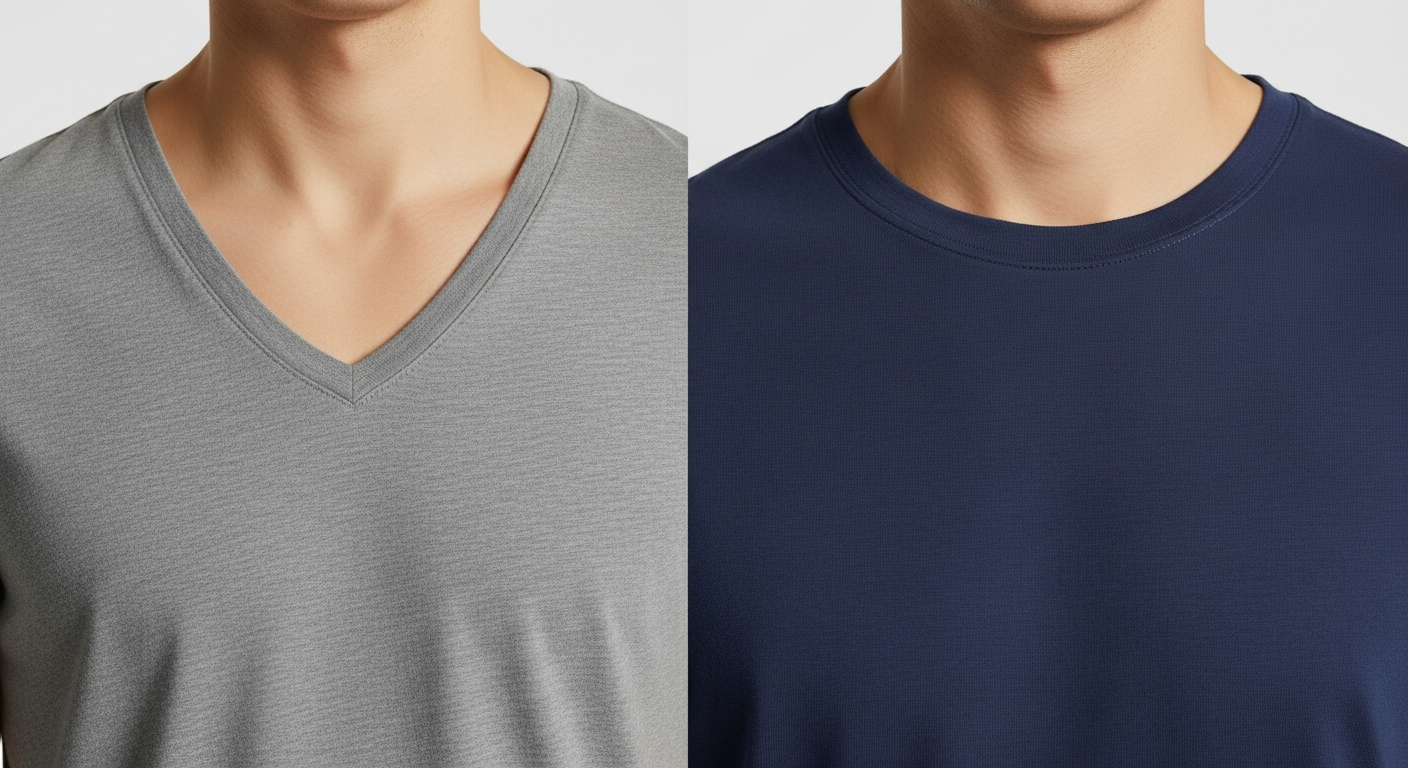
Crew necks create a closed neckline that delivers a classic, neutral appearance. This style works across age groups, genders, and garment categories. V-necks, on the other hand, expose more of the upper chest and neck. This style is often used to create a more elongated neckline and add visual interest to an otherwise basic silhouette. In knitwear and casualwear, V-necks are typically associated with more refined or layered looks. Pattern drafting for a V-neck requires more precise angle control and reinforcement at the point of the “V” to avoid distortion or puckering.
How Do These Styles Affect Fit and Body Proportion?
The visual effect of neckline shape plays a key role in how the wearer’s proportions are perceived.
V-necks tend to elongate the neck and create vertical lines, while crew necks provide a more compact, symmetrical shape that complements wider shoulders and rounder face shapes.
V-necks are often recommended for individuals with shorter necks or fuller faces, as the open neckline adds vertical space. Crew necks provide a tighter frame and are commonly used in performance apparel, uniforms, and basics where coverage and simplicity are important. In fitted silhouettes, both neckline types must account for collar stretch, shoulder slope, and chest expansion. Crew necklines maintain their shape through ribbed fabric and close-seam construction, while V-necks often require facing, binding, or a shaped rib insert. Correct neckline depth and width must be proportionally adjusted across sizes to maintain balanced visual lines and consistent fit.
How Do Factories Handle Crew Neck vs V-Neck Production?
Neckline type significantly affects workshop setup, machine operations, and quality control points.
Crew necks are faster to produce and easier to standardize in mass production, while V-necks require more precise handling and reinforcement during sewing.
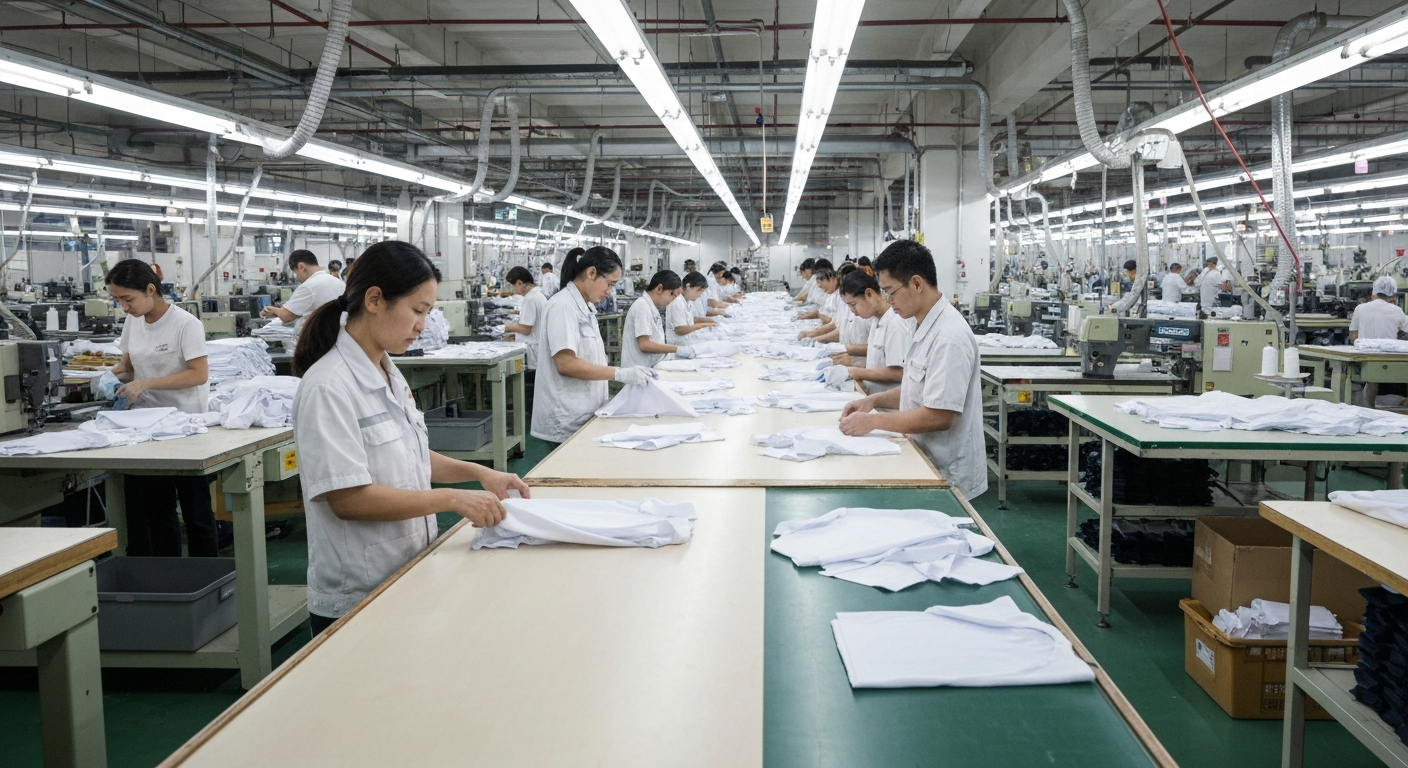
In factory workflows, crew necklines are constructed using rib fabric stitched in a loop and attached with coverstitch or double-needle lockstitch. The process is linear and efficient, allowing for high output and low defect rates. V-necklines introduce complexity—cutting must follow a symmetrical “V” angle, and the rib or facing must be shaped and sewn to lie flat without tension distortion. At the intersection point of the “V,” stitching must be clean and reinforced, which increases operator time and requires more skilled labor. During quality checks, crew necklines are measured for opening circumference and collar alignment, while V-necks must be checked for puckering, twisting, and seam accuracy at the join point.
Fabric Considerations for Each Neckline Style
Fabric type and behavior influence which neckline style performs better in specific categories.
Crew necks are more stable across all fabric types, while V-necks require fabrics with moderate stretch and high shape recovery to maintain structure.
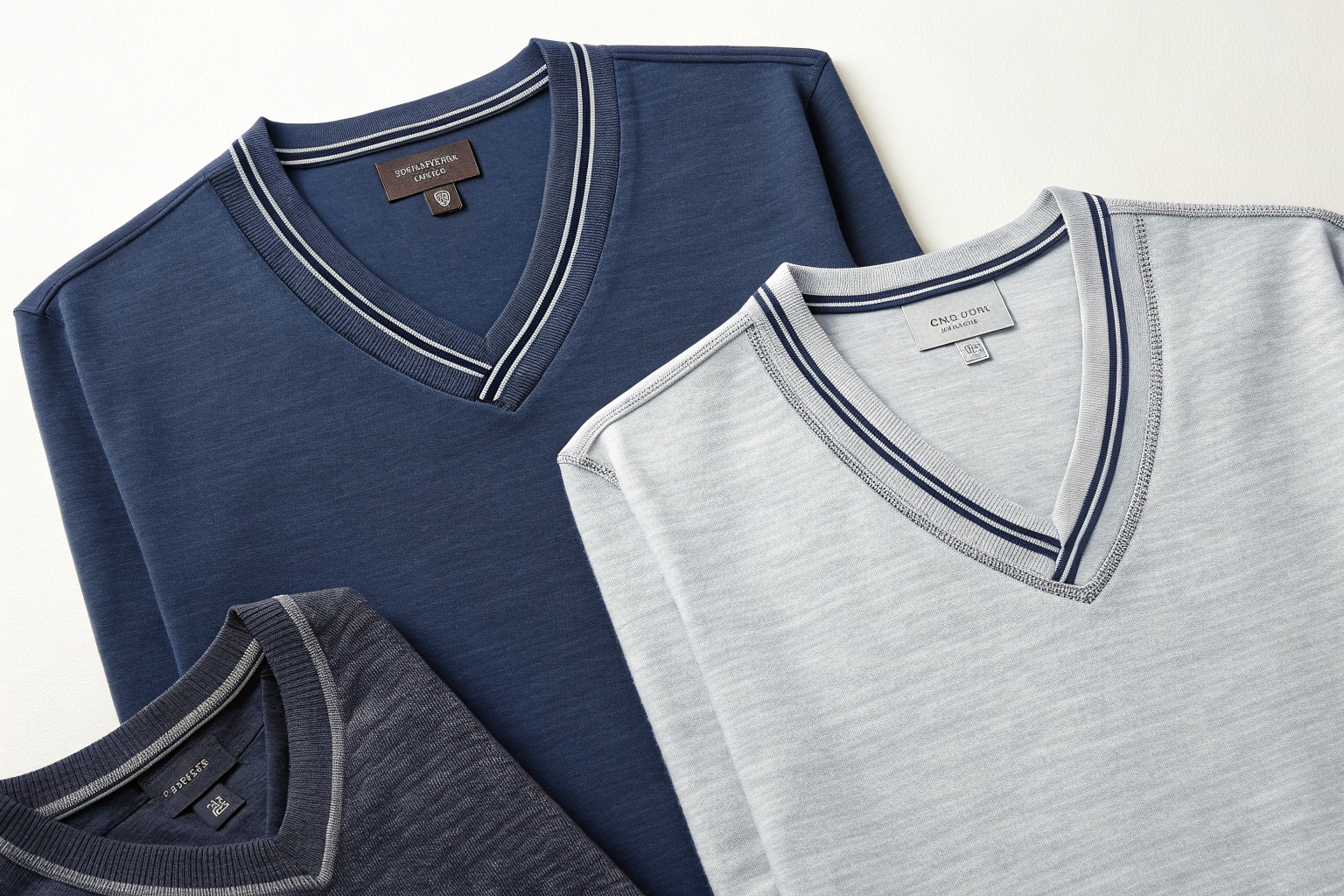
In cotton jersey, single rib, or French terry fabrics, crew necks retain their shape with minimal reinforcement. V-necks in these materials may stretch at the seam over time if not stabilized properly. For fashion knits or lightweight fabrics like viscose or modal, neckline stretch and sagging are common concerns. In such cases, V-necks need to be lined or edge-stitched to maintain crisp angles. Fabric testing includes tension tests, wash shrinkage analysis, and recovery rate evaluation. Factories prepare separate cutting markers and neck finish instructions depending on the neckline type, as the consumption of rib and seam tape differs.
Which Style Is Preferred in Different Market Segments?
Consumer preference for V-necks or crew necks often depends on demographic, product category, and seasonal trend direction.
Crew necks dominate in casual basics, activewear, and unisex collections, while V-necks are more common in fashion-focused, layered, or warm-weather styles.
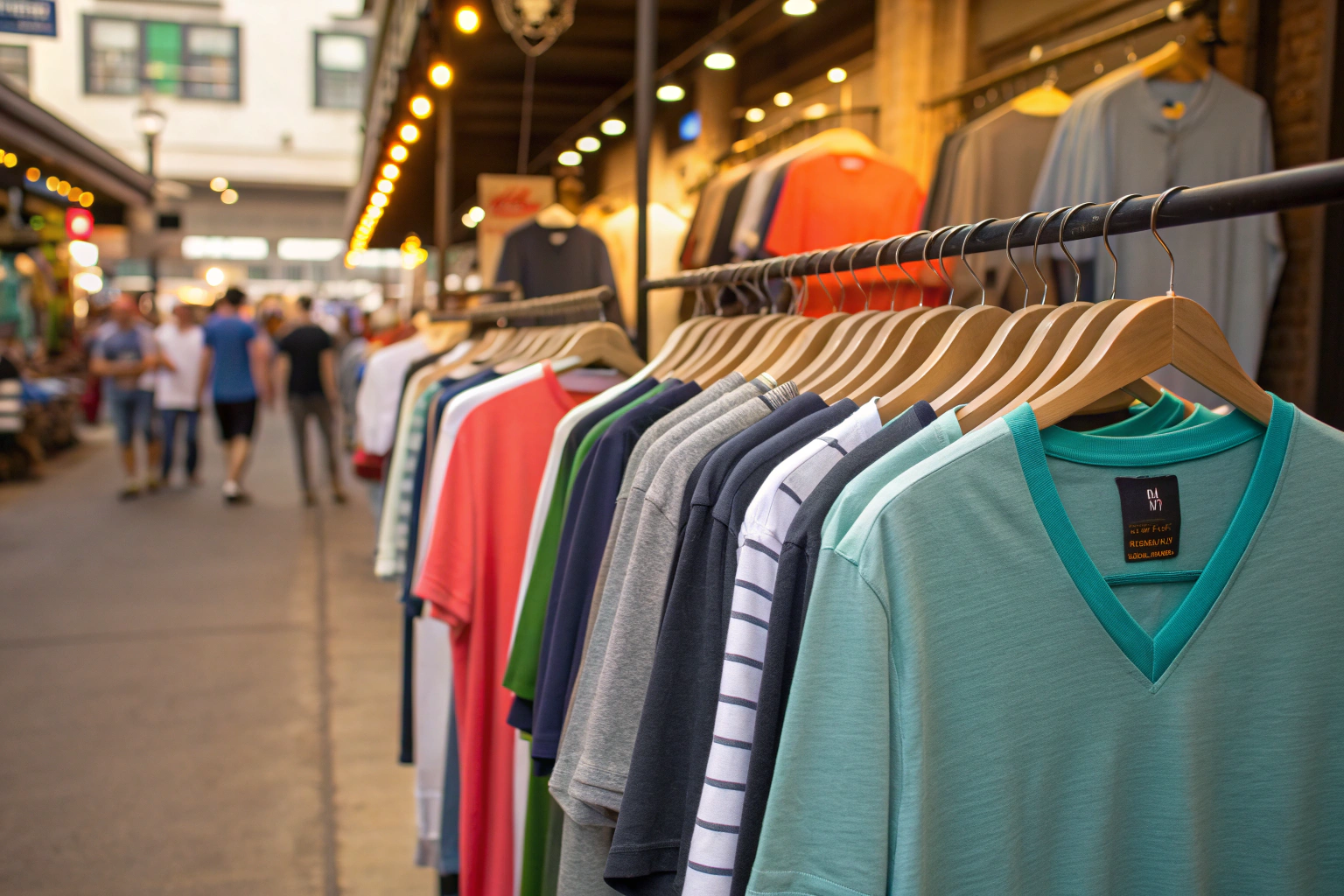
In youth-driven streetwear, oversized crew neck sweatshirts and T-shirts are standard due to their simplicity and logo-friendly placement. In knitwear and womenswear, V-necks often offer a more refined or elongated look. In colder climates, crew necks are preferred for insulation and layering control. In warm-weather markets, V-necks provide airflow and reduce fabric coverage at the neck. Product planning teams often include both necklines in seasonal collections to cover a broader customer base. The neckline decision becomes part of the brand identity, reflected in consistent fit, neckline depth, and finishing detail across drops.
Conclusion
The debate between crew neck and V-neck is less about which looks better universally and more about intended style, function, and production logic. Crew necks offer structure, efficiency, and timeless appeal, making them ideal for essentials, unisex garments, and industrial-scale production. V-necks add variety and visual impact, particularly where elongation and layering are desired. From a factory perspective, crew necklines are faster to execute with fewer defect risks, while V-necks require more technical control at key seam intersections. Fabric selection, pattern grading, and finishing techniques must align with neckline choice to ensure garment longevity and presentation. Both styles hold strong positions in apparel collections, serving distinct roles that complement various consumer needs, manufacturing systems, and market categories.