
In apparel development and production, the terms “crewneck” and “sweatshirt” are often used together, yet they describe different aspects of a garment. Clear definitions are essential for accurate design communication, material sourcing, and manufacturing execution.
A crewneck refers to the neckline shape, while a sweatshirt refers to the garment category defined by fabric weight, structure, and function.
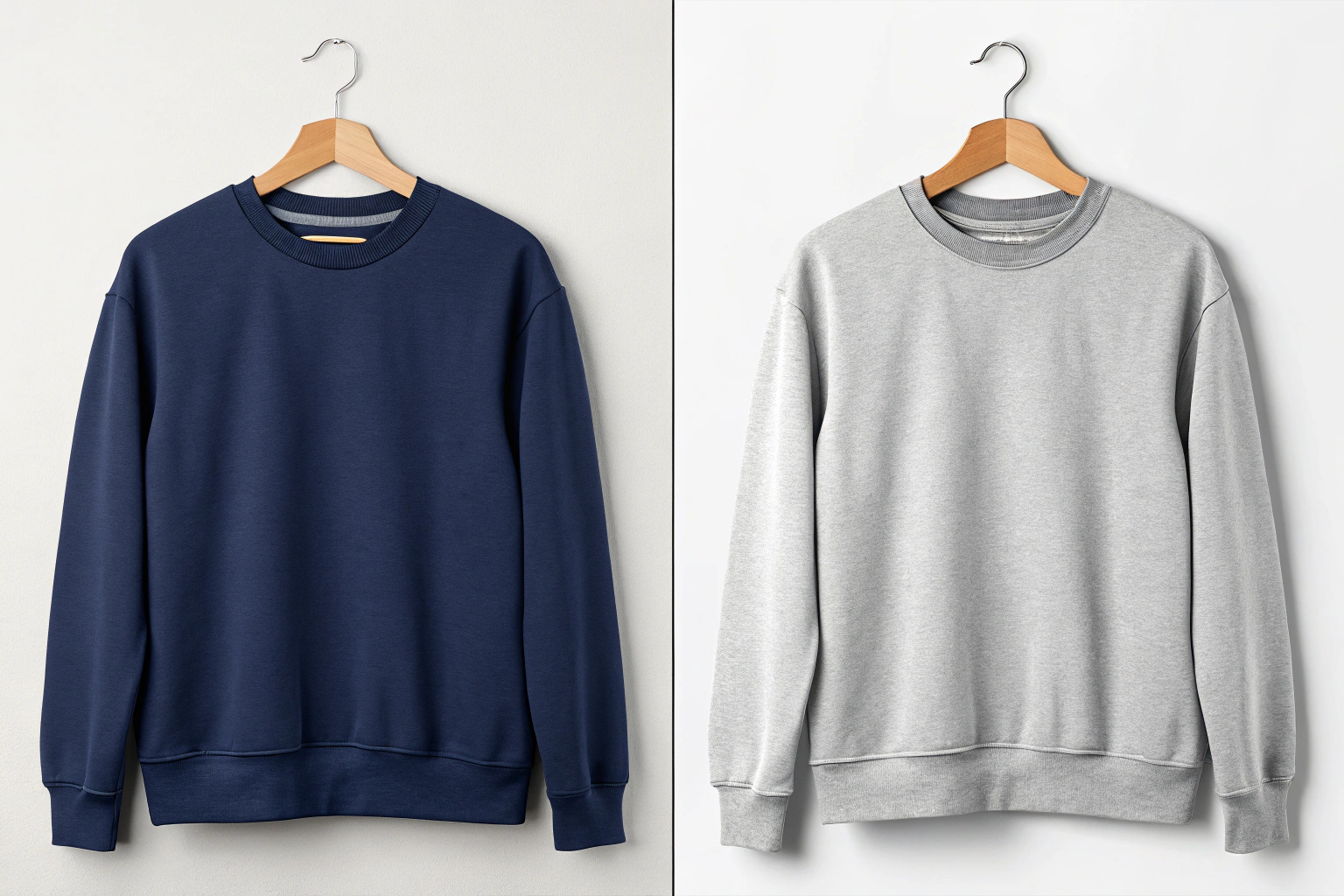
Understanding the distinction between these two concepts improves product specification accuracy and helps align design intent with factory production standards. In most cases, the commonly referenced “crewneck sweatshirt” is a sweatshirt that uses a crewneck neckline construction.
What Exactly Is a Crewneck?
The crewneck is a neckline style characterized by a round opening that sits close to the base of the neck.
A crewneck is a circular neckline, usually finished with rib fabric, designed to provide comfort, durability, and a clean appearance.
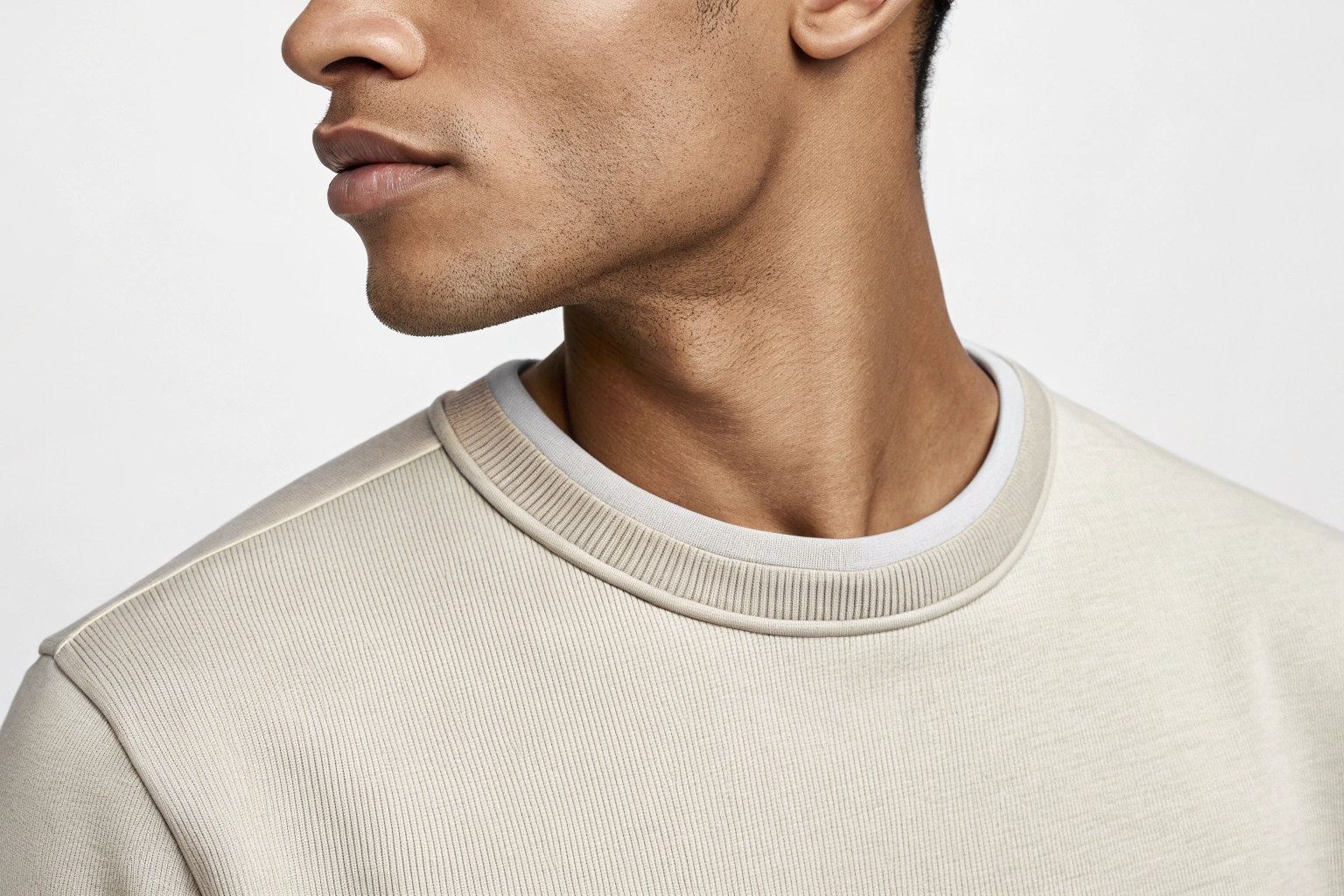
Crewnecks originated from functional garments worn by rowing crews and later became a standard neckline in casual and athletic apparel. This neckline is widely applied across T-shirts, sweaters, base layers, and sweatshirts. From a production standpoint, the crewneck involves a separate rib component that must stretch to pass over the head and then recover to maintain shape. Rib fabrics are commonly made from cotton with elastane or polyester blends to ensure elasticity and wash durability. Stitch density, rib width, and collar height are all controlled during pattern development to achieve a consistent fit. The crewneck is favored in mass production because it balances simplicity with reliability and performs well across different body types.
What Defines a Sweatshirt?
A sweatshirt is a specific garment type designed primarily for warmth and comfort.
A sweatshirt is a long-sleeve pullover made from heavier knit fabric, typically featuring a soft interior and ribbed finishes.
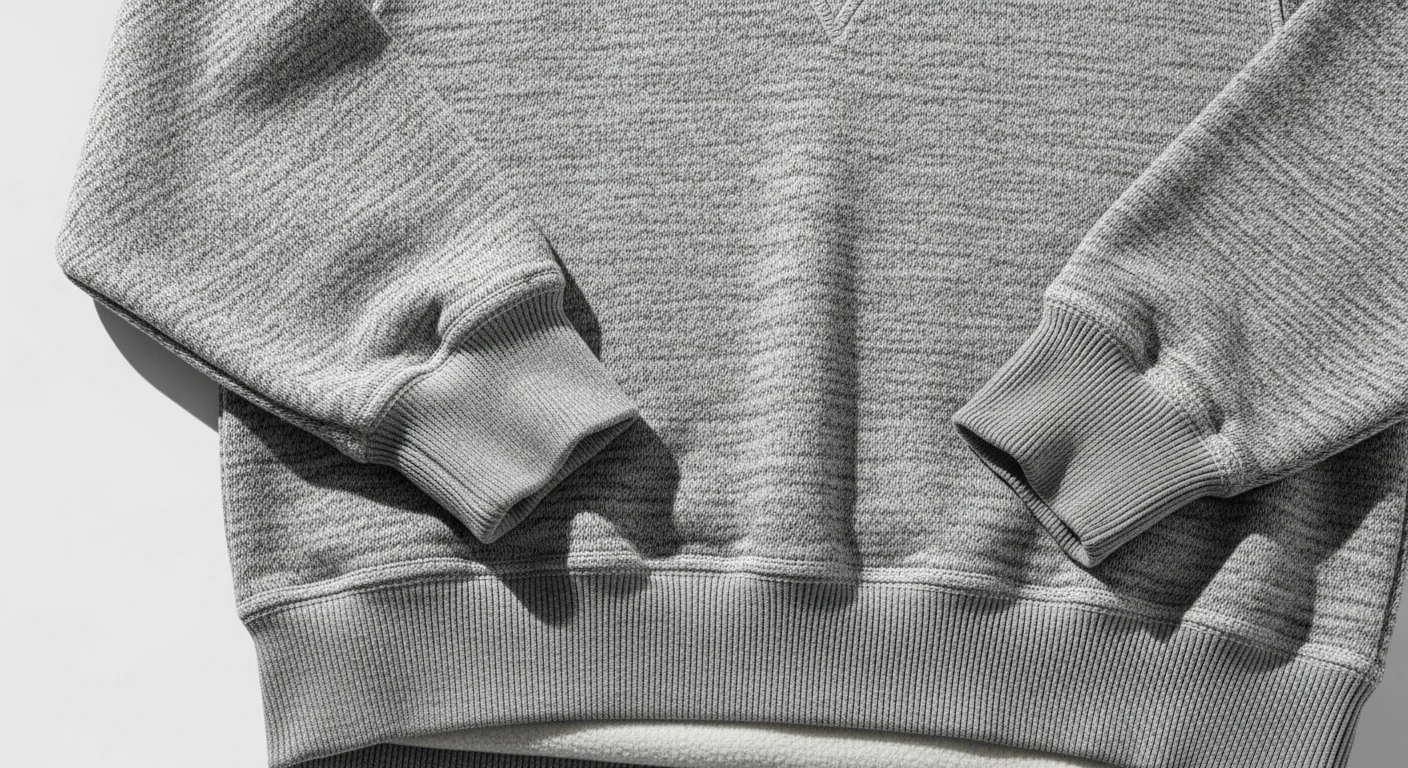
Unlike lightweight tops, sweatshirts are produced using thicker materials such as fleece or French terry. These fabrics usually range from medium to heavy weight, offering insulation while remaining breathable. Sweatshirts are constructed with long sleeves, a relaxed body fit, and ribbed cuffs and hem to maintain structure. They originated as athletic garments intended to absorb sweat and provide warmth during training. Today, sweatshirts are widely used in casualwear, loungewear, and sports-inspired fashion. From a technical perspective, sweatshirts require more fabric consumption and stronger seam construction than T-shirts. The fabric selection directly impacts hand feel, shrinkage control, and long-term wear performance.
How a Crewneck Sweatshirt Combines Both Concepts
When the crewneck neckline is applied to a sweatshirt body, the result is the classic crewneck sweatshirt.
A crewneck sweatshirt is a sweatshirt that uses a round, ribbed neckline instead of a hood or zipper.
This combination creates one of the most widely produced and consumed apparel items globally. The absence of a hood or hardware simplifies the design, reduces material complexity, and improves production efficiency. The crewneck sweatshirt offers a clean silhouette that works well for printing, embroidery, or minimalist branding. It is also easy to layer under jackets or coats. In terms of grading and sizing, the crewneck sweatshirt allows consistent proportions across size ranges, which supports scalable production. This garment type performs well across seasons, especially in mild to cool climates, making it a core style in many apparel collections.
Fabric Selection and Craftsmanship Differences
Fabric choice and construction methods clearly separate sweatshirts from lighter crewneck garments such as T-shirts.
Crewneck sweatshirts rely on heavier knit fabrics and reinforced construction, while the crewneck itself focuses on precise rib attachment and seam strength.
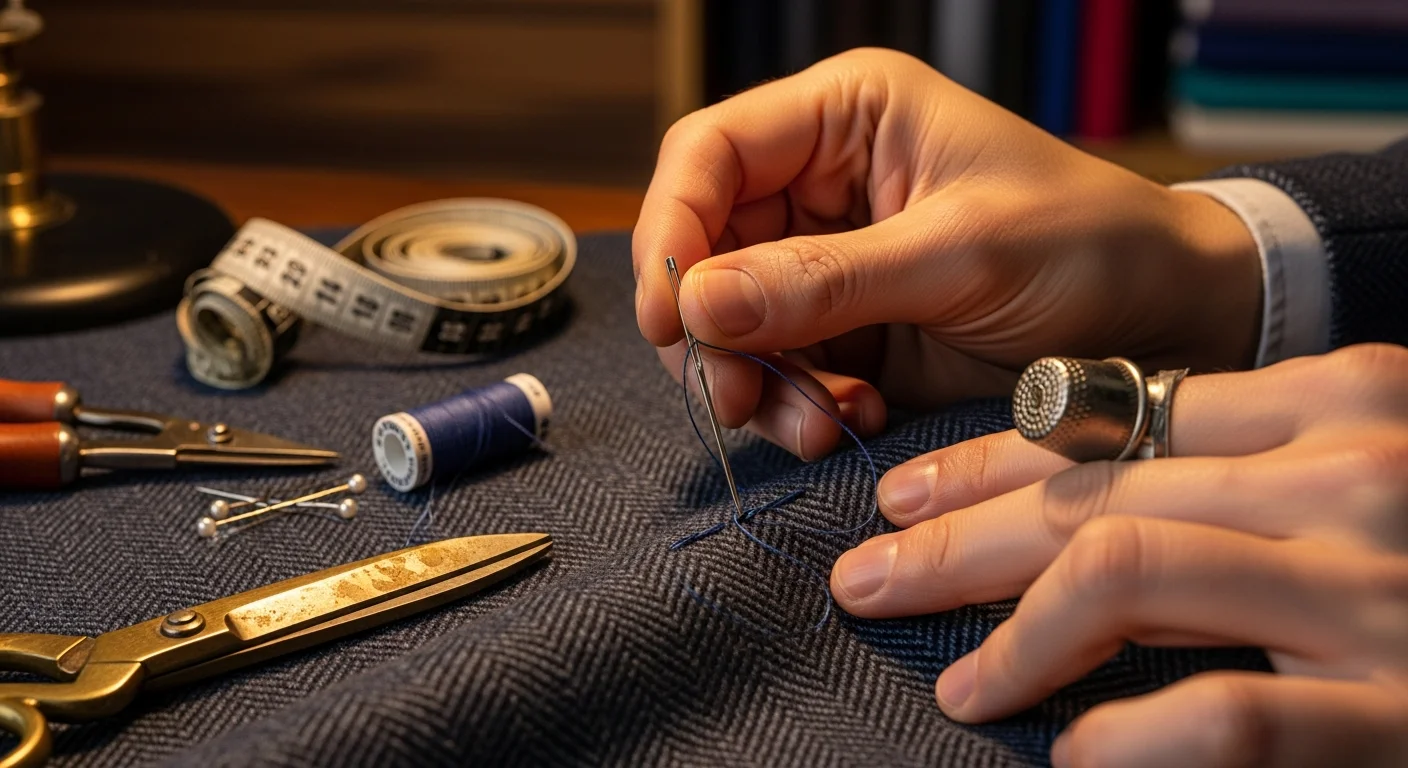
Sweatshirt fabrics often include brushed fleece for warmth or loop-back terry for breathability. These materials require pre-shrinking and testing to ensure dimensional stability after washing. The crewneck rib must match the body fabric in stretch recovery to prevent neckline distortion. Craftsmanship details include reinforced shoulder seams, coverstitching at hems, and even tension distribution along the collar seam. Poor collar attachment can cause twisting or waviness, which is unacceptable in quality inspection. Skilled operators and calibrated machines are required to maintain consistency. Fabric inspection, GSM control, and colorfastness testing are critical steps before bulk production. These technical factors directly influence garment lifespan and customer satisfaction.
Factory Workshop Process for Crewneck Sweatshirts
The production of crewneck sweatshirts follows a structured workflow designed to balance efficiency and quality.
A standardized workshop process ensures consistent output, stable quality, and reliable delivery for crewneck sweatshirt production.
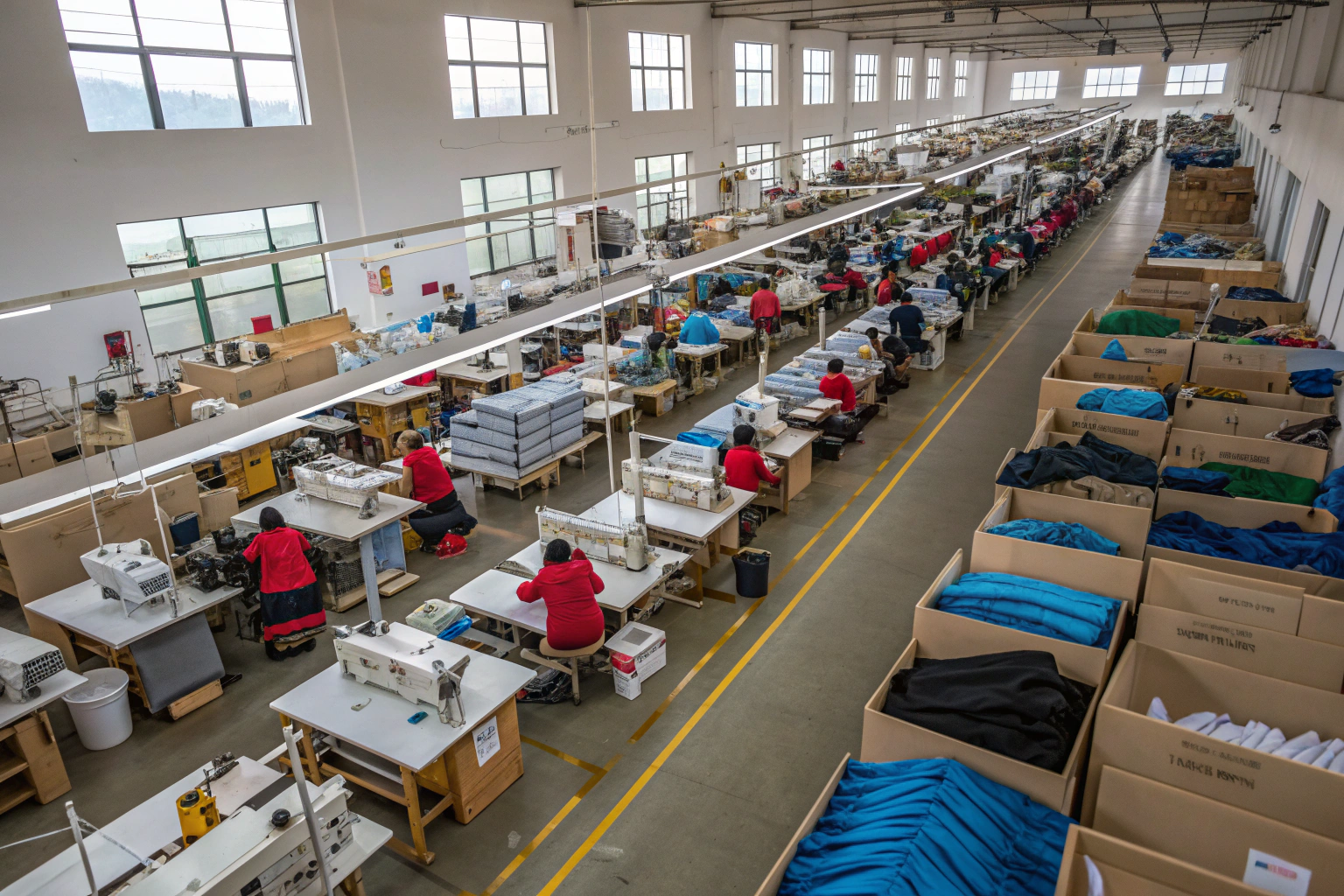
Production begins with raw material inspection, where fabric rolls are checked for defects, weight consistency, and color accuracy. Approved fabrics move to the cutting stage, often using automated cutting systems to reduce waste and improve precision. Pattern alignment is essential, especially for rib components that require accurate stretch direction. Sewing lines are organized by operation, including shoulder joining, sleeve setting, side seam closing, rib cuff attachment, waistband sewing, and neckline assembly. The crewneck collar is usually attached after the main body is assembled to maintain shape control. After sewing, garments go through trimming, washing or enzyme treatment if required, and final pressing. Quality control teams inspect measurements, seam strength, appearance, and functional stretch. Only garments that meet defined standards proceed to packing.
Conclusion
The difference between a crewneck and a sweatshirt lies in definition and function. A crewneck describes a neckline shape, while a sweatshirt describes a garment category built for warmth, comfort, and durability. When combined, they form the crewneck sweatshirt, one of the most essential products in modern apparel manufacturing. This garment succeeds because of its simple structure, versatile use, and efficient production process. From fabric selection to workshop workflow, every step influences final quality. Heavier knit materials provide insulation and comfort, while ribbed crewneck construction ensures fit stability and long-term wear. Clear technical specifications, controlled craftsmanship, and systematic factory processes allow this product to perform consistently across markets and seasons. As consumer demand continues to favor comfort, practicality, and clean design, the crewneck sweatshirt remains a foundational style supported by strong manufacturing logic and proven production efficiency.