
Women’s T-shirts vary in more than color and decoration. Neckline shape, sleeve construction, body proportions, length, and fabric all influence how a style looks and feels. A fitted ribbed tee and a loose cotton crew neck may belong to the same garment category, yet serve very different purposes in a wardrobe or clothing collection.
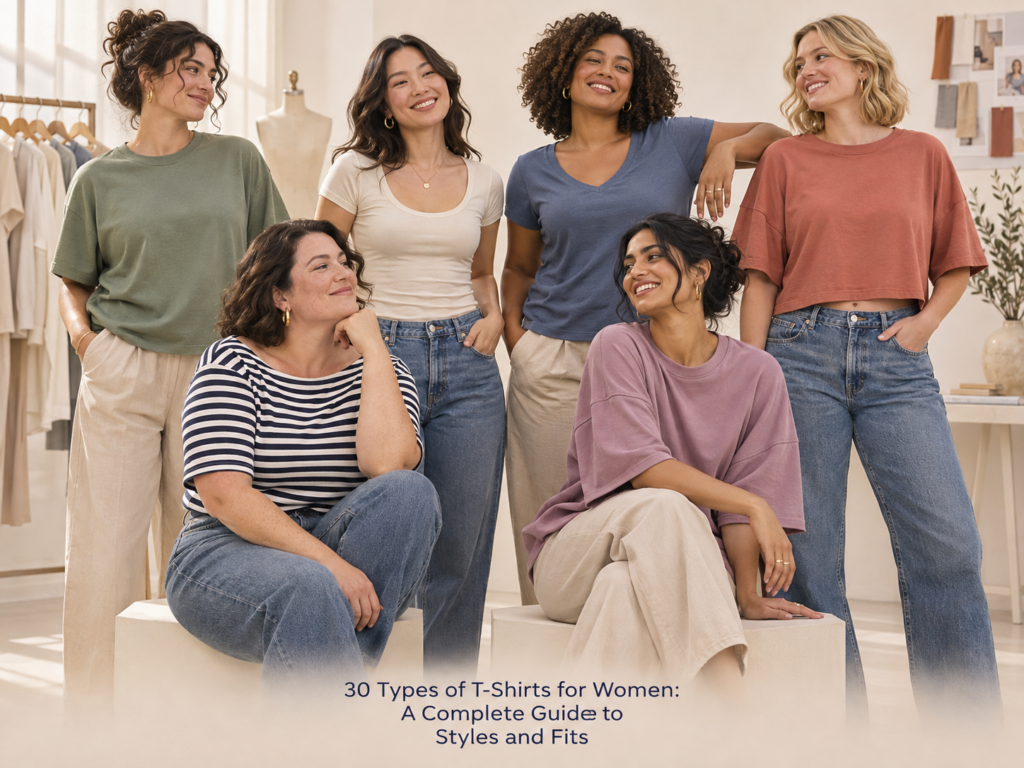
Understanding these differences helps with both buying and product development. A useful style description explains the garment’s physical features rather than relying on words such as “premium,” “flattering,” or “oversized” without measurements.
This guide covers 30 types of T-shirts for women, grouped by their main design feature. It explains how each style works, what to consider when wearing it, and which details matter when developing it for production.
How to Read the Different T-Shirt Categories
T-shirt styles overlap. A garment can have a boat neckline, raglan sleeves, a relaxed fit, and a cropped length at the same time. The following categories describe recognizable design choices rather than 30 mutually exclusive pattern blocks.
A neckline determines the opening around the neck and shoulders. A sleeve type describes coverage or how the sleeve joins the body. Fit describes the relationship between garment measurements and the wearer. Length and hem shape affect coverage and proportion. Fabric and surface design create texture, visual detail, or a particular use.
A complete description might read: “A square-neck, short-sleeve, fitted rib T-shirt ending at the high hip.” That is more useful than “a women’s fashion tee.”
Size range is a separate decision. Petite, tall, and plus-size products can use many of the styles below, with patterns and grading developed for the intended customers.
T-Shirt Types by Neckline
1. Crew-Neck T-Shirts
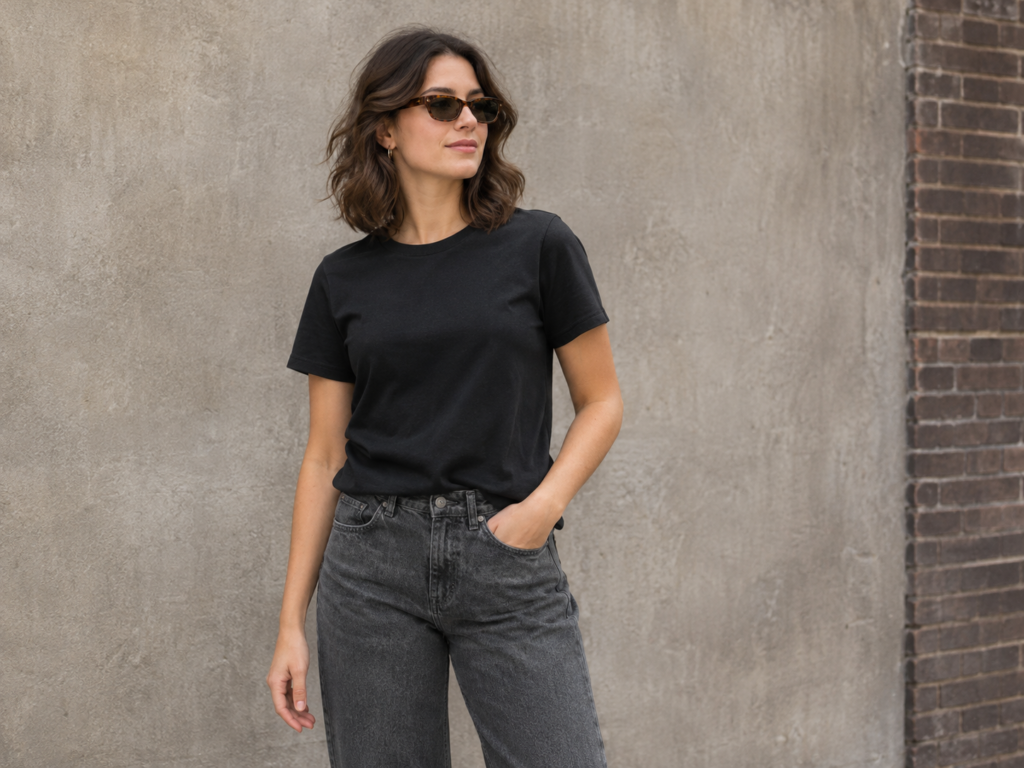
A crew neck is a rounded opening that sits relatively close to the base of the neck. It is a familiar option for everyday basics, graphic tees, and layering under jackets or overshirts.
The opening can be narrow and high or slightly wider, so two crew-neck styles may look noticeably different. Neckband width also changes the visual balance.
For production, specify the opening measurements, band material, and finished band width. The neck needs enough extension for dressing while returning to its intended shape.
A plain crew neck works with denim, tailored trousers, or skirts. When comparing garments, check that the band lies evenly and the shoulder seams sit as intended.
2. V-Neck T-Shirts
A V-neck creates an angled opening at the front. Its depth ranges from a shallow notch to a much lower neckline, with width and angle affecting the overall appearance.
It can work as a standalone top or beneath a cardigan, jacket, or open shirt. Choose the depth around the intended coverage rather than assuming every V-neck offers the same result.
The point needs careful construction. Uneven binding or stretching can create a twisted, puckered, or poorly defined tip.
During sampling, check the neckline while standing and leaning forward. A V-neck that lies neatly on a hanger may gape on the wearer, particularly if the fabric, shoulder balance, or binding is unsuitable.
3. Scoop-Neck T-Shirts
A scoop neck has a rounded opening that extends lower than a typical crew neck. It may be broad and shallow or narrower with greater depth.
This style offers a more open front while retaining a curved neckline. It pairs easily with casual trousers, skirts, and layered outfits.
The shape requires support from the fabric and edge finish. A soft jersey can drape attractively, but a weak binding may stretch away from the body.
Define both width and depth when ordering samples. Review coverage, undergarment compatibility, and whether the opening changes during movement. “Scoop neck” alone leaves considerable room for interpretation.
4. Boat-Neck T-Shirts
A boat neck extends across the upper chest toward the shoulders, usually with a relatively shallow front opening. It creates a wider horizontal line than a conventional crew neck.
It is useful for simple, clean outfits and can work with straight trousers, denim, or skirts. The broad opening also makes shoulder placement particularly visible.
Check how much fabric remains over each shoulder and whether the neckline conceals the intended undergarment straps. Front and back depths should be reviewed together.
In development, confirm dressing ease and edge stability. A boat neck should maintain its planned shape without pulling awkwardly at the shoulder ends or opening excessively when the wearer moves.
5. Square-Neck T-Shirts
Square-neck tees use a more angular opening, with corners that may be sharp or softly rounded. The neckline can create a defined frame on a fitted or relaxed jersey body.
It is often effective in ribbed or stretch fabrics, although the material must suit the intended structure. A square outline does not automatically stay square on the body.
Corners need controlled sewing and suitable stabilization. They should remain smooth without becoming bulky or restrictive.
Review the neckline with the garment worn and after care. For styling, a square-neck tee can sit neatly with high-waisted bottoms, but length and fit remain separate choices rather than fixed features.
6. Henley T-Shirts
A Henley combines a collarless neckline with a short front placket. The placket can be functional or decorative and commonly carries buttons or snaps.
It introduces a more detailed front than a plain crew neck while keeping the character of a casual knit top. Short- and long-sleeve versions both fit this category.
The placket needs enough stability for repeated opening without becoming unnecessarily rigid. Button size, spacing, reinforcement, and the finish at the lower end affect comfort and appearance.
Check the garment with the opening closed and partly open. The front should remain balanced rather than twisting or pulling. Softly textured jerseys can complement the style when their recovery and care performance are appropriate.
7. Mock-Neck T-Shirts
A mock neck rises above the base of the neck but is generally shorter than a fold-over turtleneck. It adds coverage and a defined upper edge to a jersey top.
It can work beneath a jacket, with tailored separates, or as part of a minimal casual collection. Sleeve length and fabric weight determine how seasonal the garment feels.
Specify the collar’s finished height and circumference. A collar that looks structured can still be uncomfortable if the opening is too tight or the seam lacks sufficient extension.
Check dressing ease, neck pressure, and recovery after wear. A mock-neck T-shirt can use lightweight fabric; the raised collar alone does not make it a sweater.
8. Off-the-Shoulder T-Shirts
Off-the-shoulder tees place the opening below the shoulder line on one or both sides. Some use a deliberately broad neckline, while others rely on elastic or a shaped upper edge.
The style changes how the garment is supported. Sleeve position, upper-edge tension, and body balance all influence whether it stays where intended.
Consider the desired coverage and undergarments before choosing the construction. A design that needs constant adjustment may be unsuitable for the intended activity.
For sampling, review reaching, sitting, and ordinary arm movement. Specify whether the garment is designed to remain off both shoulders, sit asymmetrically, or allow more than one wearing position.
T-Shirt Types by Sleeve Design
9. Classic Short-Sleeve T-Shirts
The classic short sleeve extends from the shoulder to partway down the upper arm. It can appear on fitted, regular, or oversized bodies.
Small changes in sleeve length and opening width have a substantial effect. A narrow sleeve close to the arm feels different from a wider sleeve ending nearer the elbow.
Use the sleeve as part of the whole silhouette. A wide body paired with a very narrow sleeve may create an unintended contrast.
During development, record sleeve length, upper-arm width, opening, and armhole requirements. For everyday wear, check comfortable arm movement and whether the sleeve hem presses into the arm when bent.
10. Cap-Sleeve T-Shirts
Cap sleeves provide short coverage over the shoulder and upper arm. They can be separate pattern pieces or integrated into the body, depending on the design.
Their compact shape works well where the upper garment needs a light, close outline. They also layer with less sleeve bulk beneath some jackets.
Because coverage is limited, the angle of the sleeve opening becomes important. Check whether the edge cuts across the arm comfortably and whether the underarm remains sufficiently covered.
A cap sleeve should be reviewed during reaching, not only with the arms lowered. Its relationship to the armhole can affect both mobility and how the side seam sits on the wearer.
11. Long-Sleeve T-Shirts
Long-sleeve tees extend to the wrist area and can use an open hem, fitted cuff, or another approved finish. They provide a useful foundation for layering and transitional dressing.
Material and fit determine warmth more than sleeve length alone. A fine jersey long-sleeve top and a dense cotton version have different applications.
Check sleeve length with the arm straight and bent. Wrist openings should permit comfortable dressing while maintaining the intended appearance.
In production, review sleeve twisting, seam position, and the relationship between body and sleeve shrinkage. A long sleeve can make distortion more visible, particularly in striped or close-fitting garments.
12. Three-Quarter-Sleeve T-Shirts
Three-quarter sleeves end between the elbow and wrist. The exact position varies, so the style name needs a finished measurement.
They can suit everyday outfits where wrist freedom is useful and full sleeve coverage is unnecessary. A slightly wider opening produces a different look from a fitted forearm.
Check where the hem sits when the elbow bends. An opening that is too narrow can become uncomfortable or catch higher on the arm.
For a size range, review proportional changes rather than adding identical length everywhere. The intended sleeve position should remain recognizable across different sizes and customer heights.
13. Raglan-Sleeve T-Shirts
Raglan sleeves join the body along seams extending toward the neckline instead of using a conventional shoulder seam around the armhole.
They are associated with athletic and casual styling, particularly when the sleeves contrast with the body. They can also be subtle in a single color.
The seam placement changes the upper pattern and appearance, but does not guarantee freedom of movement by itself. Sleeve shape, underarm room, and fabric still matter.
Check that the seams lie consistently and that the neckline remains balanced where the panels meet. For a coordinated color-block design, define the colors of every panel, including the neckband and stitching.
14. Dolman-Sleeve T-Shirts
Dolman sleeves have a low, generous underarm shape and are often cut as part of the body or formed with a broad sleeve connection. The silhouette typically narrows toward the sleeve opening.
A soft, draping fabric can emphasize the fluid upper shape. More substantial jersey creates a different, more sculptural result.
They work well in relaxed outfits, but extra underarm volume can be bulky beneath a close jacket.
Review the garment with arms raised and lowered. The body may lift as the sleeve moves, so length and movement need joint assessment. Specify the underarm depth and opening rather than relying on the term “batwing” or “dolman” alone.
T-Shirt Types by Fit and Silhouette
15. Fitted T-Shirts
A fitted tee follows the body more closely than a regular or relaxed style. It can use shaped side seams, stretch material, or a combination of pattern and fabric choices.
“Fitted” describes a relationship to the wearer, not a requirement for tightness. The garment should provide the intended movement and coverage without unplanned pulling.
Review the bust, waist, hip, armhole, and sleeve together. Excessive tension in one area can distort the neckline or hem.
For styling, fitted tees work easily beneath jackets and with fuller bottoms. In development, assess fabric extension and recovery alongside measurements so the fit remains consistent during wear.
16. Baby T-Shirts
A baby tee is an adult fashion style generally characterized by a compact, close-fitting body and relatively short sleeves. It often has a shorter body than a conventional regular-fit tee.
The name does not describe children’s clothing. Nor does it establish one standard length or fabric.
It can pair with relaxed denim or high-waisted trousers, depending on the desired proportions. Some versions are cropped; others reach the waist or high hip.
Sampling should establish the intended body length, sleeve shape, and stretch behavior. Review whether the garment remains comfortable when seated and whether the hem rides upward more than planned during movement.
17. Regular-Fit T-Shirts
A regular fit provides moderate room around the body without an intentionally oversized silhouette. The exact amount of ease varies between collections.
It is a useful starting point for everyday wardrobes, uniform programs, and core T-shirt ranges. A balanced body and sleeve make the style easy to layer or wear alone.
Avoid treating “regular” as a universal size standard. Two garments with the same size label may have different chest, shoulder, and length measurements.
For product development, define the target wearer and measurement chart. Check the sample standing, seated, and moving. A reliable regular-fit block can support several necklines and decorative variations.
18. Relaxed-Fit T-Shirts
Relaxed tees offer more room through selected areas of the body than a close or conventional regular fit. The silhouette can remain controlled rather than dramatically enlarged.
They can be useful for comfortable everyday dressing, travel, and casual collections. Material choice determines whether the garment falls softly or holds a broader shape.
Specify where the added room belongs. Chest width, waist shaping, sleeve opening, and body length need not all increase equally.
A relaxed tee should still have deliberate proportions. Review how it sits over the chosen bottoms and whether the shoulders, neckline, and hem remain balanced on the intended wearer.
19. Oversized T-Shirts
An oversized T-shirt deliberately uses increased volume as a design feature. Wider bodies, dropped shoulders, broader sleeves, and longer or cropped proportions can all contribute.
It is different from simply buying several sizes larger. Purposeful development controls the neckline, sleeve length, and overall balance despite the extra room.
Oversized styles can work with fitted bottoms, full-length trousers, or coordinated casual sets. Styling depends on how much coverage and volume the wearer wants.
For manufacturing, define the silhouette with measurements and references. Check the smallest and largest sizes carefully; uncontrolled grading can turn an intentional oversized shape into inconsistent fit.
20. Boxy T-Shirts
A boxy tee emphasizes width relative to body length, often with relatively straight side seams. It can be short, high-hip length, or cropped.
It overlaps with relaxed and oversized fits, but its defining feature is the width-to-length relationship. A boxy tee need not be extremely large.
A more stable jersey can emphasize the outline, while a fluid fabric softens it. It pairs readily with higher-waisted bottoms when the length is chosen accordingly.
Check the hem’s behavior across the body. Excess width combined with a stiff material can stand away from the wearer. Specify the desired drape instead of assuming “boxy” communicates the complete result.
T-Shirt Types by Length and Hem
21. Cropped T-Shirts
Cropped tees end higher than conventional-length styles, but the actual endpoint varies from above the waist to the upper hip.
They can be fitted, regular, or oversized. A cropped length does not determine the neckline or sleeve construction.
Choose the proportion around the intended bottoms and coverage. A garment that just meets a high waistband while standing may reveal more when the wearer sits or reaches.
For development, specify the measurement point for body length and assess the sample in movement. Bust shape and garment balance can affect the front hem position, so front and back lengths should be reviewed together.
22. Longline T-Shirts
Longline tees extend farther down the body than a conventional T-shirt. They can provide extra coverage or form part of a layered silhouette.
They are useful with leggings, slimmer trousers, or contrasting shorter outer layers, depending on the wearer’s preference. The intended use should determine the length.
Review room through the hip and seat. Extending a narrow T-shirt pattern without adjusting lower-body measurements can cause the garment to ride up.
Side openings may help movement when appropriate. In sampling, check sitting, walking, and pocket access in the bottoms. A longline tee is not automatically a dress; coverage and intended use need separate consideration.
23. High-Low Hem T-Shirts
High-low tees have different front and back lengths, commonly with a shorter front and longer back. The transition can be gradual or more pronounced.
This shape can provide rear coverage while keeping the front less bulky when paired with trousers or skirts.
Specify both lengths and the side profile. A back measurement alone does not communicate how the hem connects around the body.
Light fabrics can fall differently from firmer jerseys, particularly at the sides. Review the garment from front, side, and back, and check that the seam position remains balanced. Side vents and curved transitions should be defined as construction details.
24. Curved-Hem T-Shirts
A curved hem changes the lower edge from a straight line into a shaped outline. The front and back can have matching or different curves.
It can soften the lower silhouette and provide selected coverage without making the entire garment equally long.
A curved hem differs from a high-low hem: one describes shape, the other describes a length difference. A single garment may combine both.
Check the radius and finishing method. Tight curves can be difficult to turn neatly in some fabrics, leading to waviness or twisting. Review the hem after laundering and specify whether any side points or openings form part of the design.
T-Shirt Types by Fabric, Detail, and Use
25. Ribbed T-Shirts
Ribbed tees use a knit structure with visible ribs, rather than a smooth jersey face. Rib fabrics can be made from different fibers and may include elastane.
The structure can provide lateral stretch and a close, textured appearance. Recovery, coverage, and shape retention depend on the particular material. CottonWorks™
Ribbed tees work as standalone tops or layering pieces, with fitted necklines and body proportions often emphasizing the texture.
Check the fabric while stretched. Color depth and opacity can change, and a smooth-looking swatch may reveal more when worn. Approve the neckline and hems in the intended material, since a rib specification alone does not establish their stability.
26. Slub T-Shirts
Slub tees use yarn with intentional variations in thickness, creating an irregular surface character. The effect can be subtle or clearly visible.
They are useful where the collection calls for a textured casual basic rather than a uniformly smooth face.
Slub describes the yarn effect, not a fixed fiber content, weight, or quality level. A slub tee can have a regular fit, open neckline, or another combination of features.
Review a representative fabric area and a finished garment. Texture can influence opacity and how printed artwork appears. Define acceptable surface variation so the intended effect can be distinguished from unrelated defects during inspection.
27. Striped T-Shirts
Striped tees are defined by their visible pattern, which can be created through yarn arrangement, printing, or another textile process.
Stripe width, spacing, color contrast, and direction change the result. Narrow tonal stripes and broad contrasting bands serve different design purposes.
They pair easily with solid separates and can provide a recognizable feature in an otherwise simple garment.
For production, identify how the stripes are made and which seams require matching. Alignment at the sides, sleeves, or pocket can affect cutting and labor. Review the neckline as well: the position of a stripe beneath the binding can make an otherwise symmetrical garment appear uneven.
28. Graphic T-Shirts
Graphic tees carry artwork, lettering, illustrations, or other visual decoration. The design may be printed, transferred, embroidered, or combined with additional techniques.
The artwork and garment should be developed together. A large graphic looks different on a fitted tee, a boxy crop, and a long oversized body.
Confirm the decoration process against the fabric and desired hand feel. Large solid coverage can change flexibility, while dense embroidery can add weight.
For styling, the graphic can act as the main visual feature with simpler bottoms. In manufacturing, specify artwork dimensions, color references, placement, and any size-related changes, then assess the decorated sample after care.
29. Pocket T-Shirts
Pocket tees add one or more visible pockets, commonly on the chest. The pocket can be functional, decorative, or both.
Its dimensions, opening, position, and material should reflect the intended role. A small branding pocket differs from one expected to carry an object.
A plain body with a pocket can provide detail without a large graphic. Contrast fabric, embroidery, or a label can create further variation.
Check placement on the wearer, particularly across the bust. A pocket that appears centered on a flat pattern can sit differently on the body. Reinforce the opening appropriately and review whether its weight distorts a lightweight base fabric.
30. Performance T-Shirts
Performance tees are developed around an activity or wearing condition. Running, gym training, studio exercise, and outdoor layering can require different solutions.
The category can use several fibers, constructions, and fits. Polyester content, mesh panels, or stretch yarn alone does not prove a performance claim.
Define the intended properties, such as moisture behavior, drying performance, coverage, or freedom of movement, and determine how they will be evaluated.
Review seam placement, underarm comfort, hem movement, and decoration during a representative activity. A casual athletic look is different from an assessed functional requirement. Branding should remain compatible with the fabric and avoid unnecessary stiffness in movement areas.
Choosing Fabric for Women’s T-Shirts
The style name provides only part of the product description. Fabric determines much of the drape, surface, coverage, and care behavior.
Cotton and Cotton Blends
Cotton jersey is a familiar starting point for everyday tees. Yarn, knitting, finishing, and weight influence the feel, so “100% cotton” is not a complete quality specification.
Cotton blends can offer different combinations of texture, care behavior, stretch, and cost. Evaluate the selected material rather than assuming a blend is inherently better or worse.
Viscose, Modal, and Lyocell Options
These fiber families can be considered where a softer, more fluid drape is part of the brief. Their performance depends on the actual fabric and finishing.
Assess recovery, opacity, seam appearance, and dimensional change. A fabric that feels appealing in a swatch still needs to work in the intended neckline and silhouette.
Stretch Materials
Elastane-containing fabrics can support close-fitting styles, but the percentage alone does not establish how the garment will fit.
Review extension in relevant directions, recovery, and the tension created by the pattern. More stretch is not automatically more comfortable.
Weight and Construction
GSM measures fabric mass per square meter. It does not directly measure thickness, opacity, breathability, or quality.
Single jersey, rib, and interlock have different structures. A heavier jersey and a lighter double knit may behave differently even when both look substantial.
Through Yoplook’s material sourcing service, brands can review fabrics around the intended fit, finish, and product budget. Compare swatches and finished samples before committing.
How to Evaluate the Fit of a Women’s T-Shirt
Begin with the intended silhouette. A fitted tee and a deliberately broad drop-shoulder style should not be judged against identical expectations.
Check shoulder placement, neckline position, bust room, waist and hip allowance, armhole shape, and sleeve opening. View the garment from front, side, and back.
Review body balance. If the front rides up unexpectedly, adding overall length may not resolve the underlying fit issue.
Movement matters. Raise the arms, sit, reach forward, and bend. Identify which changes are part of the design and which cause unwanted pulling, exposure, or discomfort.
Layering also changes the brief. A tee intended beneath tailoring may need different sleeve volume and surface bulk from a standalone casual style.
When developing a size range, evaluate representative sizes and suitable wearers. Grading should preserve the style while accounting for the target customer’s proportions.
Inclusive sizing is a development commitment involving measurements, patterns, samples, and communication. Adding larger size labels without reviewing the product does not establish consistent fit.
Construction Details That Separate a Good Tee From an Average One
Neckline Finish
The band or binding needs to suit the opening and fabric. Check for waviness, twisting, excess tension, and recovery after dressing.
Crew necks, V-necks, and square openings require different development. A binding method that works on one should not be transferred without review.
Seams and Hems
Review stitch formation, skipped stitches, puckering, and seam security. The construction should accommodate the movement expected from the material.
Knit hems need an appropriate stitch and setup. More stitching does not automatically improve the result if it restricts extension or creates bulk. Coats Group plc
Garment Stability
Check side-seam position, sleeve alignment, and body shape after care. Twisting or unexpected dimensional changes can alter the intended silhouette.
Decoration should be reviewed at the same time. Printing, embroidery, or applied components can affect fabric behavior and appearance.
Comfort on the Inside
Inspect labels, seam bulk, embroidery backing, and any rough areas. A visually clean exterior does not guarantee a comfortable garment.
Establish the care process and quality criteria during development. Approved samples should represent both the desired appearance and the relevant performance requirements.
Developing a Balanced Women’s T-Shirt Collection
A useful range plan starts with customer needs rather than an attempt to produce every style.
An everyday collection might use a dependable regular-fit crew neck, an open-neck variation, and a long-sleeve layer. A fashion-led range might focus on fitted ribs, baby tees, and boxy crops.
Choose clear differences. Several products with nearly identical measurements and only slightly different names may compete for the same customer without adding much value.
Shared fabrics and colors can make a range coherent. Confirm whether sourcing and production allow combined material purchasing, since different styles may still have separate manufacturing minimums.
Plan decoration around the silhouettes. A graphic that works across an oversized chest may need different dimensions on a fitted crop. Keep those decisions in the artwork specification.
Use samples to compare the collection as a group. Check that color, quality level, sizing language, and presentation remain consistent across products.
What to Send a Women’s T-Shirt Manufacturer
A clear brief helps the manufacturer assess feasibility, sampling, and cost.
| Requirement | Information to provide |
|---|---|
| Product direction | Intended customer, use, and style references |
| Neckline and sleeves | Shape, dimensions, and construction details |
| Fit | Target measurements, sample size, and size range |
| Length and hem | Front and back lengths, curve, and openings |
| Fabric | Composition, structure, weight, stretch, and finish |
| Decoration | Artwork, process preference, size, and placement |
| Branding | Labels, tags, and packaging |
| Order plan | Quantity by style, color, and size |
| Delivery | Destination and required arrival date |
If some details are undecided, identify them. A physical reference can help communicate feel or fit, but the final specification should record the agreed requirements.
Confirm the manufacturer’s development scope: patterns, grading, revisions, material sourcing, and decoration trials. Ask which costs sit outside the quoted garment price.
Before bulk production, approve the intended fabric, sample, measurements, artwork, and packing details. Record any agreed differences so the production team works from one current reference.
Women’s T-Shirt Manufacturing With Yoplook
Yoplook is a custom clothing manufacturer supporting women’s T-shirts alongside hoodies, dresses, sportswear, denim clothing, and other apparel categories.
As a custom T-shirt manufacturer, we support development around fabric, fit, neckline, sleeves, colors, printing, embroidery, labels, and packaging. Yoplook
Our work connects material sourcing, pattern development, sampling, and bulk production. Brands can review the proposed style in physical form and refine its proportions and finishing before approving the order.
Whether the project involves everyday basics, fitted stretch tees, or graphic-led casualwear, share your references, material preferences, size range, and quantity breakdown. Our team can assess the development work and explain the next steps for sampling and quotation.
Frequently Asked Questions
What is the difference between a crew neck and a round neck?
Crew neck generally describes a rounded opening close to the base of the neck. “Round neck” is a broader description and is sometimes used for the same style. Compare the actual opening measurements.
Are oversized and boxy T-shirts the same?
They overlap, but emphasize different features. Oversized refers to deliberate additional volume. Boxy describes a relatively broad, shorter silhouette. A tee can be both.
Is a baby tee always cropped?
No. Baby tees usually have compact proportions and a close fit, but their body length varies. Check the finished measurement rather than assuming the hem position.
Which T-shirt fabric is best for women?
It depends on the desired fit, drape, use, and care. Smooth cotton jersey, rib, fluid cellulosic blends, and performance knits provide different options. Evaluate the complete garment.
Can every style be made in every size?
Many styles can be developed across a broad size range, but patterns and grading need to suit the intended customers. Representative fit testing is essential.
How many styles should a new collection include?
There is no universal number. Choose a manageable range with clear product roles, then account for the inventory created by every color and size.
Choose the Style Through Its Details
The most useful T-shirt descriptions connect neckline, sleeve, fit, length, and fabric. Understanding those features makes it easier to select a garment or communicate a design for manufacturing.
For a custom collection, resolve the proportions and materials during sampling, then keep the approved specification consistent through production. Contact Yoplook to discuss women’s T-shirt development and manufacturing requirements.