
Slipping leggings during a workout or a walk can ruin comfort, performance, and confidence — but this common issue has clear causes and proven solutions.
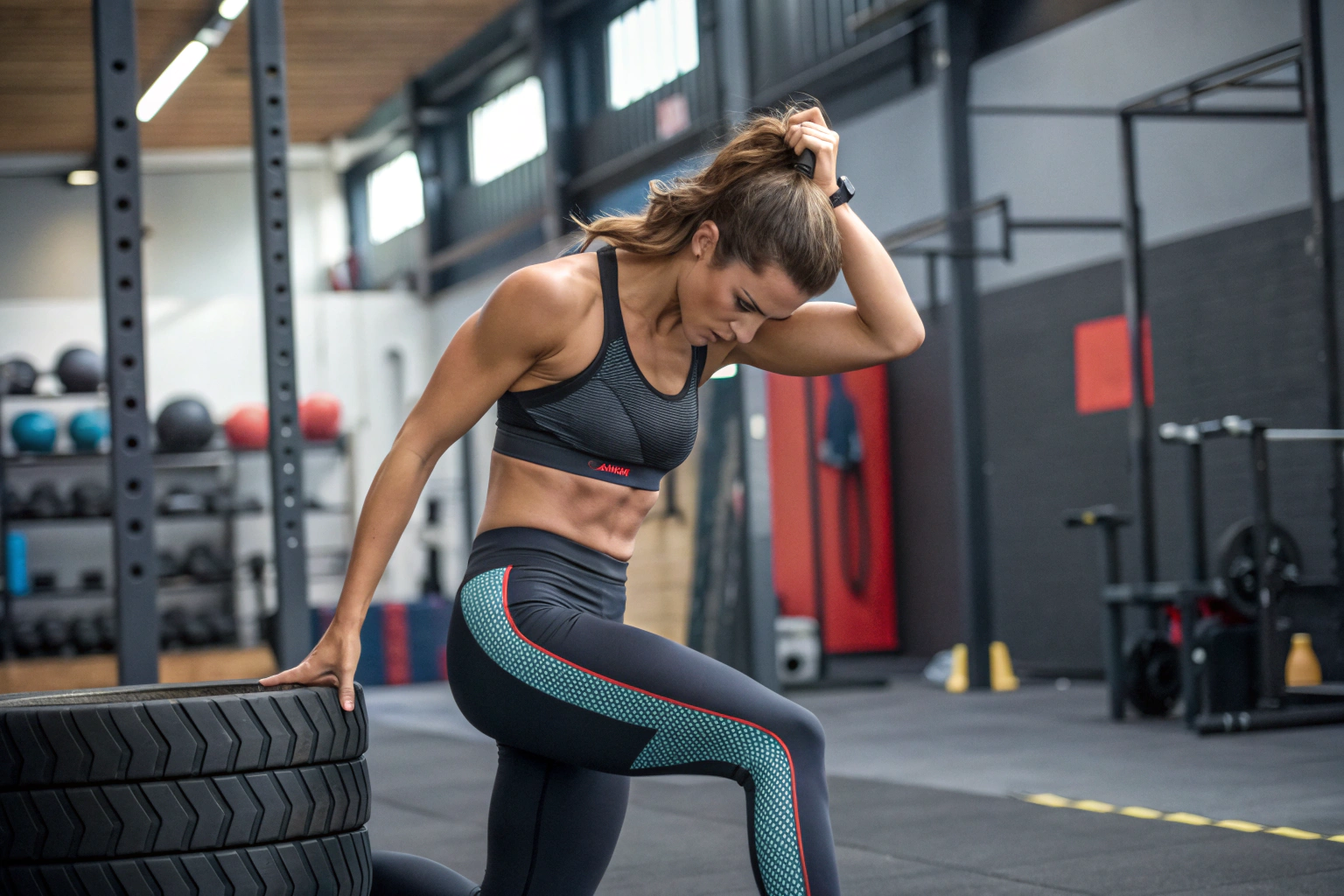
Leggings fall down due to poor fit, low waistband design, inadequate fabric stretch, weak elastic, or size mismatch. Solutions include choosing high-rise designs, four-way stretch fabrics, and waistband reinforcement.
Understanding the cause of sliding leggings is key for both consumers and manufacturers. Whether for fitness routines or daily wear, the right combination of cut, fabric structure, and waistband engineering ensures leggings stay secure without constant adjustment. This insight drives design upgrades across performance and fashion leggings.
Is size the reason why leggings fall down?
Incorrect sizing is one of the most common reasons for leggings slipping during movement.
Leggings that are too large at the waist or hips lack the grip needed to stay in place, especially during high-motion activities.
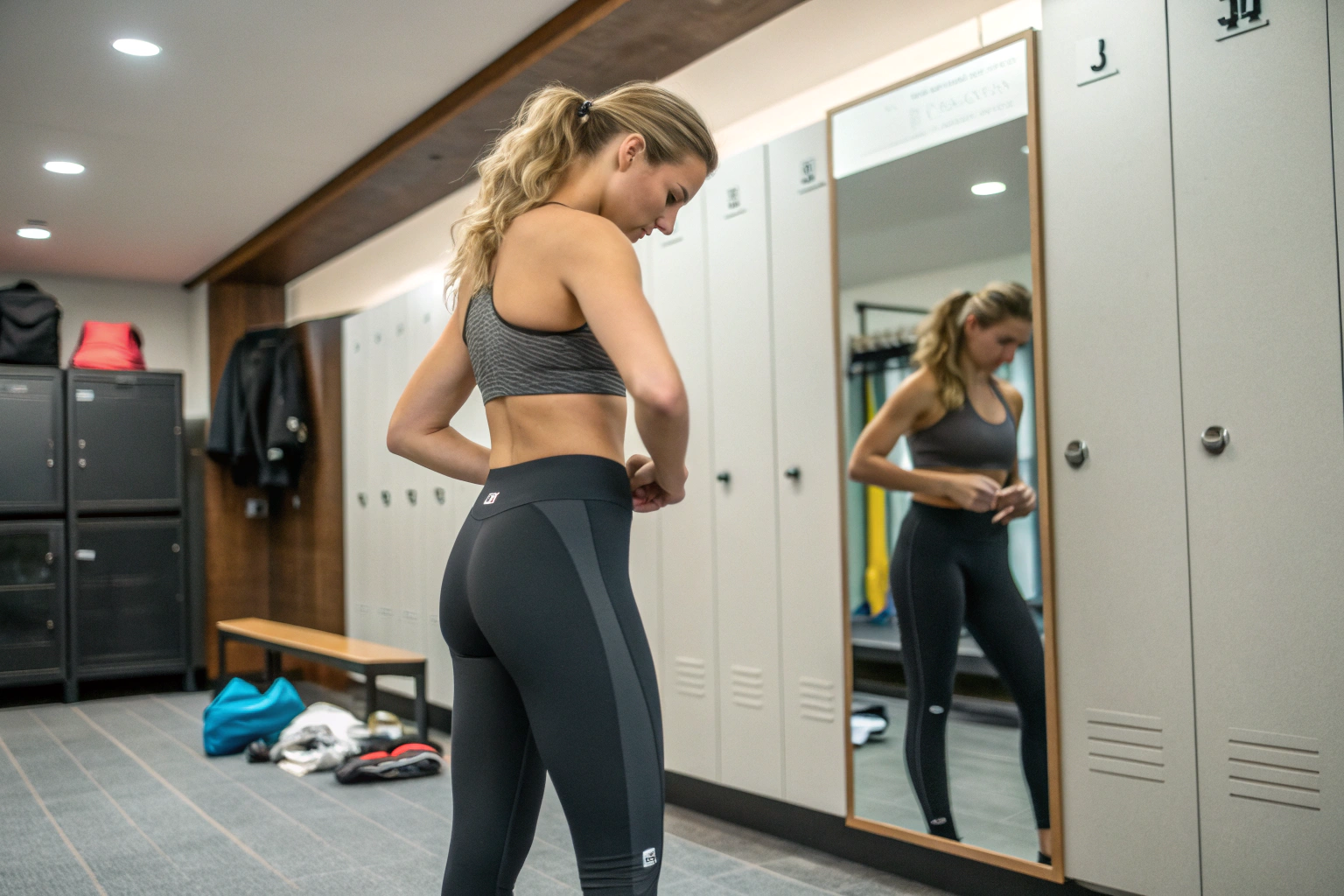
Leggings must fit close to the skin to maintain contact and support. If the waist is loose or the hip area lacks compression, fabric shifts downward under gravity and motion. Sizing inconsistencies between brands or fabric blends can also confuse consumers — leading to poor fit even when labeled correctly.
Manufacturers address this by using digital body measurements in pattern grading and reinforcing sizing consistency across styles. When leggings are offered in extended size ranges with precise hip-to-waist ratio mapping, fit accuracy improves across diverse body types.
| Issue | Result |
|---|---|
| Waist too loose | Leggings slide down during wear |
| Hip area gaping | Fabric shifts during bending or walking |
| Brand size mismatch | Incorrect selection, leading to poor hold |
How does waistband design affect hold?
Waistband construction plays a critical role in how leggings stay in place throughout the day.
Low-rise waistbands, weak elastic, or poor contouring can cause leggings to slip, while wide, high-rise, and shaped waistbands provide better support.
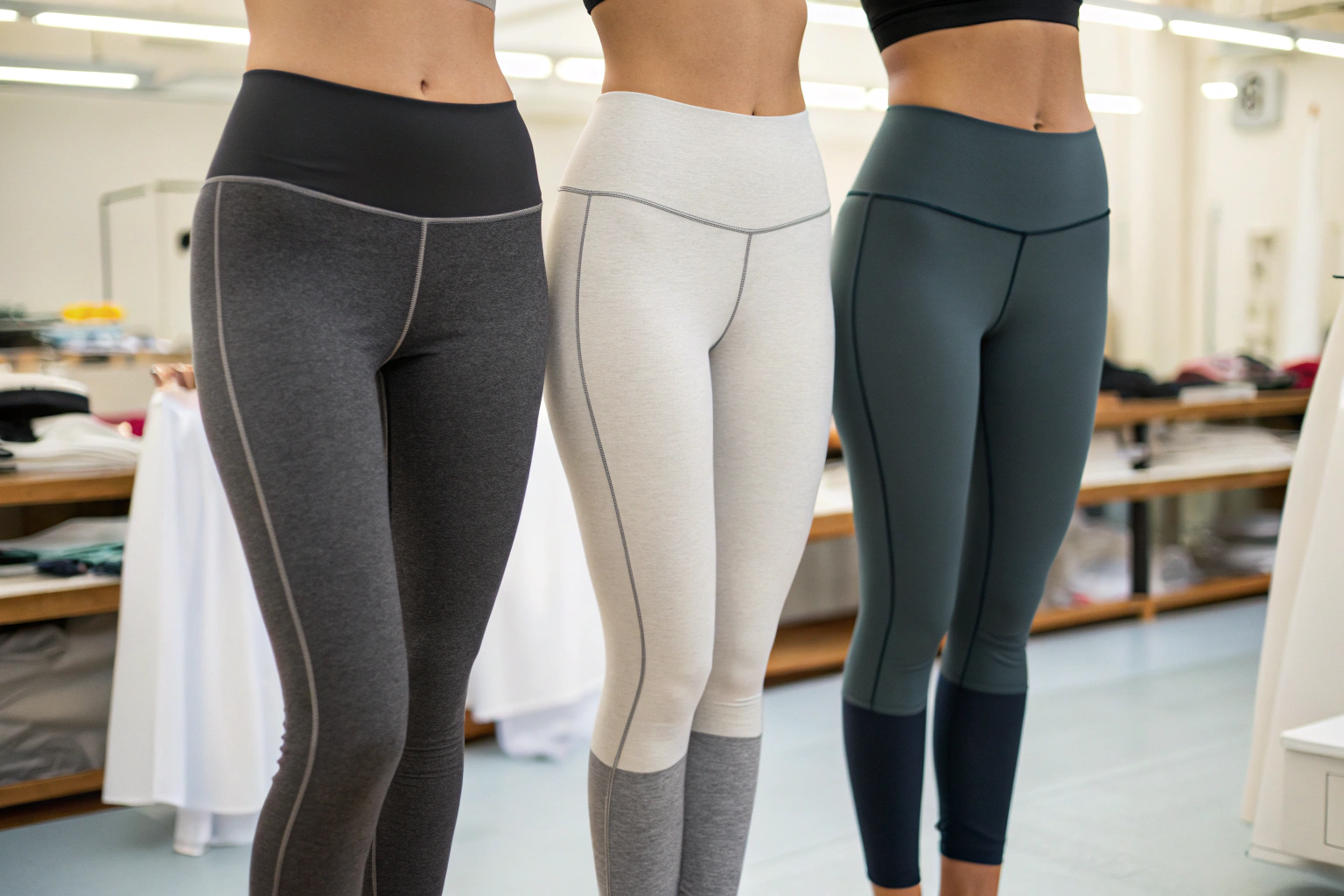
Low-rise designs tend to sit below the natural waist and don’t anchor against the body’s core area. As the wearer moves, the waistband shifts. Thin waistbands can also curl, fold, or stretch out — reducing tension.
Well-engineered leggings use high-rise waistbands that sit at or above the navel. A wider surface area distributes pressure evenly and allows for inner contour panels or bonded elastic that resists rolling. Some performance leggings integrate double-layer waistbands with reinforced stitch lines for additional support.
| Waistband Feature | Stability Impact |
|---|---|
| High-rise fit | Anchors leggings at stable waist point |
| Wide waistband (5cm+) | Improves pressure distribution |
| Contour shaping panels | Adds grip and body conformity |
| Bonded or reinforced elastic | Prevents rolling and slipping |
Can fabric quality cause leggings to slip?
Not all stretch fabrics perform equally. Inadequate elasticity and recovery can directly lead to sagging.
Low-quality or one-way stretch fabrics often lose shape during wear, causing leggings to slide. Four-way stretch materials with spandex offer better shape retention.
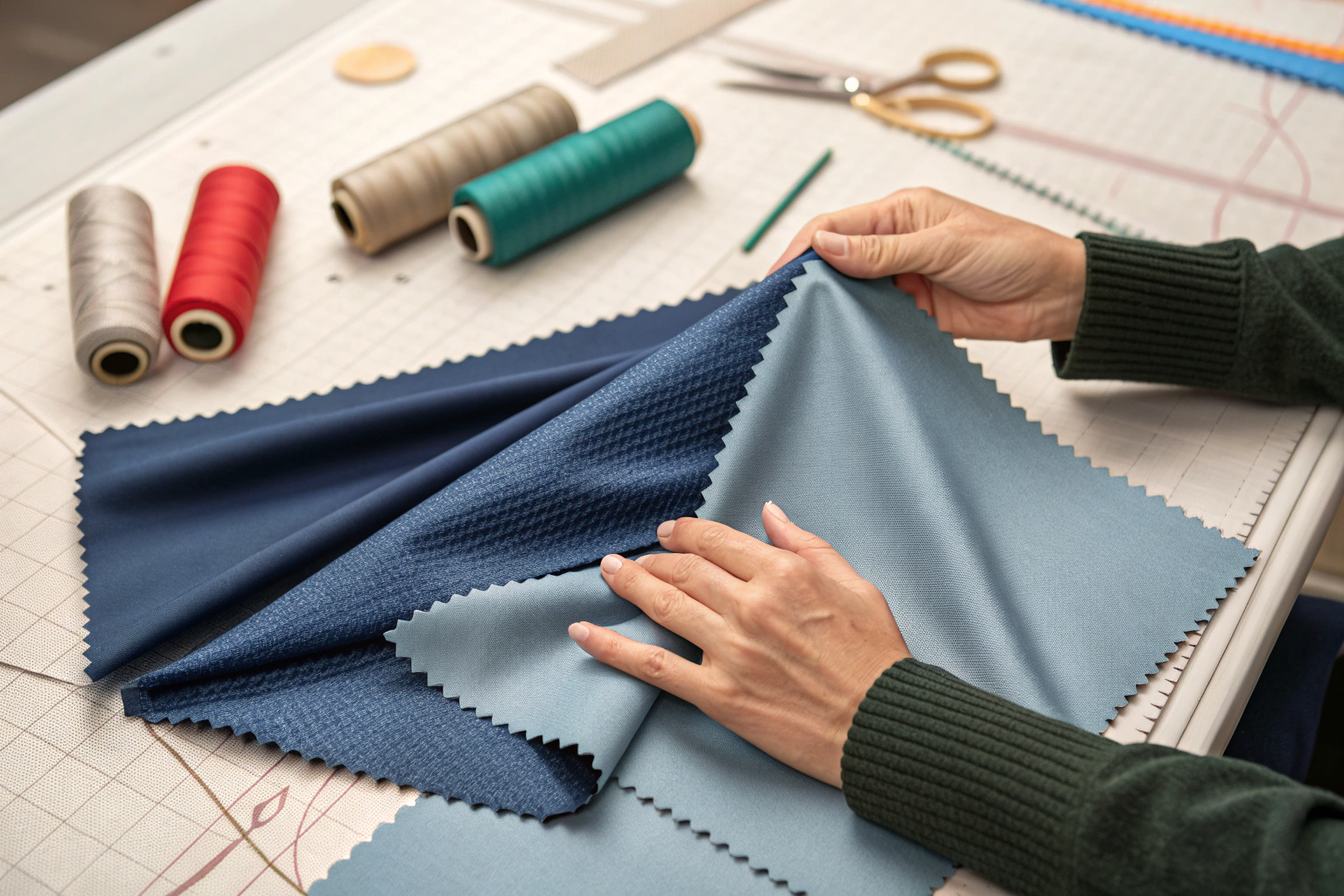
Fabric composition matters. Leggings with low spandex (under 8%) or no recovery-enhancing structures tend to relax after wear. This affects the garment’s ability to bounce back and hold shape. One-way stretch — common in budget leggings — provides motion in only one direction, failing to support multi-angle movement.
Premium leggings feature four-way stretch — horizontally and vertically — using nylon/spandex or polyester/spandex blends. These fabrics hug the body and resist bagging. High-performance blends also include moisture-wicking and anti-slip finishes to enhance comfort and stability.
| Fabric Property | Effect on Legging Stability |
|---|---|
| One-way stretch | Limited movement support, prone to slip |
| Four-way stretch | Full body coverage, retains shape |
| High spandex content | Enhances elasticity and rebound |
| Quick-dry performance | Reduces fabric drag from sweat |
What additional features help leggings stay in place?
Besides fit and fabric, several small construction details can make a major difference.
Internal drawstrings, silicone grips, reinforced stitching, and panel shaping can improve legging security during wear.
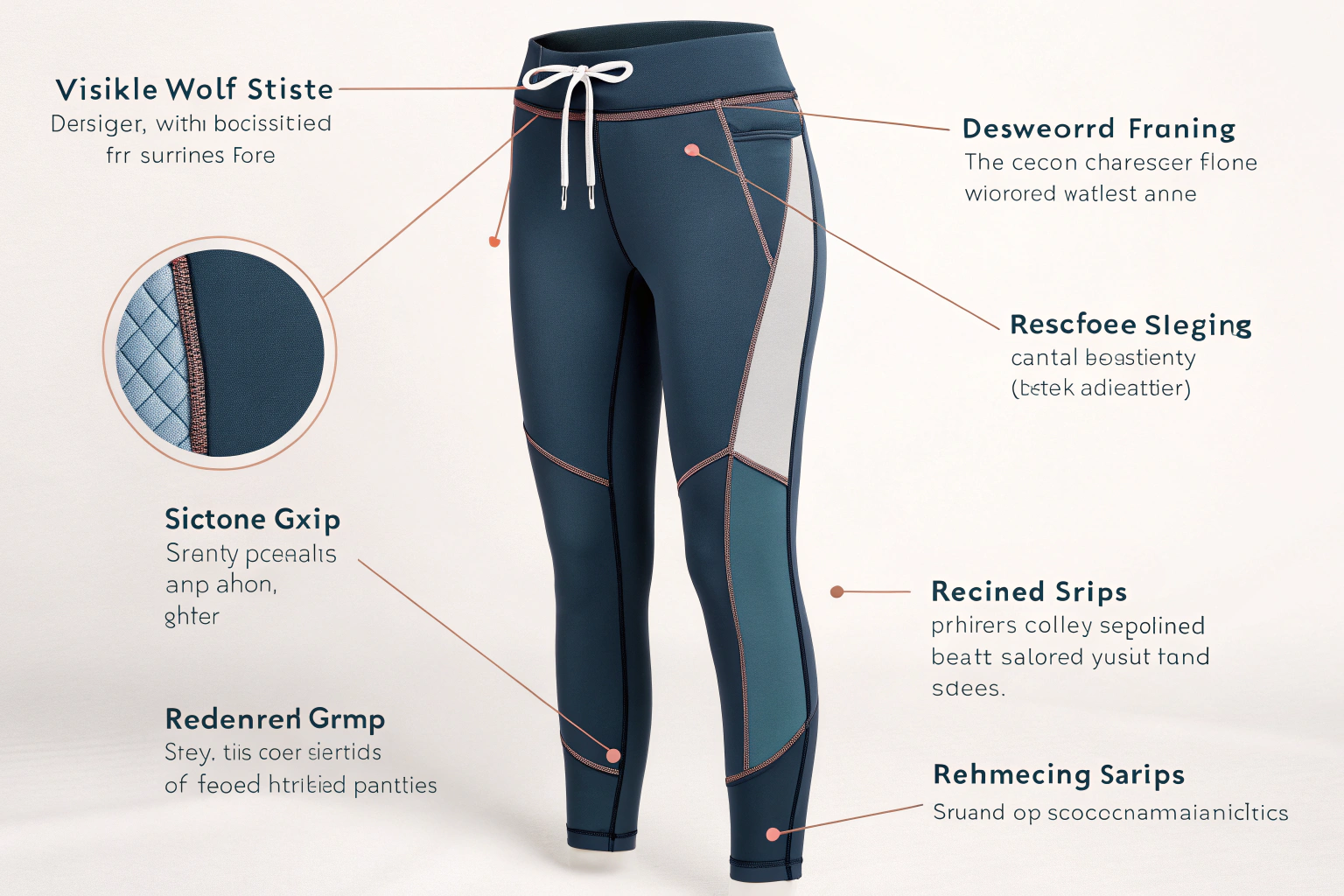
For intense activity, internal drawstrings let the user tighten the waistband manually. Silicone strips inside the waist or leg hem provide friction to prevent slippage. Flatlock seams and gusseted construction reduce pull at stress points and maintain contour alignment.
Some leggings now include compressive shaping zones or ergonomic panel placement, guiding the fabric to stay aligned with natural muscle movements. These engineering decisions — when integrated into scalable production — improve function across fitness and lifestyle product lines.
| Feature | Function |
|---|---|
| Internal drawstring | Allows waist tension adjustment |
| Silicone inner strip | Adds friction against skin or fabric |
| Flatlock/gusset seams | Prevents shifting at movement junctions |
| Shaping panels | Enhances body conformity and hold |
Conclusion
Leggings fall down when sizing, stretch recovery, waistband design, or structural details are misaligned with user movement. The most effective solution involves combining high-rise waistbands, four-way performance fabrics, and strategic construction. These principles guide production development for modern activewear — ensuring leggings that look sharp and stay in place, from studio to street.