
Sweatshirts and hoodies are often grouped together in casual wear collections. This creates confusion in product naming, design planning, and manufacturing execution.
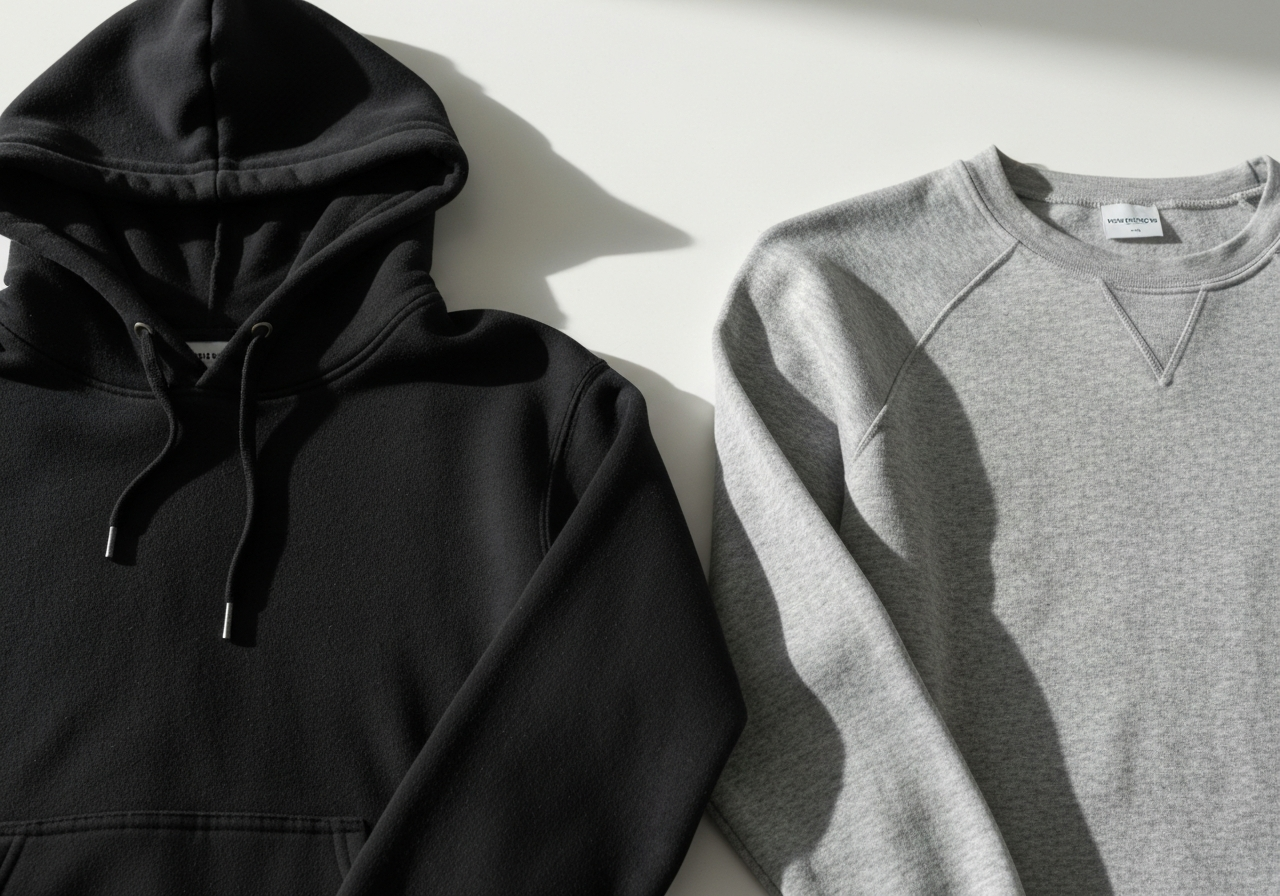
The main difference is simple: a hoodie is a sweatshirt with a hood, while a sweatshirt does not include a hood.
Although this difference sounds basic, the two garments diverge clearly in function, structure, and factory production once examined closely.
How Is a Sweatshirt Defined in Apparel Terms?
A sweatshirt is a foundational knit garment.
A sweatshirt is a long-sleeve knit top designed for warmth and comfort, typically without a hood or front opening.
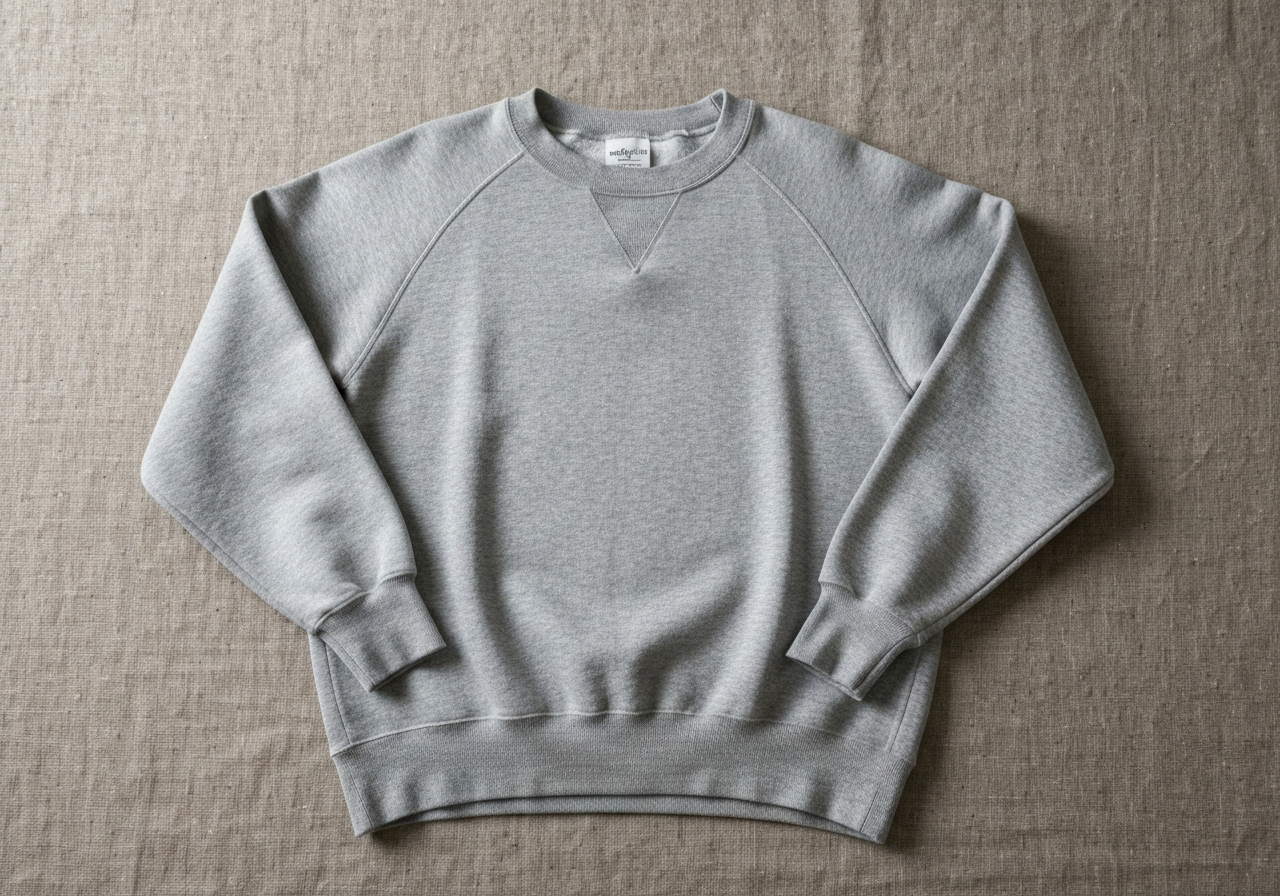
Sweatshirts are usually pullovers. The neckline is round or occasionally crew-style ribbed. The body structure is simple and balanced. Rib cuffs and rib hems provide shape and elasticity.
Common fabrics include fleece and French terry. These fabrics are knitted, not woven. They offer softness, breathability, and moderate insulation. Sweatshirts are designed to be worn indoors or as mid-layers.
From a design perspective, sweatshirts focus on clean silhouettes. Graphics, embroidery, or texture variations are often the main visual elements. Because the structure is simple, the sweatshirt is one of the most stable and repeatable garments in apparel production.
What Makes a Hoodie Different From a Sweatshirt?
The hood changes both function and structure.
A hoodie is a sweatshirt that includes a hood, often with drawstrings and sometimes with front pockets.
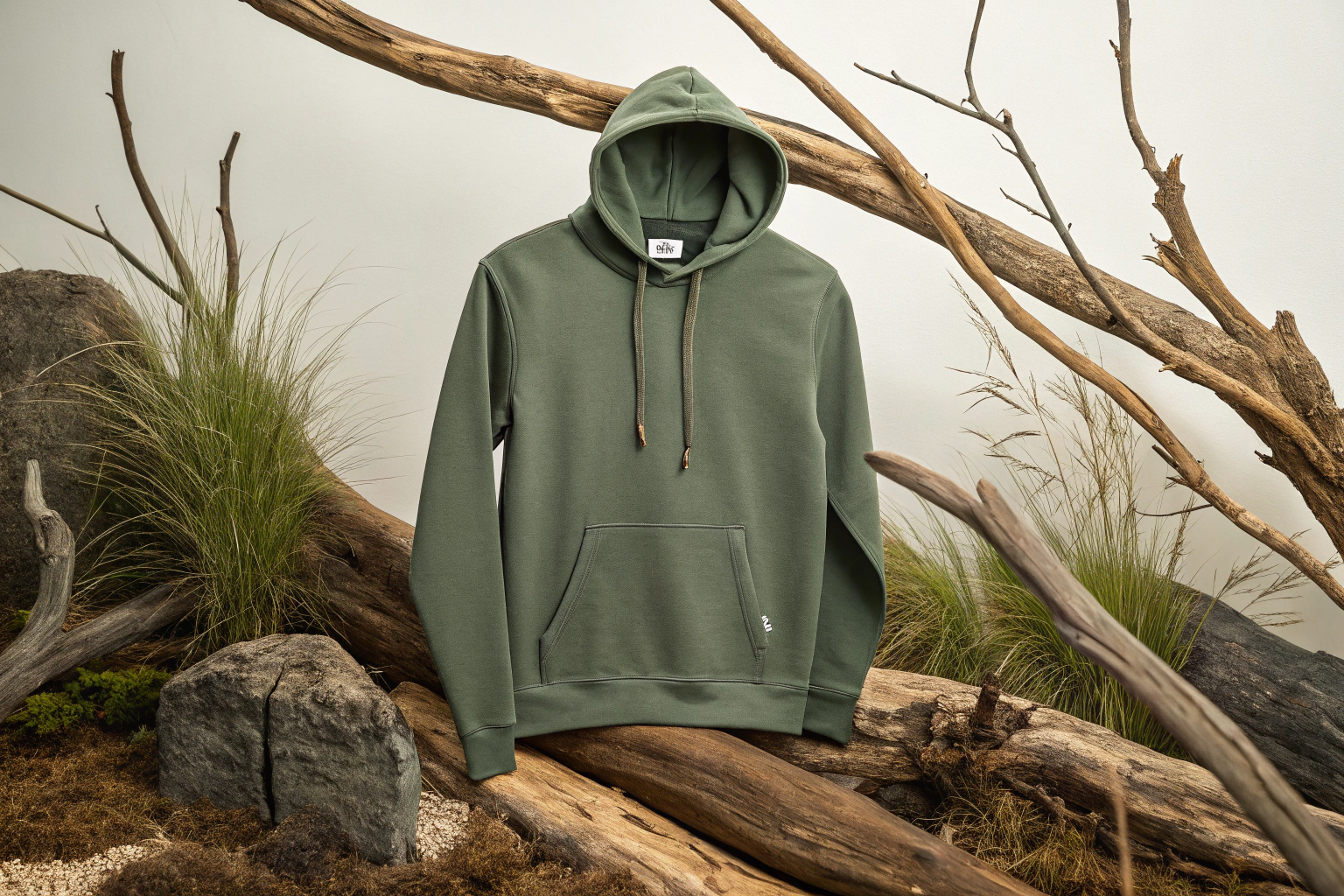
The hood adds coverage around the head and neck. This improves warmth and makes the garment suitable for outdoor and transitional use. Kangaroo pockets or zip pockets are common additions that increase practicality.
The presence of a hood shifts the balance of the garment. Weight distribution changes. The neckline construction becomes more complex. Reinforcement is required to support the added fabric and hardware.
Because of these changes, hoodies feel more casual and functional. They are often positioned closer to outerwear or lifestyle garments than basic tops.
How Do Fabric Choices Compare?
Fabric selection overlaps but performance differs.
Both sweatshirts and hoodies use similar knit fabrics, but hoodies often require heavier or reinforced materials.
Sweatshirts commonly use midweight fleece or French terry. These fabrics prioritize softness and ease of wear. Lightweight options are common for indoor use.
Hoodies often use heavier versions of the same fabrics. The hood and pockets add stress to the garment. Fabric must support additional seams and weight without stretching or sagging.
In manufacturing, hoodies may require higher GSM fabric or double-layer hood construction. Sweatshirts allow more flexibility in fabric weight and finish.
How Does Construction Differ in the Factory?
Production complexity separates the two clearly.
Sweatshirts follow simpler cut-and-sew processes, while hoodies require additional pattern pieces and reinforcement steps.
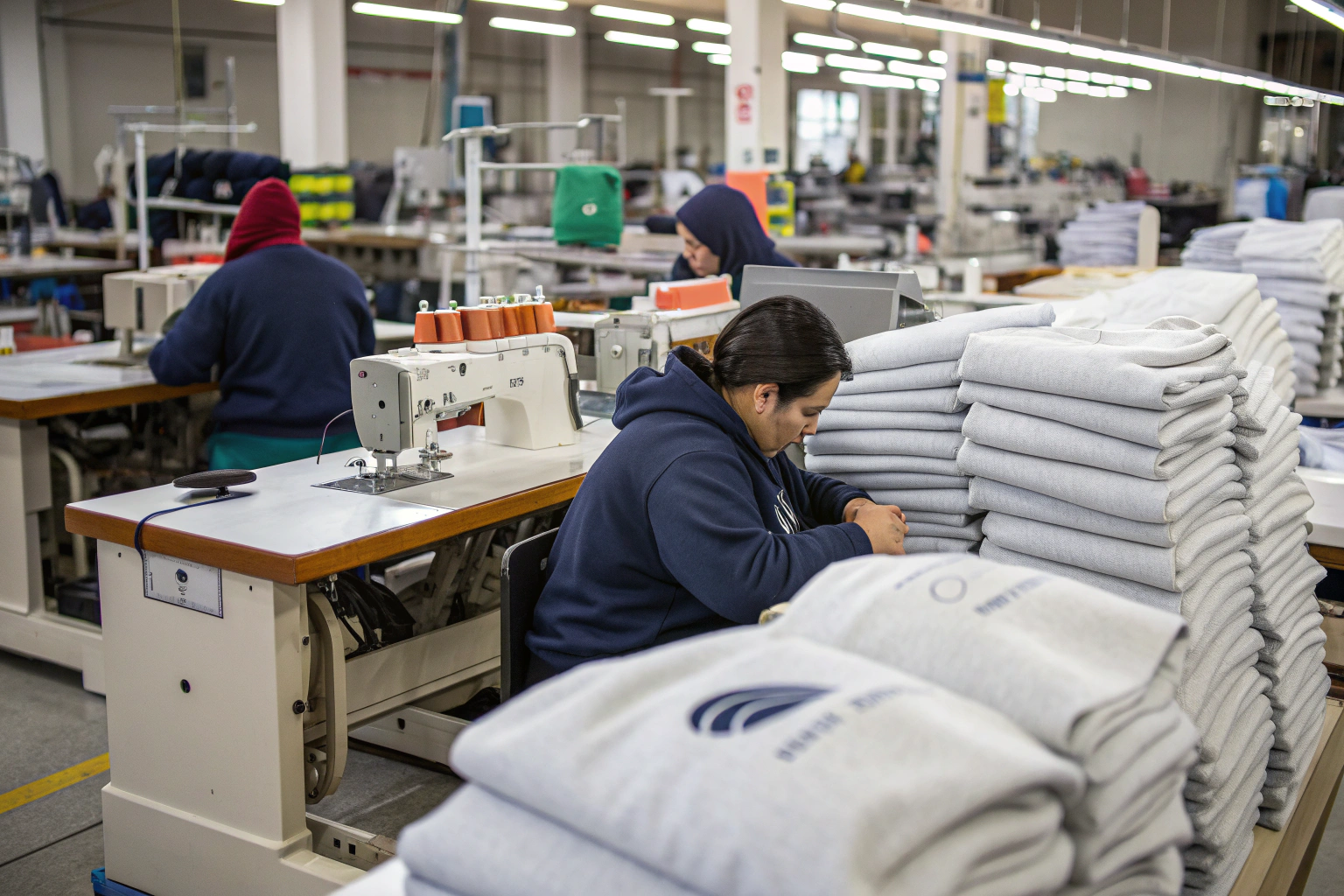
A sweatshirt typically uses fewer pattern pieces. Front, back, sleeves, collar rib, cuffs, and hem rib make up the structure. Sewing is fast and consistent.
A hoodie adds hood panels, drawstring channels, eyelets, and often pockets. These elements increase sewing time and quality checkpoints. Neck seams must be reinforced to prevent stretching.
In the workshop, hoodies move through more operations. Sewing lines slow slightly. Inspection focuses on hood symmetry, drawstring placement, and seam strength.
This difference affects cost, lead time, and defect risk.
How Do Use Scenarios and Styling Differ?
Function shapes perception.
Sweatshirts suit indoor wear and layering, while hoodies support outdoor, casual, and lifestyle use.
Sweatshirts work well under jackets or coats. The clean neckline layers easily. This makes them suitable for workwear-inspired casual wear and uniforms.
Hoodies add visual volume around the neck and back. They are often worn as the outer layer in mild weather. The hood becomes a styling element as well as a functional one.
Because of this, hoodies often feel younger and more relaxed. Sweatshirts feel more minimal and versatile across settings.
How Should Sweatshirts and Hoodies Be Positioned in Production?
Clear definition improves efficiency.
Sweatshirts should be treated as core knit tops, while hoodies should be planned as functional casual outer layers.
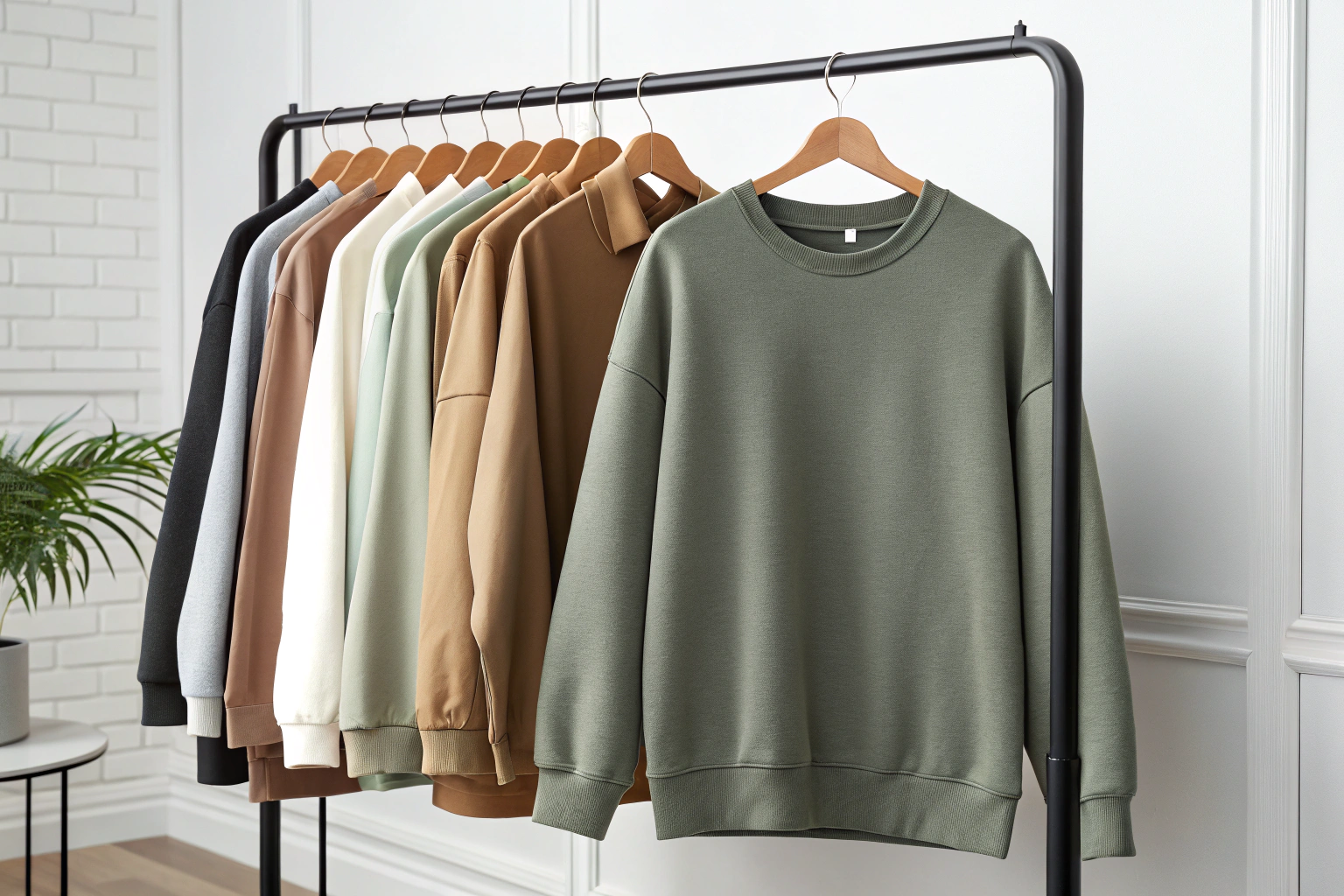
Sweatshirts benefit from long-term patterns and stable production. They are ideal for volume styles and repeat orders.
Hoodies require more development attention. Pattern balance, hood shape, and reinforcement details matter. Fabric selection and construction must support durability.
For manufacturers, separating these categories improves workflow planning, cost control, and quality consistency.
Conclusion
The difference between a sweatshirt and a hoodie lies in structure and purpose. A sweatshirt is a simple, hoodless knit top focused on warmth and layering. A hoodie builds on the sweatshirt base by adding a hood and functional details, increasing complexity and versatility. Understanding this distinction supports clearer design decisions, smoother factory production, and stronger product positioning. When each garment is developed according to its true role, both perform better in comfort, durability, and market clarity.