
Confusion around terms like hoodie and hooded sweatshirt often leads to unclear product positioning and customer hesitation.
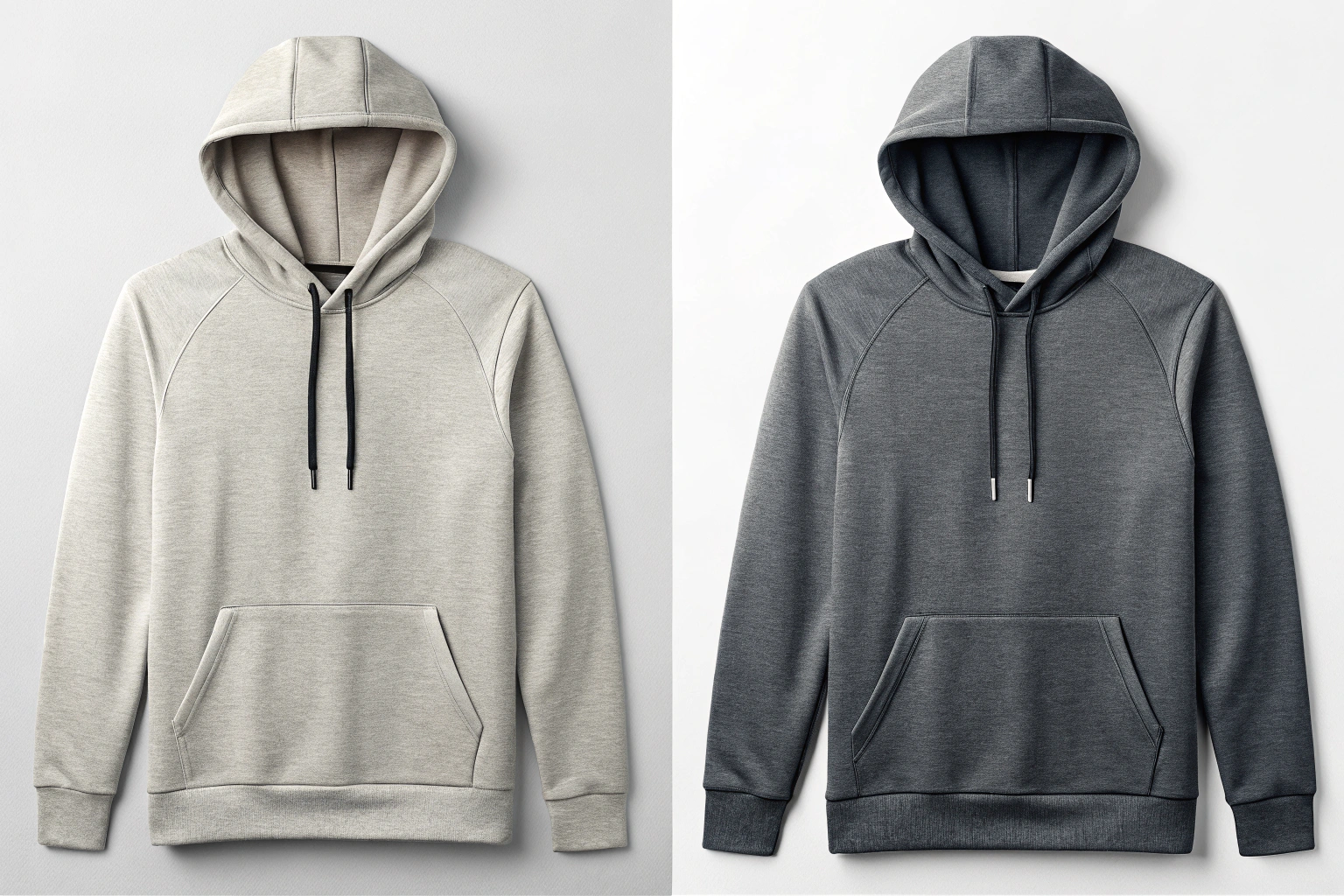
A hoodie typically features additional elements like a front pocket and drawstrings, while a hooded sweatshirt may refer to any sweatshirt with a hood, including those with minimal detailing.
These distinctions may seem minor to consumers, but they carry weight during product development, cataloging, and production. Understanding the subtle but important structural and style differences helps guide collection planning and improve end-user clarity.
Are hoodie and hooded sweatshirt the same thing?
Terminology in apparel often overlaps, but clarity is necessary in manufacturing and retail.
A hoodie is a type of hooded sweatshirt with functional or decorative features, while a hooded sweatshirt refers to the base garment structure without specifying style elements.
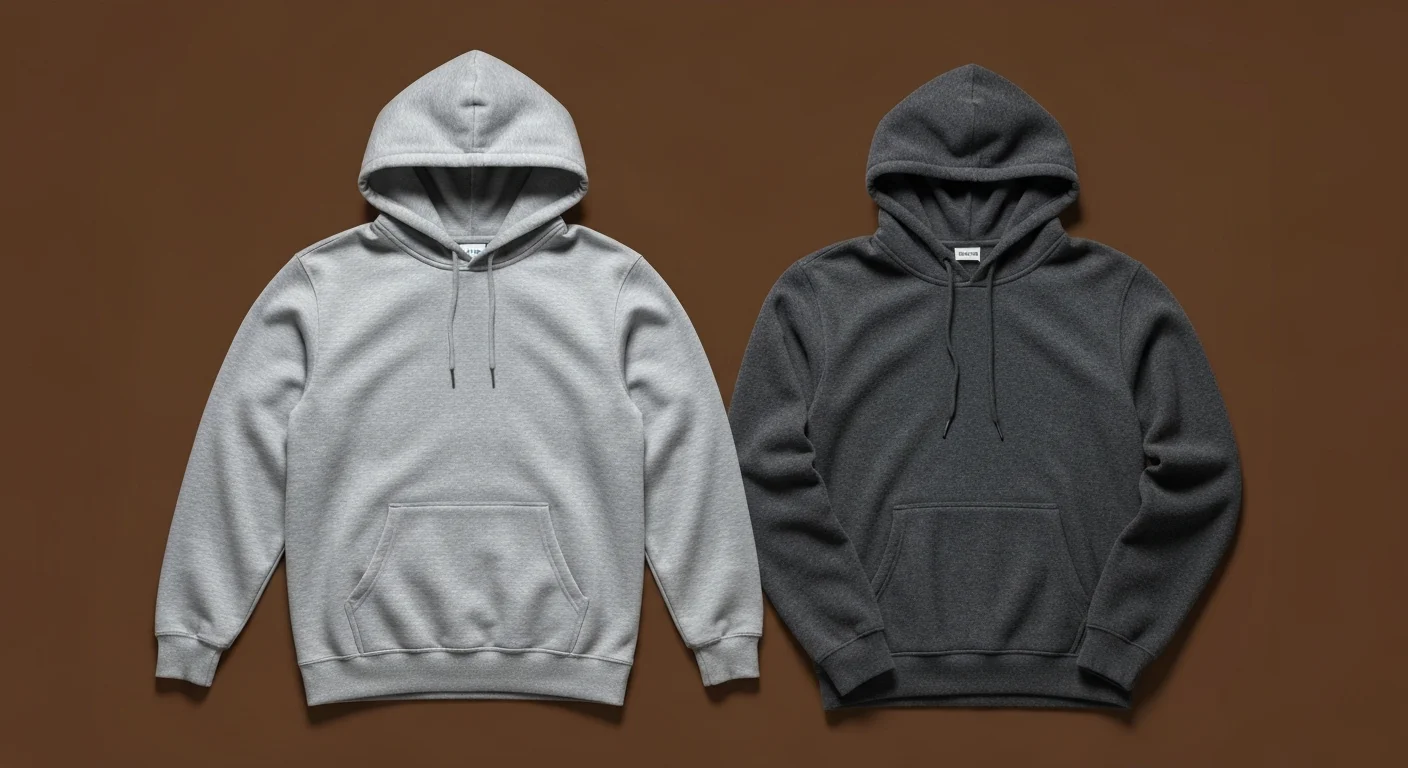
A hoodie usually includes ribbed hems, a front kangaroo pocket, and a drawstring hood. It originated from workwear and evolved into sports and casual wear. A hooded sweatshirt, in technical terms, may refer to any sweatshirt with a hood — zip-up or pullover, plain or styled. The difference affects keyword tagging in e-commerce and sample development in the production line. Factories need to know if the product requires pouch pocket construction, which involves extra fabric layering and seam reinforcement.
| Term | Core Features | Application |
|---|---|---|
| Hoodie | Hood, drawstrings, front pocket | Casual, sports, streetwear |
| Hooded Sweatshirt | Hood only, may lack pockets or details | Basic layering, minimalist designs |
How does design variation affect manufacturing?
Design elements change how the garment is assembled and which machinery is involved.
Hoodies require more sewing stages due to additional components like kangaroo pockets, drawstring eyelets, and hood lining. Hooded sweatshirts may skip these features, streamlining the production process.
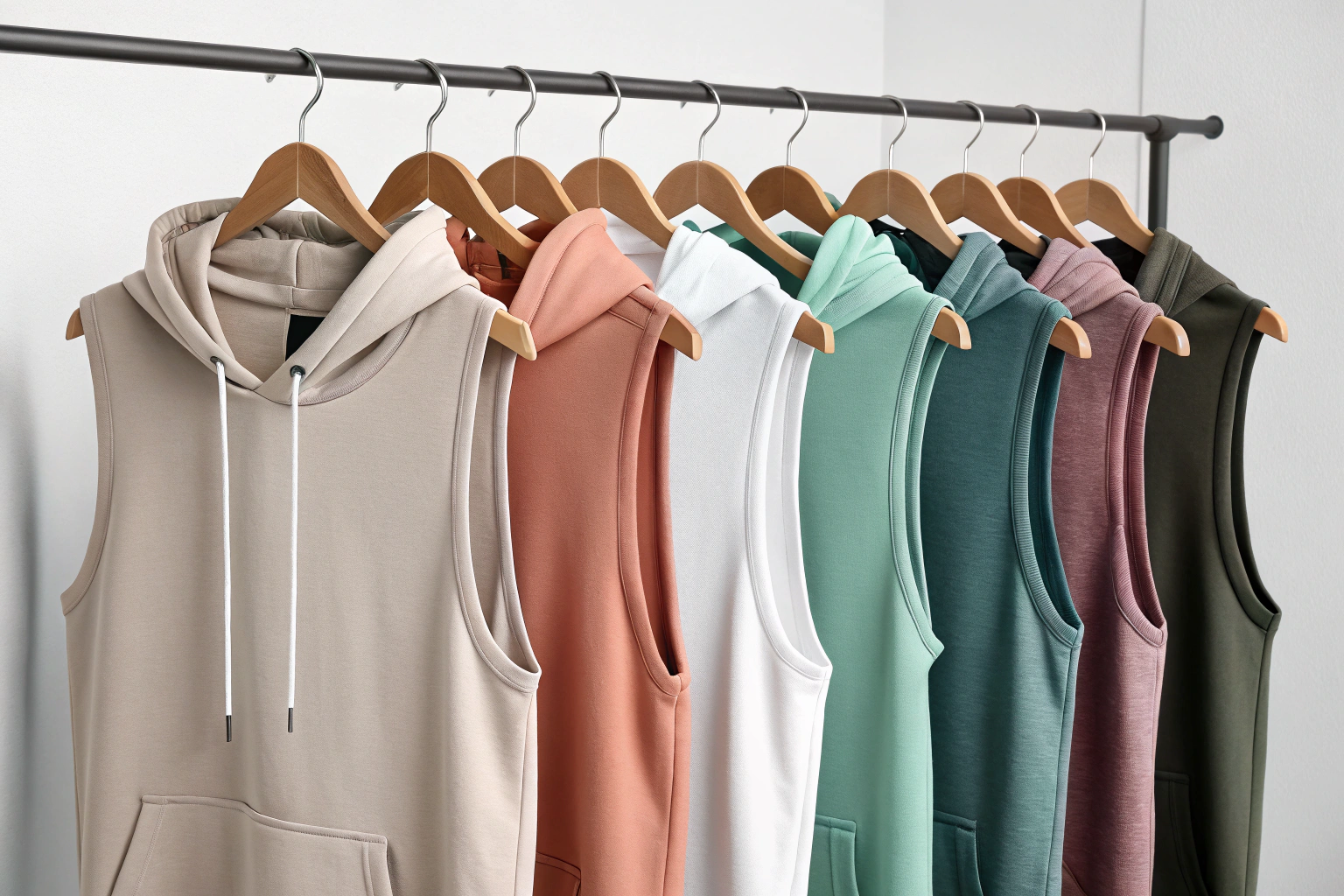
During production planning, every additional feature impacts the workflow. For instance, attaching a kangaroo pocket requires two main seam runs and edge finishing, while inserting metal eyelets for drawstrings adds both material sourcing and labor time. These steps are coordinated across sewing lines to ensure consistency. Hooded sweatshirts without these components are faster to assemble and cost-efficient, making them ideal for basic or budget collections. In high-volume production, these small design choices can significantly affect output rates and quality control parameters.
What role do fabrics play in hoodie vs hooded sweatshirt?
Material selection defines product positioning, durability, and comfort.
Hoodies often use heavier fleece or brushed cotton for warmth and structure, while hooded sweatshirts may use lighter terry or single-knit fabrics for layering.
In manufacturing, the fabric weight (measured in GSM) guides decisions for cutting, stitching, and even packaging. Hoodies built for cold weather may range from 300–400 GSM, using brushed fleece for interior softness. Hooded sweatshirts intended for transitional weather may use 220–280 GSM French terry, balancing breathability and coverage. Factories coordinate fabric sourcing with neckline and hood structures, ensuring the right balance between form retention and wearer comfort. Material compatibility also affects shrinkage rates, printability, and final silhouette.
| Fabric Type | Typical GSM | Application |
|---|---|---|
| Brushed Fleece | 320–400 | Winter hoodies, thick pullover tops |
| French Terry | 220–280 | Lightweight hooded sweatshirts |
| Cotton-Poly Blend | 250–300 | All-season hoodie basics |
Do hoodies or hooded sweatshirts have different end-use categories?
End-use determines product styling, features, and pricing expectations.
Hoodies dominate in casual and lifestyle segments, often styled with logos or oversized cuts. Hooded sweatshirts are common in minimalist fashion or activewear basics.

From a merchandising perspective, hoodies often appear in streetwear collections, youth markets, or branding-focused capsules. The front pocket is both functional and stylistic, supporting logo placement and visual depth. Hooded sweatshirts serve as layering pieces in transitional collections or gym apparel lines. In technical product lines, the absence of bulky details enhances motion and breathability. For wholesale production, distinguishing the intended end-use early supports cost control, fabric efficiency, and accurate market targeting.
How do factories manage the difference in production?
Different specifications demand varying levels of labor, tooling, and QC inspection.
Hoodie production requires skilled operators for pocket placement and drawstring integration. Hooded sweatshirts can be automated for bulk runs due to simpler construction.
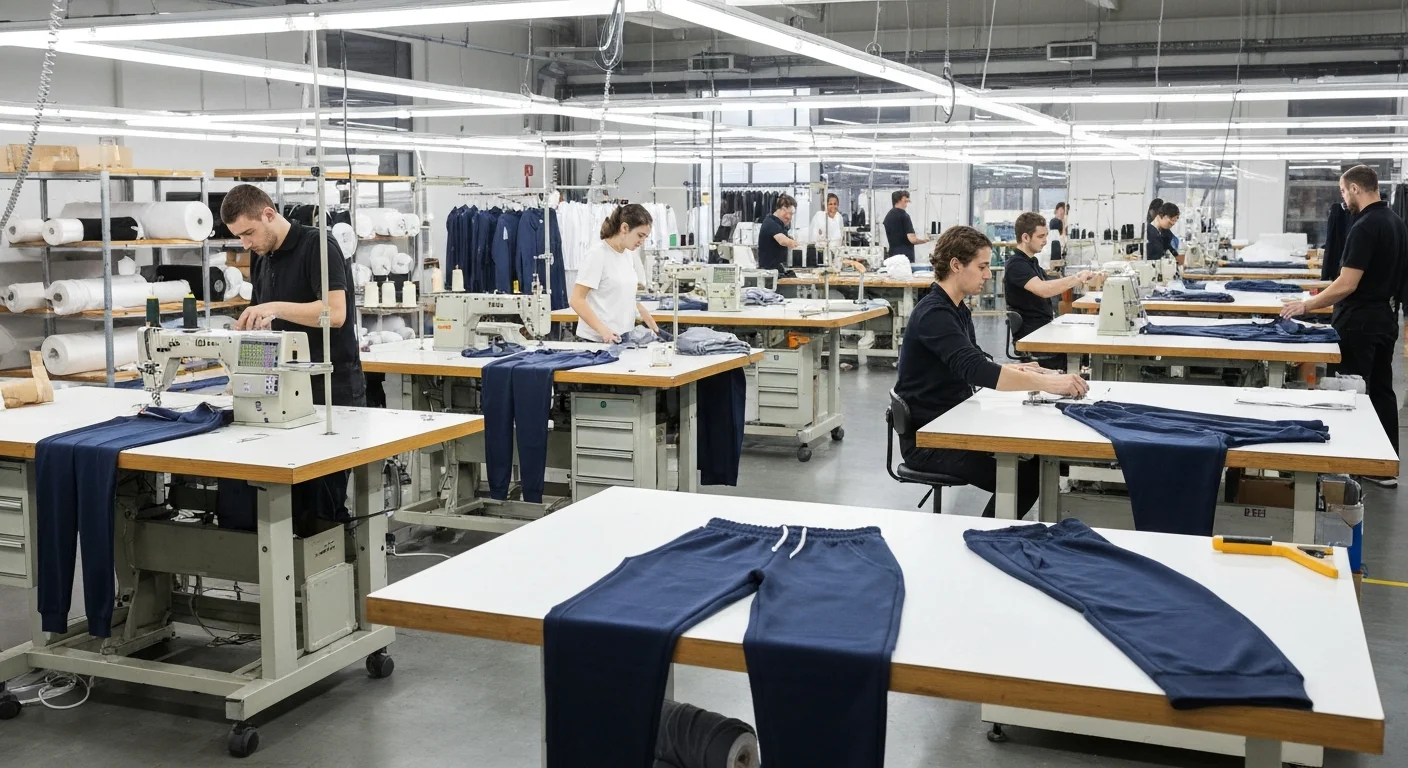
Modern apparel factories use modular sewing lines that switch between hoodie and hooded sweatshirt styles. For hoodies, workstations handle extra steps like pocket panel attachment and hood lining. Eyelets are installed either manually or with pneumatic machines. QC teams monitor symmetry in the hood seam, pocket alignment, and drawstring tension. For hooded sweatshirts, especially zip-up designs, the zipper application becomes the key quality checkpoint. The goal is balancing throughput with detail accuracy. Manufacturers optimize production schedules by grouping similar neckline and hood structures, improving efficiency across orders.
Conclusion
Hoodies and hooded sweatshirts may appear interchangeable at first glance, but their construction, styling, and usage define clear differences. Hoodies include more functional and design elements such as kangaroo pockets and drawstrings, serving fashion and casual needs. Hooded sweatshirts emphasize simplicity and layering efficiency. For manufacturers, understanding these differences shapes every aspect from fabric sourcing to final QC. Aligning neckline style, pocket construction, and fabric weight ensures the finished product meets the demand of its target audience and delivers consistency in both performance and style.