Launching a fashion brand involves turning creative ideas into garments that meet customers’ expectations for fit, quality, and style. Private label clothing gives brands a way to bring those products to market without establishing and managing their own factory.
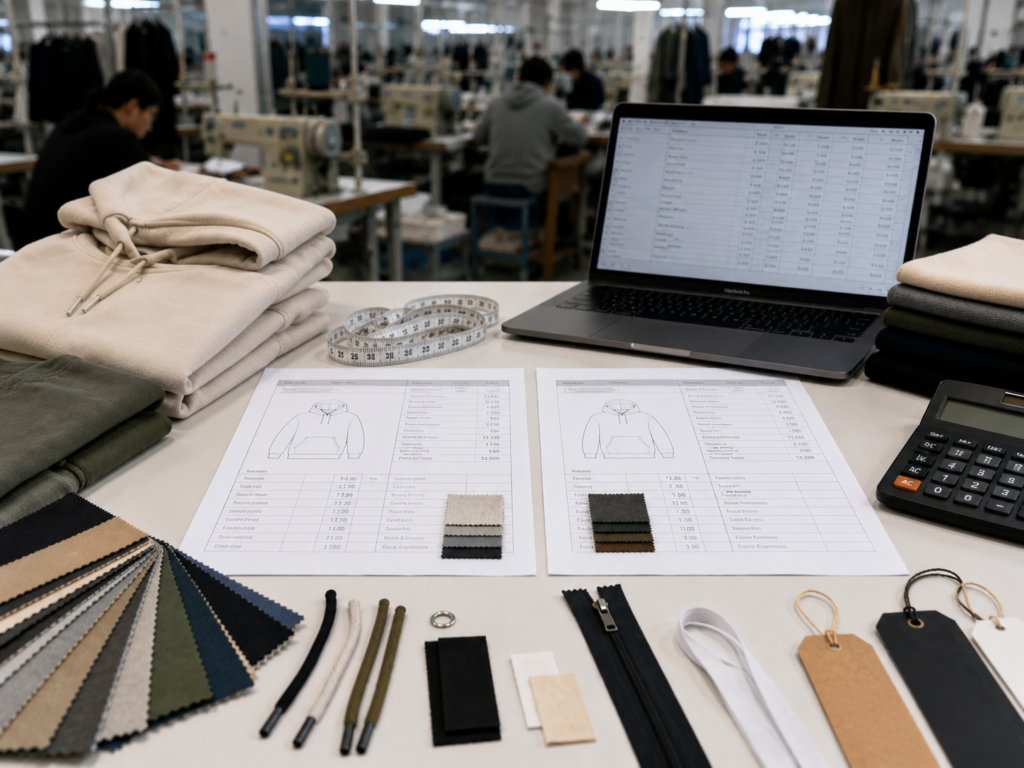
Under this model, a clothing manufacturer produces garments to be sold under your brand’s name. Depending on the project, development may involve adapting existing styles or creating custom designs, with choices covering fabrics, measurements, colors, prints, embroidery, labels, and packaging.
At Yoplook Factory, we work with fashion brands from Europe, the United States, and other international markets on private label clothing production. From fabric selection and sampling to bulk manufacturing, quality control, and final delivery, we help translate each brand’s requirements into finished garments.
What Does Private Label Clothing Mean?
Private label clothing refers to garments made by a third-party manufacturer and sold under a fashion brand’s own name. The brand defines its product requirements, while the manufacturing partner handles the agreed development and production work.
Depending on the supplier’s capabilities and the order requirements, customization may cover:
- Branding: woven neck labels, care labels, hang tags, and branded packaging.
- Materials and colors: fabric composition, weight, texture, and color selection.
- Fit and sizing: garment measurements, silhouettes, and size ranges.
- Decoration and finishing: screen printing, embroidery, washes, and other treatments.
- Quality standards: agreed requirements for construction, measurements, appearance, and performance.
For example, a streetwear brand might commission heavyweight oversized hoodies with chest embroidery, custom labels, and branded packaging. The manufacturer produces the garments to approved specifications, and the brand markets and sells them as part of its own collection.
The extent of customization should be confirmed before sampling, since it can affect pricing, minimum order quantities, and production lead times.
The Private Label Clothing Process: From Brief to Delivery
Private label production turns a brand’s product requirements into finished, branded garments. The workflow varies by design and manufacturer, but clear specifications and approval stages help keep development, costs, and quality on track.
1. Define the Collection and Production Requirements
Start with a product brief that explains what you want to make, who will wear it, and how it should be positioned in the market. Include reference images or a technical pack where available.
Key information includes:
- Garment categories and design details
- Target customer and intended use
- Fit, measurements, and size range
- Fabric preferences and desired finish
- Estimated quantities by style and color
- Target cost and delivery schedule
A clear brief helps the manufacturer assess feasibility, identify missing details, and prepare a more accurate quotation.
2. Select Fabrics, Trims, and Colors
Material selection affects the garment’s appearance, comfort, durability, and production cost. Evaluate fabric composition, weight in GSM, structure, stretch, and hand feel against the product’s intended use.
For example, French terry and brushed fleece can give the same sweatshirt different textures and levels of warmth. Compare physical swatches rather than relying on photographs alone.
Confirm material availability, minimum quantities, color references, and relevant performance requirements. Where specific certifications or material claims are needed, agree on supporting documentation before purchasing.
3. Develop Samples and Confirm Fit
Sampling translates the brief into a physical garment that the brand can evaluate before committing to bulk production.
Review the sample for:
- Fit and measurements against the specification
- Fabric suitability and overall appearance
- Seam construction and stitching
- Print or embroidery placement and execution
- Label positions and finishing details
Record feedback clearly and update the specifications after each revision. If substitute materials are used during early development, confirm which details still require approval in the intended bulk materials.
Before production begins, establish an approved sample and written specifications as the reference for the order.
4. Approve Branding and Packaging
Branding should be developed alongside the garment so labels, decoration, and packaging are ready when production needs them.
Confirm artwork, dimensions, colors, materials, and placement for woven labels, neck prints, hang tags, embroidery, and other branded elements. Include size identification, care information, barcode requirements, and packing instructions where applicable.
Check physical samples or proofs before approval. Small errors in label wording or artwork can be repeated across the entire order if they are missed at this stage.
5. Move Into Bulk Manufacturing
Bulk production starts after the required samples, materials, specifications, quantities, and commercial terms have been approved.
The factory coordinates material preparation, cutting, sewing, decoration, finishing, and packing. The sequence depends on the design; some printing or embroidery is completed on cut panels before assembly.
During production, checks should compare garments with the approved reference and agreed tolerances. Material substitutions or changes affecting fit, appearance, cost, or timing should be discussed with the brand before implementation.
6. Inspect, Pack, and Arrange Delivery
Quality control should cover incoming materials, work in progress, and finished garments. Final inspection typically reviews workmanship, measurements, decoration, labels, quantities, and packaging against the agreed requirements.
Relevant wash or performance testing should be planned early enough for the results to inform production decisions. Issues identified during inspection should be resolved before shipment.
At Yoplook Factory, we work with brands to coordinate sampling, production, quality control, and delivery around clearly defined product requirements. Confirming specifications and approvals at each stage helps keep the finished collection aligned with the brand’s expectations.The Private Label Clothing Process: From Brief to Delivery
Private label production turns a brand’s product requirements into finished, branded garments. The workflow varies by design and manufacturer, but clear specifications and approval stages help keep development, costs, and quality on track.
Which Brands Can Benefit From Private Label Clothing?
Private label clothing suits businesses that want to sell garments under their own name while outsourcing production. It can support both first collections and established ranges, provided the manufacturer’s capabilities, minimum order quantities, and pricing match the brand’s needs.
Typical users include:
- Startup fashion brands seeking help with materials, sampling, and production.
- Streetwear and premium basics labels focused on distinctive fits, fabric weights, and decoration.
- Creators and merchandise businesses developing branded products for an existing audience.
- Boutique and e-commerce brands building collections around a defined customer base.
- Established labels adding product categories without investing in their own manufacturing facilities.
The model is particularly useful when a brand has a clear creative direction but needs technical support. A founder may know the desired silhouette and customer profile while needing guidance on fabric performance, sizing, construction, or print methods.
The level of support varies by supplier. Confirm whether pattern development, material sourcing, testing, and packaging are included before choosing a production partner.
Key Benefits of Private Label Clothing
A Shorter Development Path for Suitable Products
Using established patterns, available fabrics, or proven construction methods can reduce development work compared with creating every element from scratch.
The time saved depends on the extent of customization. Exclusive fabrics, new fits, and specialized finishes may still require multiple sampling rounds and longer lead times.
Access to Technical Expertise
An experienced manufacturer can help translate a design concept into workable specifications. This may include recommendations on fabric weight, seam construction, decoration techniques, and measurement tolerances.
That input helps brands identify potential problems before committing to bulk production.
Control Over Brand Presentation
Private label production allows garments to carry the brand’s own labels, artwork, and packaging. Depending on the agreement, customization may also extend to fit, materials, colors, and finishing.
However, branded labels alone do not make a product exclusive. Brands seeking distinctive designs should confirm which elements are developed specifically for them and whether any base styles are shared with other customers.
Less Investment in Manufacturing Infrastructure
Outsourcing production removes the need to purchase factory equipment or manage a sewing workforce directly. Brands can focus more resources on product direction, sales, and customer relationships.
They still need to budget for development, inventory, quality verification, and delivery, and remain responsible for approving the products they sell.
A Foundation for Repeat Orders
Once a product has an approved sample, documented specifications, and proven customer demand, repeat production can become easier to coordinate.
Brands can build on successful styles through additional colors, sizes, or related products. Consistency still depends on material availability, accurate records, and quality checks across each production run.Which Brands Can Benefit From Private Label Clothing?
Private label clothing suits businesses that want to sell garments under their own name while outsourcing production. It can support both first collections and established ranges, provided the manufacturer’s capabilities, minimum order quantities, and pricing match the brand’s needs.
Typical users include:
- Startup fashion brands seeking help with materials, sampling, and production.
- Streetwear and premium basics labels focused on distinctive fits, fabric weights, and decoration.
- Creators and merchandise businesses developing branded products for an existing audience.
- Boutique and e-commerce brands building collections around a defined customer base.
- Established labels adding product categories without investing in their own manufacturing facilities.
The model is particularly useful when a brand has a clear creative direction but needs technical support. A founder may know the desired silhouette and customer profile while needing guidance on fabric performance, sizing, construction, or print methods.
The level of support varies by supplier. Confirm whether pattern development, material sourcing, testing, and packaging are included before choosing a production partner.
Key Benefits of Private Label Clothing
A Shorter Development Path for Suitable Products
Using established patterns, available fabrics, or proven construction methods can reduce development work compared with creating every element from scratch.
The time saved depends on the extent of customization. Exclusive fabrics, new fits, and specialized finishes may still require multiple sampling rounds and longer lead times.
Access to Technical Expertise
An experienced manufacturer can help translate a design concept into workable specifications. This may include recommendations on fabric weight, seam construction, decoration techniques, and measurement tolerances.
That input helps brands identify potential problems before committing to bulk production.
Control Over Brand Presentation
Private label production allows garments to carry the brand’s own labels, artwork, and packaging. Depending on the agreement, customization may also extend to fit, materials, colors, and finishing.
However, branded labels alone do not make a product exclusive. Brands seeking distinctive designs should confirm which elements are developed specifically for them and whether any base styles are shared with other customers.
Less Investment in Manufacturing Infrastructure
Outsourcing production removes the need to purchase factory equipment or manage a sewing workforce directly. Brands can focus more resources on product direction, sales, and customer relationships.
They still need to budget for development, inventory, quality verification, and delivery, and remain responsible for approving the products they sell.
A Foundation for Repeat Orders
Once a product has an approved sample, documented specifications, and proven customer demand, repeat production can become easier to coordinate.
Brands can build on successful styles through additional colors, sizes, or related products. Consistency still depends on material availability, accurate records, and quality checks across each production run.
What to Consider Before Choosing Private Label Clothing
Private label production can simplify manufacturing, but it does not remove every development constraint or purchasing risk. Understanding the supplier’s terms and capabilities helps brands set realistic expectations.
Customization May Have Limits
Some suppliers offer established styles with changes to colors, decoration, labels, and packaging. Others support original patterns and more extensive development.
If your collection requires an exclusive silhouette, specialized fabric, or complex construction, confirm whether the manufacturer can develop it. Also clarify design ownership and exclusivity, particularly when working from styles available to other brands.
Minimum Orders Affect Your Investment
Private label clothing does not automatically mean low minimum order quantities. Requirements may apply separately to each style, color, fabric, or branded component.
Before committing, request a clear breakdown of minimums, development fees, and pricing at different quantities. Evaluate the total order cost against expected sales, rather than choosing a larger quantity solely for a lower unit price.
Quality Requires Clear Specifications and Verification
A private label arrangement alone does not guarantee product quality. Results depend on material selection, workmanship, production controls, and how clearly the brand communicates its requirements.
Use approved samples and written specifications to define measurements, construction, decoration, and finishing standards. Agree on inspection procedures and how defects will be addressed before bulk production begins.
Supplier Dependence Can Affect Repeat Orders
Material availability, factory capacity, and production schedules can change between orders. A successful first run does not guarantee identical pricing or immediate replenishment.
Keep accurate product records and discuss repeat-order lead times, material substitutions, and approval requirements with your manufacturer. This helps protect consistency as your collection grows.
Private Label vs. Custom Clothing: Which Approach Fits Your Brand?
Private label and custom manufacturing are not mutually exclusive. Private label describes whose brand appears on the product, while custom manufacturing describes how the garment is developed. A fully custom garment can therefore also be sold as a private label product.
In supplier discussions, however, “private label” often refers to adapting established styles, while “custom manufacturing” usually means developing garments to original specifications. Confirm what each manufacturer includes rather than relying on the terminology alone.
Adapting Existing Styles
This approach starts with an available pattern or garment design. Depending on the supplier, brands may select fabrics and colors, refine measurements, and add prints, embroidery, labels, or packaging.
It can suit collections built around established silhouettes, such as T-shirts, hoodies, sweatpants, and branded merchandise. Using a proven starting point may reduce sampling work, although extensive changes can increase costs and lead times.
Developing Original Garments
Custom development starts with a design brief or technical pack and may require new patterns, construction methods, material sourcing, and several sample revisions.
It is appropriate when existing styles cannot deliver the required fit, function, or appearance. For example, a jacket with original panel shapes, specialized pockets, and a distinctive lining system may need development from the pattern stage.
Comparing the Two Approaches
| Consideration | Adapting Existing Styles | Original Custom Development |
|---|---|---|
| Starting point | An established pattern or garment | A design brief or original specifications |
| Design flexibility | Limited by the base style and supplier capabilities | Broader scope, subject to technical feasibility |
| Sampling | Usually focuses on selected modifications | May require several development and fit rounds |
| Development cost | Often lower when changes are limited | Often higher due to additional technical work |
| Exclusivity | Base styles may be available to other brands | Ownership and exclusivity require explicit agreement |
Choose the approach according to how much product development your collection needs. A brand can use established styles for core basics while investing in original development for signature pieces. Before proceeding, confirm the scope, minimum quantities, costs, and approval stages with the manufacturer.
Preparing Your Private Label Production Brief
A clear brief helps a manufacturer assess your project, identify technical requirements, and prepare a useful quotation. You do not need every detail finalized, but separating confirmed decisions from areas where you need guidance makes the discussion more productive.
Organize your initial information into four areas:
- Product concept: garment categories, reference images, sketches, intended customer, and preferred fit.
- Materials and appearance: fabric preferences, target weight, colors, prints, embroidery, and finishing details.
- Order requirements: estimated quantities by style and color, size range, labels, and packaging.
- Budget and timing: target production cost, delivery destination, and the date you need finished goods.
If available, include a technical pack with measurements, construction details, and artwork. Clearly identify which features in reference images you want to develop rather than expecting the manufacturer to interpret them.
If you do not have a technical pack, explain what is missing and ask which development services the supplier provides. Confirm any associated fees, deliverables, and approval stages before proceeding.
Private Label Clothing Production With Yoplook Factory
At Yoplook Factory, we work with fashion brands from Europe, the United States, and other international markets to develop and manufacture private label clothing.
Our support covers fabric selection, sampling, bulk production, printing and embroidery, custom labels and packaging, quality control, and delivery coordination. The scope of each project is agreed according to the garment design, materials, quantities, and branding requirements.
We work with brands to clarify specifications early, review samples before production, and establish clear approval points throughout the process. This gives both teams a shared reference for the collection’s fit, appearance, workmanship, and finishing.
Whether you are preparing a first collection or expanding an established range, share your product brief with Yoplook to discuss suitable materials, development needs, minimum order quantities, and production timing.
Bring Your Private Label Collection to Life With Yoplook
Launching your first collection or expanding an established range? Yoplook Factory helps turn your product ideas into branded garments, with support from fabric selection and sampling through production and final quality checks.
Share your designs, estimated quantities, and target timeline with our team to discuss development options, minimum order requirements, and the next steps for your collection.