
A children’s clothing collection has to work beyond the product photograph. A sweatshirt needs to pull comfortably over a child’s head. A waistband needs to stay in place during play. A printed T-shirt needs to retain its fit and appearance after repeated washing.
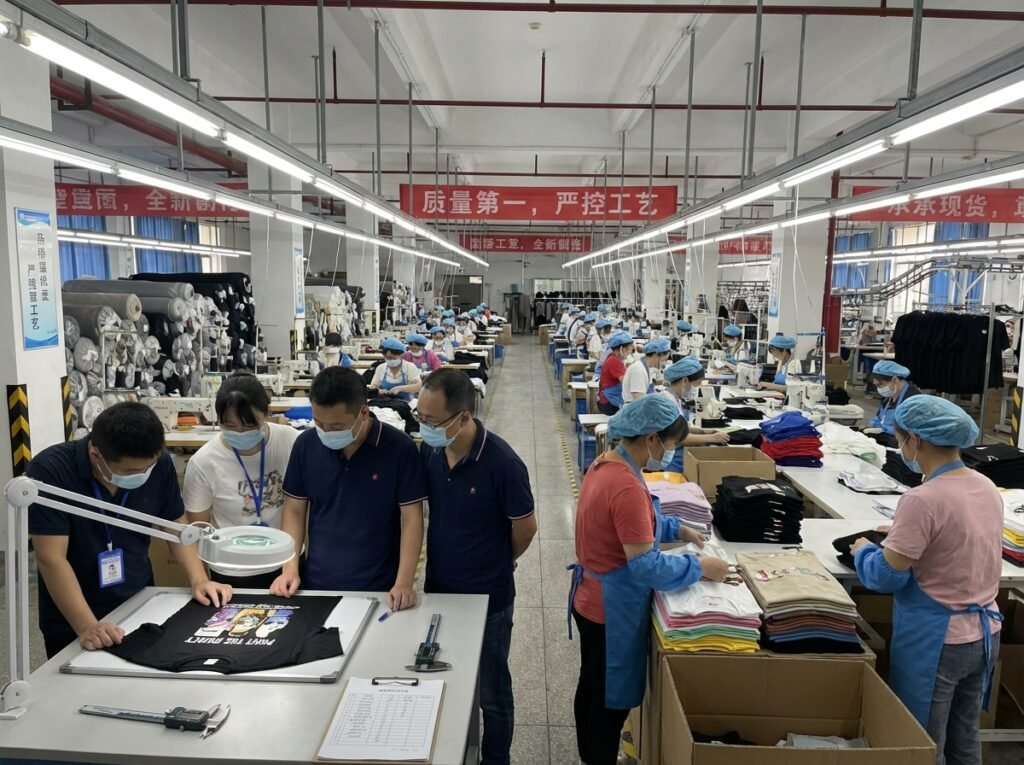
For founders, those details connect directly to the business: fabric choices affect cost, sizing affects returns, and every additional color creates more inventory to manage. Before investing in a large collection, establish who you are designing for, how the garments will be developed, and what evidence you need before approving production.
This guide explains how to start a kids’ clothing line with those decisions in mind, from choosing your first products to evaluating samples and planning a manageable launch.
Choose an Age Group and a Specific Product Need
“Children’s clothing” is too broad to serve as a first collection brief. Baby bodysuits, preschool playwear, and clothing for older children require different patterns, closures, fabrics, and size systems.
Start with a defined customer and use case. For example:
- Easy-to-dress everyday separates for toddlers.
- Durable jersey basics for school-age children.
- Lightweight matching sets for warm-weather wear.
- Occasionwear designed for a particular age range.
Then write a positioning statement that can guide product decisions: “Washable everyday separates for children aged three to six, with comfortable fits and easy outfit coordination.”
That description is more useful than “premium kidswear.” It gives your designer and manufacturer something concrete to work toward.
Research What Parents Actually Struggle With
Competitor research should go beyond colors, logos, and follower counts. Read customer reviews and look for recurring problems: inconsistent sizing, restrictive neck openings, scratchy labels, fading prints, or waistbands that twist after washing.
Speak with parents in your intended customer group. Ask about their most recent purchases, which pieces their children wear repeatedly, and why they return or stop using certain garments.
Build a comparison sheet covering price, materials, sizing information, care instructions, delivery, and returns. Your goal is to identify a problem you can address at a price customers will accept.
For early validation, show product concepts with an indicative price and invite people to join a launch list. Treat compliments as feedback; purchasing behavior will be the stronger test.
Keep the First Collection Manageable
A collection becomes complicated faster than its design board suggests. Three styles offered in two colors and five sizes create 30 separate stock-keeping units, or SKUs. Each variation needs an inventory allocation, product information, and a way to track sales.
An illustrative first range might contain a T-shirt, a sweatshirt, and a coordinating bottom using a limited palette. Shared materials and trims may simplify purchasing, provided they suit each garment.
Before adding another option, ask:
- Does it meet a distinct customer need?
- Can the order quantity support a sensible size allocation?
- Will it require a separate material minimum or development fee?
- Can the budget cover sampling, testing, and inventory?
A focused range gives you a clearer view of what customers want to reorder.
Select a Production Model
You do not need to own a factory to launch a kids’ clothing brand. Choose a production model based on how much control you need over the garment itself.
| Production approach | Useful when | Main trade-off |
|---|---|---|
| Print-on-demand using existing garments | Testing artwork or a merchandise concept without holding bulk inventory | Fit, fabric, branding, and delivery options depend on the provider |
| Private label using established styles | Building a branded collection around an available product foundation | Customization and exclusivity may be limited |
| Custom cut-and-sew development | Creating original fits, construction details, or product features | More development work, sampling, and upfront investment |
Supplier terminology varies. Some private label manufacturers also offer full custom development. Ask what is included: pattern making, grading, sourcing, sample revisions, decoration, labels, and packaging.
An outsourced model still requires you to approve specifications and confirm the products meet the requirements of the market where you sell.
Address Product Safety Before Finalizing Designs
Children’s clothing requirements depend on the destination market, intended age group, materials, and product category. Establish those details before approving trims or ordering fabric.
For the United States, children’s products subject to applicable safety rules generally require third-party testing and a Children’s Product Certificate. The domestic manufacturer or importer is responsible for issuing the certificate; the testing laboratory supplies the test results.
Design details also matter. CPSC identifies hood and neck drawstrings in children’s upper outerwear in sizes 2T–12 as a substantial product hazard. Waist and bottom drawstrings have separate restrictions. Do not transfer an adult hoodie design into children’s sizes without reviewing these requirements.
Sleepwear needs particular attention because its flammability requirements can differ from those for ordinary daywear, with specific exceptions and classifications. Calling a product “loungewear” does not necessarily place it outside sleepwear rules.
For US children’s products, plan for permanent tracking information on the product and packaging to the extent practicable. It must make production and source information ascertainable.
EU sales require a separate review. Textile fiber-composition labeling and relevant language requirements are one part of that work, alongside applicable product-safety and chemical obligations.
These examples are a starting point, not a complete compliance checklist. Ask a qualified laboratory or product-compliance specialist to establish the requirements for your actual garments, components, and sales destinations.
Choose Fabrics by Performance
“Soft” and “premium” are not complete fabric specifications. Compare composition, construction, weight, stretch, recovery, surface texture, and behavior after washing.
| Material option | Potential application | What to evaluate |
|---|---|---|
| Cotton jersey | T-shirts and everyday tops | Shrinkage, twisting, opacity, and print performance |
| Cotton-elastane jersey | Close-fitting separates and leggings | Stretch recovery, seam performance, and dimensional stability |
| French terry | Sweatshirts, joggers, and casual sets | Weight, loop texture, pilling, and waistband compatibility |
| Brushed fleece | Warmer casual layers | Shedding, pilling, shrinkage, and bulk at seams |
| Woven cotton | Shirts, dresses, and lightweight bottoms | Tear strength, seam behavior, creasing, and comfort |
Request swatches, then evaluate the selected material in a finished sample. A fabric can feel appealing on a swatch card but behave differently once sewn, printed, and washed.
Avoid assuming a fiber name proves safety, sustainability, or suitability for sensitive skin. Any specific certification or marketing claim needs evidence relevant to the material and product you are selling.
Develop a Consistent Size System
Children of the same age can have different body measurements. An age label alone gives parents limited help when choosing a size.
Define the body measurements your collection is designed around, then establish garment measurements and the ease needed for movement. Distinguish body measurements from finished-garment measurements on your size guide.
Review more than the middle size. Neck openings, sleeve lengths, rises, and waistbands need to function across the range; simply shrinking an adult pattern is not a reliable approach.
Fit samples should be assessed for dressing, sitting, reaching, and bending, as appropriate to the garment. Record feedback and update the specification before approval. On the product page, explain the intended fit and provide useful measurements rather than relying on “true to size.”
Send Manufacturers a Brief They Can Quote
Comparable quotations require comparable information. Sending different suppliers a photograph and asking for their “best price” often produces offers based on different assumptions.
Your brief should include garment drawings or references, intended age range, size specifications, fabric requirements, colors, construction details, decoration, labels, and packaging. Add estimated quantities by style and color, the delivery destination, and your required timing.
Ask each manufacturer to clarify:
- Minimum quantities per style, color, and material.
- Whether sizes can be split within those minimums.
- Development charges and included sample revisions.
- Relevant experience with children’s garments.
- Testing coordination and available product documentation.
- Inspection arrangements and defect-resolution terms.
- Exactly what the quoted price includes.
If you do not have a technical pack, ask whether development support is available and what deliverables you will receive. Do not assume it is included in the production price.
Use Sampling to Make Decisions
A sample is useful only if you assess it against defined requirements. Check measurements, fit, seams, openings, trims, decoration, and label placement.
Then wash it according to the proposed care instructions and record what changes. Look for shrinkage, twisting, color transfer, pilling, print deterioration, or trim problems. Home wash checks can identify development issues, but they do not replace required laboratory testing.
Document corrections clearly. “Improve the quality” is difficult to act on; a marked photograph and a measurement discrepancy give the factory a specific issue to resolve.
Before bulk production, confirm the approved sample, current specifications, intended materials, and acceptable tolerances. If an early sample used substitute fabric or trims, those unresolved details still need approval.
Calculate Costs Beyond the Factory Price
Your budget needs to cover getting a saleable product to the customer, not just sewing it.
Include development, sampling, testing, production, labels, packaging, freight, applicable import costs, inspection, and receiving. Then account for selling expenses such as payment fees, fulfillment, promotions, customer acquisition, and returns.
Consider this simplified example, which is not a Yoplook quotation:
| Item | Illustrative amount per unit |
|---|---|
| Factory garment price | $8.00 |
| Freight, import, and receiving allocation | $2.00 |
| Allocated development and testing cost | $1.50 |
| Total before selling expenses | $11.50 |
At a $30 selling price, this leaves $18.50 before selling expenses and overhead. It does not mean $18.50 in profit.
Keep enough cash available for operations and replenishment. Spending the entire launch budget on inventory can leave a brand unable to promote its products or reorder its best seller.
Plan Inventory by Style, Color, and Size
The minimum order quantity tells you what you must purchase. It does not tell you what customers will buy.
For example, a supplier requiring 100 pieces per style and color would require 600 pieces for three styles in two colors, assuming sizes can be split within each minimum. Confirm the calculation rather than assuming “100 pieces” applies to the whole collection.
Build an initial size allocation using the best evidence available, and treat it as a forecast. After launch, track sales and returns at SKU level.
A style can sell well overall while leaving particular sizes unsold. Use that detail when reordering instead of repeating the original size ratio automatically.
Build a Store That Answers Parents’ Questions
Before launch, prepare product pages with accurate photographs, composition details, care instructions, a clear size guide, delivery information, and returns terms.
Show practical features: an opening that makes dressing easier, the inside of a waistband, or the construction of a closure. Include model measurements and worn sizes where appropriate and with suitable permissions.
Market to the people making the purchase. Useful content may explain fit, demonstrate outfit combinations, or show how a garment looks after washing. Keep product claims specific and supported.
Launch with a limited, ready-to-ship assortment or clearly explained delivery arrangements. Then monitor conversion, size exchanges, returns, and customer feedback alongside revenue.
Build Your Brand Around Products Customers Trust
The strongest foundation for a kids’ clothing line is a focused collection with dependable fit, suitable materials, and documented production requirements. Validate those elements before expanding into more styles and colors.
At Yoplook Factory, we work with fashion brands from Europe, the United States, and other international markets on clothing development and production. Share your intended age range, product references, estimated quantities, and target timeline to discuss the scope and requirements of your project.
Start with a collection you can evaluate properly. Improve it using customer feedback, and let proven demand guide the next order.