

Pricing your heat transfer vinyl (HTV) t-shirts can be tricky, but with the right strategy, you can maximize your profits while staying competitive. Here’s everything you need to know to set the right price for your custom shirts.
Wondering how to price your HTV t-shirts effectively? The right pricing strategy can make a big difference in your sales and profits. Read on to learn the best approach to pricing your custom t-shirts.
Setting the right price for your heat transfer vinyl (HTV) t-shirts isn’t just about covering costs. You want to make sure you’re earning a fair profit, staying competitive in the market, and offering a price that customers are willing to pay. While there are many factors to consider, getting the pricing right can help ensure your success. In this article, we will break down the key components of pricing HTV t-shirts, from material costs to labor, and give you a step-by-step guide to finding your ideal price point.
Factors to Consider When Pricing HTV T-Shirts
When pricing your HTV t-shirts, there are a few important factors that should be taken into account:
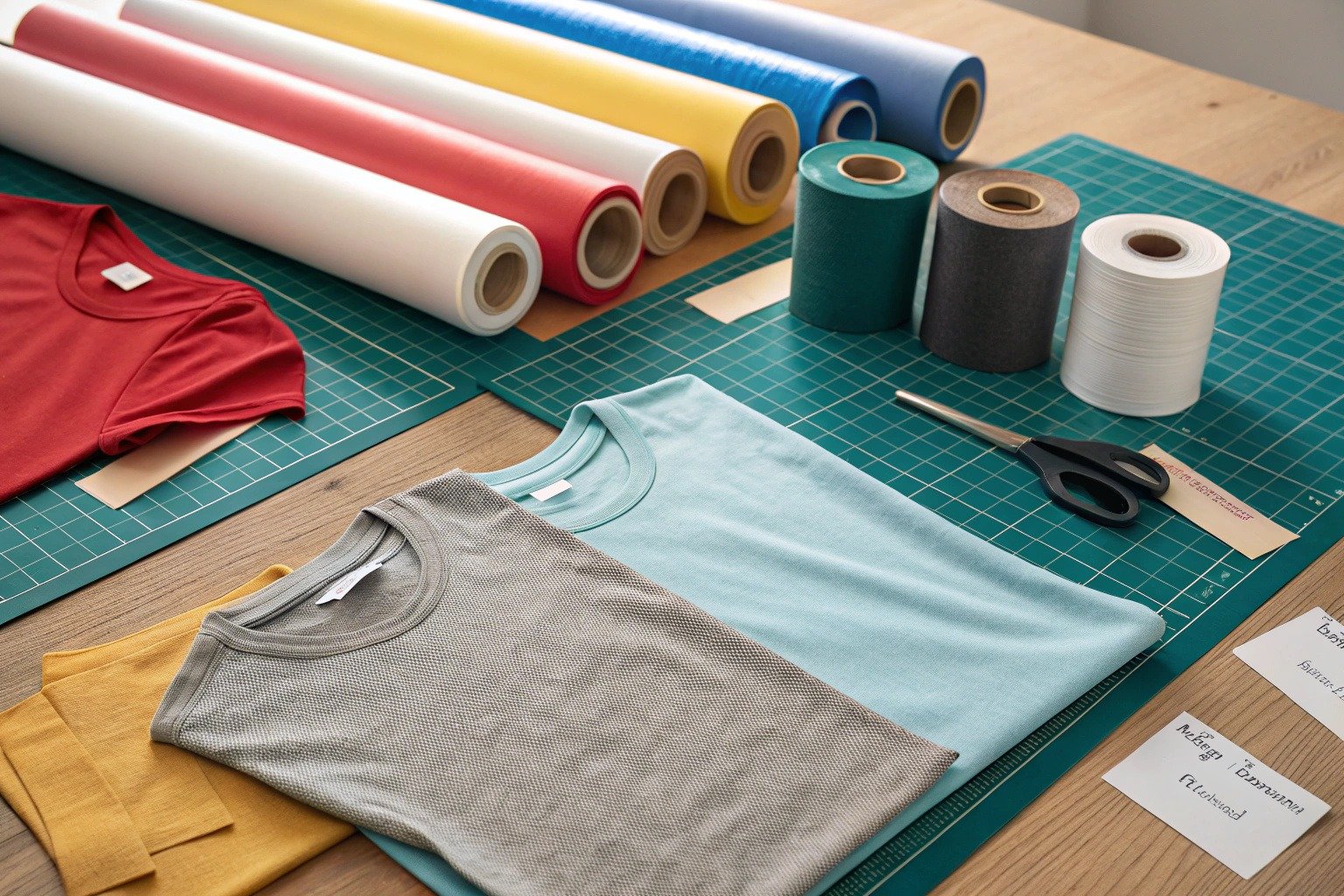
1. Material Costs
Your base material, including the t-shirt itself and heat transfer vinyl, can significantly impact your price. Depending on the quality and brand of the shirt and vinyl you use, your material costs will vary. Higher-quality materials tend to cost more but can allow you to charge a premium price for the finished product.
2. Labor Costs
Consider how long it takes you to create a single shirt. This includes time spent designing, cutting the vinyl, applying it, and curing it. If you’re doing this yourself, calculate your hourly rate and multiply it by the amount of time it takes to make a t-shirt. If you’re outsourcing some steps, factor in those additional costs as well.
3. Overhead Costs
In addition to direct costs (materials and labor), you should also factor in overhead costs. These include utilities, equipment maintenance, rent (if applicable), and any software or subscriptions you need to run your business.
4. Market Demand
The demand for your designs will affect the price you can charge. If you’re targeting a niche market with unique or custom designs, you can usually charge more. On the other hand, if you’re in a highly competitive market with lots of similar designs, you might need to keep your prices more affordable.
5. Competitor Pricing
Check what similar t-shirts are being sold for. If your competitors are pricing their shirts higher or lower, you’ll need to adjust your price accordingly to stay competitive. Make sure to offer value that justifies your price, whether that’s through design quality, shirt material, or customer service.
How to Calculate the Cost of Making a T-Shirt
To price your HTV t-shirt effectively, you need to start by calculating your total cost per shirt. Here’s how:

Step 1: Calculate Material Costs
- T-shirt cost: The price of a blank t-shirt, which can range from $1 to $10 depending on the quality and brand.
- HTV vinyl cost: The price of vinyl sheets or rolls, which can range from $0.50 to $5 per sheet depending on the type (e.g., regular, glitter, or specialty vinyl).
- Transfer paper or accessories: If you use transfer paper or other tools for the application process, include their costs.
Add these up to find the total material cost per shirt.
Step 2: Add Labor Costs
Estimate how long it takes you to create one t-shirt. For example, if you spend 30 minutes on each shirt and your hourly rate is $20, the labor cost for one shirt will be:
[ \text{Labor cost} = \frac{20 \, \text{(hourly rate)}}{60} \times 30 \, \text{minutes} = 10 \, \text{dollars} ]
Step 3: Add Overhead Costs
If your monthly overhead (utilities, rent, etc.) is $500, and you produce 200 shirts a month, your overhead cost per shirt would be:
[ \text{Overhead cost per shirt} = \frac{500}{200} = 2.50 \, \text{dollars} ]
Step 4: Add Profit Margin
Once you’ve calculated the total cost per shirt (materials, labor, and overhead), add your desired profit margin. Most businesses aim for a 50%-100% markup, but this depends on your market and goals.
If your total cost per shirt is $15 and you want to make a 50% profit margin, your price should be:
[ \text{Selling price} = 15 \, \text{(cost)} \times 1.5 \, \text{(markup)} = 22.50 \, \text{dollars} ]
Common Pricing Strategies for HTV T-Shirts
1. Cost-Plus Pricing
This is the most common method, where you add a markup on top of the total production cost. It’s simple and ensures you’re covering your costs while making a profit.
2. Market-Based Pricing
In this strategy, you look at what competitors are charging and adjust your price accordingly. If your competitors are offering similar designs for $20, you can choose to price your shirts at $19.99 or $22 to remain competitive.
3. Value-Based Pricing
If your designs or the quality of your shirts provide superior value (e.g., custom designs, eco-friendly materials), you can charge a premium. This strategy focuses on the perceived value to the customer rather than just the costs involved.
How to Adjust Your Prices Based on Market Demand
Pricing is not a one-time decision—it’s dynamic. You may need to adjust your prices based on several factors:
Seasonality
Certain times of the year (e.g., holidays, back-to-school season) may allow you to raise prices due to higher demand. Alternatively, during slower months, you might lower prices or offer discounts to attract customers.
Promotions and Discounts
Offering discounts, bundle deals, or limited-time offers can help drive sales while maintaining a higher base price. Be sure to factor in the cost of discounts when calculating your final price.
Customer Feedback
Pay attention to customer feedback. If your t-shirts are selling well at a certain price, great! If not, it could be time to reconsider your pricing or marketing strategy.
Conclusion
Pricing your heat transfer vinyl t-shirts requires a balance of calculating your costs, understanding market demand, and setting a price that allows you to make a profit. By factoring in material costs, labor, overhead, and competitor pricing, you can find the ideal price point for your shirts. As your business grows, be prepared to adjust your pricing strategy to stay competitive and responsive to customer needs.