
Clothing might look simple on the shelf, but every piece goes through a complex, multi-step process from concept to customer.
The full clothing manufacturing process includes design, pattern development, fabric sourcing, cutting, sewing, finishing, quality control, packaging, and shipping — all managed with precision.
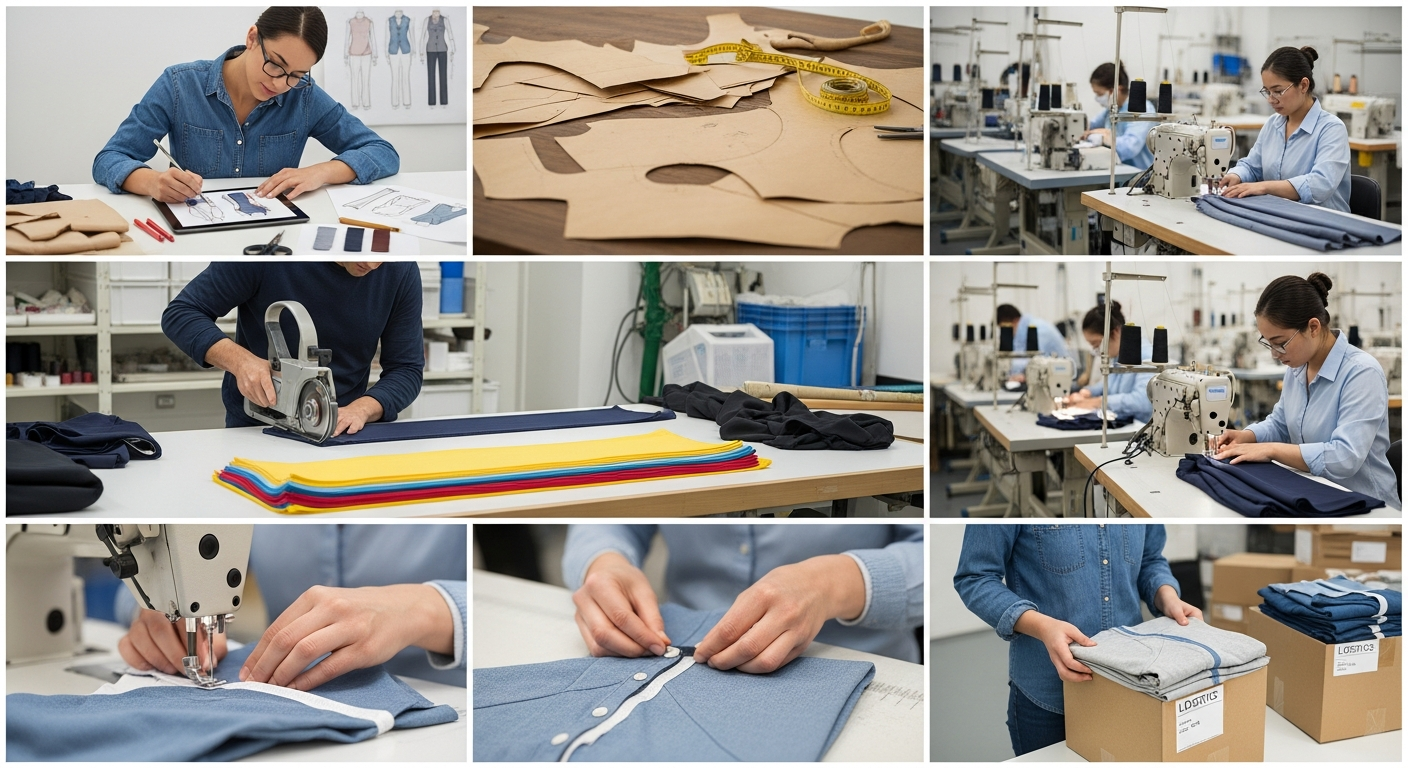
Understanding each stage of garment production helps clarify timelines, costs, and quality expectations. Manufacturers coordinate every phase to balance efficiency and customization. For brands, knowing the full workflow supports better planning and sourcing decisions.
What is the first step in making clothes?
Before any fabric is cut or stitched, clothing starts with an idea and a plan.
Clothing production begins with design development — turning creative concepts into technical sketches, measurements, and production-ready plans.

This phase includes trend research, fabric planning, and silhouette sketching. Designers provide reference visuals or hand drawings, which are translated into digital tech packs.
Tech packs include size charts, construction guidelines, fabric type, trims, and seam details. These technical documents are essential for accurate sample development and clear manufacturer communication.
| Phase | Key Activities |
|---|---|
| Design Concept | Mood board, sketching, style planning |
| Tech Pack Creation | Flat drawings, BOM, measurements, specs |
| Design Approval | Revisions and sign-off before sampling |
How are patterns and samples developed?
With the design approved, the next step is to turn it into a physical product.
Pattern making converts flat sketches into garment templates, which are then sewn into samples for testing fit and function.
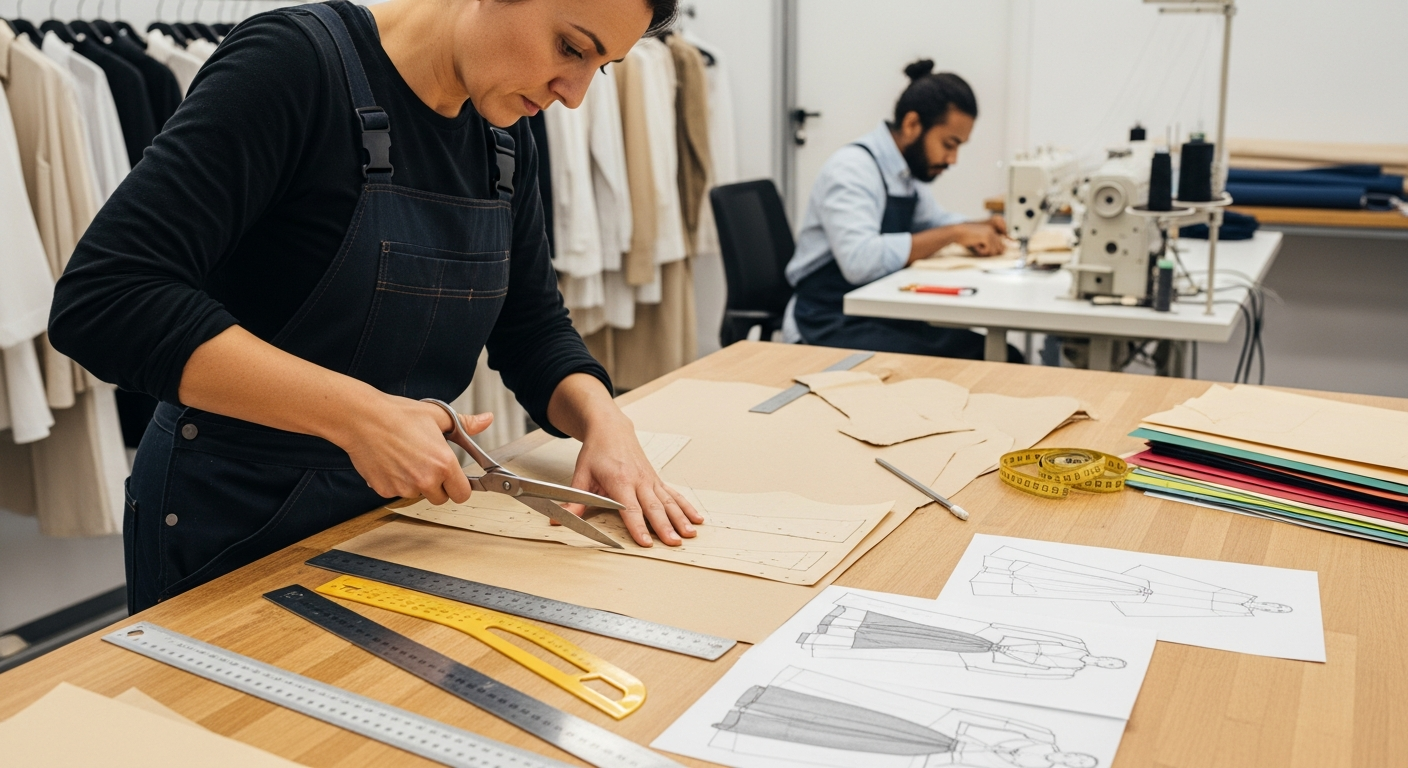
Patterns are made digitally using CAD software or by hand for complex or draped styles. These patterns are then graded into different sizes. A sample garment is sewn from available fabric to verify design accuracy.
Fit sessions are conducted to check dimensions, proportions, and mobility. Any necessary adjustments are made to finalize the pattern for bulk cutting.
| Stage | Output |
|---|---|
| Pattern Drafting | Base size templates |
| Sample Sewing | First production sample |
| Fit Testing | Checks design, comfort, and proportions |
What happens during bulk fabric sourcing and cutting?
Once the sample is approved, materials are ordered, and bulk production begins.
This stage includes ordering fabric and trims, pre-shrinking if needed, and cutting garment panels using manual or automated systems.
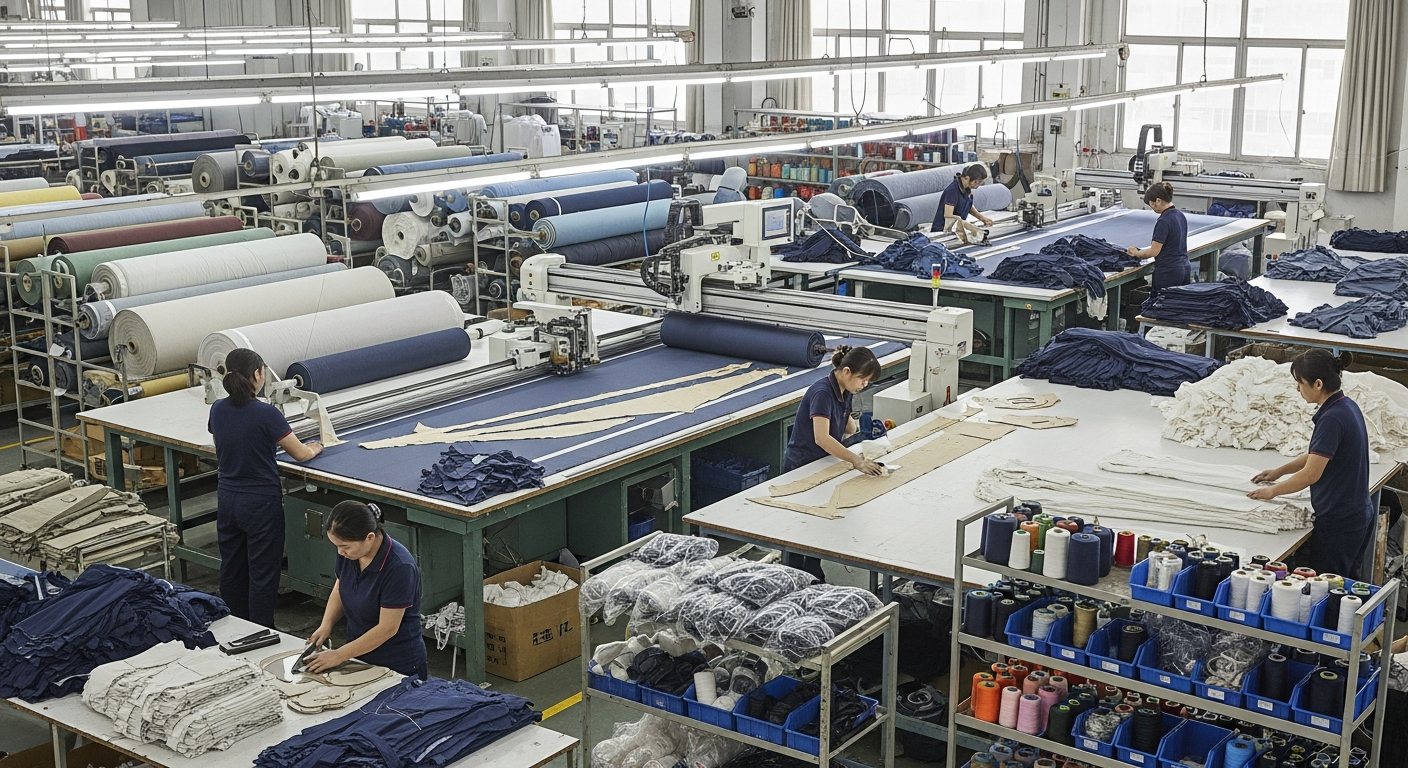
Fabric is received in rolls and inspected for defects. It is then spread into layers and cut using cutting machines or lasers based on graded patterns. Labels and trims are also prepared for sewing lines.
Efficiency at this stage is crucial — any errors in cutting can waste materials or delay schedules. Some factories use auto-spreaders and CNC cutters for precision.
| Material Stage | Task |
|---|---|
| Fabric Inspection | Check for color consistency, defects |
| Fabric Spreading | Layering fabric for bulk cutting |
| Cutting Execution | Sharp cut lines for consistency |
What does the sewing and assembly process include?
This is where flat fabric becomes a finished 3D garment.
Sewing involves joining garment parts, inserting trims, and assembling components into a complete piece following production specs.
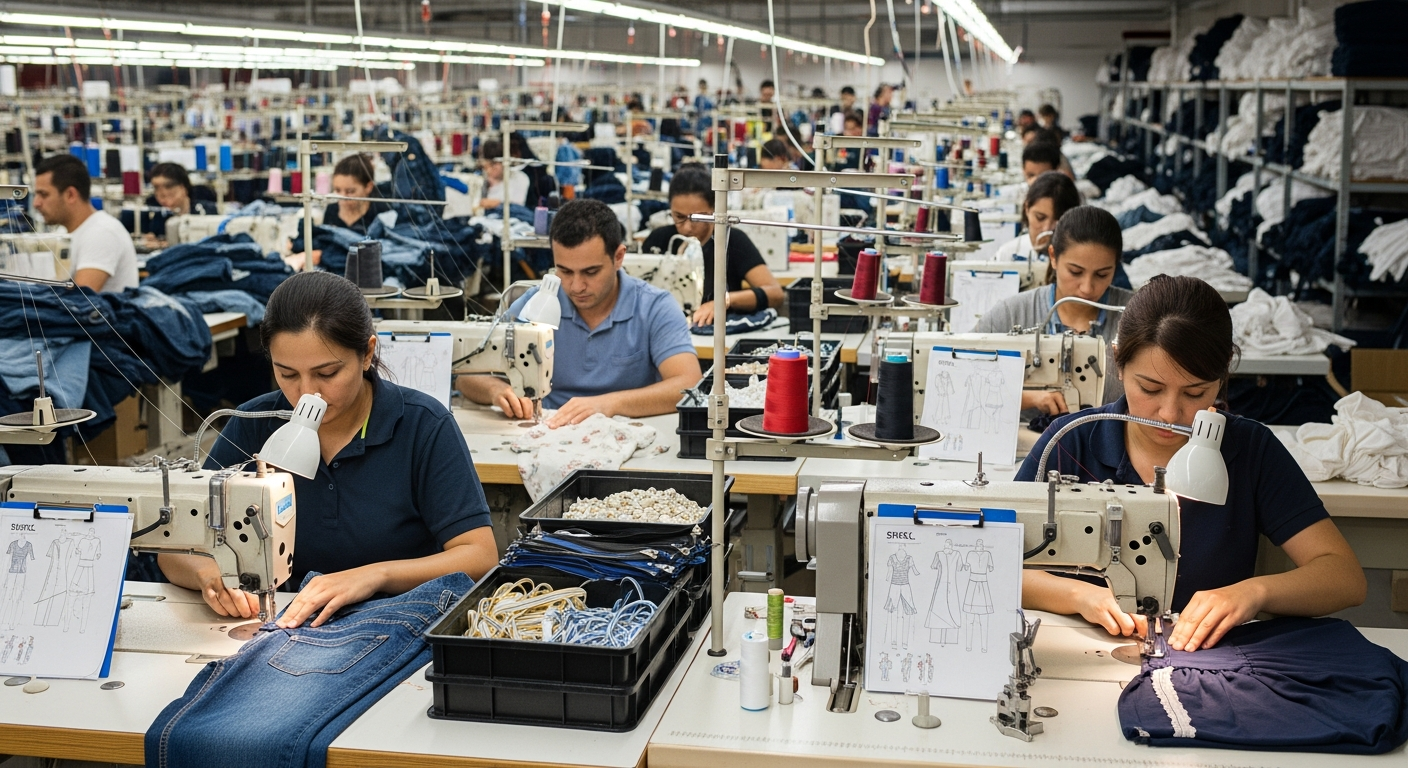
Sewing lines are organized into stations by operation — one for sleeves, another for zippers, another for neckbands, etc. Each operator specializes in a specific task to maximize efficiency.
Modern factories use lockstitch, overlock, coverstitch, or flatlock machines depending on garment type. Quality control is often integrated into the line for early defect detection.
| Operation | Equipment Used |
|---|---|
| Body Assembly | Overlock or lockstitch machine |
| Trims Attachment | Flatlock or zigzag stitch machine |
| Final Joinery | Coverstitch for hems and seams |
What are the final finishing and quality control steps?
After sewing, garments go through detailed inspections, pressing, labeling, and packing.
Final steps include thread trimming, steam pressing, label attachment, quality checks, and packing for shipment.
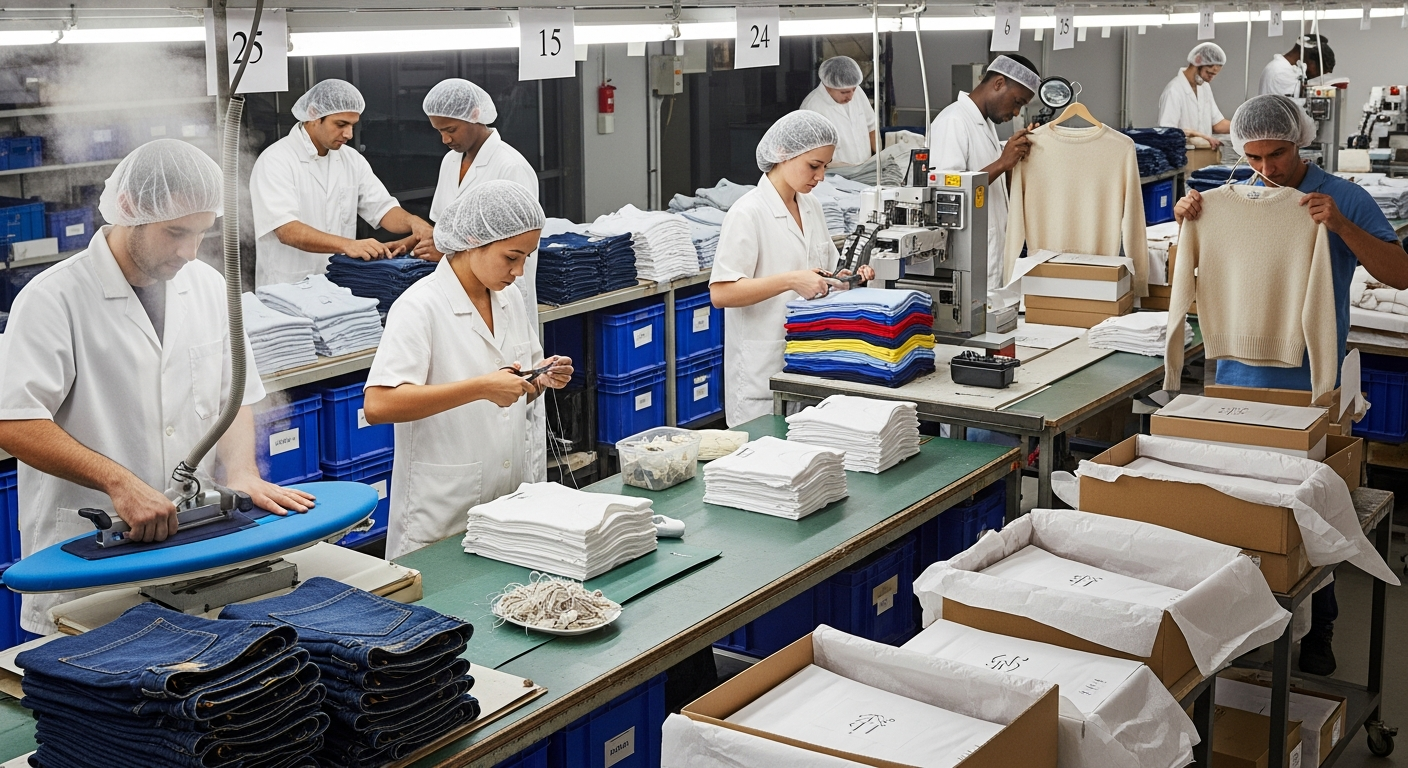
Each piece is reviewed for stitching accuracy, size consistency, and defects like skipped seams or loose threads. Measurements are checked against size specs. Garments are pressed and folded according to packing guidelines.
Labels, hang tags, and barcodes are attached based on order requirements. Finished units are polybagged or boxed for export.
| Finishing Task | Purpose |
|---|---|
| Thread Cleaning | Removes excess threads post-sewing |
| Ironing/Pressing | Smooths wrinkles, enhances shape |
| Final Inspection | Ensures garment meets spec |
| Packing & Tagging | Prepares units for retail or shipping |
Conclusion
Clothing production is a structured, multi-phase process that combines design creativity with industrial precision. Each step — from sketch to shipment — impacts final quality and efficiency. Manufacturers that master this chain deliver garments that meet global standards in style, fit, and performance.