
In modern apparel markets, crewnecks appear in a wide range of fits, from classic regular silhouettes to intentionally oversized styles. This variation often leads to confusion about what the “correct” fit should be from a design and production perspective.
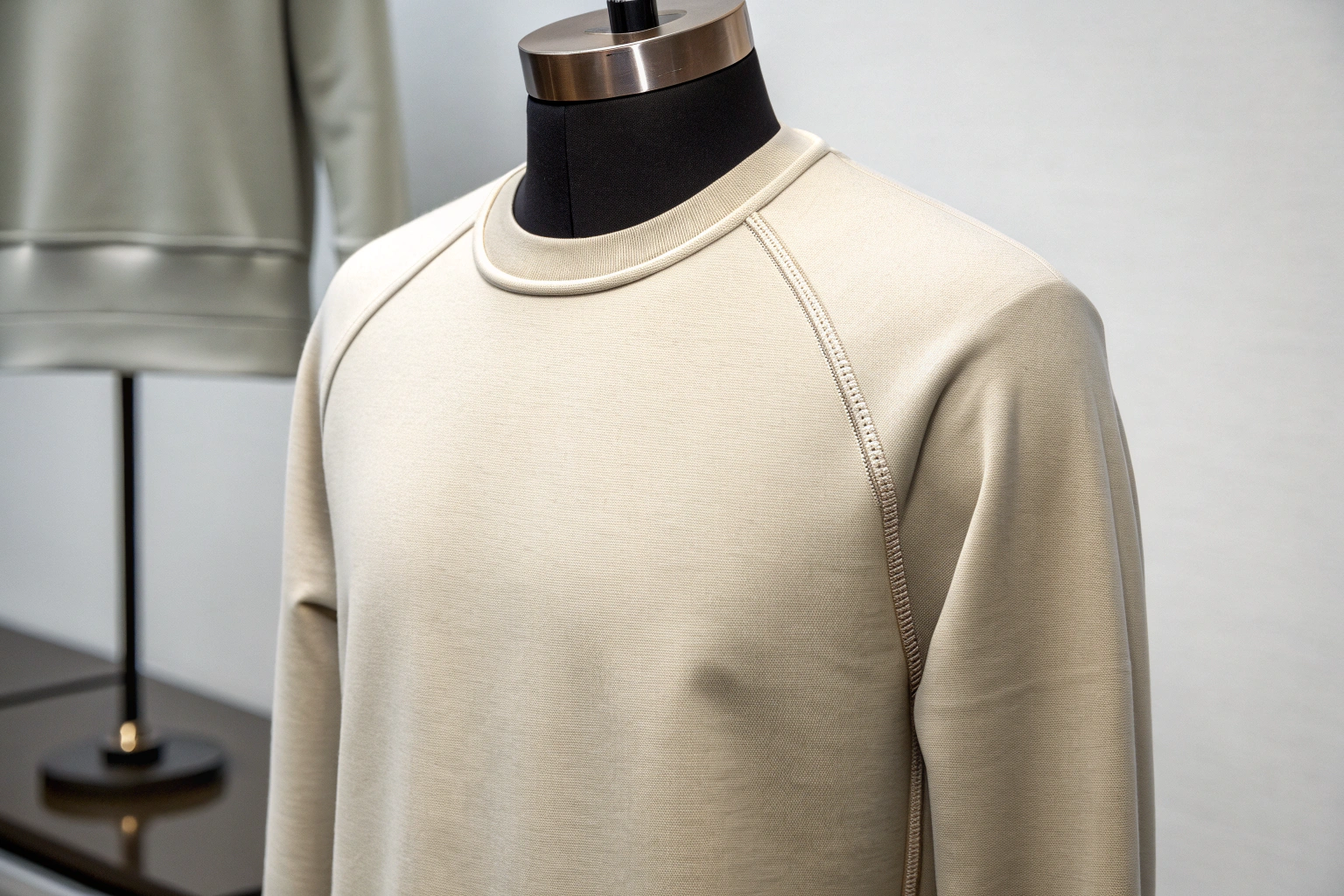
Crewnecks are not inherently oversized; they are designed in multiple fit types, with oversized being a deliberate style choice rather than a standard requirement.
From manufacturing and product development viewpoints, fit decisions are guided by target market, fabric behavior, and intended use. Oversized crewnecks represent one category within a broader fit system rather than the default construction.
What Is the Standard Fit for a Crewneck?
The standard crewneck fit is built around balance, comfort, and ease of movement without excess volume.
A regular-fit crewneck follows the natural shoulder line, offers moderate ease through the body, and maintains a clean silhouette.
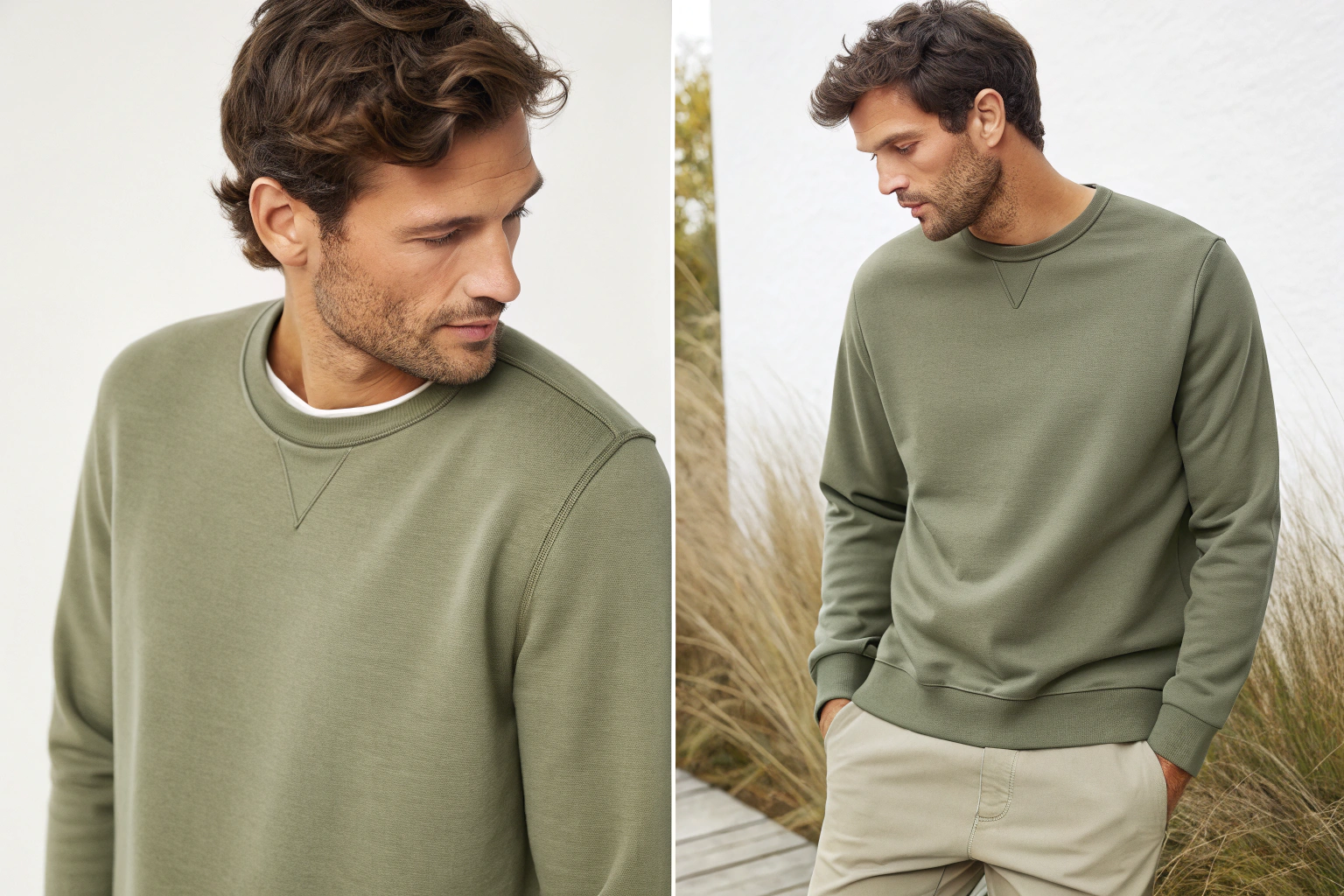
In pattern development, the regular crewneck serves as the base block. Shoulder seams align with the shoulder point, sleeves follow a natural arm curve, and the body falls straight from the chest. Ribbed hems and cuffs provide structure without compressing the garment. This fit is widely used in core programs, uniforms, and everyday casualwear. Fabric weights and elasticity are carefully matched to ensure the garment drapes properly. Regular-fit crewnecks are designed to work both as standalone pieces and as mid-layers, making them suitable for broad market distribution.
Why Oversized Crewnecks Exist as a Style Category
Oversized crewnecks are a product of fashion trends rather than functional necessity.
Oversized crewnecks are intentionally designed with extended proportions to create a relaxed, loose, and expressive visual effect.
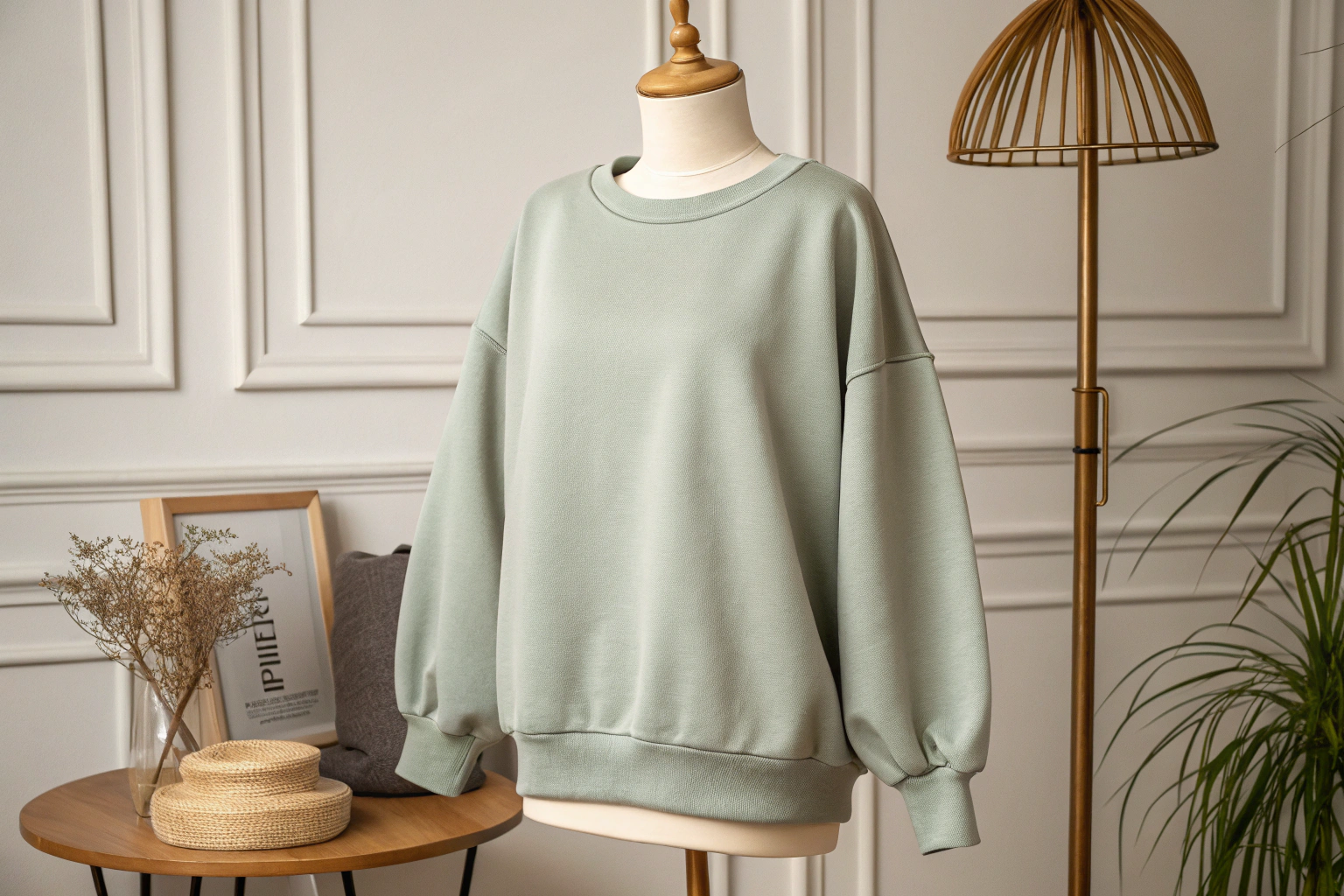
This fit style increases garment volume through wider shoulders, deeper armholes, longer body length, and expanded sleeve width. The neckline often remains stable to prevent the garment from looking unstructured. Oversized crewnecks are commonly associated with streetwear, youth-oriented collections, and seasonal fashion drops. From a design standpoint, oversized silhouettes emphasize comfort and visual impact rather than precise body shaping. However, without controlled pattern adjustments, oversized designs can appear sloppy rather than intentional, which is why this fit requires careful engineering.
Pattern Engineering Differences Between Regular and Oversized Crewnecks
The difference between oversized and regular crewnecks is defined at the pattern level, not by simply increasing size.
Oversized crewnecks use rebalanced patterns rather than scaled-up regular sizes to maintain proportion and wearability.
In production, simply grading up a regular pattern results in distorted proportions. True oversized patterns redistribute volume intentionally. Shoulder seams are dropped, sleeve heads are reshaped, and body width is increased independently of garment length. Neck openings are adjusted slightly but reinforced to avoid stretching. Rib components are recalculated to match the new body dimensions. Fabric behavior becomes more critical in oversized styles, as heavier fabrics may collapse under excess volume. Sampling stages include drape evaluation and movement testing to ensure the oversized garment maintains structure and comfort.
Factory Workshop Processes for Oversized Crewnecks
Producing oversized crewnecks introduces specific challenges in cutting, sewing, and quality control.
Workshop operations must adapt to larger pattern pieces, increased fabric consumption, and bulk management during assembly.
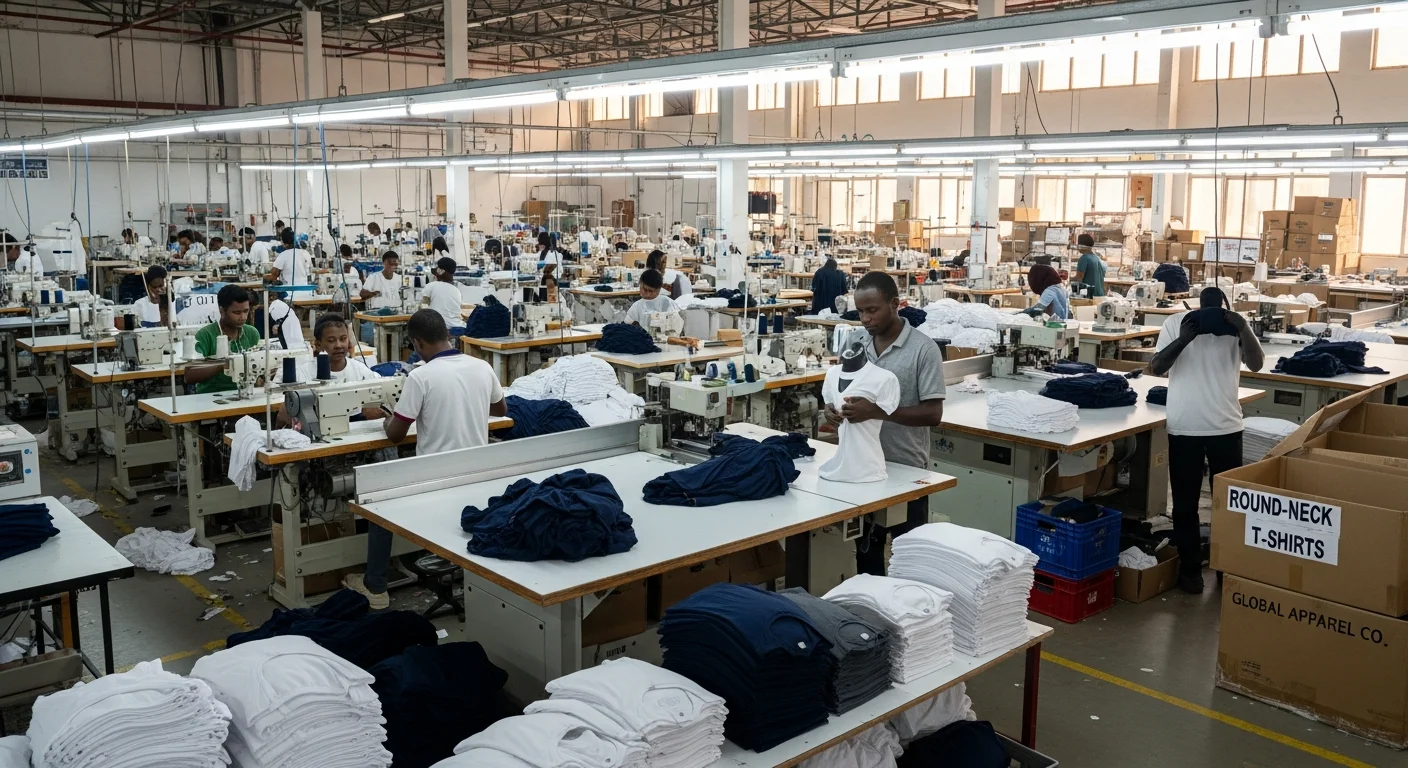
In the cutting room, oversized patterns require wider fabric spreads and optimized marker layouts to reduce waste. Fabric inspection becomes more important, as surface defects are more visible on larger panels. Sewing lines must manage heavier seam intersections, especially at dropped shoulders and wide sleeves. Operators adjust machine settings to maintain stitch consistency over longer seam runs. Rib attachment at cuffs, hems, and neckline requires precise tension control to prevent waviness. Quality inspections focus on symmetry, drape, and proportion rather than fitted alignment. Pressing and finishing processes are also adjusted to set shape without flattening the garment’s volume.
How Fabric and Weight Influence Oversized Crewnecks
Fabric selection plays a decisive role in whether an oversized crewneck performs well in wear and appearance.
Oversized crewnecks require fabrics with enough structure to support volume while maintaining softness and comfort.
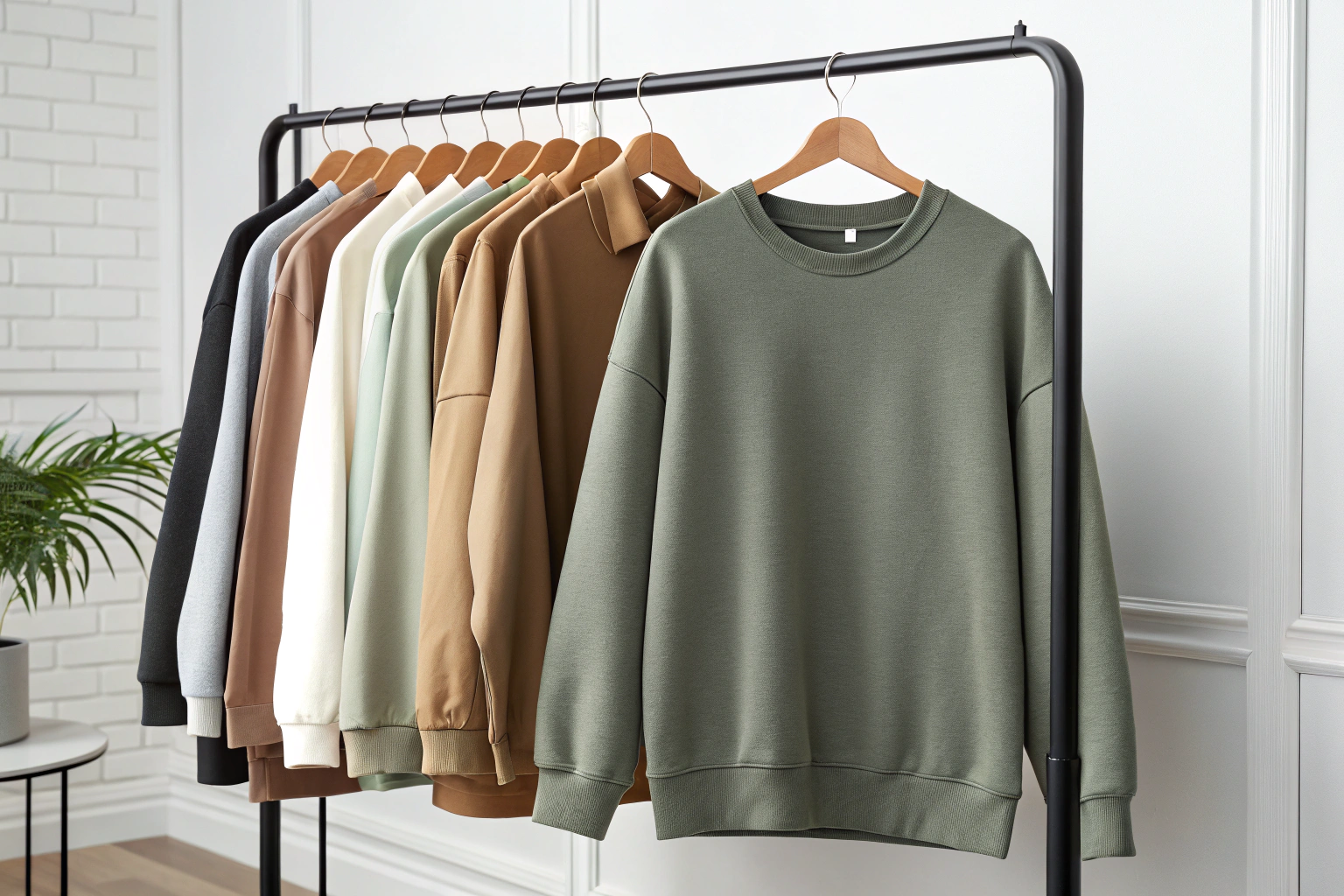
Medium to heavy fabrics such as fleece, French terry, and structured knits are commonly used. Lightweight fabrics may lack body and cause the garment to lose shape. Fabric weight, measured in GSM, is often increased slightly for oversized styles to maintain drape control. Shrinkage testing is essential, as dimensional changes are more noticeable on larger garments. Finishing processes such as enzyme washing or brushing are carefully calibrated to avoid excessive softness that weakens structure. Proper fabric choice ensures that oversized crewnecks appear intentional and refined rather than loose or unbalanced.
Conclusion
Crewnecks are not automatically meant to be oversized. Oversized crewnecks represent a specific design direction shaped by fashion trends, while regular-fit crewnecks remain the industry standard for everyday wear. The distinction lies in pattern engineering, fabric selection, and production execution rather than size alone. Oversized designs require deliberate redistribution of volume, controlled neckline construction, and reinforced workshop processes to maintain quality and visual balance. From cutting and sewing to inspection and finishing, factories must adapt workflows to handle increased garment dimensions without compromising consistency. When executed correctly, oversized crewnecks deliver comfort and modern style. When regular fits are applied with precision, they provide versatility, durability, and broad market acceptance. Both fits coexist in modern apparel collections, each serving distinct functional and aesthetic roles supported by clear manufacturing logic and disciplined production standards.