
A T-shirt may look easy to make, but one weak step in production can lead to shrinkage, twisted seams, thin fabric, print failure, and fast customer complaints.
The T-shirt production process moves through a chain of controlled steps, from fabric sourcing and testing to cutting, sewing, printing, finishing, inspection, and packing. Most quality failures happen when one stage is rushed, poorly checked, or not aligned with the approved standard.
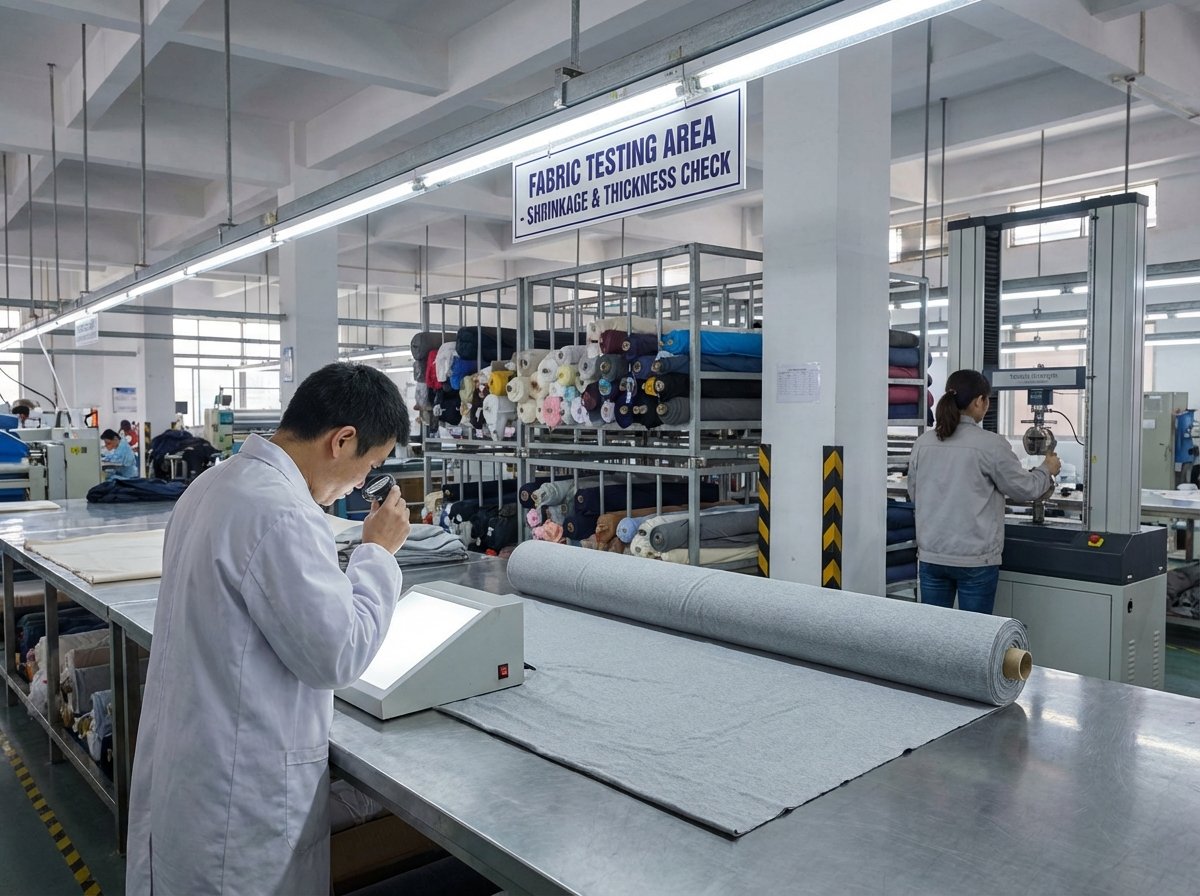
A good T-shirt is not created by fabric alone, and it is not created by printing alone either. Real market feedback shows the same failures again and again. White shirts are too thin and see-through. Cotton shirts shrink and become too short after washing. Side seams twist. Necklines fray. Hems open. Prints crack, peel, or fade. Some shirts even arrive with holes, stains, or obvious size inconsistency. These problems do not usually start at the packing table. Most of them start much earlier, inside the production process itself.
That is why understanding the T-shirt production process matters. A shirt that feels soft, fits well, holds color, stays stable after washing, and still looks clean after repeated wear usually comes from a factory that controls each production stage carefully. A shirt that fails quickly usually comes from a weak link in fabric choice, cutting, sewing, finishing, or quality control.
What Does the T-Shirt Production Process Start With?
T-shirt production starts with product definition, not with sewing.
The first stage is building a clear product standard for fabric, GSM, fit, size chart, color, print method, labels, and packaging before sampling or bulk production begins.
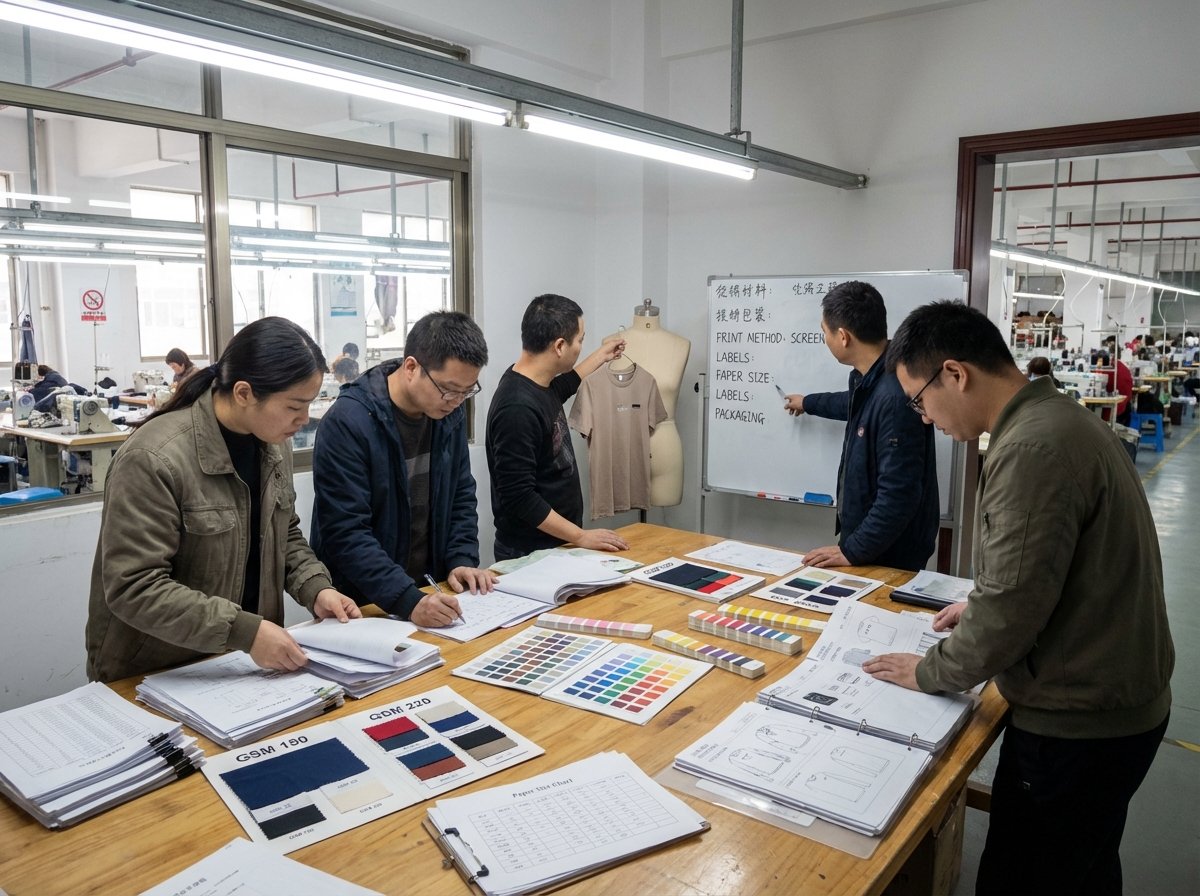
This stage matters because many later problems begin with unclear direction. If the fabric is chosen too light for a white shirt, transparency complaints will follow. If the shirt is meant to be a regular fit but the pattern is developed too boxy or too short, fit complaints will appear before or after washing. If the garment is meant for printing but the fabric is too unstable, the print may crack or distort later.
A good start usually includes the product position, target market, fabric composition, fabric weight, neckline type, sleeve proportion, body length, decoration method, and wash expectations. This is where the factory and buyer decide whether the shirt is a lightweight layering tee, a balanced everyday tee, a graphic tee, or a heavier premium basic. Strong production becomes much easier when this first step is clear.
How Does Fabric Sourcing Shape the Final T-Shirt?
Fabric sourcing decides how the shirt will feel, cover, drape, print, and wash.
The right fabric should be selected by looking at GSM, opacity, yarn quality, knit structure, shrinkage risk, surface stability, and intended end use before the first sample is approved.
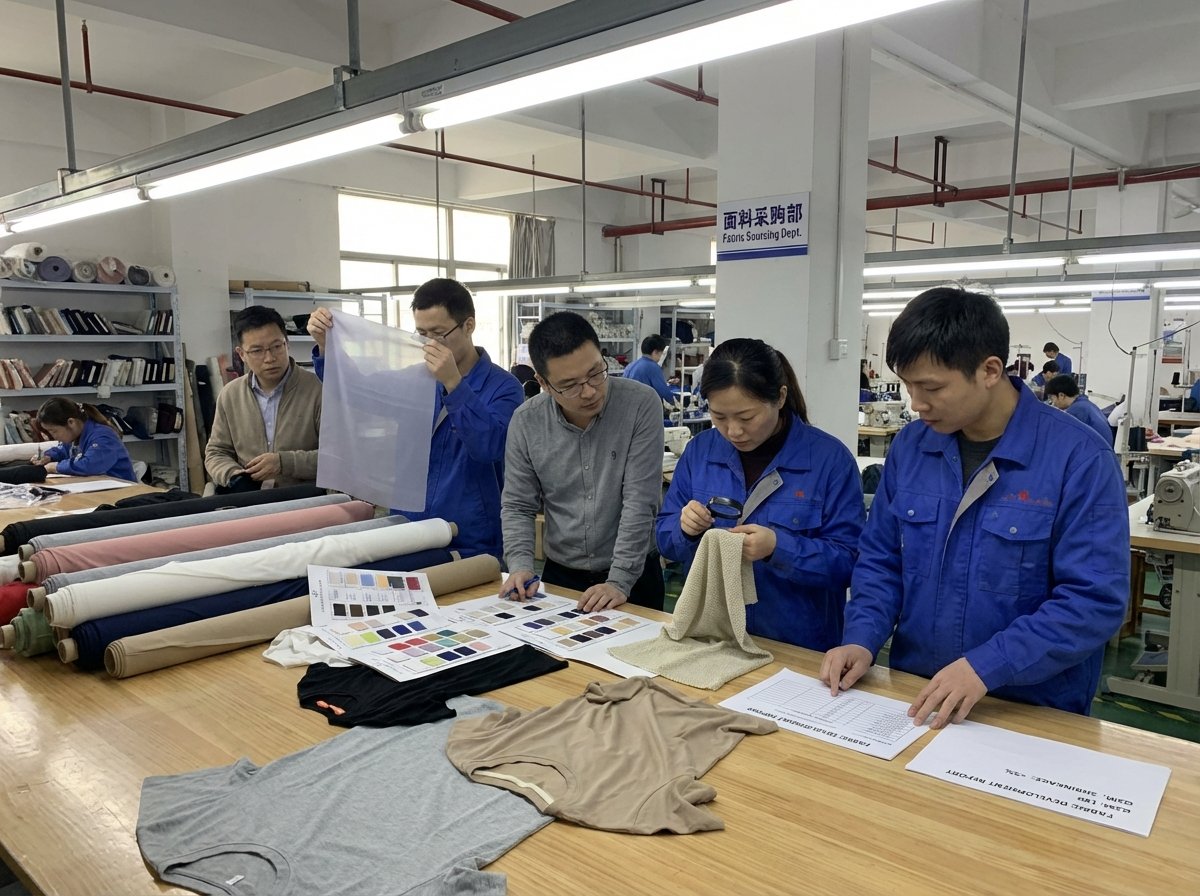
The insight table shows just how important this stage is. Buyers complain that shirts are too thin, too transparent, too rough, too weak, or too cheap-looking. White and light-colored shirts get especially harsh criticism when the fabric is so light that tattoos, skin tone, or inside neck prints show through. Other shirts feel soft at first but lose shape or become rough after washing. These are fabric development problems before they become customer problems.
A strong factory should not treat all colors and all styles the same. A white stand-alone tee often needs better opacity control than a dark shirt. A blank tee for embroidery needs more support than a light fashion basic. A graphic tee needs a base fabric that can work with shrinkage and print elasticity. Good sourcing is not only about finding cotton. It is about finding the right cotton fabric for the real product goal.
| Fabric stage decision | What it affects later |
|---|---|
| GSM and knit density | Opacity, drape, value feel |
| Yarn quality | Softness, pilling, durability |
| Shrinkage control | Post-wash fit stability |
| Surface finishing | Hand feel and print result |
| Color stability | Fading and bulk consistency |
Step-by-Step T-Shirt Production Process from Fabric to Packing
T-shirt production works best when each stage is controlled as part of one connected system.
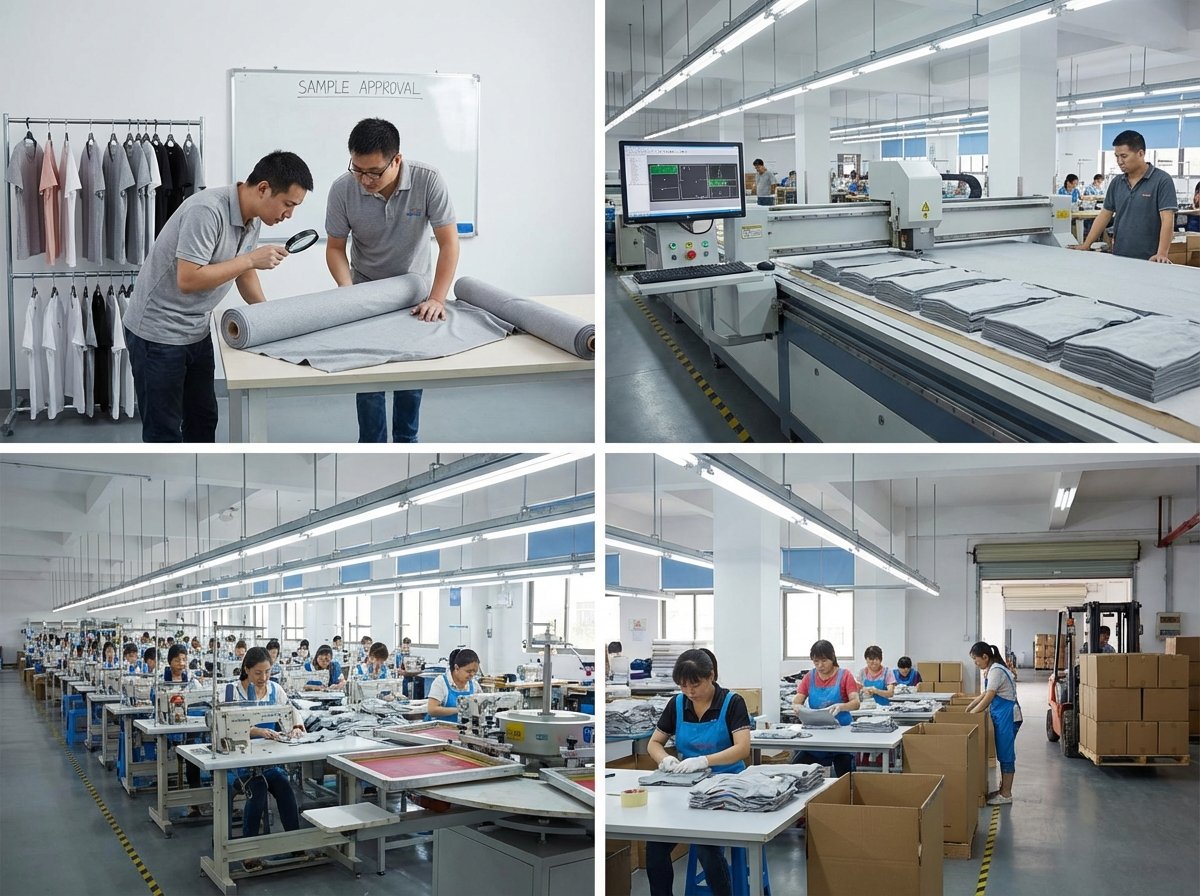
The usual flow is fabric approval, sample development, marker planning, cutting, printing or embroidery, sewing, finishing, inspection, folding, packing, and shipment preparation.
After the fabric is approved, the factory develops or confirms the sample standard. Once that is locked, bulk fabric is inspected, spread, and prepared for cutting. Marker planning is used to control size layout and fabric use. Then the fabric is cut into garment panels. If the shirt includes printing or embroidery, that stage is often completed before full sewing, depending on the artwork and garment structure.
After that, the body, sleeves, neckline, and hems are sewn together. Then the shirt moves to finishing, where thread trimming, pressing, cleaning, shape correction, and visual review take place. Final inspection checks measurements, print quality, stitching, stains, holes, and overall appearance. Only after that does the shirt move into folding, labeling, polybagging, carton packing, and shipment preparation.
The important point is simple: every stage builds on the previous one. If the fabric is unstable, cutting and printing will suffer. If cutting is off grain, the shirt may twist after wash. If sewing tension is poor, the neckline or hem may open later. A bad shirt is rarely caused by one stage alone.
What Happens During Cutting and Why Does It Matter So Much?
Cutting controls garment balance before the shirt is even sewn.
If fabric is cut off grain, under tension, or with weak marker control, the finished T-shirt can twist, skew, shrink unevenly, or lose shape after washing.
This stage connects directly to many complaints in the insight table. Buyers say vertical prints become crooked after washing, side seams twist, and the whole shirt looks off after one laundry cycle. These are not only washing problems. They are often cutting and grainline problems. If the pattern is not aligned correctly with the fabric grain, the garment may never sit straight after wash.
To save fabric, some weak producers may cut too aggressively or allow poor lay control. That creates a problem that may not be visible at first. The shirt can look fine in the carton and still twist badly later. Good cutting control means the factory respects grainline, spreading stability, marker accuracy, and panel consistency across sizes.
How Do Printing and Decoration Affect Production Risk?
Printing adds value to a T-shirt, but it also adds technical risk.
The main print risks are cracking, peeling, fading, poor white coverage, low-resolution output, stiff hand feel, and mismatch between the print method and the shirt fabric.
The insight table shows this clearly. Buyers complain that prints crack after one wash, peel after a few washes, look blurred, feel papery, or arrive already looking old. Some white letters show the dark base through them. Some designs look very different from the product photo. These are not only design issues. They are production control issues.
A strong factory matches the print method to the fabric and product purpose. DTG, screen print, DTF, heat transfer, embroidery, and applique all behave differently. A thin shirt may not support heavier decoration well. A shirt with high shrinkage can create stress on the print after washing. A print that looks good on day one may still fail if curing is weak or elasticity is too low. This is why print testing should happen before bulk release, not after complaints arrive.
Where Quality Problems Usually Happen in the T-Shirt Production Process
Most quality problems happen where standards are weak, not where the product is most visible.
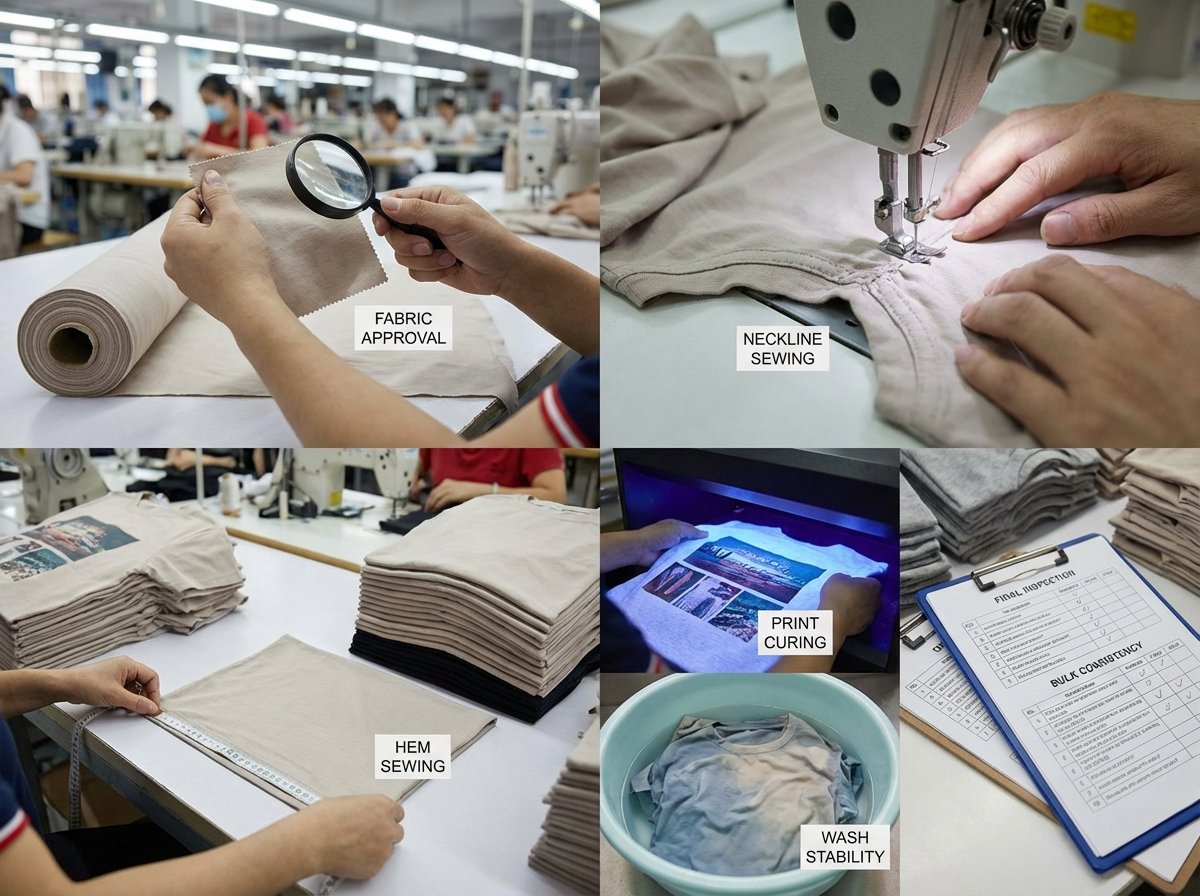
The most common failure points are fabric approval, cutting alignment, neckline sewing, hem sewing, print curing, wash stability, final inspection, and bulk consistency control.
The insight table gives a very clear map of these failure points. Thin and see-through shirts start at fabric selection. Shrinkage starts at weak pre-shrinking and unstable fabric finishing. Twisted shirts start at off-grain cutting or unstable fabric behavior. Fraying necklines and opening hems start at weak sewing control. Cracked graphics start at poor print method choice or weak curing. Small holes can come from low fabric strength, abrasion weakness, or needle damage during sewing.
This matters because many factories try to solve problems too late. They focus on final appearance before packing, but many important failures are already built into the garment by then. A stronger quality system catches them earlier.
| Quality problem | Stage where it often starts |
|---|---|
| See-through shirt | Fabric development |
| Shrinkage and short body | Fabric finishing and wash control |
| Twisted side seams | Cutting and grainline control |
| Open hems or sleeve seams | Sewing tension and reinforcement |
| Cracked print | Decoration method and curing |
| Fraying collar | Neck construction and wash stability |
| Tiny holes | Fabric strength or sewing damage |
Why Is Neckline Construction So Important in T-Shirt Production?
The neckline is one of the fastest ways buyers judge T-shirt quality.
A good neckline should sit flat, recover well, resist fraying, and stay balanced after washing instead of stretching out, puckering, or breaking down early.
The insight table shows repeated complaints around necklines that fray, wrinkle, lose shape, or even develop holes around the seam after just a few washes. Buyers also notice puckering at the neck because it makes the whole shirt look cheap even when the rest of the garment is acceptable.
This means the neckline should never be treated as a small detail. Rib quality, rib width, seam tension, tape use where needed, and wash performance all matter. A premium-feeling T-shirt often has a collar that feels substantial and stays clean after repeated wear. A low-quality T-shirt often gives itself away through a weak collar first.
How Should Buyers Monitor Production Progress More Effectively?
Production monitoring works best when it follows the real risk points, not only the calendar.
Buyers should monitor fabric approval, pre-production sample lock, cutting accuracy, print approval, in-line sewing quality, measurement checks, wash results, and final inspection consistency across the order.
The most effective monitoring system is simple and practical. First, make sure the approved sample is truly locked as the production standard. Then confirm that bulk fabric matches the approved quality in weight, feel, color, and opacity. During cutting, check that panels are being cut correctly and size separation is stable. Before or during print production, confirm that artwork output, hand feel, and color are correct. During sewing, review necklines, sleeve joins, side seams, and hems. Before packing, check measurement tolerance, stains, holes, print defects, and mixed-size problems.
This type of monitoring matters because many buyer complaints in the market come from bulk inconsistency, not just single-piece defects. One shirt may fit well while another in the same order feels smaller, thinner, or rougher. Monitoring should therefore focus on whether the factory is repeating the standard correctly, not only whether the first units look fine.
What Does Strong Final Inspection Actually Cover?
Final inspection should confirm function, appearance, and consistency before the goods leave the factory.
A strong final inspection checks measurements, stitching, print durability signs, color consistency, stains, holes, neckline shape, hem quality, labeling, packing, and carton accuracy.
This stage is the last barrier before shipment, but it should not be the first real check. Final inspection works best when earlier stages were controlled properly. Even so, it remains essential because buyers still report shirts arriving with open seams, stains, holes, wrong sizes, wrong colors, and inconsistent presentation.
A good final inspection also protects the selling experience. A shirt may be technically wearable and still create complaints if the fold is poor, the size sticker is wrong, the inside label does not match the tag, or the packaging looks low-grade. In high-volume production, these small mistakes quickly become expensive.
Conclusion
The T-shirt production process is a chain of technical steps, and quality problems usually begin long before packing. Better fabric control, cleaner cutting, stronger sewing, smarter print handling, and tighter inspection create shirts that fit better, last longer, and generate fewer complaints in bulk production.