
Many growing apparel brands hit a wall fast. Orders rise, quality slips, lead times stretch, and customer trust starts to fade.
A strong T-shirt manufacturer helps a brand scale by improving sampling speed, production planning, quality control, fit consistency, and bulk execution. The right partner reduces common problems like thin fabric, shrinkage, print cracking, sizing errors, and unstable delivery during growth.
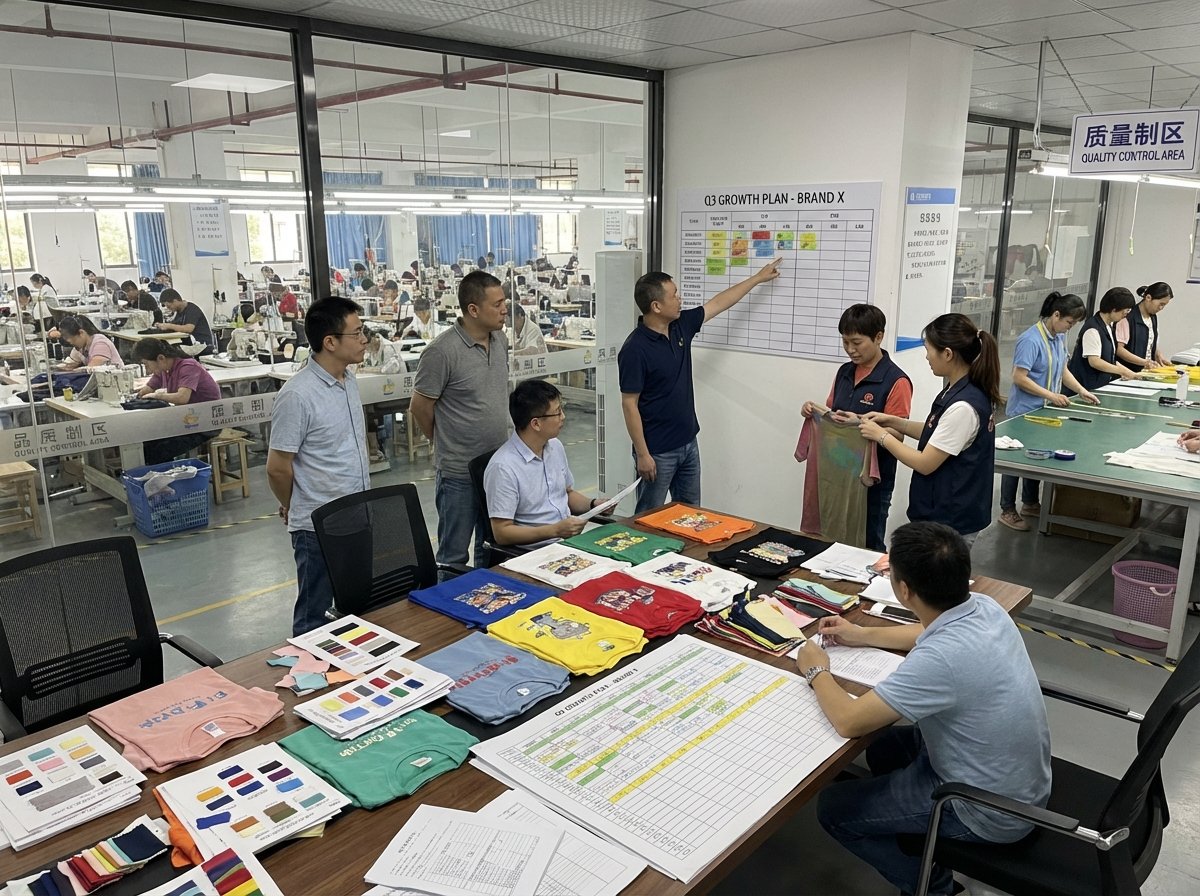
Scaling a T-shirt brand is not only about selling more units. It is about keeping the product reliable while volume grows. Many brands can manage small runs with close attention and quick fixes. That changes when monthly orders rise, colors expand, graphics multiply, and restocks become more frequent. At that stage, the wrong factory creates hidden drag. Fabric starts feeling thinner. White shirts become see-through. Prints crack after a few washes. Collars lose shape. Sizes become uneven across the same order. Growth then turns into customer service pressure instead of momentum. A reliable manufacturer changes that pattern by bringing better planning, better controls, and better repeatability into the product line.
When a T-Shirt Manufacturer Can Help You Scale Faster?
Small brands often wait too long before upgrading production support. That delay usually shows up in missed restocks, late launches, and uneven product quality.
A T-shirt manufacturer can help a brand scale faster when order volume starts rising, style options expand, restocks become frequent, and quality consistency becomes harder to control in-house. Growth needs repeatable systems, not only good designs.
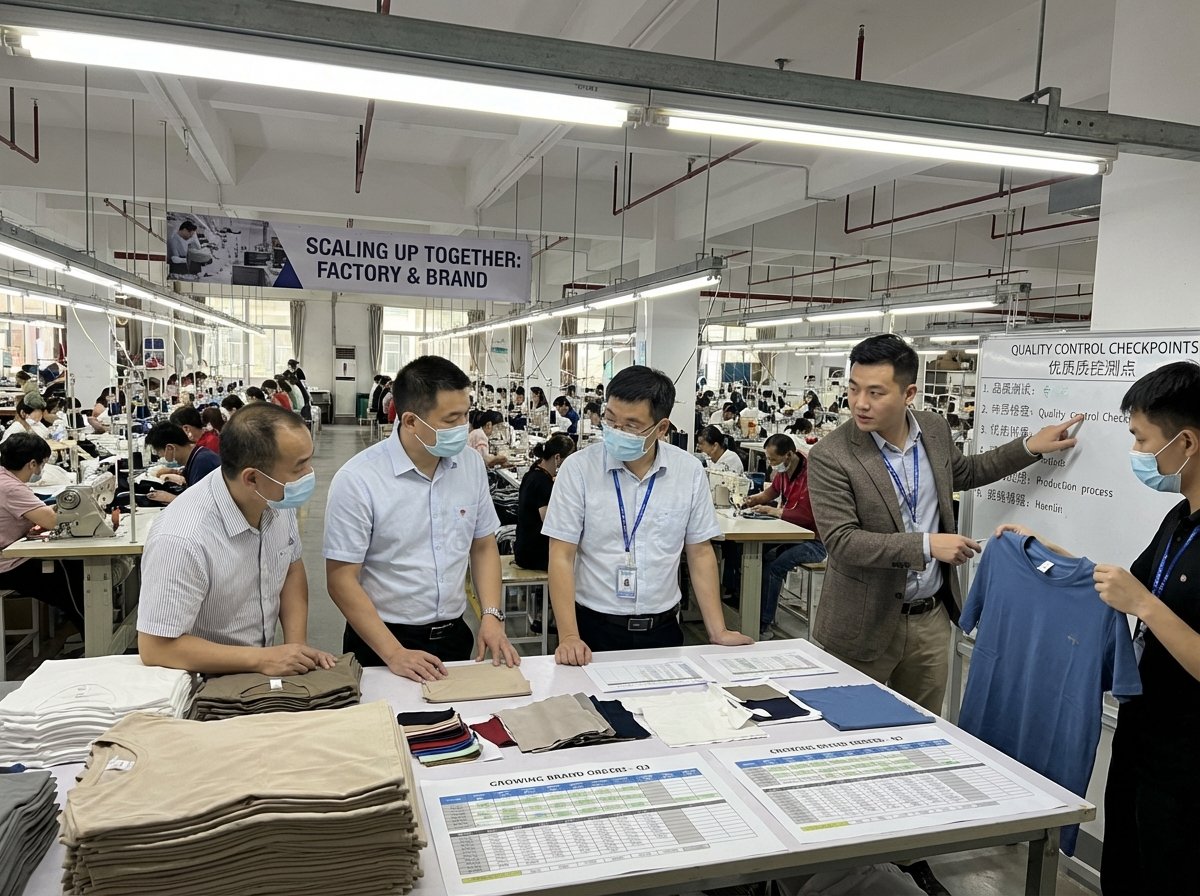
A brand often reaches a point where demand is no longer the main problem. Execution becomes the real challenge. That usually happens when one or more of these signs appear: repeat orders become urgent, best sellers run out too often, sample approval takes too long, or the product starts receiving complaints about fit, fabric, and wash performance.
This stage matters because scaling weak products only multiplies the problem. Public complaints across the T-shirt market are very clear. Customers notice thin fabric, shrinkage in length, twisted seams, pilling, weak hems, poor collars, faded color, and cracked prints. These are not random issues. They are production issues. Once order volume rises, these small failures spread faster.
| Sign a Brand Is Ready to Scale | What It Usually Means |
|---|---|
| Frequent restocks | Demand is stable enough for production planning |
| More color and print options | Product complexity is rising |
| More size complaints | Pattern and grading need stronger control |
| More wash-related returns | Fabric and finishing need better testing |
| Longer sample cycles | Development process is too loose |
| Inconsistent bulk quality | Factory systems are not strong enough |
A capable manufacturer helps remove these growth bottlenecks by turning repeated product decisions into stable production standards.
Why Do Quality Problems Slow Brand Growth So Much?
Growth looks exciting from the outside, but poor quality turns growth into rework very quickly. A brand can lose momentum even while sales rise.
Quality problems slow brand growth because they increase returns, reduce repeat purchases, create negative reviews, and make every restock riskier. Thin fabric, shrinkage, print failure, and sizing inconsistency hurt trust more than almost any marketing mistake.
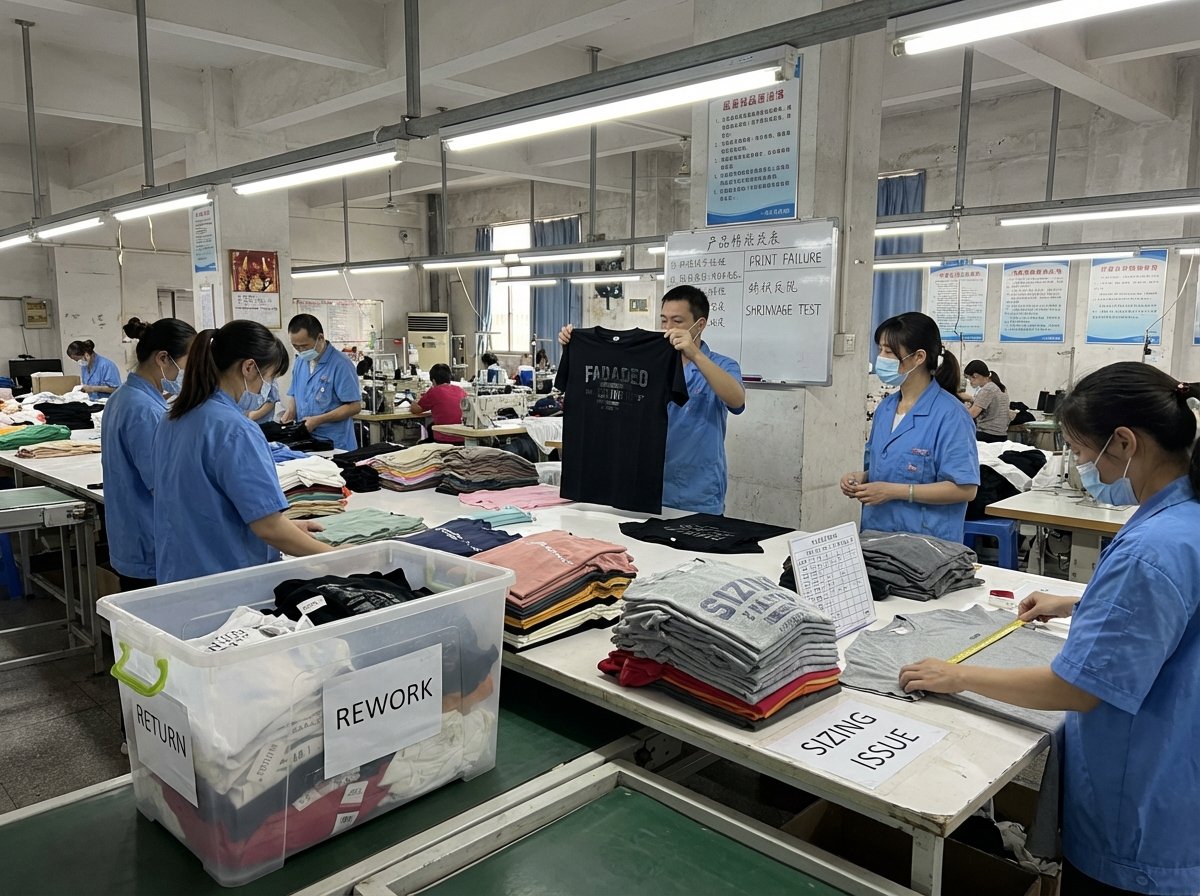
The market keeps repeating the same complaints. White tees are too thin. Cotton shirts shrink after one wash. Side seams twist. Prints peel or crack. Hems open. Collars wrinkle. Sizes run small in one batch and large in the next. When this happens, the brand does not only lose one sale. It loses confidence.
That is why product stability matters so much during scale. A brand can recover from a missed social post. It is much harder to recover from hundreds of customers saying the shirt felt cheap or fit wrong.
| Common Complaint | Business Impact |
|---|---|
| See-through fabric | Lowers perceived value fast |
| Shrinkage after wash | Creates size distrust |
| Print cracking | Damages branded product image |
| Pilling | Makes the product look old too early |
| Seams opening | Signals poor construction |
| Inconsistent sizing | Hurts repeat ordering confidence |
A strong manufacturer helps protect growth by treating these risks as preventable production failures, not as normal apparel problems.
How Manufacturers Support Brand Growth Through Sampling, MOQ, and Production Planning?
Many brands think manufacturing support starts at bulk production. In reality, growth is shaped much earlier, during development and planning.
Manufacturers support brand growth through faster sampling, smarter MOQ options, clearer material planning, and better production scheduling. These systems help brands test ideas, manage cash flow, and reorder winning styles without losing product consistency.
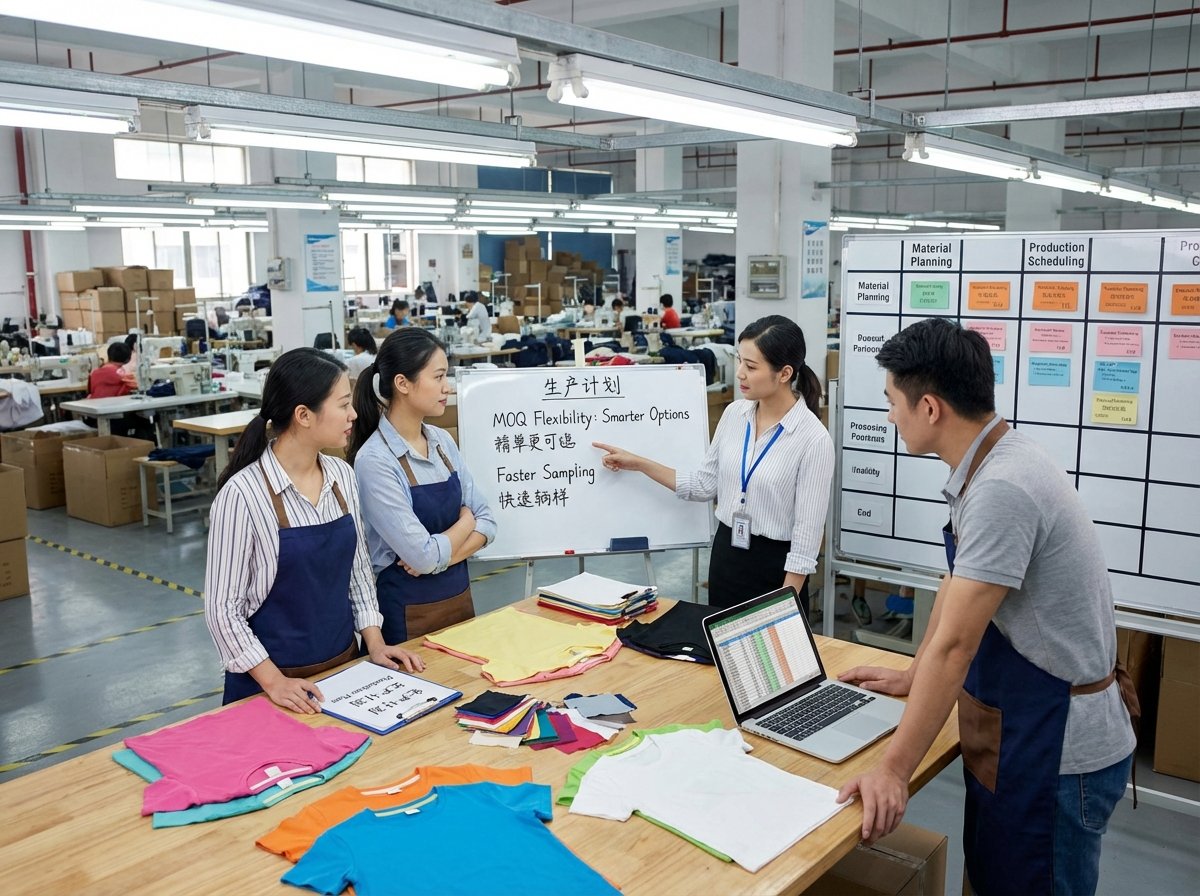
Sampling is where product quality begins. A good manufacturer helps shape more than the logo placement. Sampling should confirm fabric weight, color feel, print method, fit balance, collar shape, and wash performance. This is where many future complaints can be caught early.
MOQ also plays a major role in growth. A brand that is still testing new styles needs room to experiment without carrying too much stock. At the same time, the manufacturer must be able to support larger repeat runs once a style proves itself. That balance matters more than low headline pricing.
Production planning becomes even more important once demand grows. Best sellers need raw material forecasting. Seasonal launches need backward scheduling. White tees, black tees, oversized fits, and graphic basics may all need different fabric and finishing logic.
| Manufacturing Support Area | How It Helps Scaling |
|---|---|
| Sampling | Tests fit, fabric, print, and wash performance early |
| Flexible MOQ | Helps manage launch risk and inventory pressure |
| Fabric planning | Improves restock speed and consistency |
| Production scheduling | Reduces delays in launch windows |
| Style forecasting | Supports repeat best sellers more smoothly |
| Color and print planning | Keeps variations organized as range grows |
The best production planning does not only fill orders. It helps a brand grow with less waste and fewer avoidable mistakes.
Which T-Shirt Features Matter Most When a Brand Starts Scaling?
A growing brand does not need every feature to be premium. It does need the right features to stay consistent as volume increases.
The most important T-shirt features during scaling are fabric opacity, shrinkage control, fit consistency, collar stability, seam strength, print durability, and color retention. These are the areas customers notice fastest and complain about most.
Public product feedback shows a clear pattern. Customers reward shirts that are soft, durable, not see-through, true to size, and stable after washing. They complain when shirts feel thin, shrink in length, pill quickly, lose shape, or crack at the print.
That means scaling brands should protect the basics first. A white T-shirt should not share the same logic as a dark style if opacity is at risk. A tall fit should not use the same shrinkage expectation as a standard body. An oversized tee should not be built by only widening the chest. These details shape whether customers reorder or leave.
| Product Feature | Why It Matters During Scale |
|---|---|
| Fabric weight and density | Protects feel, structure, and opacity |
| Shrinkage control | Keeps size trust after wash |
| Collar construction | Maintains shape and premium look |
| Seam quality | Prevents early garment failure |
| Fit grading | Keeps all sizes wearable and balanced |
| Print method | Protects graphics through wash and wear |
| Colorfastness | Keeps garments looking newer longer |
Strong brands often grow faster when the product becomes easier to trust. These basic features are what build that trust.
How Do Better Manufacturing Systems Improve Repeat Orders?
The first order creates attention. The repeat order creates a real business. That is why manufacturing systems matter so much after launch.
Better manufacturing systems improve repeat orders by making fit, feel, color, print quality, and lead time more predictable. Customers reorder when the next shirt feels like the last good one, not when every batch feels different.
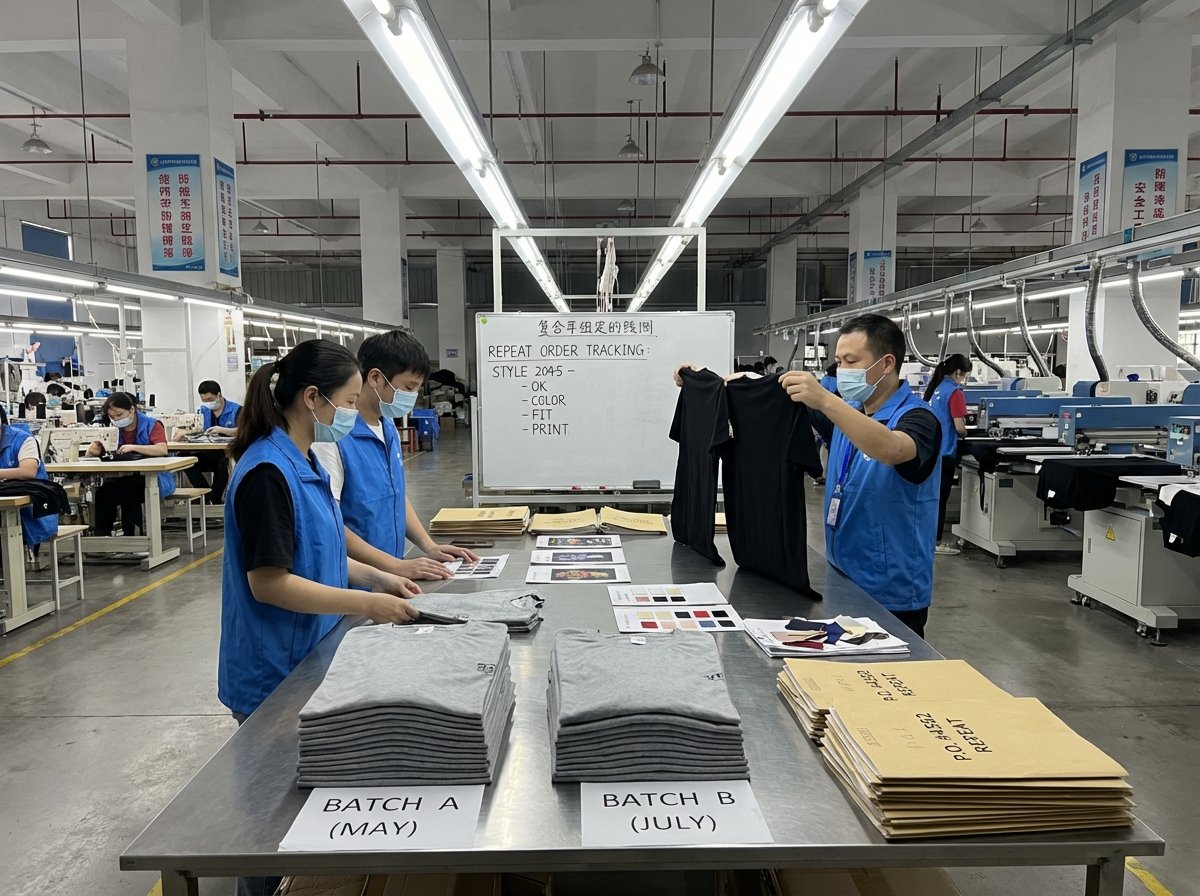
Repeat selling depends on consistency. A best-selling blank or graphic tee should not feel soft in one batch and rough in the next. Body length should not shift. White should not become more transparent. Black should not fade too fast. A brand may create demand through strong content and marketing, but only reliable production turns that demand into repeat revenue.
This is where stronger systems make a visible difference. Fabric specs stay fixed. Approved colors are matched properly. Print methods are not changed without reason. Measurements are checked with tolerance standards. Wash testing is done before shipment.
| System Element | Repeat Order Benefit |
|---|---|
| Fixed fabric specification | Keeps handfeel and weight stable |
| Measurement control | Reduces size surprises |
| Wash testing | Protects shape and shrinkage consistency |
| Print approval standards | Keeps graphic quality repeatable |
| Shade control | Prevents visible color mismatch |
| Bulk QC checkpoints | Catches defects before shipment |
When production becomes stable, customer trust becomes easier to build and much easier to keep.
What to Look for in a Long-Term T-Shirt Manufacturing Partner?
A long-term manufacturing partner should support growth, not just current production. The relationship should become more useful as the brand gets bigger.
A strong long-term T-shirt manufacturing partner should offer stable quality, clear communication, scalable capacity, reliable sampling, practical MOQ structure, strong quality control, and a real understanding of fit, fabric, and print performance over time.
The best long-term partner is usually not the one that says yes to everything. It is the one that can explain what will work, what may fail, and how to reduce product risk before bulk production starts. Clear communication matters because product details get more complex as a brand grows.
A reliable partner should also understand that different product lines need different logic. A heavyweight tee, a soft retail basic, a women’s fitted style, and a white graphic T-shirt should not all be treated the same way. Material, fit, and production flow should match the use case.
| What to Look For | Why It Matters |
|---|---|
| Stable fabric sourcing | Supports consistency across reorders |
| Clear sampling process | Speeds development and reduces mistakes |
| Scalable production capacity | Supports growth without chaos |
| Practical MOQ structure | Balances testing and expansion |
| Wash-tested quality standards | Reduces returns and complaints |
| Pattern and grading knowledge | Improves fit across sizes and styles |
| Print method expertise | Protects graphic durability |
| Transparent communication | Helps solve problems early |
A good factory can make shirts. A strong long-term partner helps protect margins, reputation, and momentum.
How Can a Brand Build a Better Scaling Strategy with the Right Manufacturer?
Scaling works best when product, planning, and production all move in the same direction. The manufacturer should strengthen that connection.
A better scaling strategy comes from building core products with strong quality basics, setting clear production standards, planning reorders early, and working with a manufacturer that can keep quality stable while order volume increases.
The strongest scaling path usually starts with a focused product line. One reliable blank, one strong fit, a few controlled colors, and carefully chosen print methods often outperform a wide range built on weak production control. Once the basics are stable, expansion becomes safer.
The right manufacturer supports that process by helping standardize what matters most: fabric weight, opacity, fit, shrinkage, print durability, and inspection flow. As the brand grows, those standards become the operating base for better launches and stronger repeat sales.
A scaling strategy becomes much more durable when quality is built into the product from the start instead of repaired later through discounting, apology emails, or return handling.
Conclusion
A strong T-shirt manufacturer helps brands scale faster by making product quality, sampling, planning, and repeat production more stable as demand grows.