
Jackets and sweatshirts are often placed side by side in casual collections. However, they serve very different roles in apparel design, seasonal planning, and factory production.
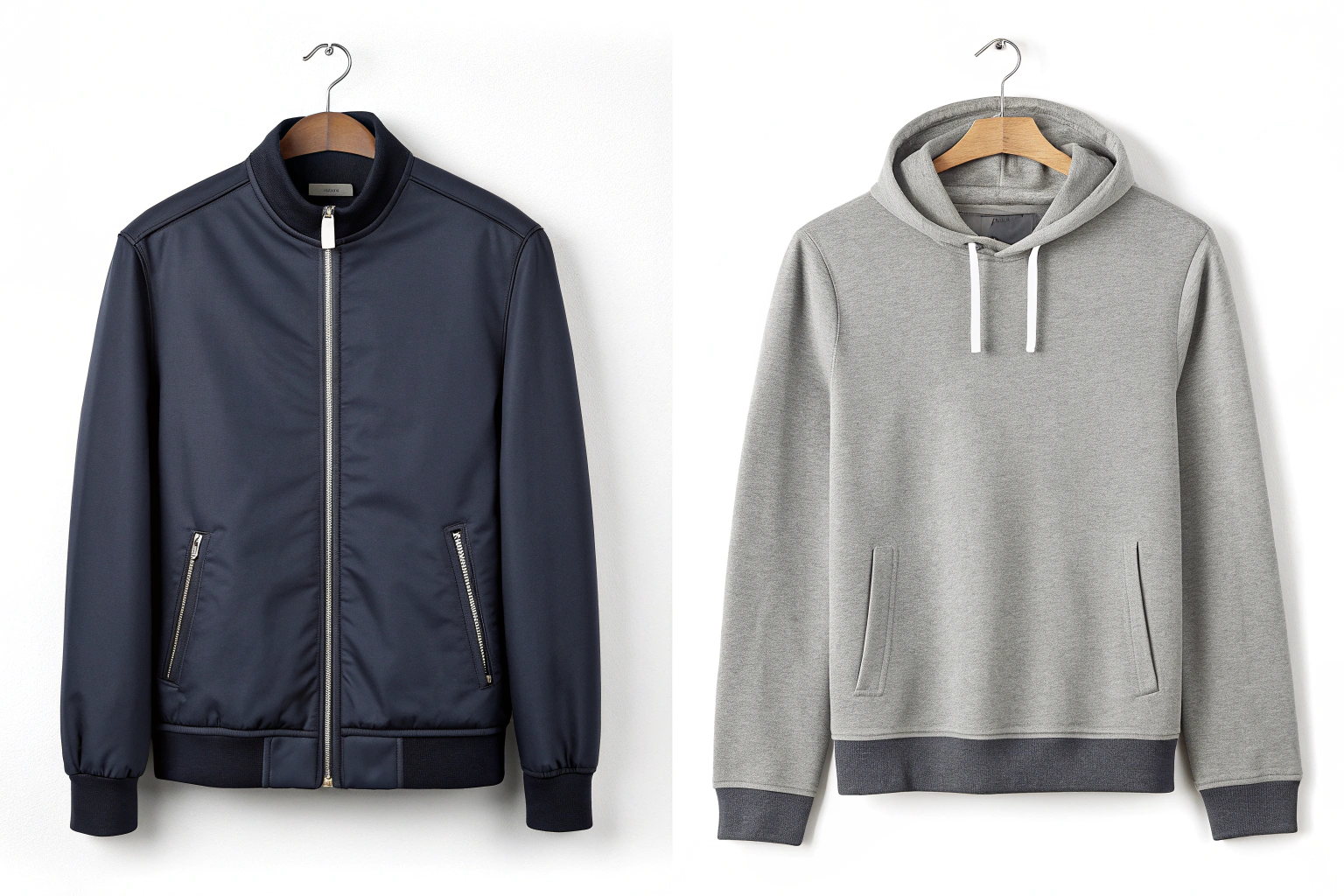
The core difference is purpose and structure: a jacket is outerwear designed for protection, while a sweatshirt is knitwear designed for warmth and comfort.
This difference becomes clear when function, fabric, construction, and manufacturing processes are examined in a professional context.
How Does Functional Purpose Separate Jackets and Sweatshirts?
Function defines category first.
Jackets are designed to protect the body from external conditions, while sweatshirts are designed to maintain body warmth and comfort.
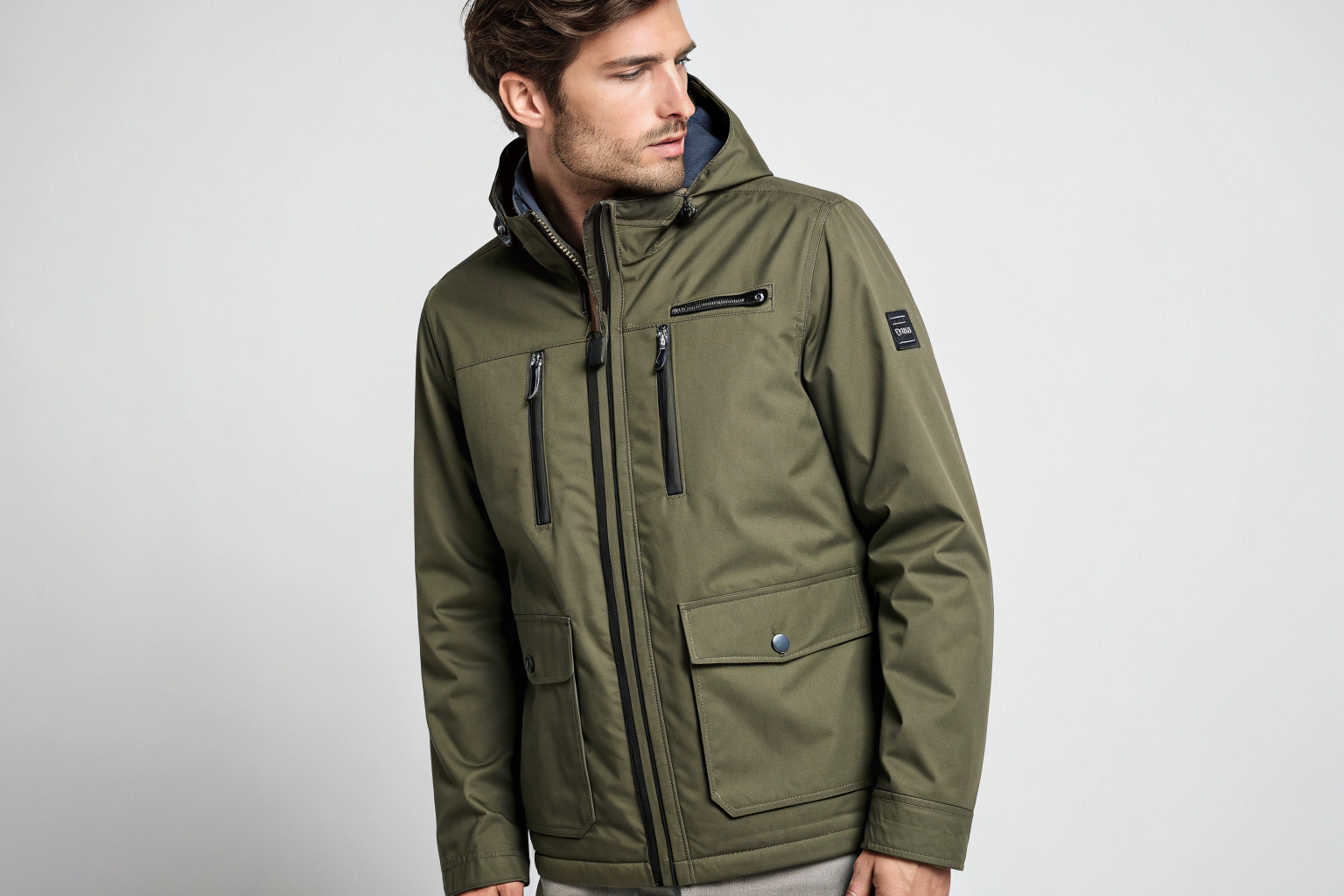
Jackets act as the outermost layer. They reduce wind penetration, offer light weather resistance, and help maintain body temperature in outdoor environments. Many jackets are removed indoors, which reflects their protective role.
Sweatshirts function as inner or mid-layers. They trap body heat through knit fabric while allowing airflow. They are often worn indoors for long periods. Protection is not the goal. Comfort and ease of movement come first.
This functional difference drives every design and production decision that follows.
How Do Fabric Types Clearly Distinguish the Two?
Fabric structure creates performance differences.
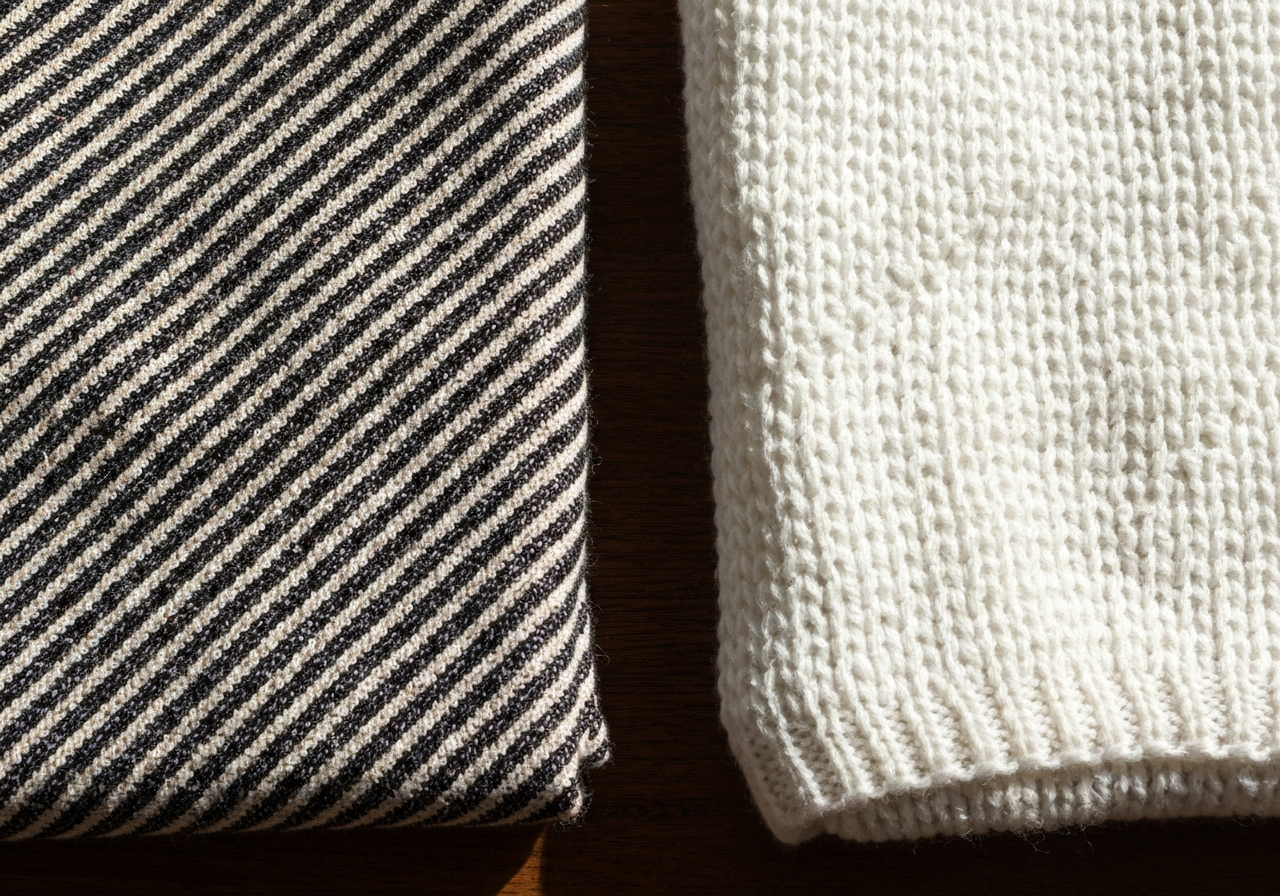
Jackets use woven or structured fabrics, while sweatshirts rely on knitted fabrics.
Jackets are commonly made from woven fabrics such as polyester, nylon, canvas, or denim. These materials resist wind and maintain shape. Some include coatings or laminations for added protection.
Sweatshirts use knit fabrics like fleece or French terry. Knitted construction allows stretch, softness, and breathability. These fabrics hold warm air but do not block wind.
From a technical standpoint, woven fabrics restrict airflow. Knitted fabrics manage heat through air circulation. This single difference explains why jackets protect and sweatshirts insulate.
How Does Garment Structure and Silhouette Differ?
Structure supports purpose.
Jackets are built with defined shape and multiple components, while sweatshirts maintain simple, flexible silhouettes.
Jackets often include collars, plackets, linings, pockets, and closures such as zippers or buttons. Interlining may be added for stiffness. Pattern shapes aim to hold form over time.
Sweatshirts use fewer pattern pieces. A typical structure includes front, back, sleeves, and rib components at collar, cuffs, and hem. The shape follows the body without rigidity.
In pattern development, jackets require tighter tolerance control. Sweatshirts allow more flexibility due to fabric stretch. This difference affects fitting rounds and size stability.
How Do Factory Production Processes Differ?
Manufacturing systems are not interchangeable.
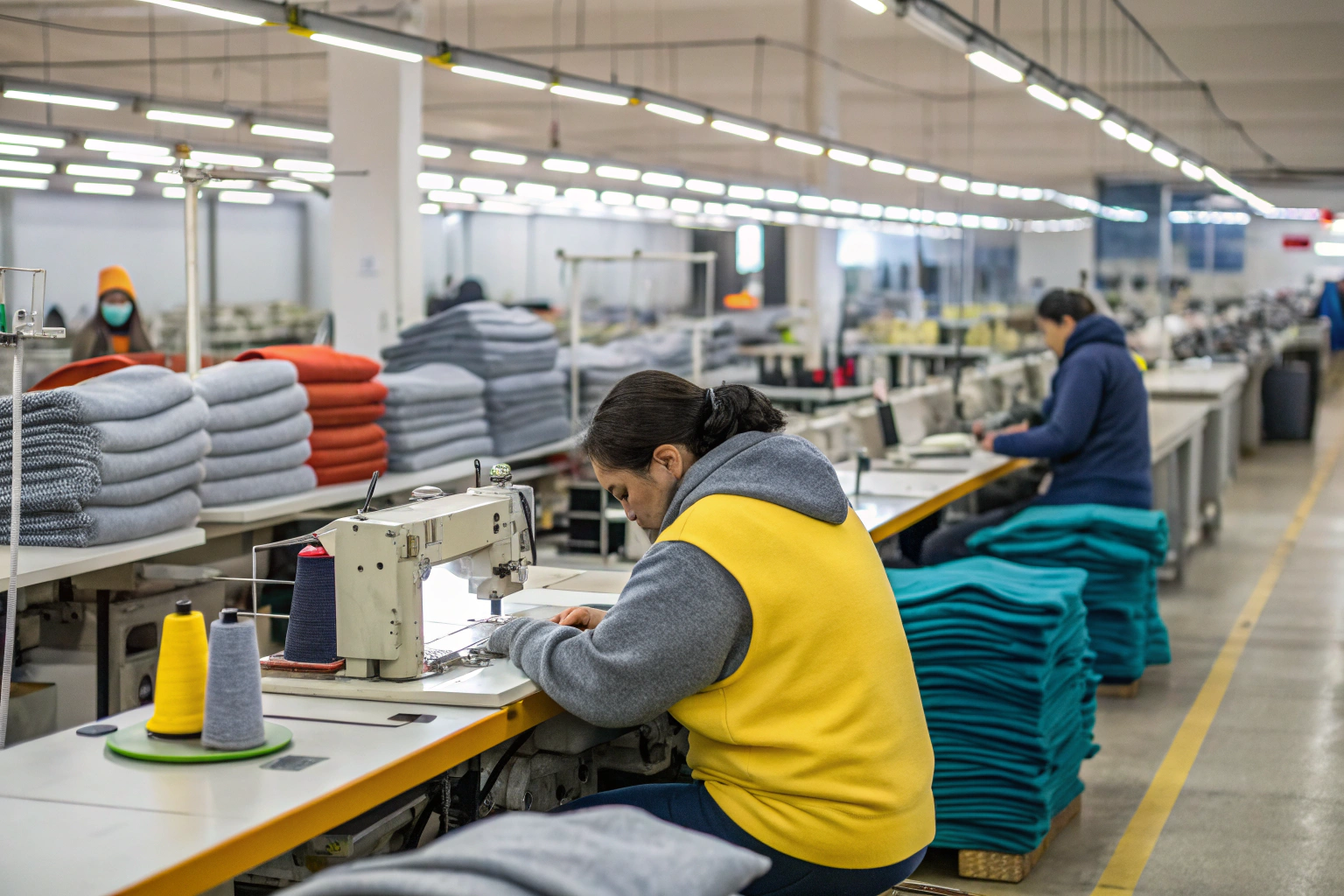
Jackets follow outerwear production workflows, while sweatshirts follow knitwear cut-and-sew workflows.
Jacket production starts with woven fabric inspection and precise cutting. Sewing involves multiple machines for heavy seams and closures. Lining attachment and reinforcement steps add complexity. Quality control focuses on seam strength, shape retention, and hardware durability.
Sweatshirt production begins with knit fabric relaxation. Cutting accounts for stretch. Sewing uses overlock and coverstitch machines. Washing and finishing play a major role in final hand feel.
Production speed is generally higher for sweatshirts. Jackets require more operations and longer lead times. This impacts cost structure and planning.
How Do Use Scenarios and Seasonal Roles Differ?
Wear environment clarifies intent.
Jackets are worn primarily outdoors, while sweatshirts are worn indoors or as part of layered outfits.
Jackets suit commuting, outdoor work, and changing weather. Sweatshirts suit daily routines, indoor work, travel, and light outdoor activity.
In colder seasons, sweatshirts are layered under jackets. In mild weather, sweatshirts can replace jackets. This layered relationship shows how the two garments complement rather than replace each other.
Design planning must respect these roles to avoid performance gaps.
How Should Jackets and Sweatshirts Be Positioned in Production?
Clear classification improves efficiency.
Jackets should be developed as protective outerwear, while sweatshirts should be developed as comfort-focused knit tops.
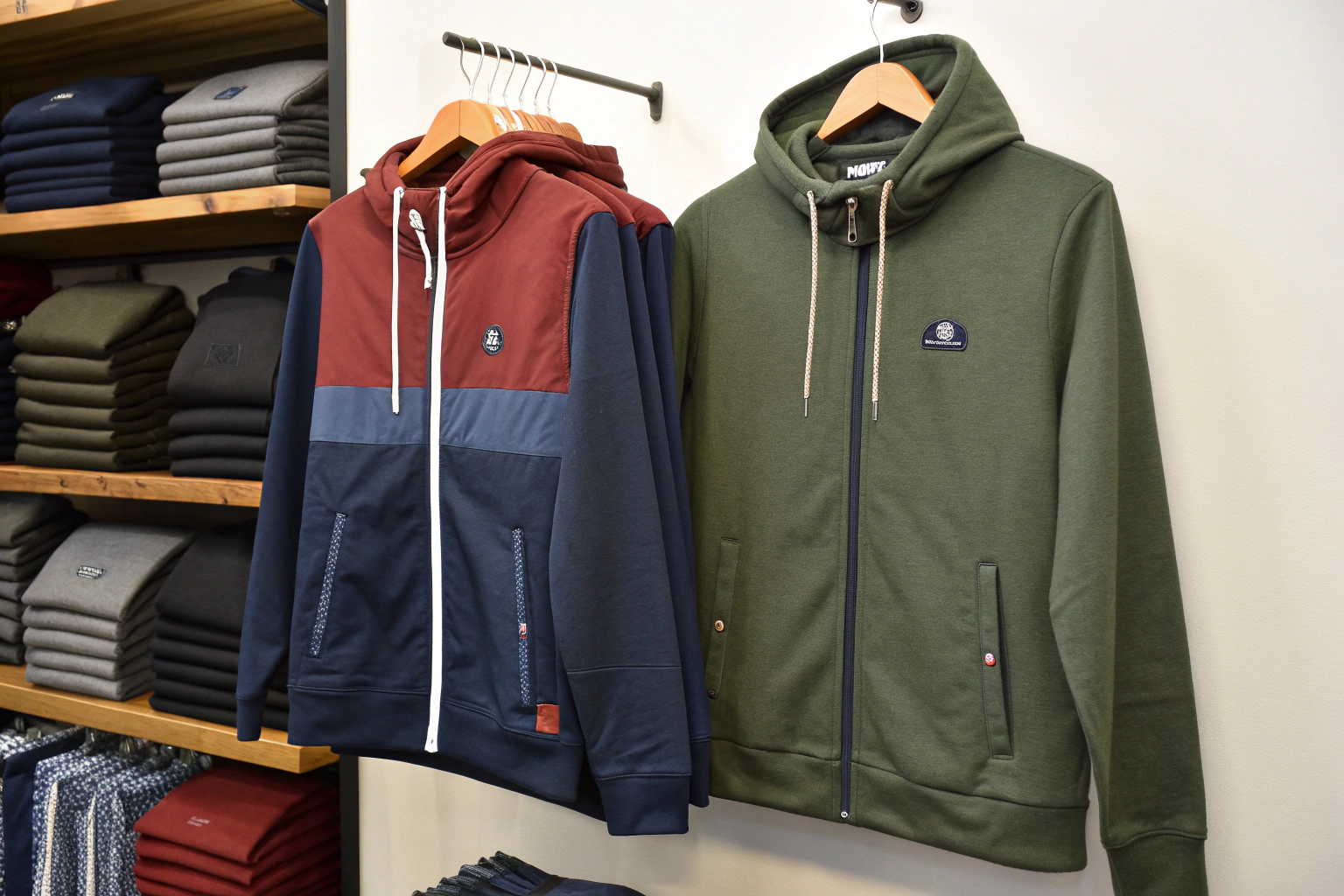
In production planning, jackets require skilled operators, stronger machinery, and longer quality checks. Sweatshirts benefit from repeatable patterns and stable knit sourcing.
Misclassifying a sweatshirt as a jacket leads to unrealistic performance expectations. Misclassifying a jacket as a sweatshirt leads to cost and comfort issues.
Factories that separate these categories clearly achieve better quality consistency and workflow balance.
Conclusion
The difference between a jacket and a sweatshirt lies in purpose, fabric structure, construction, and manufacturing process. Jackets are engineered for protection using woven materials and structured assembly. Sweatshirts are engineered for warmth and comfort using knitted fabrics and simplified construction. Each garment plays a distinct role within an apparel system. When designed, produced, and positioned according to their true function, both jackets and sweatshirts deliver reliable performance, longer wear life, and clearer value within modern clothing collections.