
A widely used yet often misunderstood term, the hooded sweatshirt plays a key role in both casual fashion and functional apparel categories.
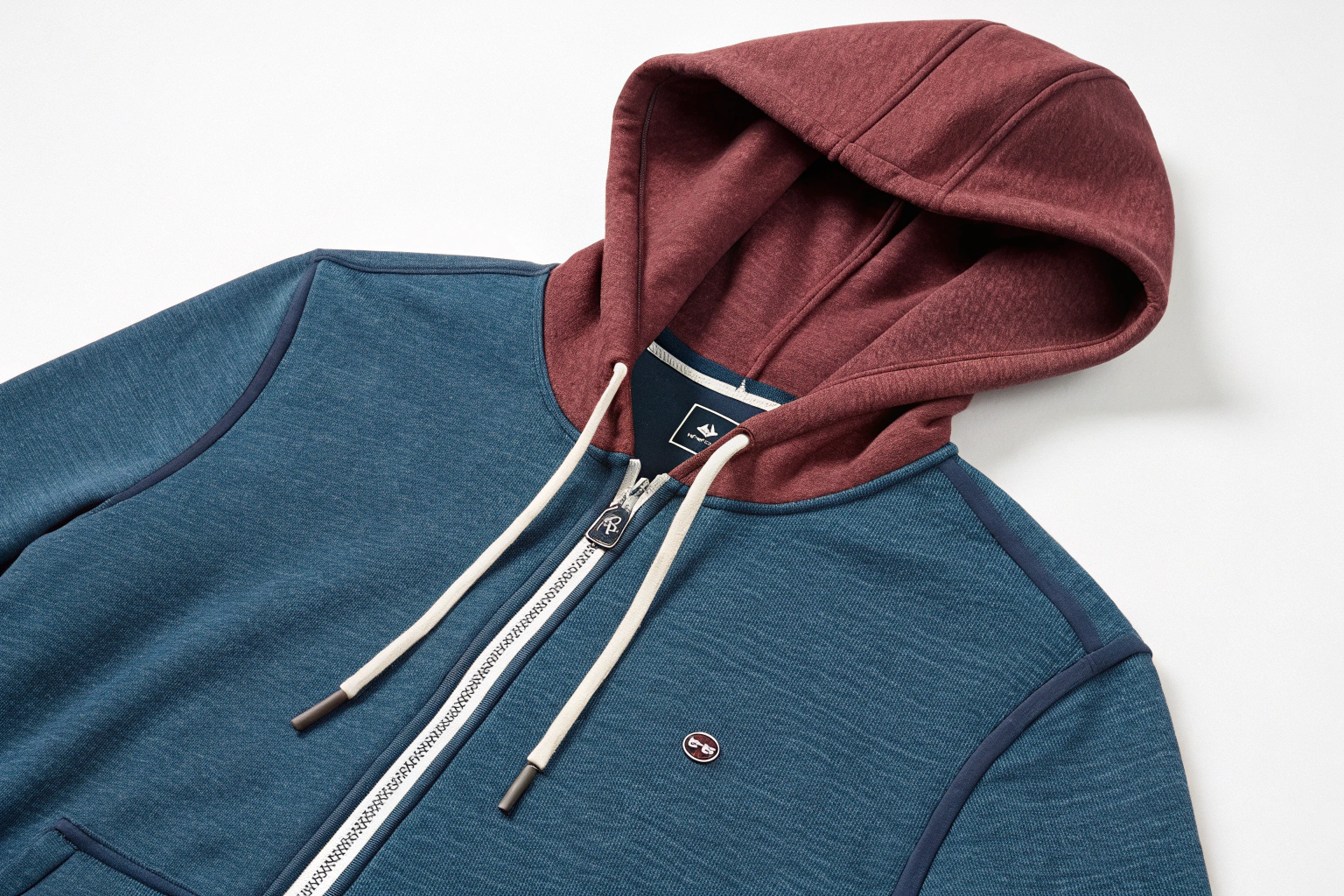
A hooded sweatshirt is a pullover or zip-up top made from knit fabric that features an attached hood. It may or may not include drawstrings, pockets, or lining.
This staple garment offers warmth, coverage, and layering versatility. While commonly confused with hoodies, the term "hooded sweatshirt" refers more to the garment structure than to style-specific features. Its design varies across regions, use cases, and fashion trends.
How is a hooded sweatshirt constructed?
Construction determines the garment’s durability, comfort, and performance.
A standard hooded sweatshirt includes a knit body, two-piece hood, ribbed cuffs and hem, and optional pockets or zipper. The hood is sewn into the neckline and may feature a lining or drawstring.
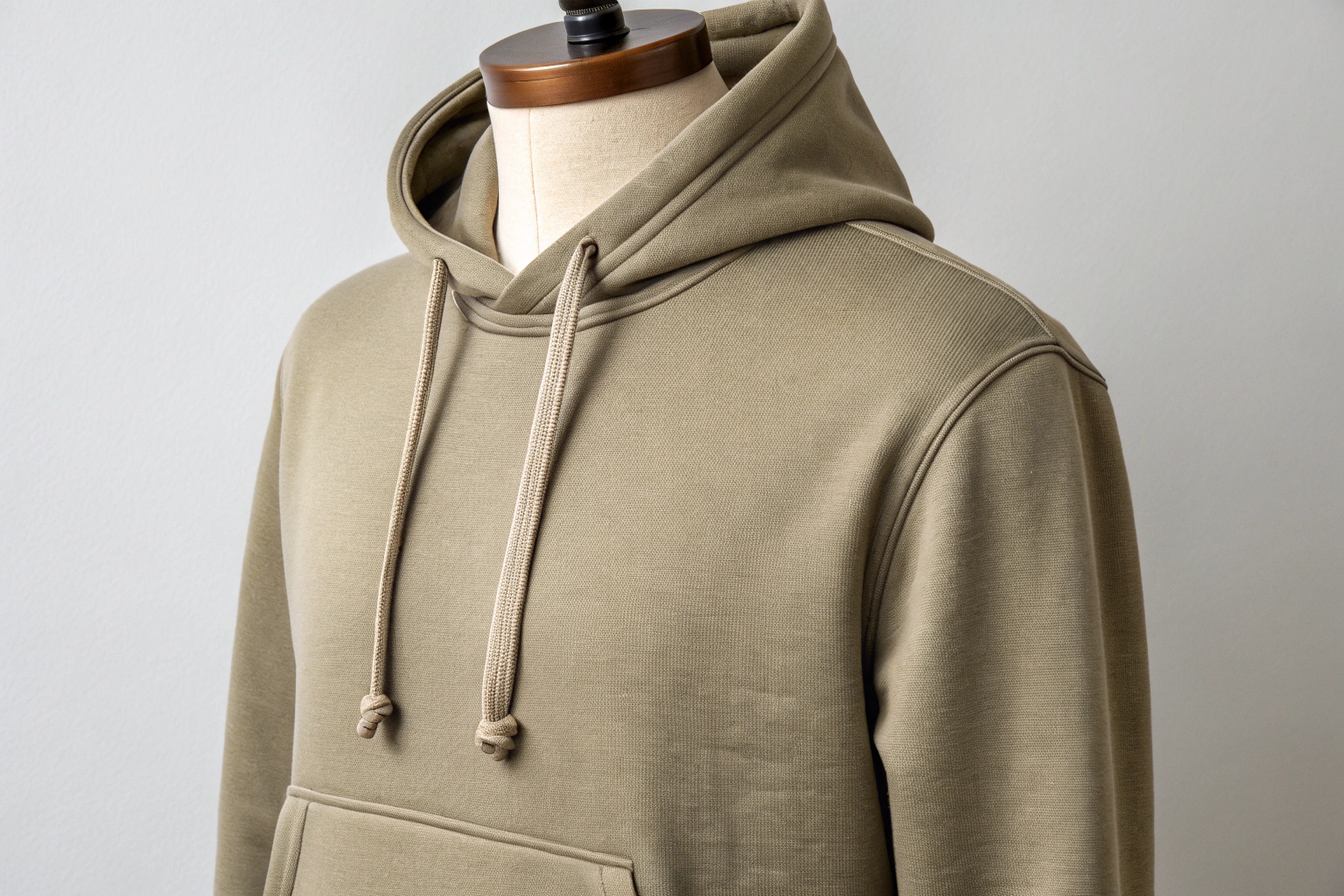
Manufacturers typically use circular knitting machines to produce the fabric—usually cotton, polyester, or blends. Assembly involves stitching the front, back, sleeves, and hood in stages. In some styles, a kangaroo or welt pocket is attached before final side seam closure. For zip-up versions, a zipper is inserted between the front panels. Factories adjust stitch types (overlock, coverstitch) based on fabric stretch and design details. The finishing process may include brushing the inner side for softness or pre-shrinking the garment.
What types of fabrics are used in hooded sweatshirts?
Material affects softness, thermal insulation, weight, and print compatibility.
Hooded sweatshirts are typically made from fleece, French terry, single jersey, or double knit. Brushed fleece adds warmth, while terry offers breathability for milder climates.
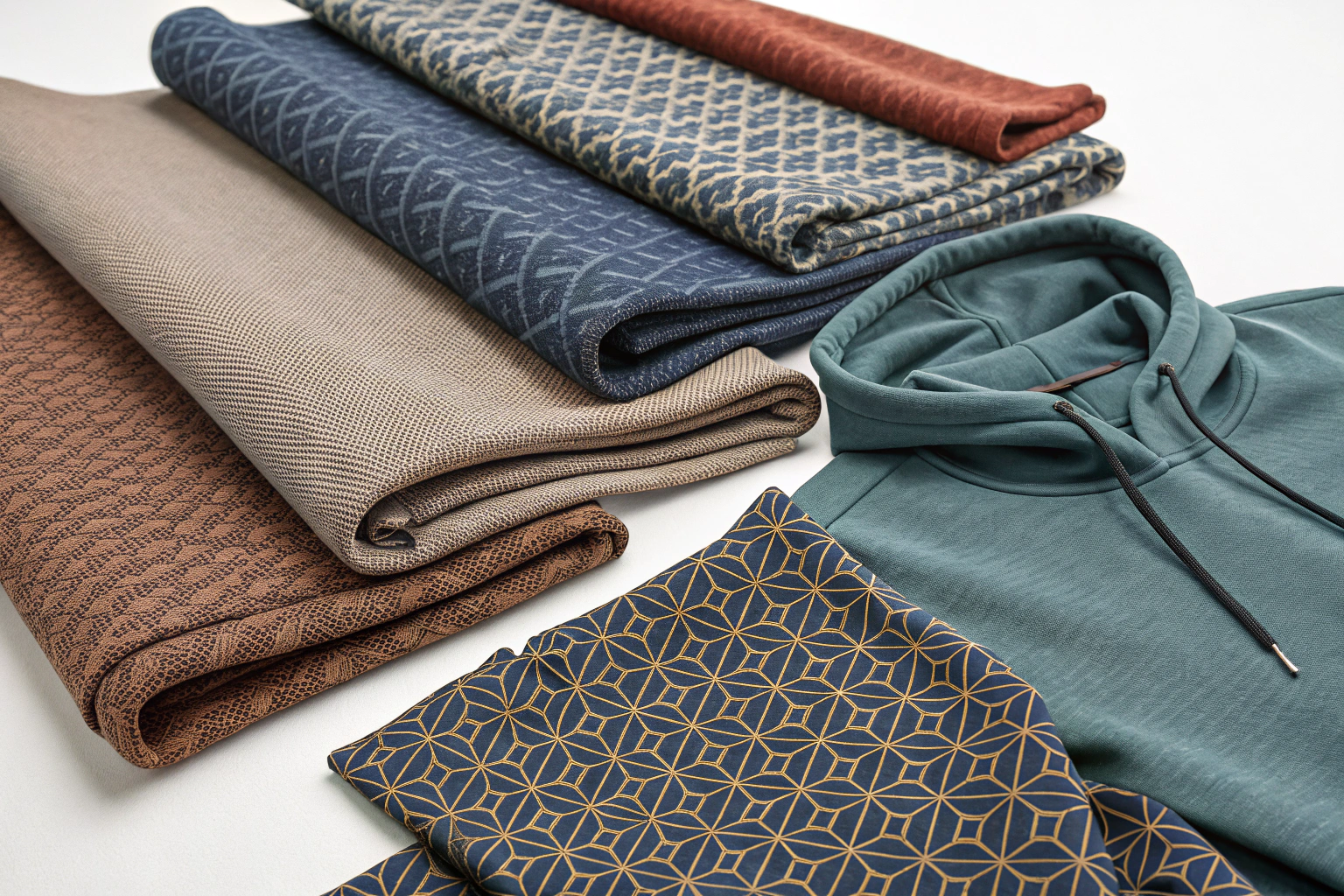
Factories often choose fabric based on seasonality and customer preference. Fleece, with its brushed inner surface, is ideal for fall/winter collections. French terry, characterized by looped inner yarns, balances absorption and breathability. Single jersey may be used in lightweight versions or for layering styles. Double knit provides stability and structure in higher-end garments. Fabric weight generally ranges from 220 to 400 GSM depending on application.
| Fabric Type | Inner Surface | Use Case | Typical GSM |
|---|---|---|---|
| Brushed Fleece | Soft, fuzzy | Cold-weather wear | 300–400 |
| French Terry | Looped | All-season layering | 240–320 |
| Single Jersey | Smooth | Lightweight designs | 180–220 |
| Double Knit | Dense, stable | Premium items | 280–350 |
What are the functional benefits of hooded sweatshirts?
Functionality makes this garment adaptable to multiple market segments.
The hood offers head coverage, the knit fabric retains warmth, and the silhouette allows ease of movement. These features suit sportswear, casualwear, and travel apparel.
In activewear, the hood provides light protection against wind or drizzle. For loungewear, the fabric softness ensures comfort. In streetwear, oversized cuts and branding offer visual impact. Zip-up versions serve transitional needs, allowing easy on-and-off layering. Factories optimize hood depth, opening shape, and drawstring length to match brand and end-user expectations. Even placement of shoulder seams or armhole shaping can enhance motion range, especially in ergonomic styles.
How does production vary by hooded sweatshirt style?
Different styles impact production complexity, workflow, and cost.
Pullover styles involve fewer components and quicker assembly, while zip-up styles need zipper alignment, edge binding, and more QC checkpoints.
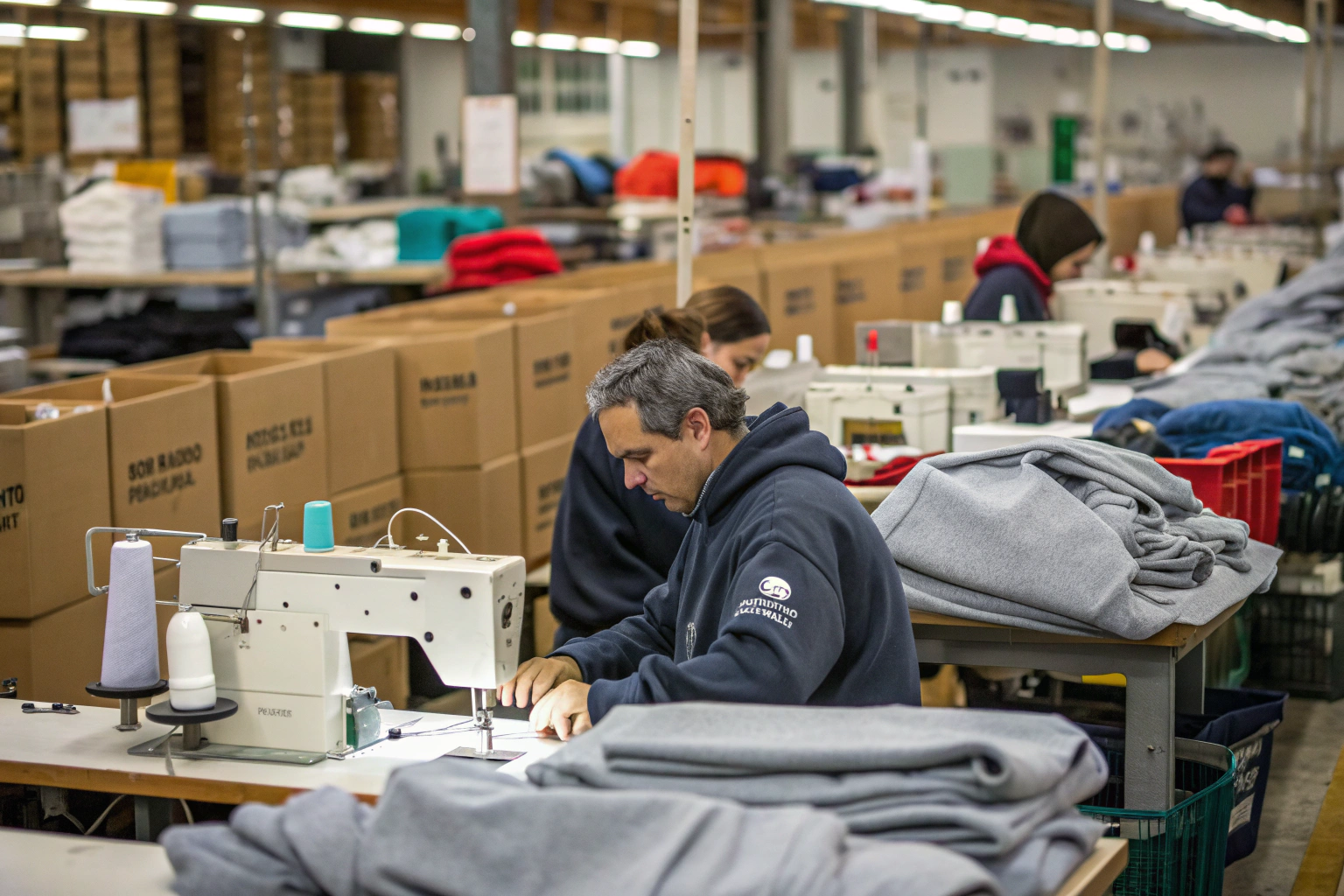
In factory settings, pullover hooded sweatshirts move faster along the sewing line. Standard versions may be completed in fewer than ten operations. Zip-up hoodies, however, require more stitching precision, especially during zipper insertion and finishing. Pocket style also changes labor needs. Kangaroo pockets are quicker to install, whereas welt or side pockets involve extra reinforcement. Large-volume production relies on modular stations that can switch between these styles efficiently. Material usage and wastage rates also vary based on cut layout.
| Style Type | Key Components | Production Complexity |
|---|---|---|
| Pullover | Hood, body, pocket | Moderate |
| Zip-up | Hood, body, zipper, pocket | Higher |
| Sleeveless | Hood, armhole binding | Low |
What are the applications in global markets?
Usage differs by climate, consumer preference, and market segment.
In colder regions, hooded sweatshirts serve as mid-layer or outerwear. In temperate markets, they function as trans-seasonal essentials. In Asia, lightweight versions trend in spring/summer activewear.

Retailers often request region-specific adaptations, such as longer hoods in colder markets or lighter fabrics for tropical zones. For export-oriented factories, it is vital to develop multiple base patterns and tech packs that reflect these differences. Print zones (front chest, back panel, sleeve) are also optimized based on branding trends in each market. The hooded sweatshirt continues to grow across unisex, youth, and lifestyle categories due to its universal appeal and adaptable features.
Conclusion
A hooded sweatshirt is more than just a hoodie variant. It is a foundational piece in the global apparel landscape, valued for its comfort, protection, and flexibility. From fabric weight to stitch construction, every element of this garment can be fine-tuned to meet diverse climate conditions, style trends, and cost targets. For apparel manufacturers, mastering the technical standards and style variations of hooded sweatshirts opens the door to scalable, profitable product lines across global markets.