
PU leather offers the sleek look of real leather without the cost or animal origin. But understanding what it is — and what it isn’t — is critical for smart sourcing.
PU leather (polyurethane leather) is a synthetic material made by coating a fabric base with a layer of polyurethane, giving it a leather-like texture, gloss, and durability.
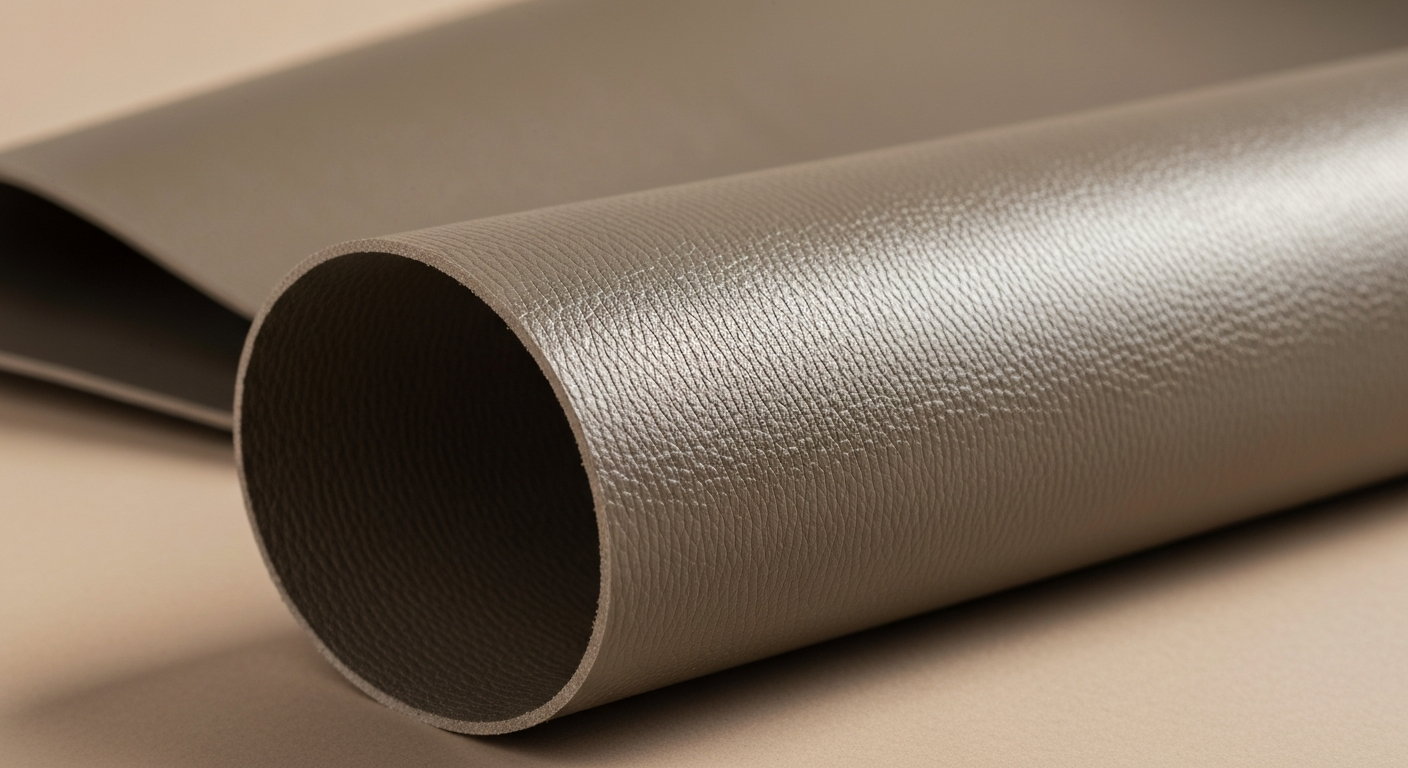
Used widely in fashion, footwear, upholstery, and accessories, PU leather allows for versatile design at scale. It can be embossed, printed, or laminated and offers many finish options — from matte to glossy, smooth to textured. Manufacturers choose PU leather for its balance of aesthetics, function, and cost-efficiency.
What is PU leather made of?
The key to PU leather lies in its dual-layer structure: a textile base and a polymer coating.
PU leather is made by applying a polyurethane coating to a base fabric, typically polyester, cotton, or microfiber. The coating mimics the grain and look of real leather.
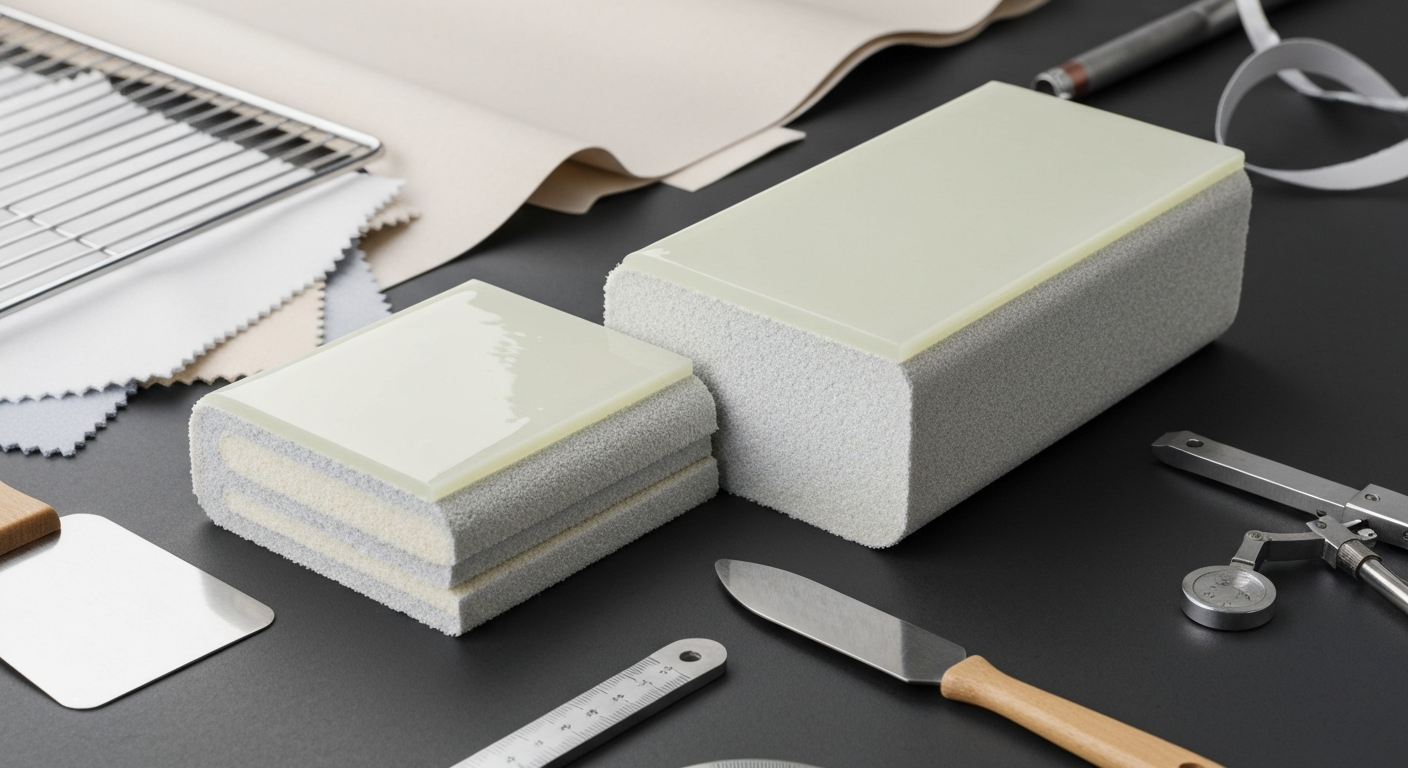
The base fabric gives strength and flexibility, while the polyurethane layer provides surface finish and water resistance. Some advanced PU leathers use microfiber substrates that feel more like natural hide. The upper layer can be treated with pigments, embossing, or protective finishes to simulate grain texture and color depth.
| Layer | Role in PU Leather |
|---|---|
| Fabric Substrate | Provides strength, flexibility |
| PU Coating | Adds leather-like texture and water barrier |
| Surface Finish | Enhances gloss, matte, or embossed effects |
How does PU leather compare to real leather?
PU leather and genuine leather may look similar, but their properties differ.
PU leather is lighter, more affordable, and easier to maintain than real leather — but has lower breathability and slightly shorter durability.
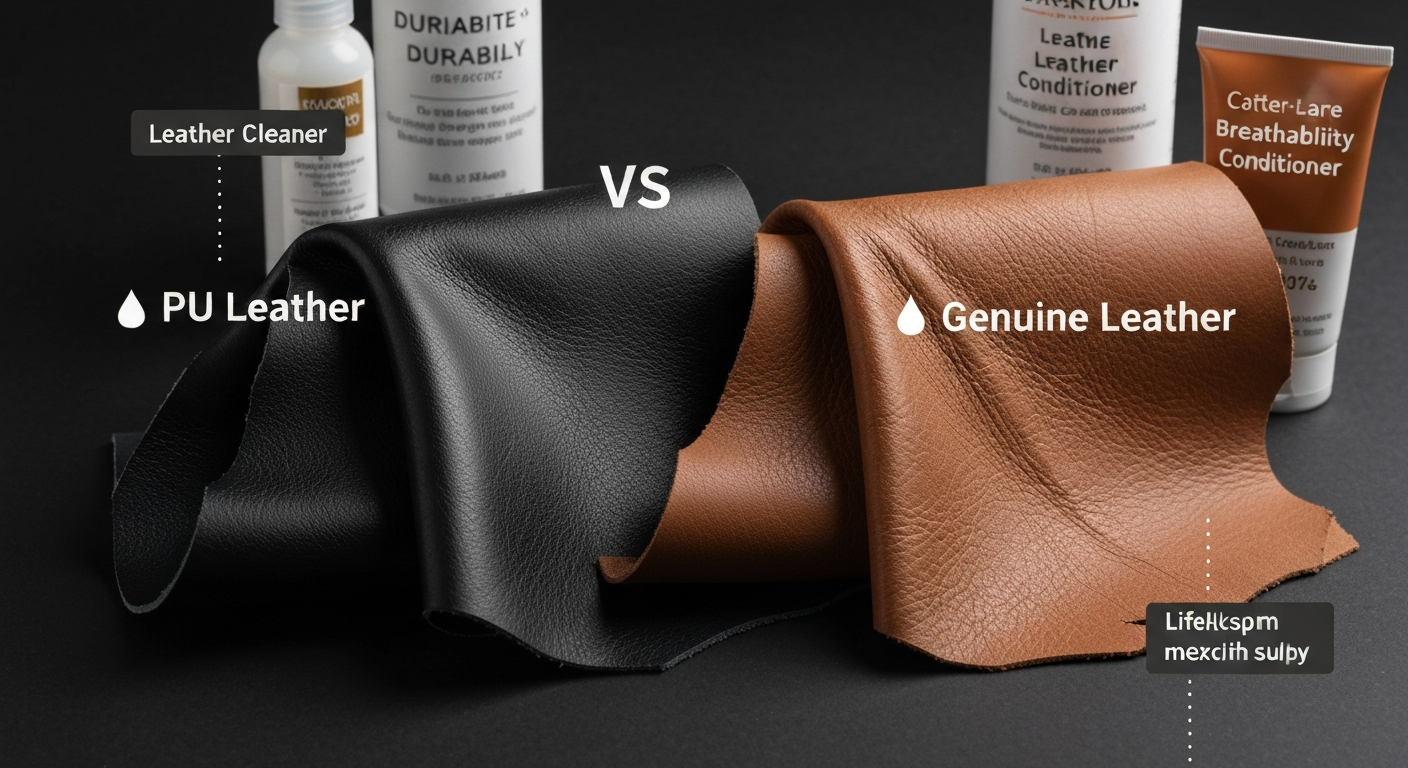
While genuine leather ages naturally and varies in texture, PU leather offers consistency and scalability. It is less prone to cracking when treated correctly, though it doesn’t develop patina like animal leather. PU is also easier to clean and waterproof — ideal for wet-weather or fashion use.
From a sustainability standpoint, PU avoids animal use, but is plastic-based. However, some new developments include bio-based PU made from plant oils.
| Attribute | PU Leather | Genuine Leather |
|---|---|---|
| Weight | Light | Heavier |
| Cost | More affordable | More expensive |
| Maintenance | Easy wipe-clean | Requires conditioning |
| Aging | Maintains appearance | Develops patina over time |
| Water Resistance | High | Moderate |
| Eco Profile | Animal-free, but plastic-based | Natural, but animal-derived |
Where is PU leather used in apparel and fashion?
Its finish flexibility and cost advantage make PU leather ideal for many fashion categories.
PU leather is used in jackets, leggings, skirts, bags, belts, and trim panels — offering visual edge without real leather cost.
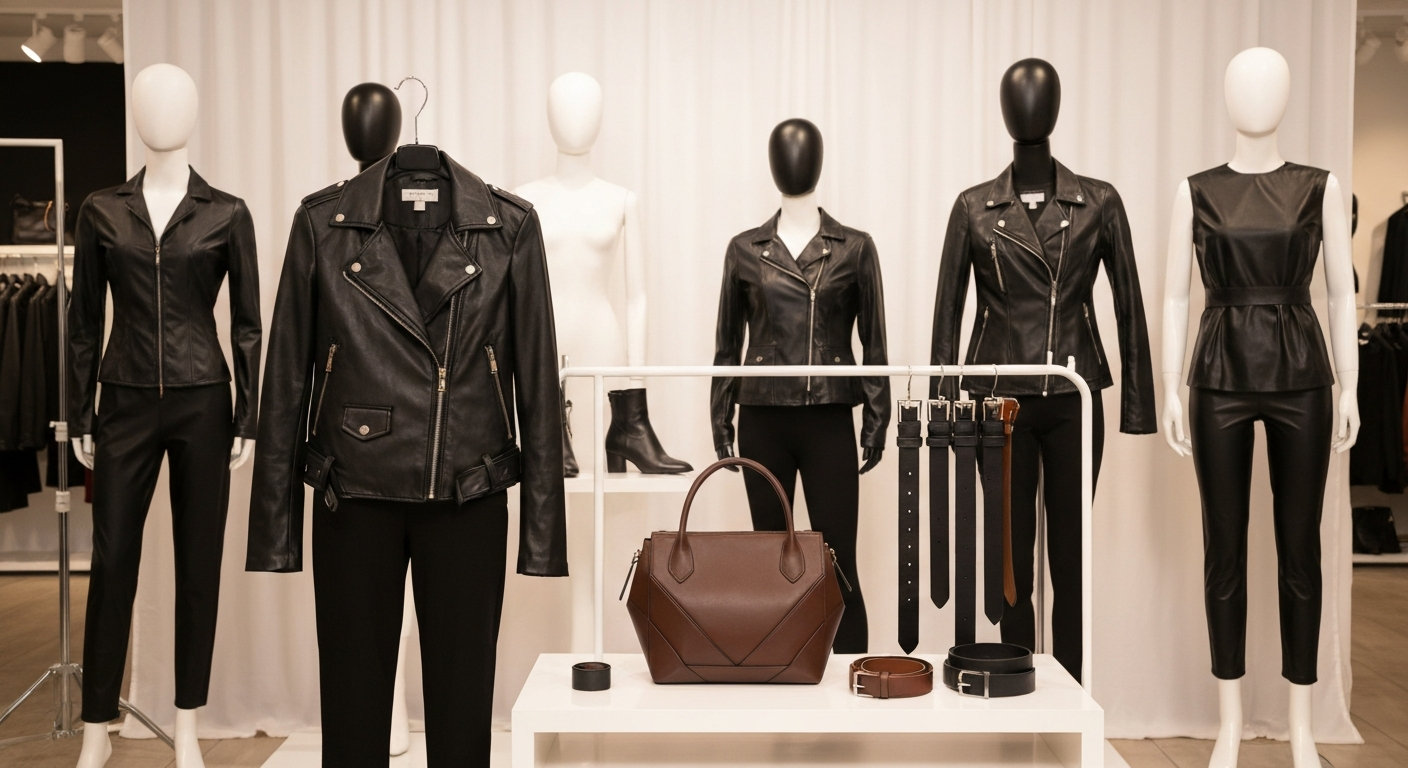
For outerwear, PU leather creates structured silhouettes, edge detail, and color flexibility. It is widely used in bomber jackets, moto styles, and minimalist layering coats. In bottoms or trim panels, PU adds contrast and shine.
In accessories, PU leather offers a cruelty-free alternative for belts, wallets, and bags. It supports heat embossing and laser cutting for brand logos or graphic effects.
| Application Area | PU Leather Role |
|---|---|
| Outerwear Jackets | Structured fit, style element |
| Pants and Skirts | Shine finish, sculptural shape |
| Handbags | Durable, shaped, color-custom options |
| Belts and Straps | Edge definition, adjustability |
What are the care and performance characteristics?
PU leather is user-friendly — but not invincible.
PU leather is water-resistant, scratch-resistant, and easy to clean — but should be protected from extreme heat and sharp abrasives.
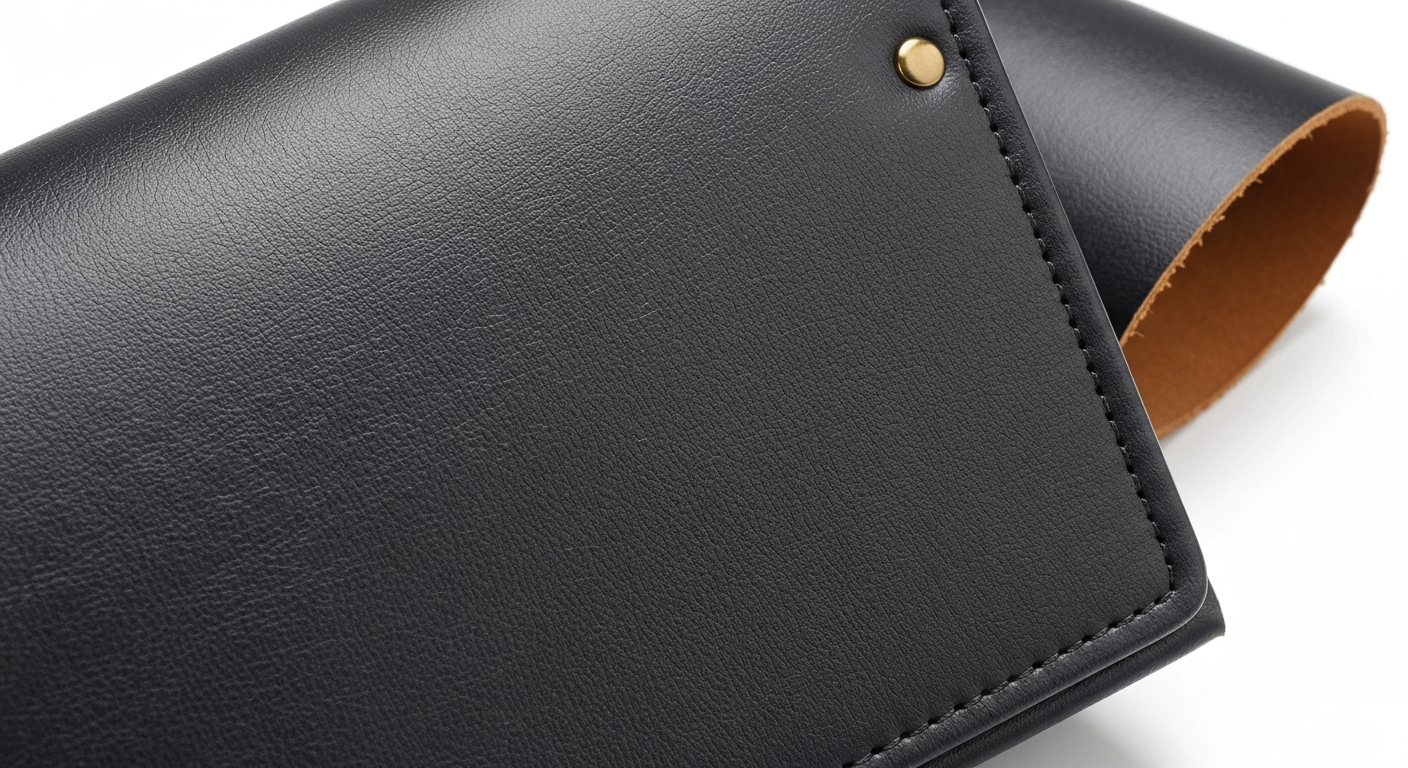
To maintain PU’s appearance, wipe it clean with a damp cloth. Avoid storing in direct sun or exposing it to extreme humidity, as the polymer surface can dry out or peel over time. Good-quality PU will resist cracking and discoloration with proper care.
For sewing, PU needs special treatment — needle size, stitch length, and presser foot choice all matter to prevent puckering or skipped stitches. Manufacturers apply special topcoats or lamination to extend PU’s lifespan in commercial production.
| Feature | Recommendation |
|---|---|
| Cleaning | Use soft cloth, avoid alcohol solvents |
| Heat Exposure | Store away from direct sunlight |
| Stitching | Use leather needle, lengthened stitches |
| Shelf Life | 2–5 years depending on quality and use |
Conclusion
PU leather is a flexible, modern material that supports high-appearance, cruelty-free design across apparel and accessories. With the right sourcing, construction, and care, it offers both functional value and fashion appeal. For brands looking to balance price, ethics, and aesthetics, PU leather remains a leading solution.