
Starting a kids’ clothing line requires a clear product idea, reliable manufacturing, and an understanding of how children wear clothes. The collection needs to appeal to buyers while providing the fit, comfort, and practicality children need
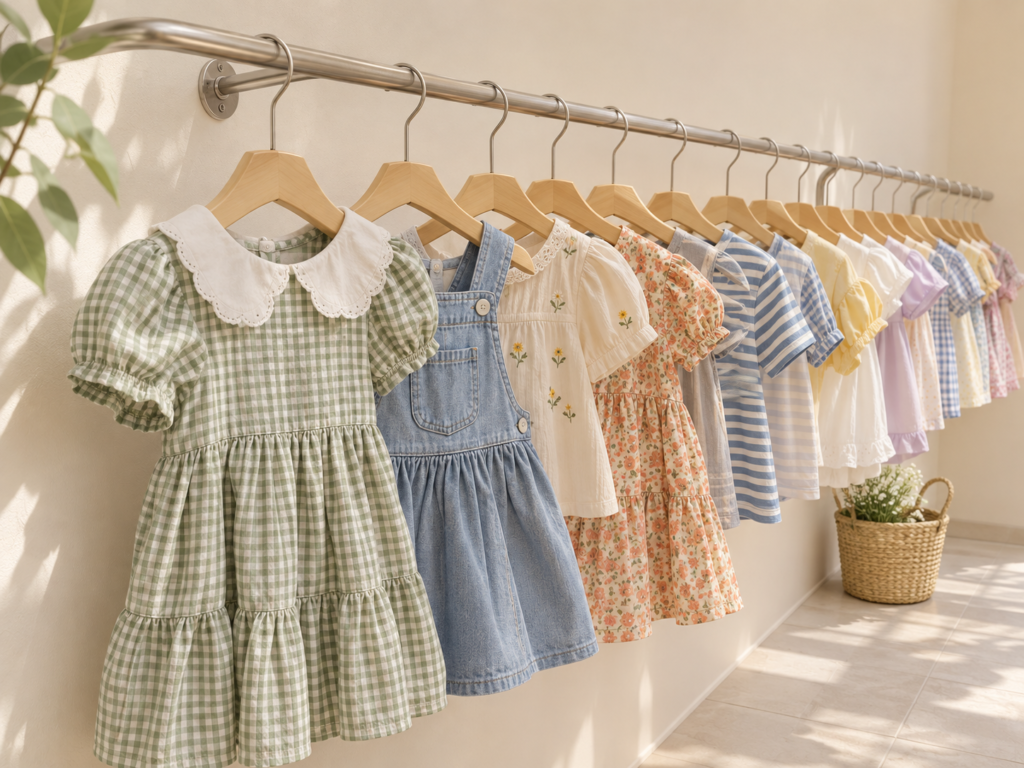
A well-designed garment should be easy to put on, allow movement, and retain its intended shape after washing. Details such as neckline openings, waistband pressure, seam finishes, and fastening placement deserve attention from the first sample.
This guide explains how to develop a children’s clothing brand, plan a manageable first collection, work with a manufacturer, and prepare for launch.
Define the Age Group and Product Category
Begin with a specific customer and use. Newborn essentials, nursery playwear, school-age casual clothing, and occasionwear involve different development decisions.
Age affects more than the size of a pattern. Infants may need room for diapers and convenient changing access. Toddlers need clothing that supports active movement and developing independence. Older children may have stronger preferences about appearance and how the garment feels.
| Product direction | Development priorities |
|---|---|
| Baby daywear | Dressing access, diaper allowance, comfortable seams, and suitable fastenings |
| Toddler playwear | Movement, waistband comfort, easy dressing, and wash durability |
| School-age casualwear | Consistent sizing, practical pockets, and everyday care |
| Occasionwear | Comfort beneath decorative layers, secure components, and usable closures |
| Children’s activewear | Coverage, stretch recovery, seam comfort, and activity-specific fit |
Choose the markets you intend to sell into at the same time. Product classification, labeling, and safety requirements need to be understood before the design is finalized.
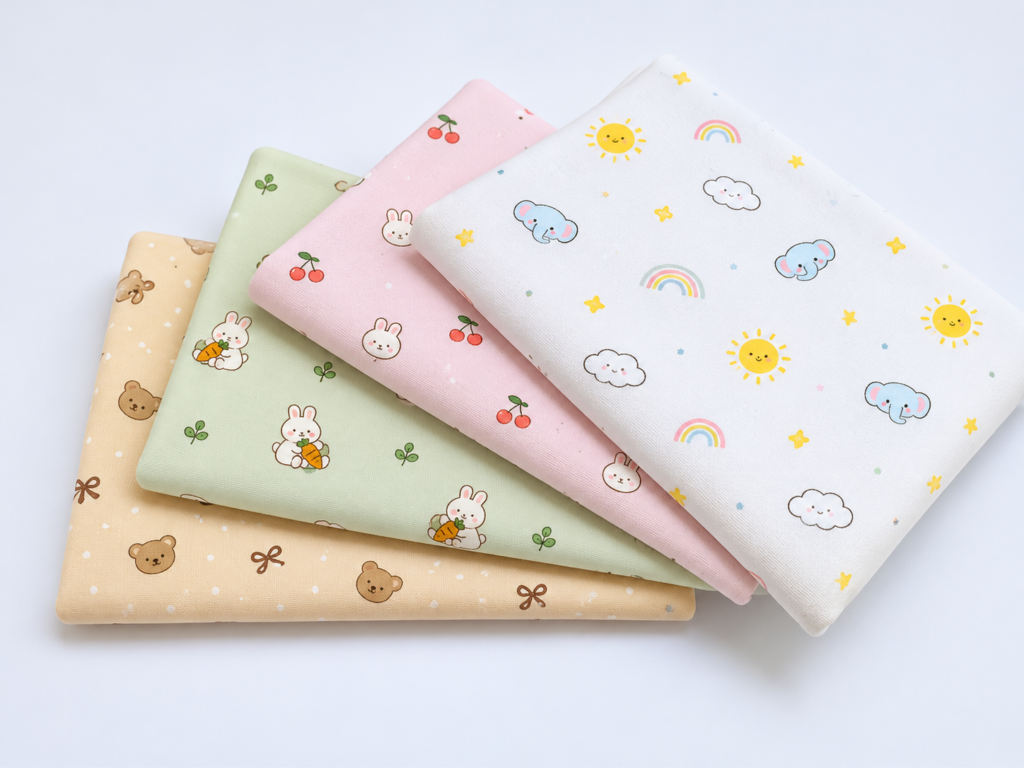
Research Parents’ Buying Decisions
Research the products your intended customers already purchase. Compare materials, sizing, prices, construction, and sales channels within the category you plan to enter.
Read reviews for repeated problems: necklines that are difficult to pull over the head, trousers that fit the waist but are too short, stiff embroidery, or garments that change shape in the wash.
Speak with parents and caregivers about recent purchases. Ask how they choose a size, which clothes get worn repeatedly, and what makes a garment inconvenient. For older children, consider the wearer’s preferences as well as the buyer’s.
Purchase a few relevant examples if possible. Examine the inside of the garment, use the fastenings, and assess the product after care.
Turn the findings into a precise product brief. “Easy-dressing everyday separates for preschool children” provides more direction than “high-quality clothes for all kids.”
Plan a Small, Coherent First Collection
A focused range is easier to develop and stock than a collection covering many ages and occasions.
Choose a small group of products that work together. For a casual range, that might be a T-shirt, sweatshirt, and trouser with shared colors. An occasionwear launch may need fewer styles with more development allocated to fit and finishing.
Build a range plan that lists the material, sizes, colors, intended selling price, and order quantity for each style.
Count the variants before ordering. Four styles in three colors and six sizes create 72 stock-keeping units. This example shows why a collection that looks small on a mood board can still become difficult to manage.
Do not divide the order evenly by size without a reason. Use customer research, any existing sales information, and a cautious inventory plan to decide the initial size breakdown.
Choose a Production Model
The appropriate manufacturing route depends on how much of the garment you need to develop.
Decorated existing garments can work when an available fit and material already meet the brief. Confirm the suitability of the complete decorated product for the intended age group and market.
Private label production using established styles provides a starting point for agreed branding or product changes. Clarify which measurements, materials, colors, and components can be modified.
Custom cut-and-sew manufacturing supports original proportions, selected materials, and specific construction. It is useful when the product’s distinction depends on the garment itself.
Private label describes the branding arrangement and can also involve custom cut-and-sew production. Ask suppliers to explain their scope rather than relying on terminology alone.
Compare development charges, material minimums, production quantities, and sampling requirements for your proposed range.
Select Fabrics for Comfort and Repeated Care
Evaluate the finished material rather than choosing solely by fiber name. Composition, yarn, construction, dyeing, and finishing all affect how a fabric feels and performs.
| Material option | Potential use | What to evaluate |
|---|---|---|
| Cotton jersey | T-shirts and casual daywear | Neckline stability, shrinkage, surface appearance, and twisting |
| Rib knits | Fitted pieces, cuffs, and neckbands | Stretch recovery, pressure, and compatibility with the body fabric |
| French terry or sweatshirt fleece | Sweatshirts, joggers, and layers | Weight, inner-surface feel, pilling, and wash performance |
| Woven cotton or blends | Shirts, dresses, shorts, and trousers | Movement allowance, opacity, seam behavior, and care needs |
| Performance knits | Selected activewear | Coverage, recovery, seam comfort, and evidence for performance claims |
Assess weight in relation to the wearer and season. A heavy fabric is not automatically a better choice for a child’s garment.
Request swatches, then evaluate the preferred material in a sample. Washing can reveal changes in hand feel, dimensions, color, and decoration that are difficult to predict from an unused swatch.
Organic or other certified materials require supporting documentation for the claim being made. No fiber name alone establishes that a finished garment is hypoallergenic, free of all harmful substances, or suitable for every child.
Through Yoplook’s material sourcing service, brands can discuss fabric and trim options around the product, intended market, and budget.
Develop Children’s Sizing and Practical Details
Children’s sizes need their own measurements and grading rules. Reducing an adult pattern does not account for changing body proportions.
Build a Measurement-Based Size System
An age label is useful for shopping, but children of the same age can differ substantially in height and build.
Define the body measurements behind each size. Depending on the product, these may include height, chest, waist, hip, and relevant length measurements. Keep body-size guidance separate from finished-garment measurements.
Review the increments between sizes rather than applying one increase everywhere. A collection spanning infants through older children may need separate fit development for different age groups.
Design for Dressing and Movement
Check that neck openings allow dressing without excessive pulling. Confirm that sleeves and trouser legs are accessible and that fastenings are positioned where they can be used comfortably.
Review diaper allowance where appropriate. For toddlers learning to dress independently, consider whether waistbands and closures can be managed without unnecessary difficulty.
Assess the garment while the child sits, reaches, bends, and moves. Extra room should be placed deliberately; making everything larger can create a different set of fit problems.
Specify the Inside Finish
Inspect label edges, seam bulk, embroidery backing, elastic, and zipper ends. Areas that look acceptable from the outside can still feel uncomfortable against the skin.
Document these requirements in the tech pack alongside drawings, measurements, materials, trim details, artwork, and packaging.
Address Safety and Compliance Before Production
Create a product-specific requirements list for each sales market. Work with a qualified testing laboratory or compliance specialist to identify the applicable rules, test evidence, labeling, and documentation.
For the United States, important considerations include:
- Testing and certification: Children’s products subject to applicable CPSC safety rules generally require a Children’s Product Certificate supported by required testing. Applicable exemptions and determinations must be assessed for the particular product.
- Traceability: CPSC tracking-label requirements call for permanent identifying information on children’s products and packaging, to the extent practicable
- Drawstrings: Hood and neck drawstrings on children’s upper outerwear in sizes 2T–12 or the equivalent are identified as a substantial product hazard. Waist and bottom drawstrings in covered sizes have additional requirements
- Sleepwear: Children’s sleepwear needs separate assessment. Tight-fitting sleepwear has specific dimension, design, and labeling requirements.
Do not treat a fabric certificate or a factory audit as proof that every finished style complies. Confirm that the documentation covers the relevant product, components, materials, and requirements.
Review buttons, snaps, appliqués, cords, and other attachments during development. Any design or material change should be checked for its effect on the agreed assessment.
Find a Manufacturer With Relevant Kidswear Experience
Look for a children’s clothing manufacturer with experience in your garment category. Infant bodysuits, casual jersey sets, and layered occasion dresses involve different construction and development work.
Request comparable samples. Discuss pattern development, grading, fastener attachment, material control, and the checks performed during production.
Clarify who coordinates testing and who prepares the required documentation. Ask how the manufacturer keeps approved materials identifiable and prevents unapproved substitutions.
Send shortlisted suppliers the same brief so their quotations can be compared fairly. Include styles, materials, age and size range, quantities by color, customization, destination, and delivery requirements.
Discuss minimums per style and color, including separate fabric or component purchases. Available materials may make a smaller order practical, while custom dyeing or hardware can introduce additional commitments.
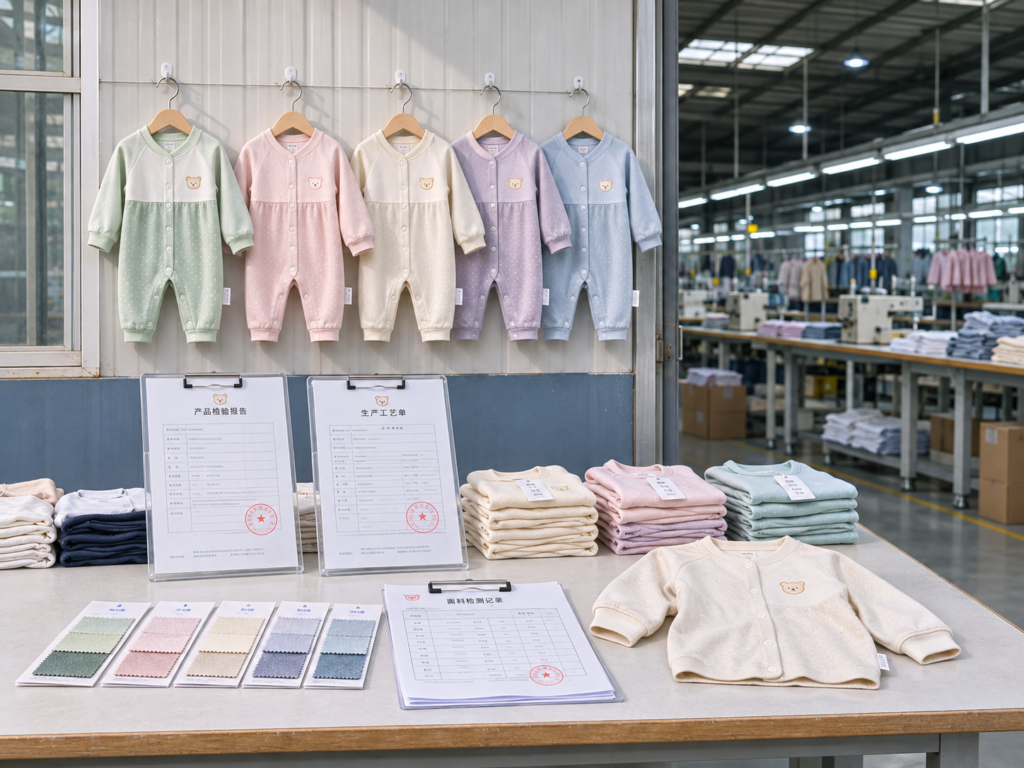
Test Samples Before Approving the Order
Sample review should cover fit, function, care, workmanship, and the applicable product requirements.
Compare measurements with the specification, then arrange supervised fit reviews appropriate to the age group. Ask caregivers to evaluate dressing, changing access, comfort, and ease of use.
Review representative sizes. A satisfactory sample in one size does not confirm the smallest and largest sizes in the collection.
Evaluate the sample after the intended care process. Check:
- Length and width changes.
- Neckline and waistband recovery.
- Twisting, puckering, and seam appearance.
- Print, embroidery, and trim performance.
- Color changes or transfer.
- Fastening operation and attachment condition.
Wear and wash reviews complement the agreed laboratory assessment; they do not replace required testing.
Consolidate comments into one current revision document. Before bulk production, identify the approved sample, specification version, materials, and any agreed differences.
Build the Budget and Production Calendar
Include the full development and selling commitment in the budget, rather than the factory unit price alone.
Account for patterns, samples, revisions, grading, testing, inspection, production, labels, packaging, freight, import charges, photography, storage, fulfillment, and marketing.
For wholesale plans, check whether the proposed wholesale price leaves enough room for your costs. For direct sales, allow for returns, payment processing, fulfillment, and customer acquisition.
Keep cash available for corrections and replenishment. Selling stock does not necessarily mean the business is ready to fund the next order.
Plan backward from the required stock-arrival date. Separate sourcing, sample review, testing, production, inspection, and shipping. A bulk-production lead time that begins after approval is only one part of the launch schedule.
Avoid publishing a firm delivery promise before that schedule supports it.
Prepare the Store and Launch Content
Parents need information that helps them choose the right product and size.
Include measurement-based size guidance, fabric composition, care instructions, fit notes, clear product photographs, and delivery and returns information.
Show useful details: the opening, waistband, closure, inside finish, and how separates work together. Explain functional features accurately instead of relying on vague claims such as “perfect for every child.”
Use samples representative of the production product. Review marketing content if a material, color, or construction detail changes.
Choose sales channels around your customer. A direct online store, selected boutiques, local events, or relevant marketplaces may play different roles. Begin with channels you can operate and support reliably.
Build early interest through useful product information, parent feedback, and relationships with suitable retailers or creators.
Use Launch Results to Plan Reorders
Track sales by style, color, and size, alongside returns and exchanges. Record fit feedback in enough detail to distinguish a sizing issue from a preference.
Review recurring complaints before repeating production. A difficult neckline or uncomfortable waistband should become a documented development action.
Reorder proven products selectively and retain the specifications that worked. Confirm material availability and any proposed substitutions before placing the next order.
Expand the range when the first products provide evidence about demand, fit, and operational capacity.
Develop Your Kids’ Clothing Line With Yoplook
Yoplook is a custom clothing manufacturer supporting children’s clothing alongside T-shirts, hoodies, sportswear, dresses, denim clothing, and other apparel categories.
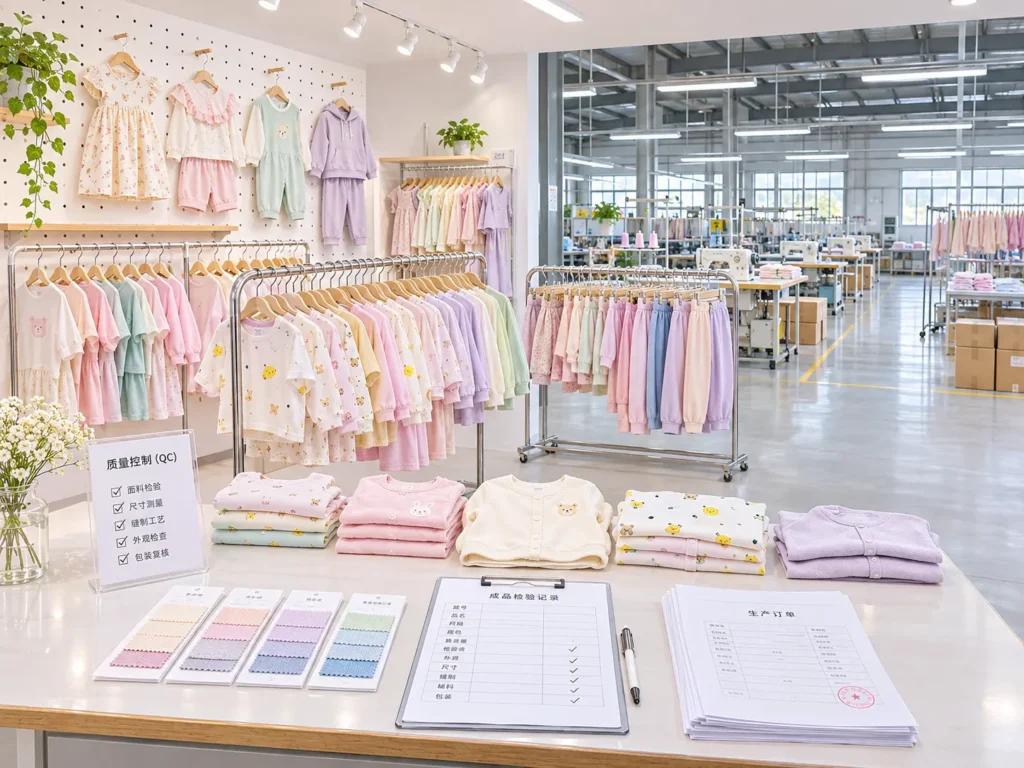
As a custom kids’ clothing manufacturing partner, we help brands coordinate fabric sourcing, pattern making, sampling, fit development, printing, embroidery, labels, and packaging.
Our custom apparel manufacturing service connects development with bulk production and quality checks. Share the intended age group and sales market early so the product brief can identify the relevant construction, testing, and documentation requirements
To start a project, send your designs or references, proposed size range, material preferences, quantities by color, and delivery requirements. Our team can review the brief and explain the sampling and quotation process.
Frequently Asked Questions
How much does it cost to start a kids’ clothing line?
The budget depends on the production model, style count, size and color range, development work, testing, quantities, and sales channels. Obtain project-specific quotations and include launch and operating expenses.
What is the best fabric for children’s clothing?
There is no single best fabric. Select materials around the garment, age group, season, and intended care. Evaluate the finished fabric and required documentation rather than relying on fiber names alone.
Can I start with a small order?
Potentially. The minimum depends on the manufacturer, material availability, colors, components, and customization. Ask which part of the project sets the minimum.
Do I need different patterns for different ages?
Children’s proportions change as they grow. The range needs suitable base patterns and grading, with representative sizes reviewed rather than assuming one base fits every age group.
Can I use the same safety plan for daywear and sleepwear?
Do not assume so. Classification and requirements can differ. Identify the intended use and sales markets before confirming the design and assessment plan.
Build the Collection Around Everyday Use
A strong kids’ clothing line starts with garments that fit their purpose: comfortable to wear, practical to dress in, and developed for the intended market.
Keep the first collection focused, resolve the details during sampling, and confirm the full cost and production plan before ordering. Contact Yoplook to discuss your children’s clothing designs and manufacturing requirements.