
Cut and sew manufacturing is the process of cutting fabric into shaped components and sewing those components together to make a garment. In custom clothing production, it allows a brand to develop the garment’s fit, materials, construction, and finishing details before the bulk order is made.
For clothing brands, this offers more scope than adding a logo to an available T-shirt or hoodie. A brand can specify a different sleeve shape, create its own pocket arrangement, select a particular fabric, or adjust proportions for its customers.
The process involves more than cutting and stitching. Product development, material selection, sampling, size grading, and quality control all help turn a design into a garment that can be manufactured consistently.
What Does “Cut and Sew” Mean in Clothing?
“Cut” refers to preparing the individual fabric pieces, such as front and back panels, sleeves, collars, pockets, and waistbands. “Sew” refers to assembling those pieces using suitable seams and stitches.
The method is used for many everyday garments, including T-shirts, hoodies, shirts, trousers, dresses, jackets, and sportswear.
It does not automatically mean that every pattern is newly invented. A manufacturer may develop an original pattern, adapt an established block, or work from production-ready patterns supplied by the brand.
Similarly, cut and sew does not guarantee a particular quality level. The result depends on the specification, materials, development work, and production controls.
Cut and Sew vs. Other Clothing Production Terms
Some terms describe how a garment is made; others describe branding, order handling, or the supplier’s responsibilities. They are not always competing alternatives.
| Term | What it describes | What to clarify |
|---|---|---|
| Custom cut and sew | Fabric panels are cut and assembled to an agreed garment specification | Pattern development, customization, and included services |
| Decorated blanks | Existing garments receive printing, embroidery, or other branding | Available fits, fabrics, colors, and decoration limits |
| Private label | Clothing is supplied to be sold under the customer’s brand | Whether it uses existing styles or custom garment development |
| Print-on-demand | Items are produced or decorated as individual orders arrive | Whether the provider uses blanks or a cut-and-sew workflow |
| CMT | Cut, make, and trim: a production service arrangement | Who supplies patterns, fabric, components, and technical support |
Private label clothing can be made through cut-and-sew production. Print-on-demand can also involve printed fabric being cut and assembled after an order is received.
With CMT, the buyer commonly supplies materials and production information, while the factory handles agreed manufacturing operations. The exact division of work needs to be confirmed in the quotation.
How the Cut and Sew Manufacturing Process Works
The workflow varies by garment, but the following stages explain how a custom project usually moves from brief to finished order.
1. Define the Design and Product Requirements
Development starts with a clear description of the garment. The manufacturer needs to understand the intended fit, customer, materials, construction, and finish.
A technical pack normally brings together:
- Front and back garment drawings.
- Measurement specifications and size requirements.
- Fabric and trim details.
- Seam and construction instructions.
- Artwork dimensions and placement.
- Labels, packaging, and finishing requirements.
A reference photograph can communicate direction, but it rarely answers every production question. Details hidden inside the garment still need to be defined.
2. Select Fabrics and Components
The material affects how the pattern behaves and how the garment should be sewn. A pattern developed for a stable woven fabric will not necessarily work in a highly elastic knit.
Review composition, construction, weight, stretch, surface finish, and care performance. Components such as ribbing, elastic, zippers, lining, and interfacing also need to suit the design.
For example, a zip hoodie requires the zipper and surrounding fabric to perform together after care. A soft body fabric with unsuitable ribbing may produce a distorted cuff or hem.
Through Yoplook’s material sourcing service, brands can discuss fabric and trim options around the proposed garment and budget.
3. Develop the Pattern
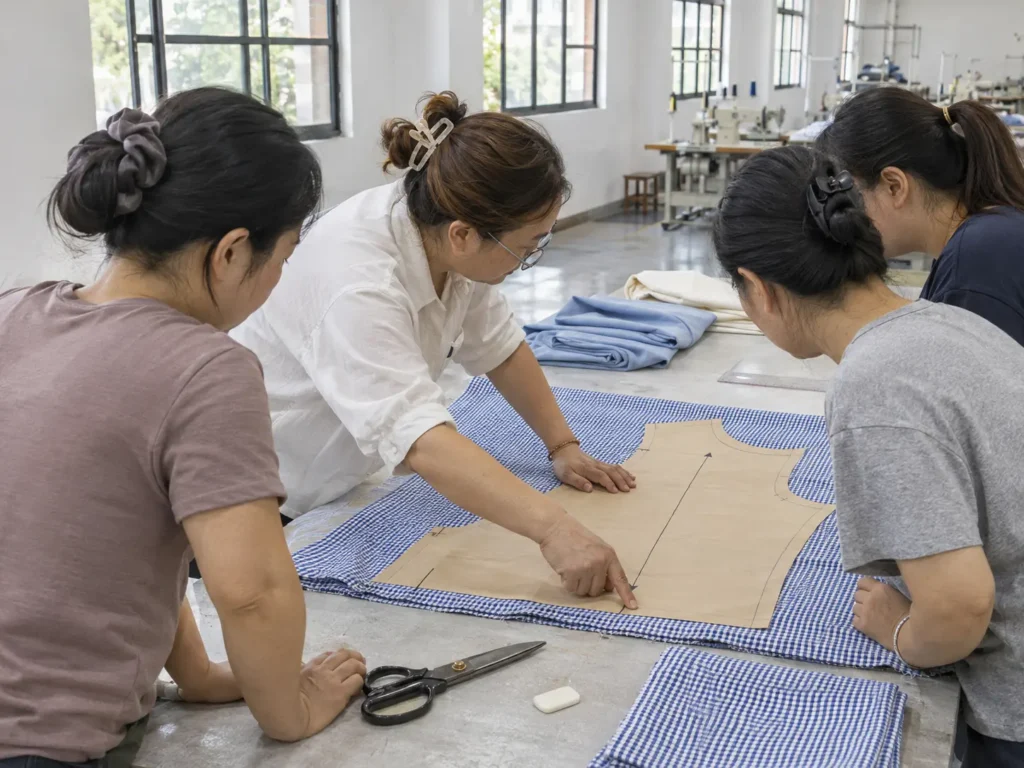
The pattern translates the design into shapes that can be cut and assembled. It includes the panel outlines and the information needed to join them correctly.
Pattern development considers body measurements, intended ease, seam allowances, material behavior, and construction. Alignment marks help operators match the pieces during sewing.
The pattern must work as a complete garment. Changing a shoulder or armhole can affect the sleeve; changing a waistband can affect how trousers sit on the body.
4. Make and Review Samples
Samples allow the brand and manufacturer to evaluate the physical product before bulk cutting.
Check measurements, fit, movement, construction, material feel, and appearance. Review relevant care performance and decoration results as well.
Record substitute materials used in early samples. Before production approval, resolve the details that depend on the intended bulk fabric and components.
Revisions should update both the sample instructions and the underlying specifications. Our guide to clothing sample makers explains how sampling supports this development work
5. Grade the Pattern Across the Size Range
Grading develops the approved base pattern into the required sizes.
It is not simply an equal enlargement of every dimension. Body length, width, sleeve shape, rise, and other measurements may need different changes.
Agree on the size chart and grading rules, then review representative sizes. A good fit in the sample size does not establish the fit of the entire range.
6. Prepare the Fabric and Cutting Layout
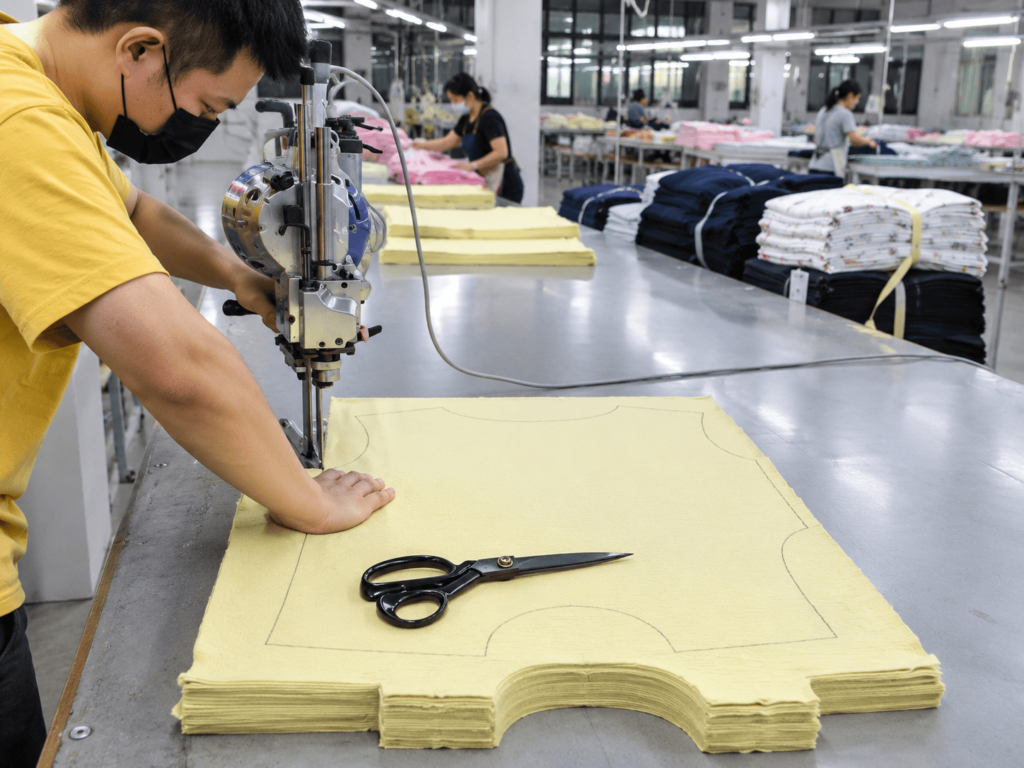
Before cutting, the factory checks the material and prepares a layout, often called a marker, showing where the pattern pieces will be placed.
The layout must account for usable fabric width, grain direction, size quantities, and any directional surface or print. Fabric utilization matters, but it cannot override the garment’s construction requirements.
Spreading lays the fabric out for cutting. Suitable handling is important so that unwanted tension or distortion is not introduced into the cut pieces.
7. Cut and Identify the Components
The factory cuts the panels using equipment suited to the fabric and order.
Cut pieces are checked and organized so the sewing team receives the correct components. Identification helps prevent sizes, colors, or fabric shades from being mixed during assembly.
Printing, embroidery, or other work may take place on selected panels at this stage. A sleeve graphic or pocket detail may be easier to apply before the part is attached to the garment.
8. Sew the Garment
Operators assemble the panels in a planned sequence. The order depends on the garment’s construction and access to particular areas.
Seam and stitch selection should reflect the fabric and function. A stretch garment needs seams that accommodate the required movement, while other products may prioritize structure, reinforcement, or a clean enclosed finish.
Thread, needle, tension, and machine setup influence the result. More rows of stitching do not automatically produce a better seam; the construction needs to suit its application.
9. Complete Decoration and Finishing
Some decoration is applied to finished garments rather than panels. The production sequence should be agreed during development, particularly for designs crossing seams, pockets, or zippers.
Finishing can include thread trimming, pressing, attaching components, and specified garment treatments.
If washing or garment dyeing is part of the design, evaluate its effect on measurements, appearance, trims, and decoration. The sample should represent the intended finished condition.
10. Inspect and Pack the Order
Quality checks should take place during production as well as at the end.
Review relevant measurements, workmanship, fabric defects, shade consistency, decoration, labels, and overall presentation against the approved references.
Packing follows the agreed size and color breakdown, folding method, labels, and carton requirements. Accurate packing records support receiving, stock management, and distribution.
Why Brands Choose Custom Cut and Sew Manufacturing
Greater Control Over Fit
Brands can develop proportions around their customer rather than accept an available garment’s measurements. This is useful when fit is central to the product, such as a boxy T-shirt, a tailored trouser, or a close-fitting training garment.
More Construction Options
Custom paneling, pocket systems, collars, linings, and openings can be developed as part of the product. These features need to be engineered into the pattern and assembly sequence rather than added after the garment is finished.
Material Selection Around the Design
The brand can assess fabrics for the intended drape, weight, comfort, and performance. Selection still needs to account for availability, sourcing minimums, and manufacturing suitability.
A Defined Basis for Repeat Orders
Approved patterns, material references, measurements, and production samples create a record for future manufacturing. Reorders still require confirmation of materials and any proposed changes.
What Affects Cost, MOQ, and Lead Time?
Cut-and-sew pricing depends on the work required to develop and produce the garment.
Pattern making, samples, grading, fabric consumption, sewing operations, decoration, treatments, and packing all contribute. A garment with several pockets and specialist hardware involves different work from a basic jersey top.
Minimum order quantities may come from several sources. The factory has a production minimum, while fabric suppliers and component makers may have separate purchasing requirements.
Ask whether the quoted minimum applies per style, color, or material. Available fabrics and standard trims may make a smaller order practical, but the manufacturer needs to assess the full project.
Lead time should separate development from bulk production. A production estimate beginning after sample approval does not include the time needed for sampling, revisions, or material confirmation.
What Cut and Sew Manufacturing Cannot Guarantee
Customization offers choices, but those choices remain subject to material behavior, available equipment, construction methods, and budget.
It does not automatically make a garment more durable than a ready-made blank. Both can be produced through cutting and sewing; their performance depends on how they are specified and made.
Likewise, panel printing opens useful placement options without removing every limitation. Seam matching, fabric stretch, print dimensions, and assembly tolerances still affect what is achievable.
Discuss essential features early. A manufacturer should explain what can be produced reliably and where a design adjustment is needed.
Choosing a Cut and Sew Manufacturer
Look for experience with the garment and materials you intend to use. Expertise in lightweight stretchwear differs from expertise in structured outerwear or denim.
Review relevant samples and ask how the supplier handles pattern development, revisions, material purchasing, subcontracted processes, and inspection.
Also clarify the development deliverables. Confirm what pattern and grading charges include, who retains the files, and what access you have if the project ends or moves elsewhere.
Before ordering, request a quotation that identifies the product specification, quantities, included services, payment terms, and delivery basis.
Custom Cut and Sew Manufacturing With Yoplook
Yoplook is a custom clothing manufacturer supporting cut-and-sew projects for T-shirts, hoodies, sweatshirts, sportswear, dresses, denim clothing, and other apparel categories.
Our custom apparel manufacturing service covers design development, fabric sourcing, pattern making, sampling, bulk production, and quality control. Printing, embroidery, labels, and packaging can be developed around the collection’s requirements.
We work with brands to review fit, materials, and construction during sampling before confirming the production specification.
To discuss a project, share your technical pack or annotated references, preferred materials, size range, quantities by color, and delivery requirements. Identify any areas where you need development support so they can be included in the quotation.
Frequently Asked Questions
Does cut and sew mean fully custom clothing?
It can involve fully custom development, but the term itself describes a construction method. A factory may use new patterns, adapted blocks, or patterns supplied by the customer.
Is private label different from cut and sew?
They describe different aspects of the project. Private label concerns the brand under which clothing is sold; cut and sew concerns garment construction. A private label collection can use custom cut-and-sew production.
Can knitted fabrics be used?
Yes. Jersey, French terry, sweatshirt fleece, and other knitted fabrics can be cut into panels and sewn. This differs from fully fashioned knitwear, where shaped components are knitted to form.
Is printing always done before sewing?
No. The placement and process determine whether printing is applied to fabric, cut panels, or finished garments.
Do I need a complete tech pack to start?
A complete tech pack supports more precise development and pricing. An initial discussion can begin with references and a clear brief, but missing specifications need to be resolved before bulk production.
Turn the Design Into a Production-Ready Garment
Cut and sew manufacturing gives brands a way to develop the garment itself: its shape, materials, construction, and finish. Successful production depends on connecting those decisions through patterns, samples, specifications, and quality checks.
Contact Yoplook to discuss your design and the development work needed to move it into sampling and production.